ALOCASIA ZEBRINA ‘RETICULATA’
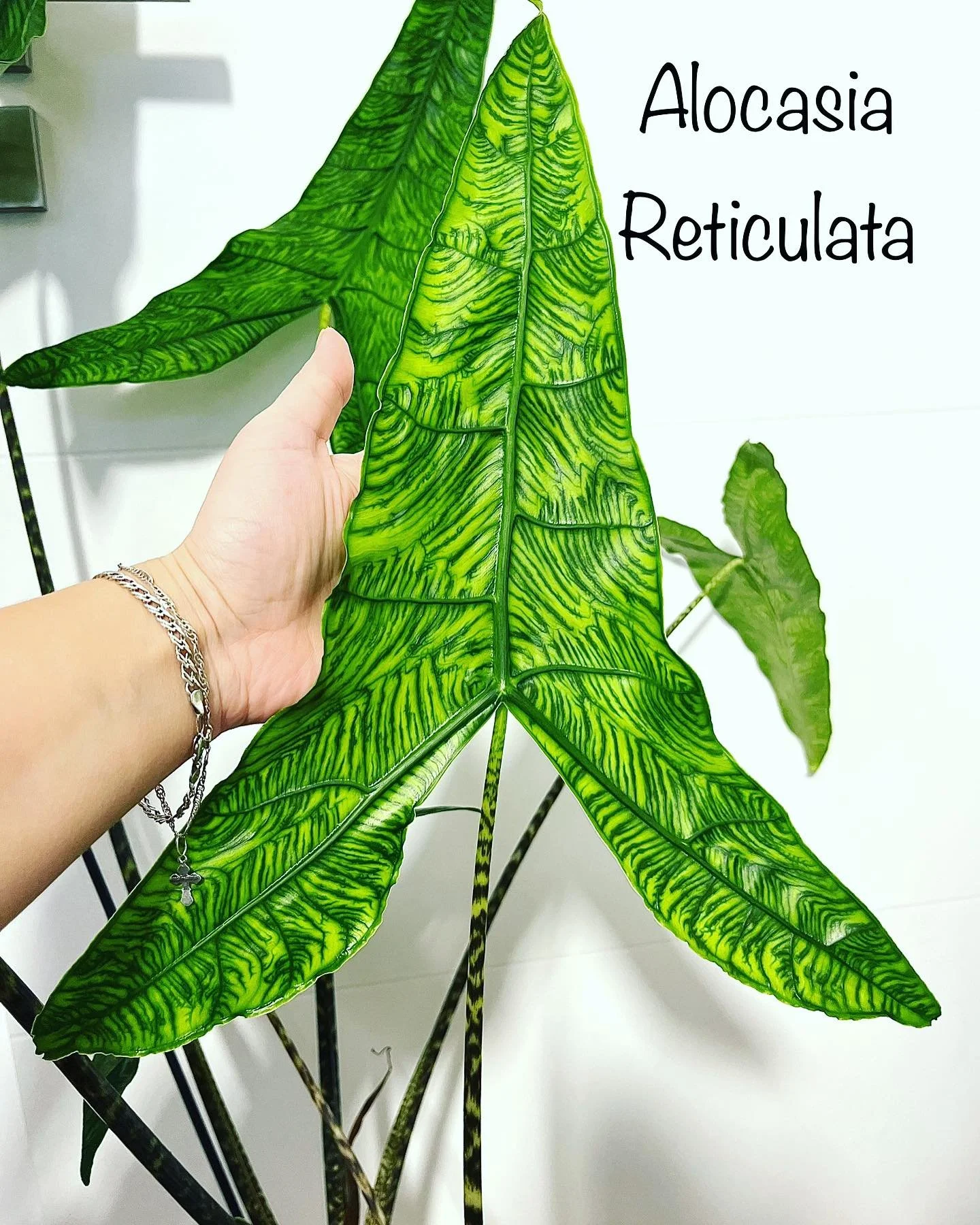
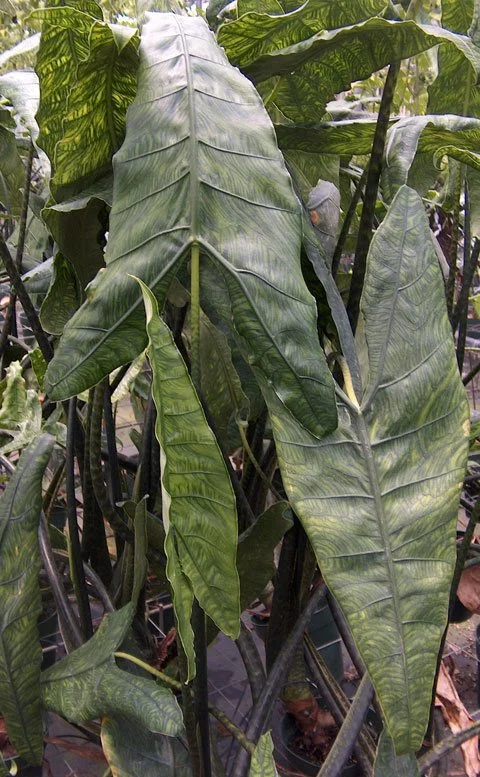
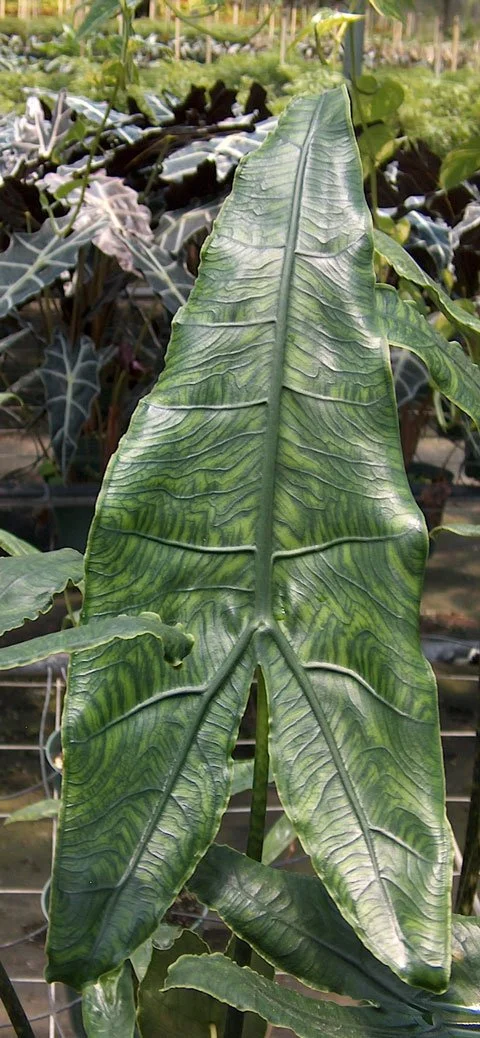
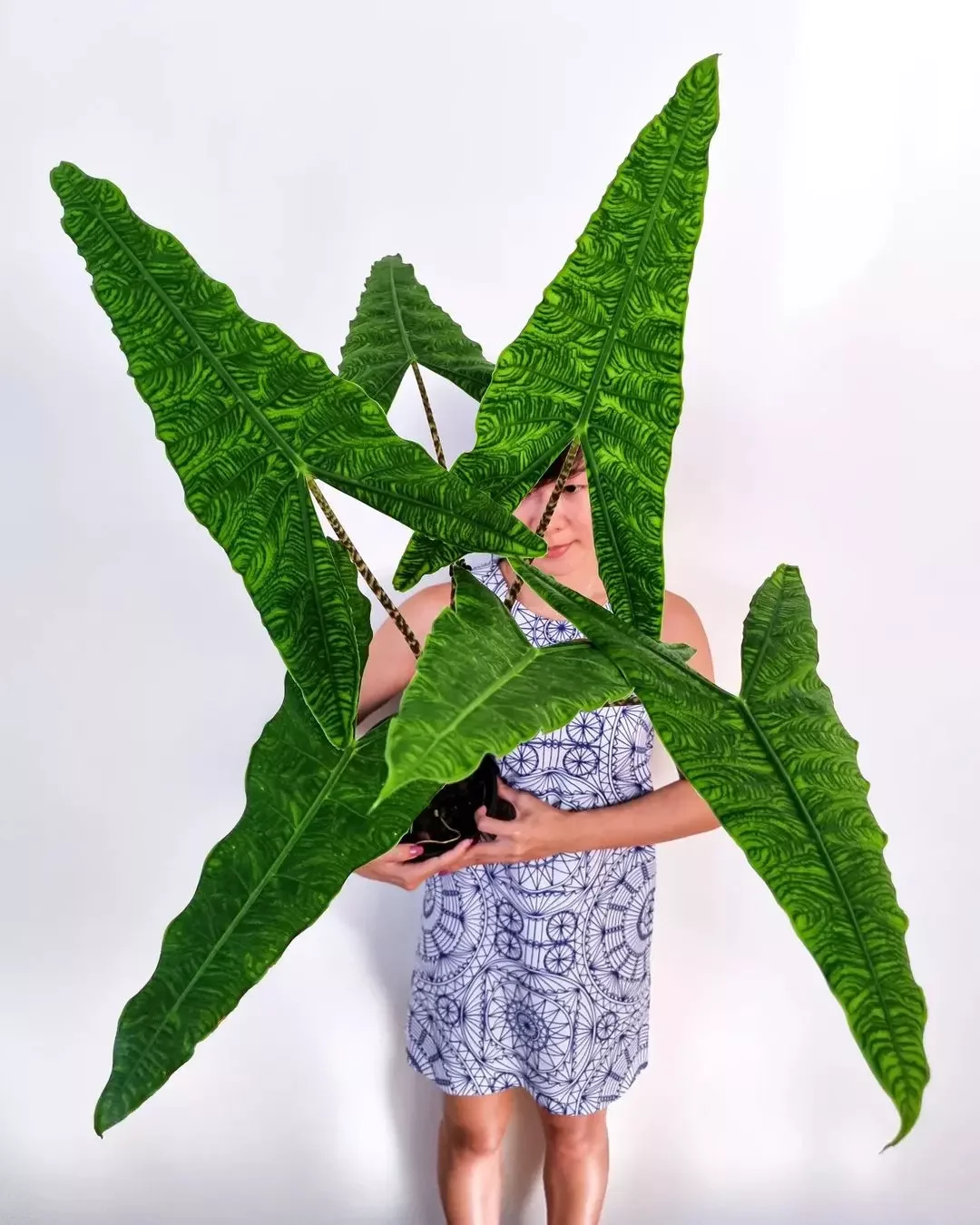
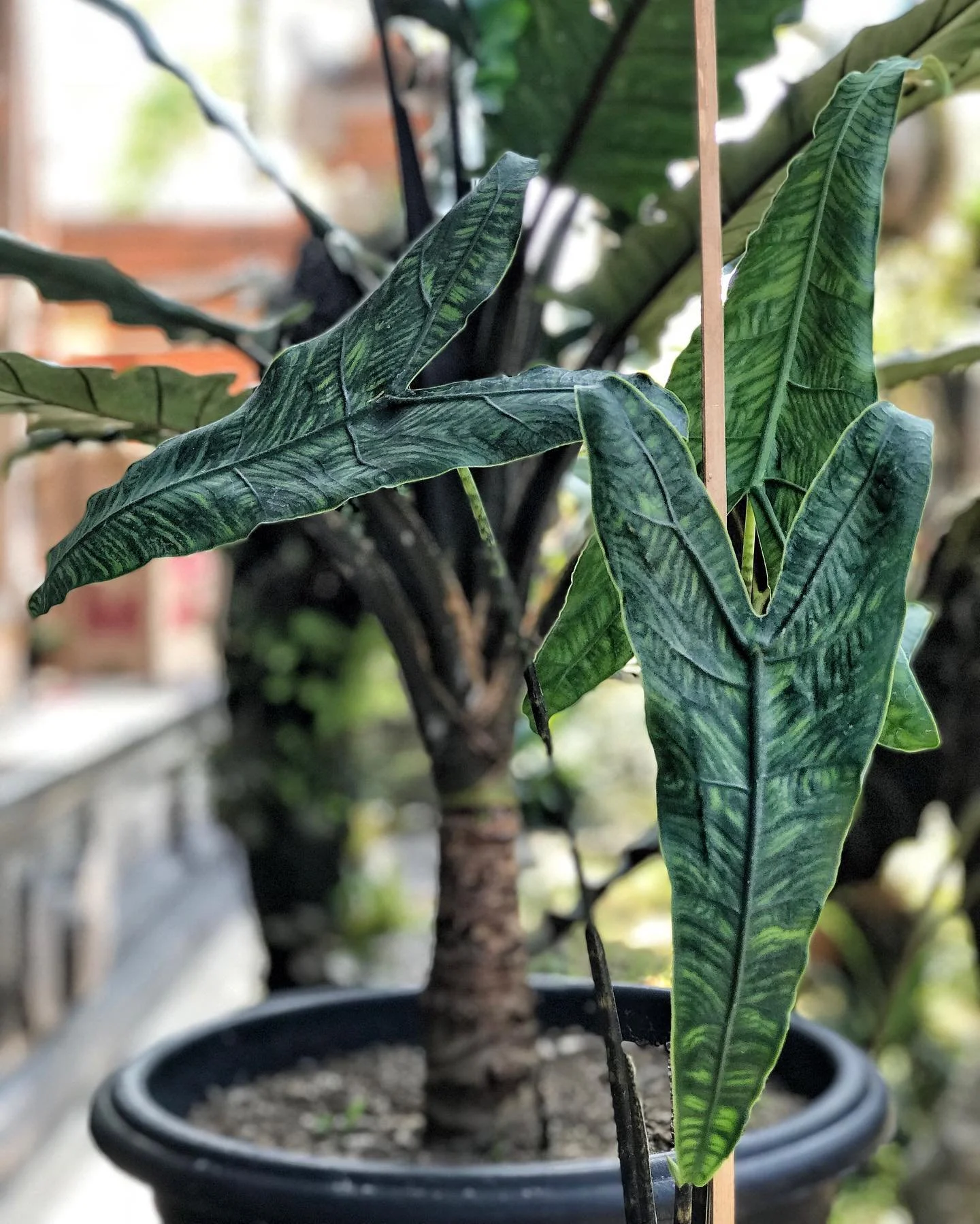
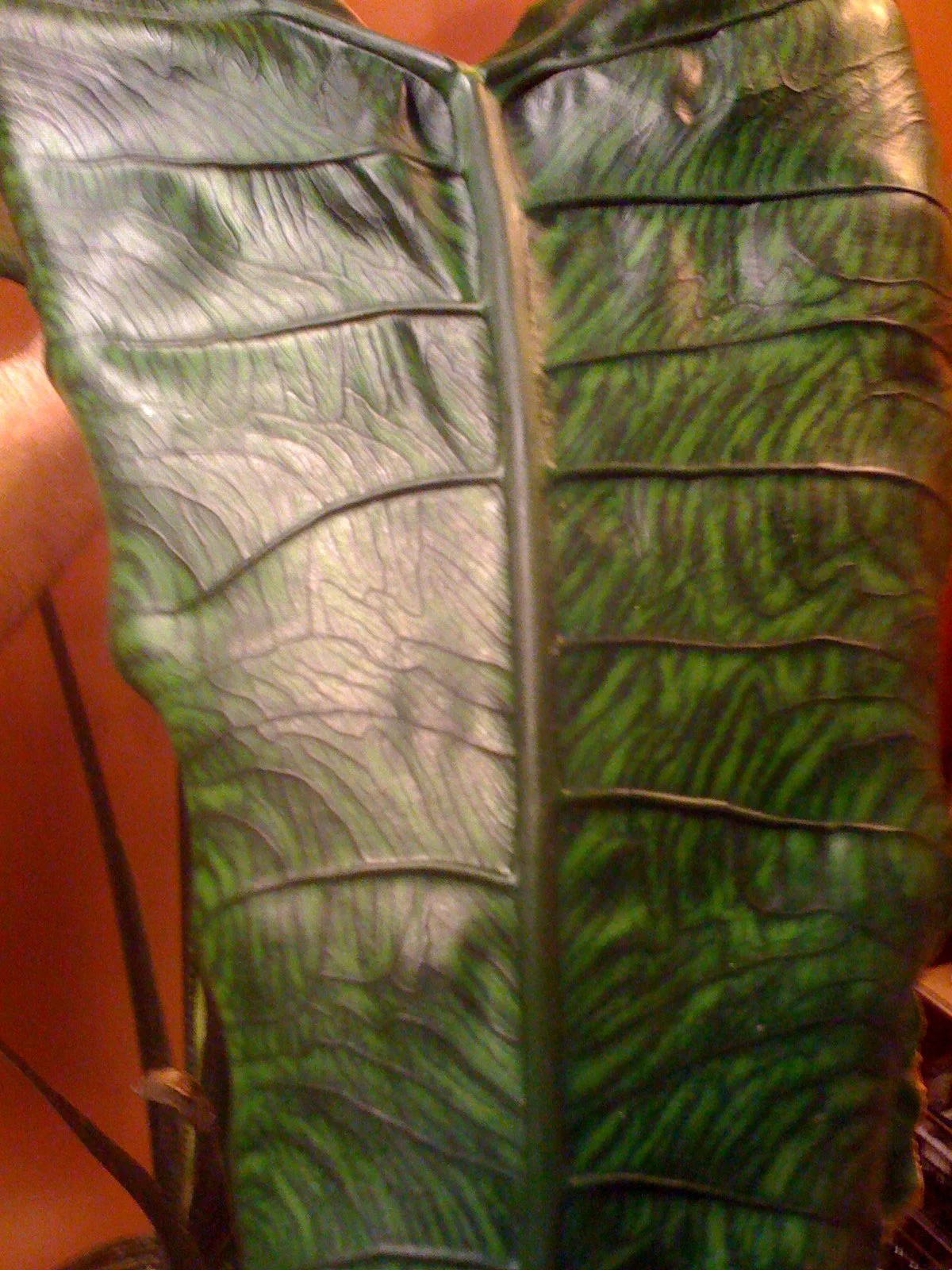
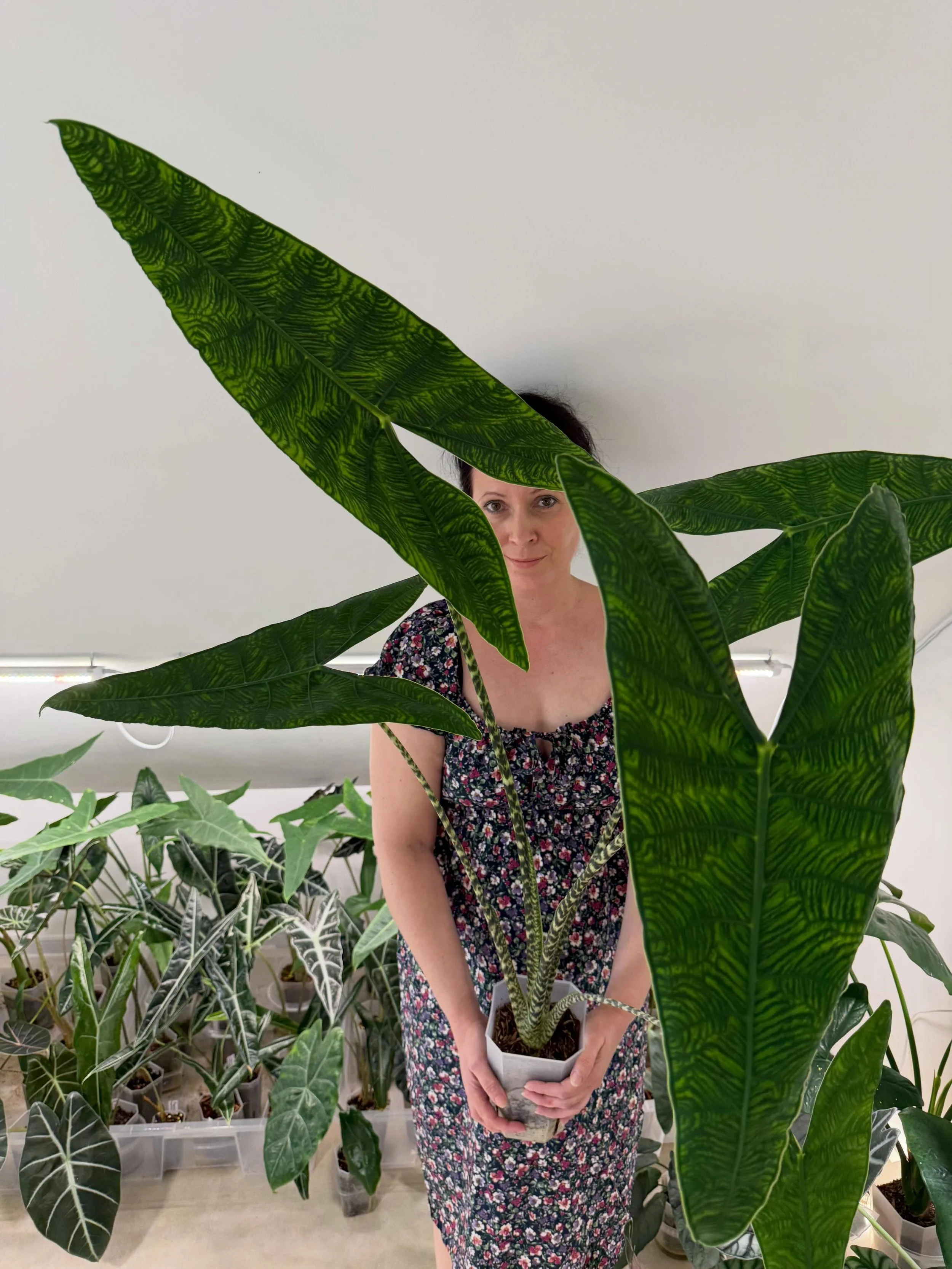
CULTIVAR DESCRIPTION: A popular and interesting cultivar of Alocasia zebrina. It is defined by unique reticulation of its leaves.
RETICULATION IN BOTANY
While reticulation in botany has multiple meanings, in this case Reticulate means net-like — forming a network, especially veins, fibers, or lines that cross one another. The textbook application is reticulate venation: the net-like pattern of veins in a leaf, where the veins form a complex web across the blade, classically contrasted with the parallel venation of monocots.
While reticulate venation is usually associated with dicots and contrasted with the parallel venation of monocots, Alocasia is one of the well-known monocot exceptions — like most aroids it has netted (colocasioid) venation. So the epithet is best read as referring not to the vein pattern but to the reticulate surface patterning on the blade: the pale, net-like mottling that is this plant's distinguishing feature and that growers note fades as the leaf matures. Notably, LariAnn Garner describes this clone's venation as not prominent at all — reinforcing that it's the surface reticulation, not the veins, that earned the name.
A SHORT TIMELINE: Though the exact origins of this cultivar are lost to time, many Aroid minds have been fascinated by this cultivar over the years and have put together a timeline of its introduction to market
1976 — Harry Luther recalled first seeing an Alocasia ‘reticulata" in the private, keep-out stock house at Fantastic Gardens, Miami, under the Mentelos family (with the caveat his memory was "filled with bromeliad stuff").
1981 — Scott Hyndman first saw it at Fantastic Gardens sold as Alocasia zebrina cv. Reticulata.
1983 — David Burnett described it briefly in Aroideana Vol. 7(3&4), treating "reticulata" only as a horticultural name. He wrote that it seemed released by Fantastic Gardens within the prior decade, that its origins were unknown, that he doubted it was a species and thought a hybrid unlikely — possibly "simply a sport or varietal form." He gave no measurements and let a photo stand in for a description.
1980s — Oglesby Plant Labs tissue-cultured it (Denis of Silver Krome Gardens put the run at ~1,000–1,500 plants); production later moved to Agristarts in Apopka.
1999 — The JoeHerbMan/Lester Kallus email carries the folkloric version: SE Asian origin, introduced to the US in 1985, ~1,000 TC plants sent to a Homestead nursery, all destroyed by Hurricane Andrew (1992) except an original held "under lock and key" at a Sarasota botanical garden (almost certainly Selby). This conflicts on nearly every point with the Fantastic-Gardens/1970s recollections and reads as an origin myth
2008 — An Aroid listserv thread (Hyndman, Powell, Luther, Denis) plus a post by Peter Boyce, where he notes Hay's 1999 Gardens' Bulletin Singapore treatment folded A. wenzelii into a broadly circumscribed A. zebrina, never mentioned A. tigrina (never formally published), and called for a proper field study to untangle the cultivated clones.
AN ISSUE OF NOMENCLATURE
The problem with the "Reticulata" name is that it fails on every available route to legitimacy:
As a species / botanical variety — never validly published; absent from IPNI. Hay's view is blunt: not a distinct species, and botanical variety is the wrong category for "a horticultural thing like this."
As a cultivar — the governing rule is that a cultivar epithet established on or after 1 January 1959 must be a word or words in a modern language other than Latin, save for narrow exceptions. In the current 9th edition (2016) this is Art. 21.11. A bare Latin descriptor like reticulata coined as a cultivar name after 1959 simply isn't permitted. Plant Delights
The one escape hatch — the Code does retain Latin-form epithets that were established before 1 January 1959. A Latin name published prior to 1 January 1959 — even if not published validly — is to be retained when the plant is now treated as a cultivar. This is exactly why Hay repeatedly circles back to dating: Alocasia 'reticulata' could survive only if its use traces to before 1959 and the name was applied to a single clone (a cultivar-equivalent), not to a range of similar plants. No such published finding has yet been found. Crassulaceae
The "cv." abbreviation is obsolete and no longer used; and single quotes ('Reticulata') signal an established/registered cultivar, which this is not — no registration exists yet with the IAS, but work is underway to legitimize this under a proper and valid cultivar name
REFERENCES:
Additional photo by Exotic-Flowers-DE and Nadine Hafke
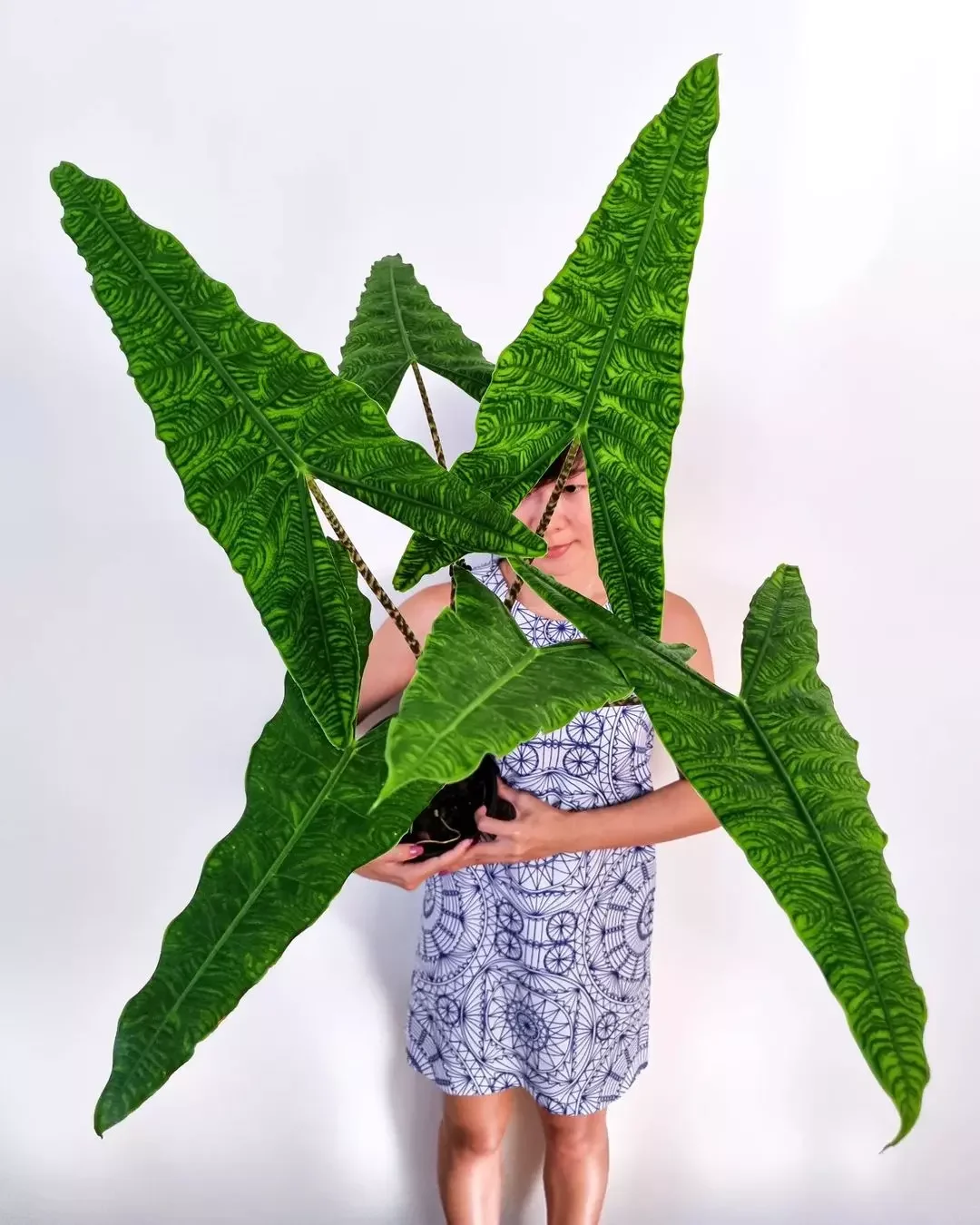
Photo by My Green Heaven