AMORPHOPHALLUS CIRRIFER
ORIGINAL DESCRIPTION:
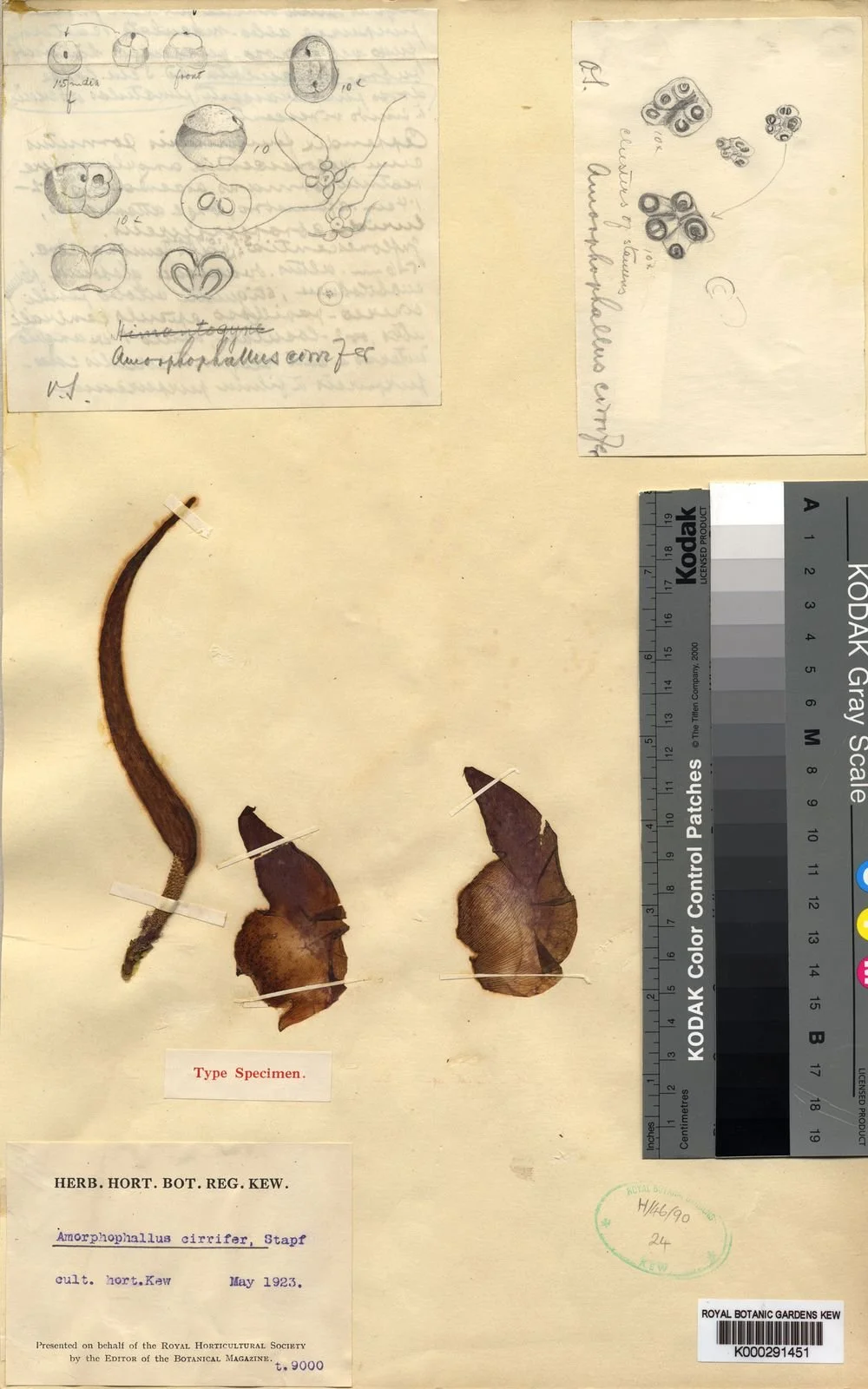
Amorphophallus cirrifer,Stapf (sp. nov.): inter omnes species generis organis neutris (staminibus mutatis) filiformibus basi bulbosis inter spicam femineam et masculam creberrimis necnon varie cum pistillis et staminibus et supra spicam masculam ipsam et in appendice ipso ortis insignis, his notis prototypum subgeneris novi nomine "Metandrium" salutandi constituens.
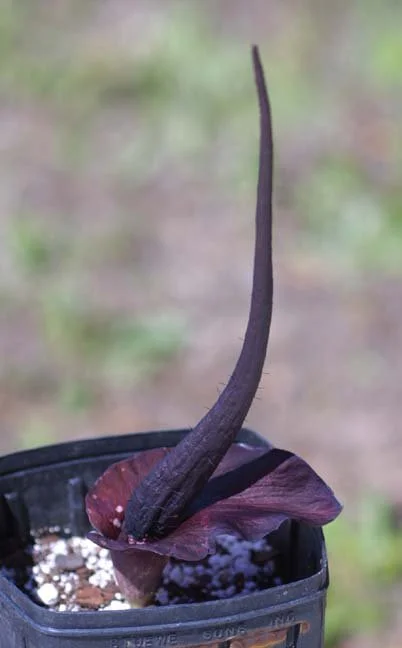
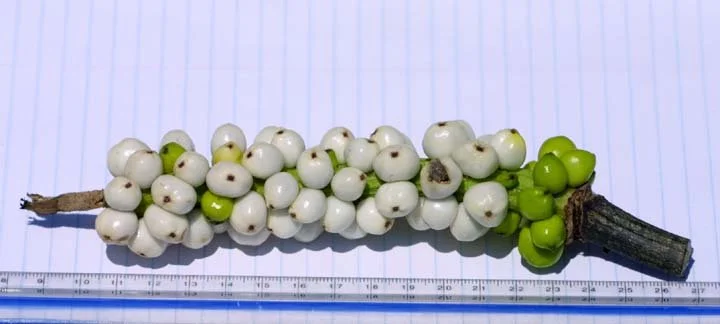
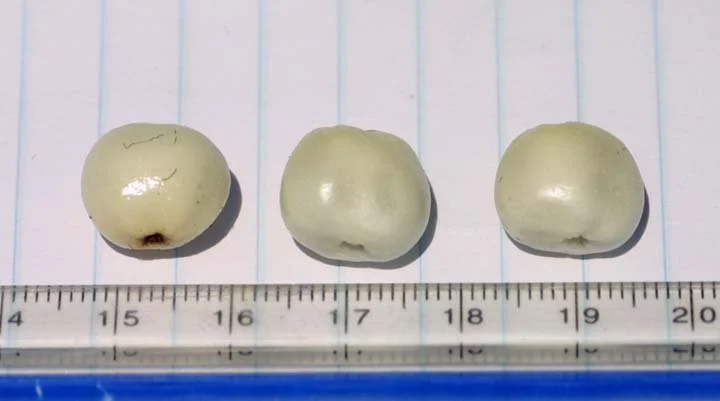
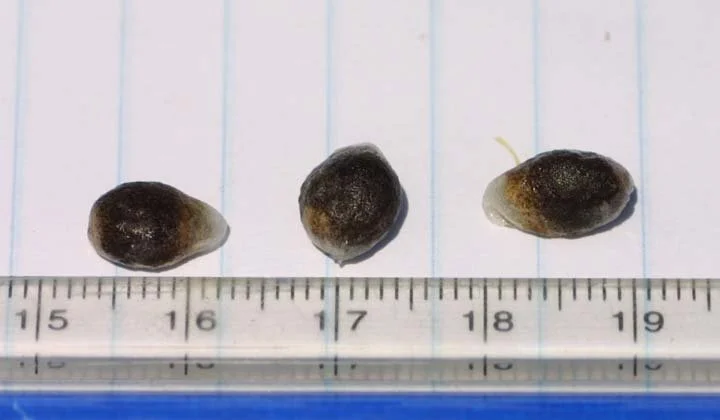
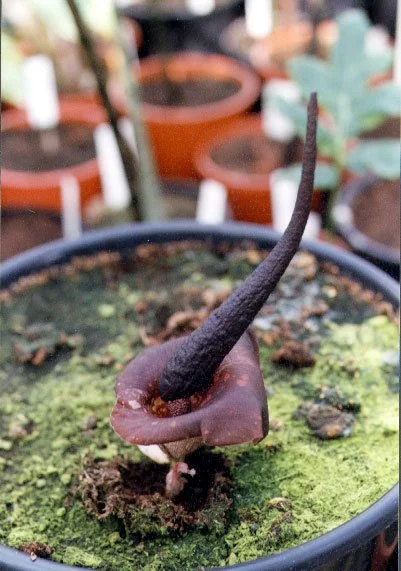
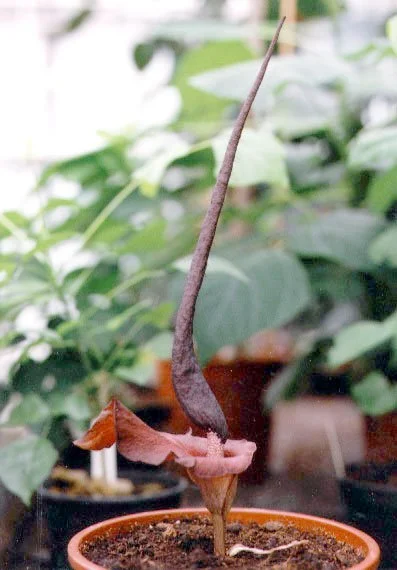
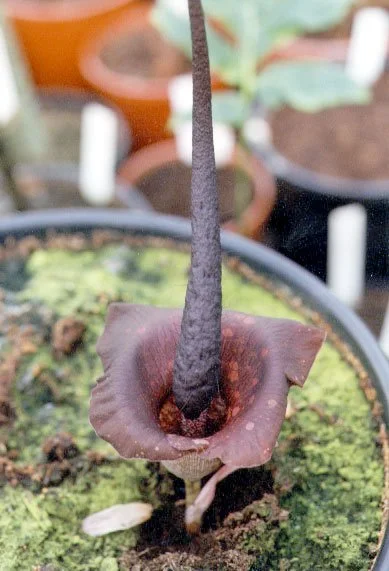
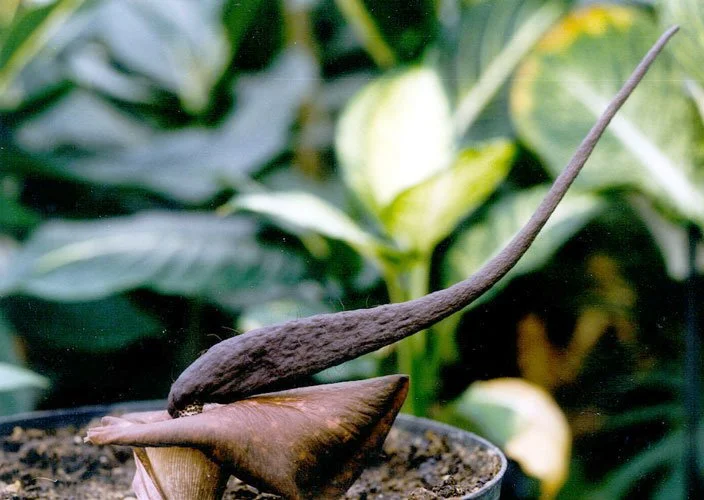
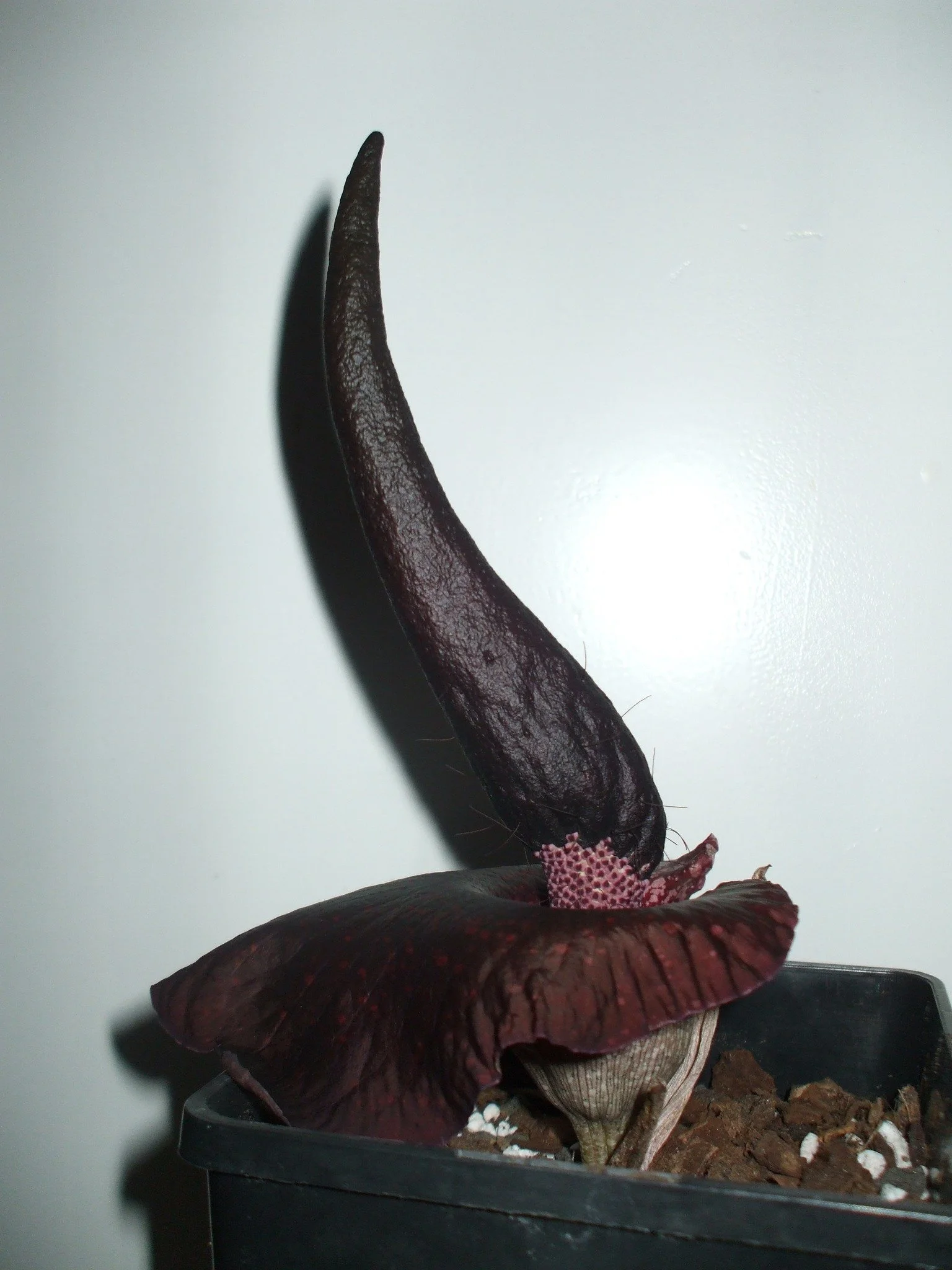
Photo by Alan Galloway
SYNONYMS:
HOMOTYPIC SYNONYMS: N/A
HETEROTYPIC SYNONYMS: N/A
ACCEPTED INFRASPECIFICS: N/A
OTHER: N/A
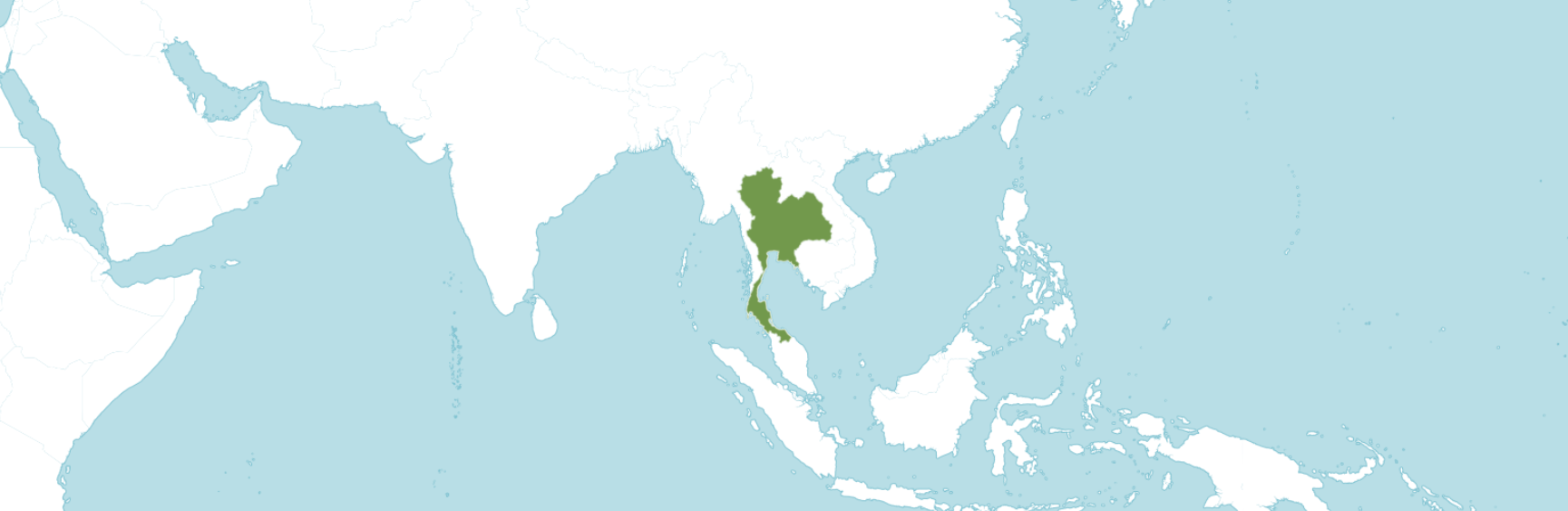
DISTRIBUTION: Thailand
CLIMATE: N/A
ECOLOGY: N/A
SPECIES DESCRIPTION:
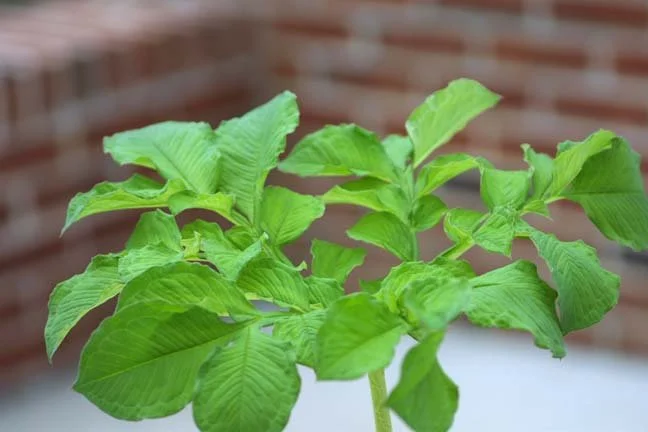
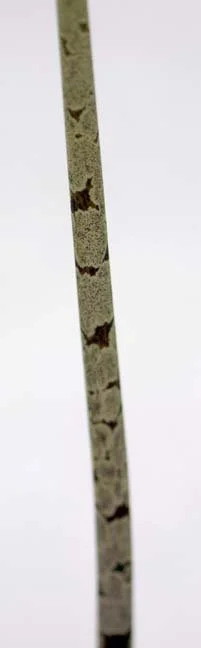
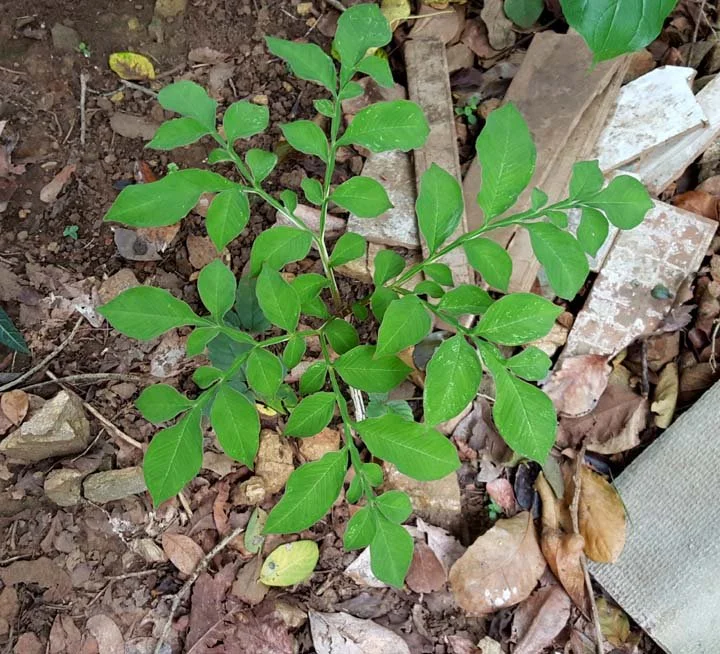
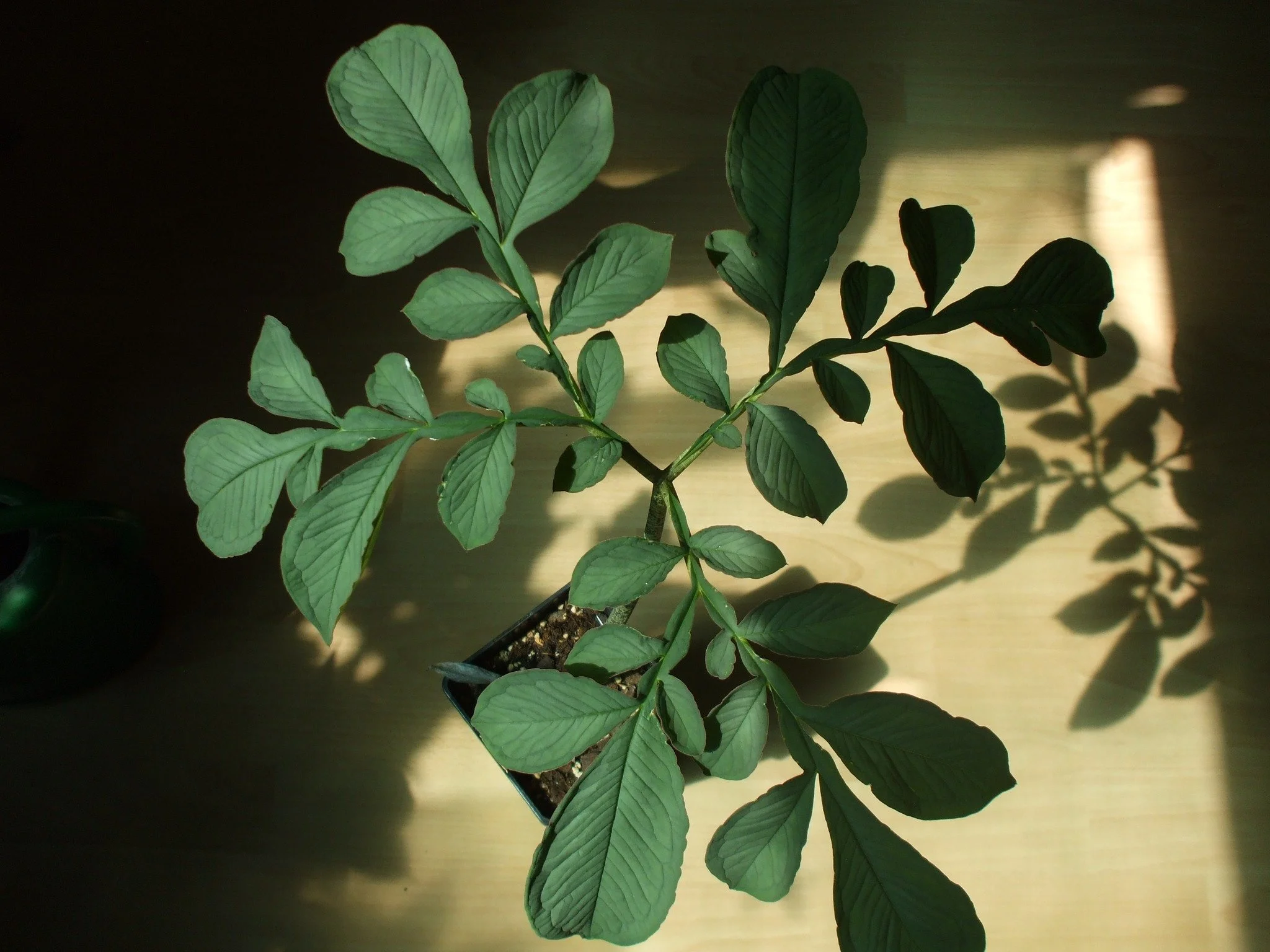
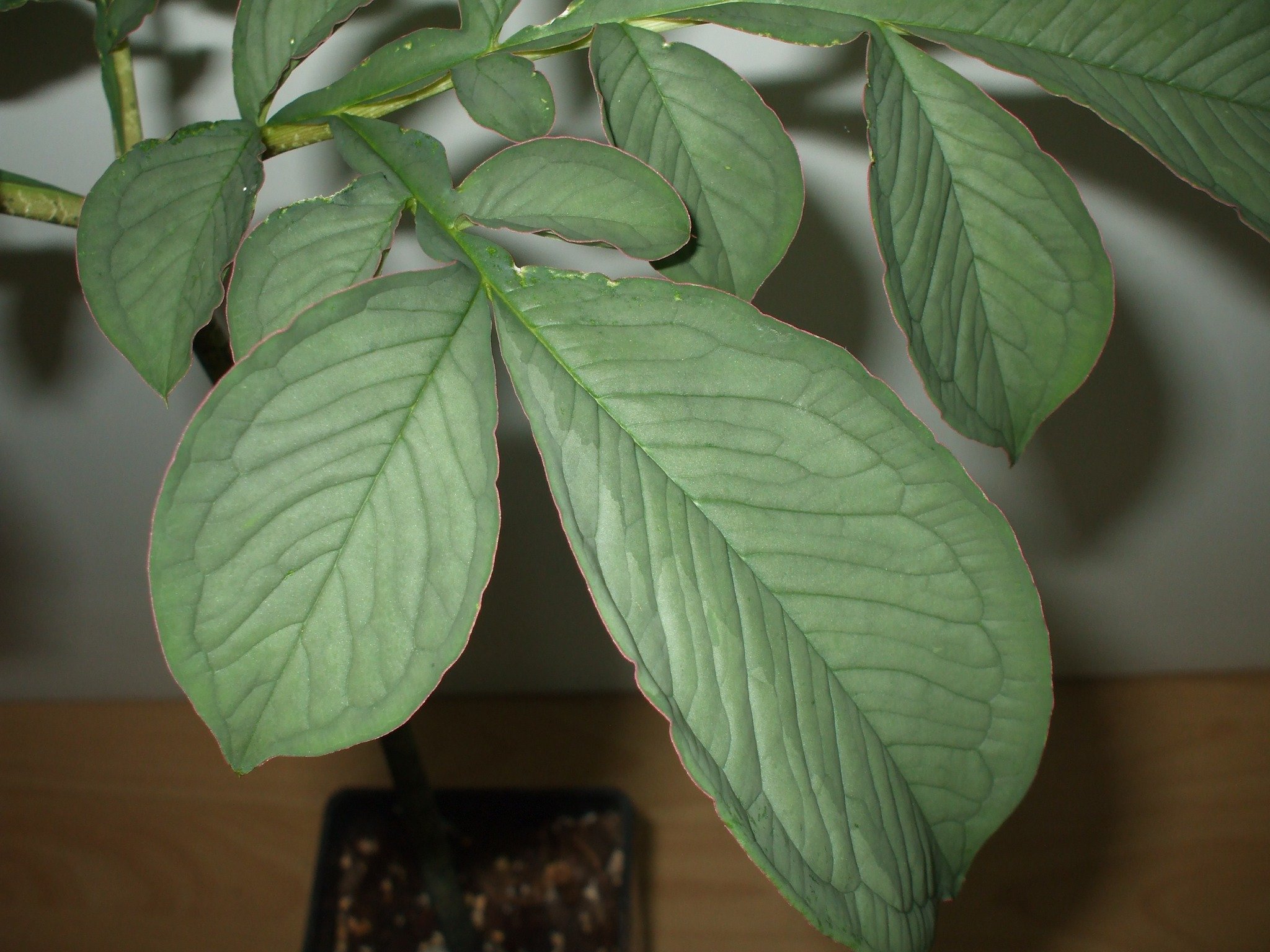
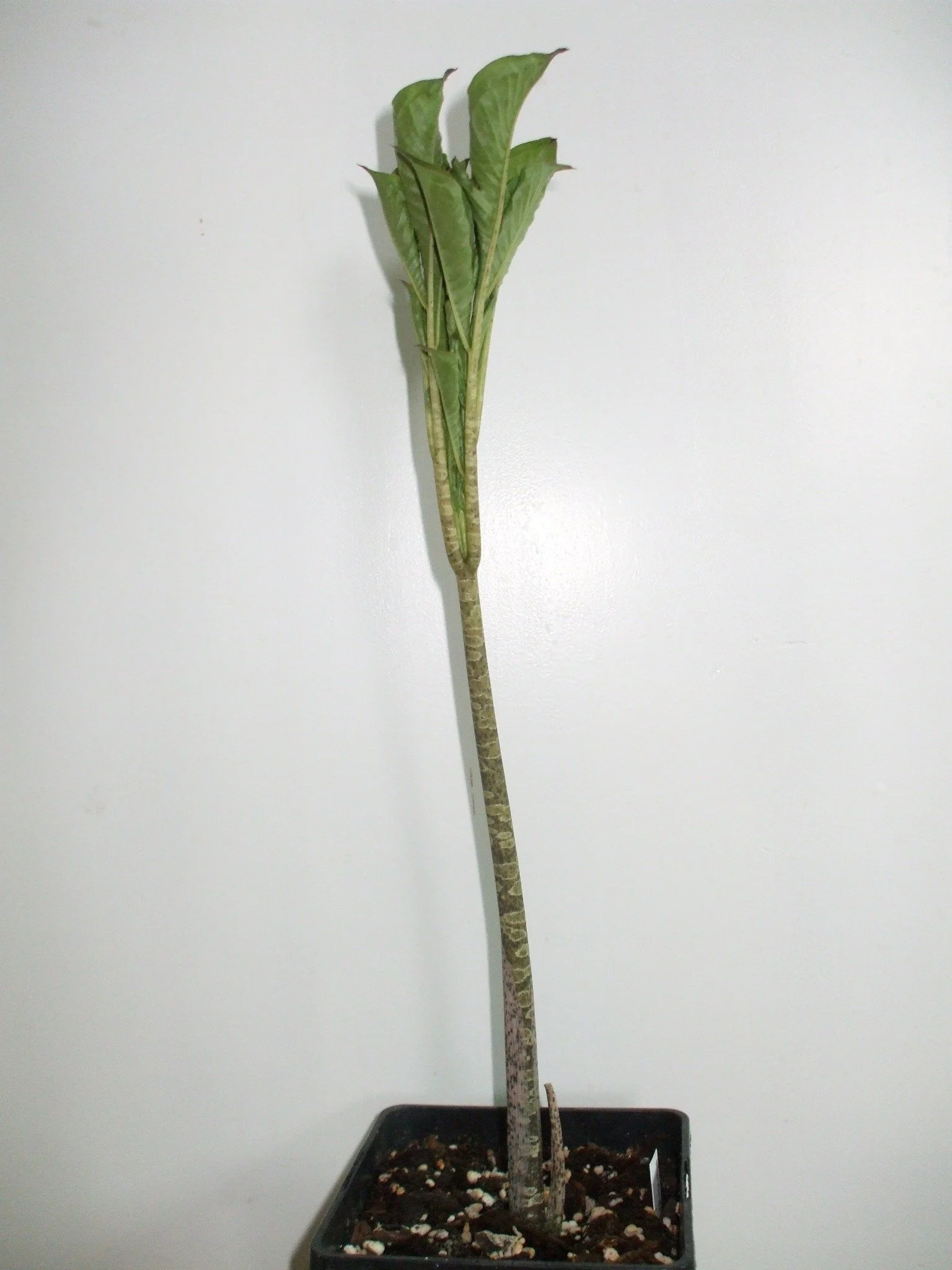
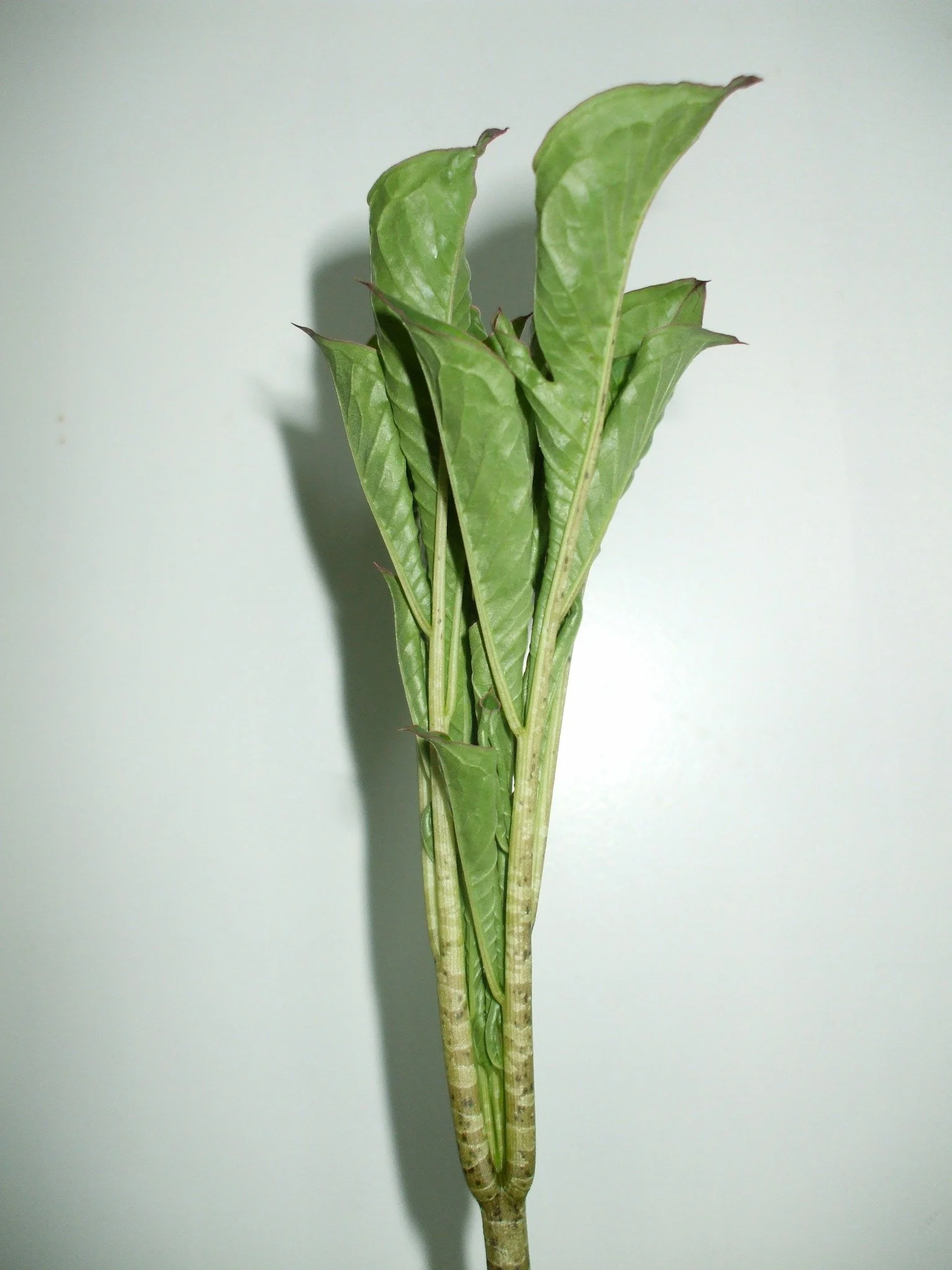
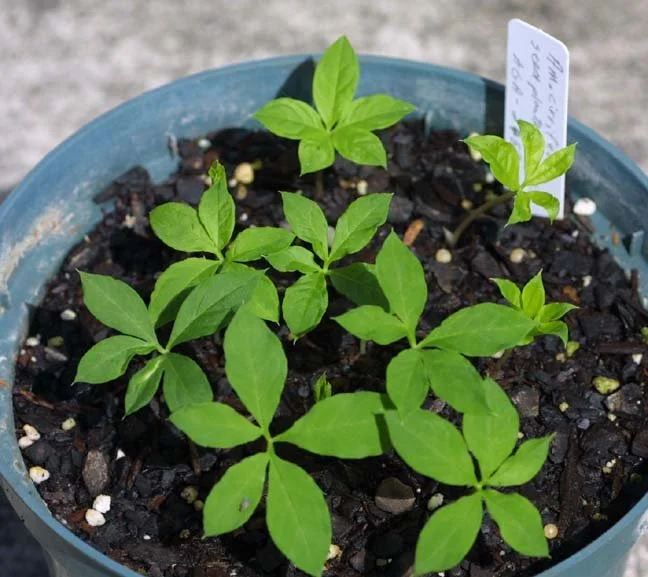
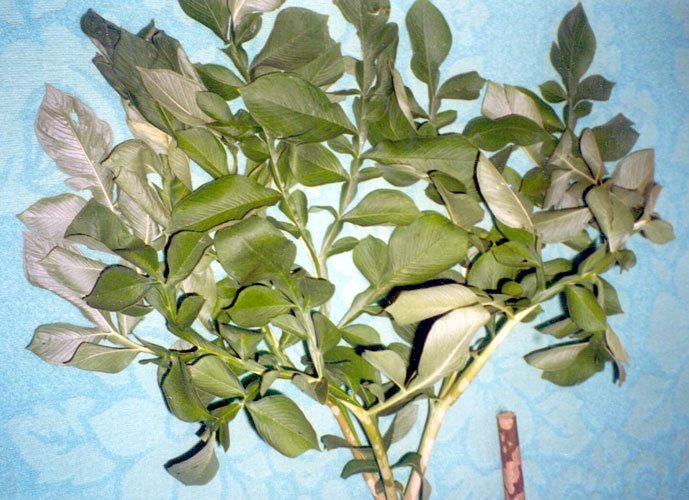
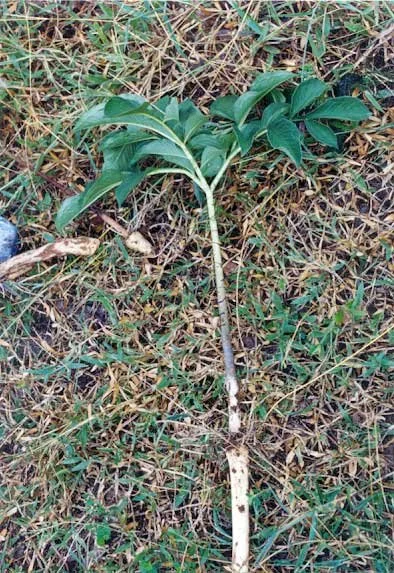
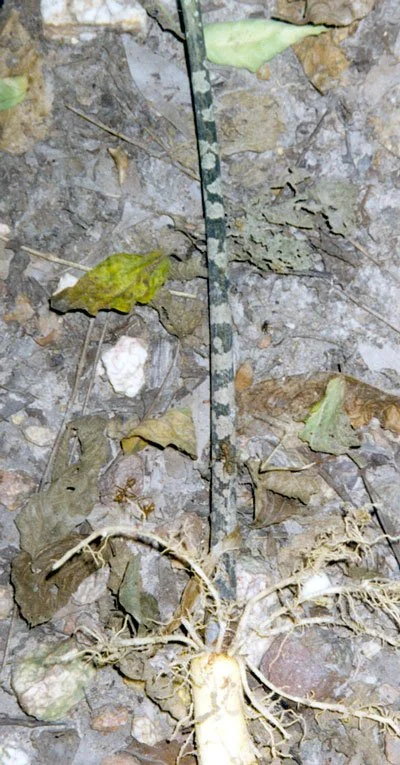
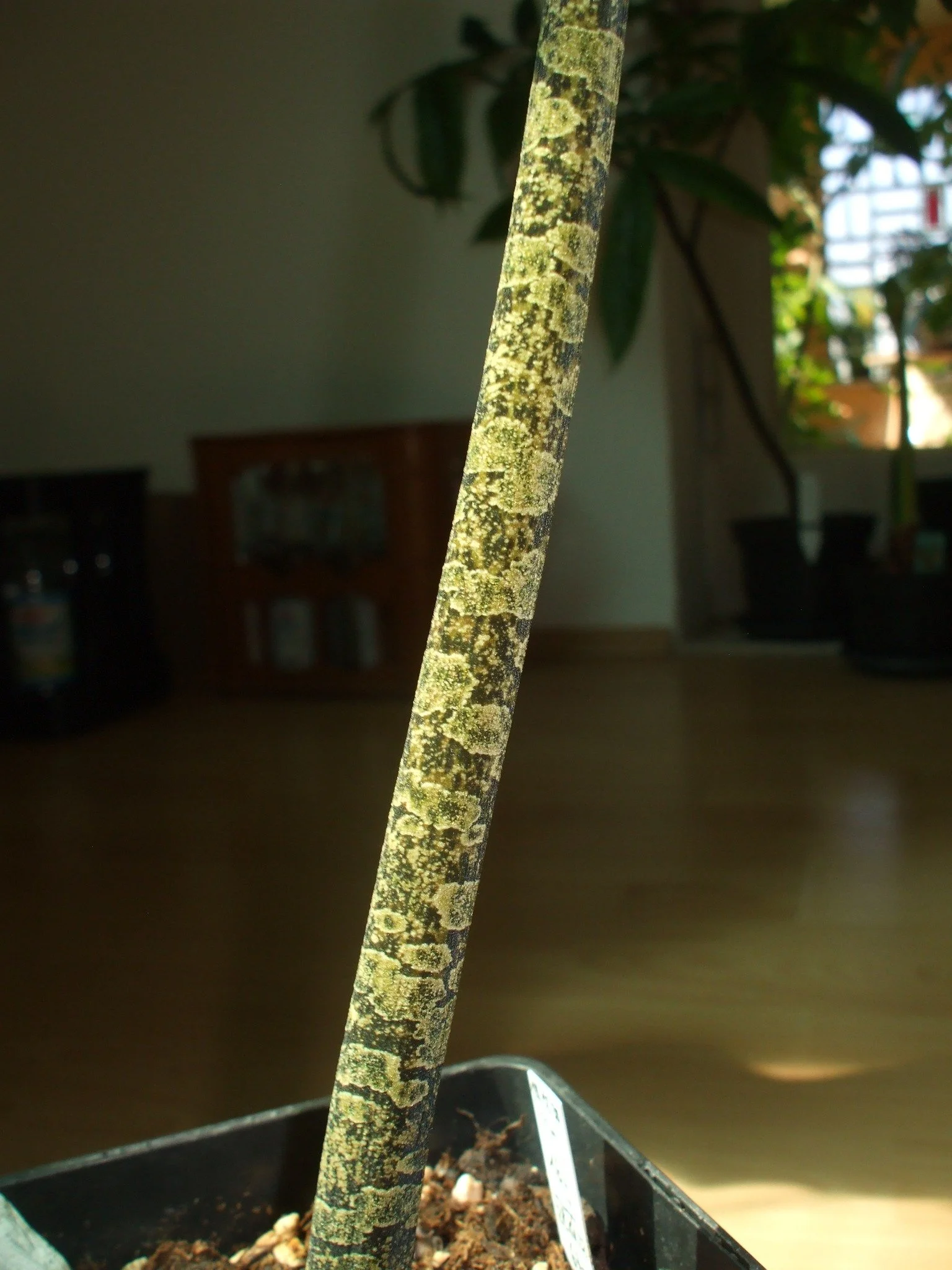
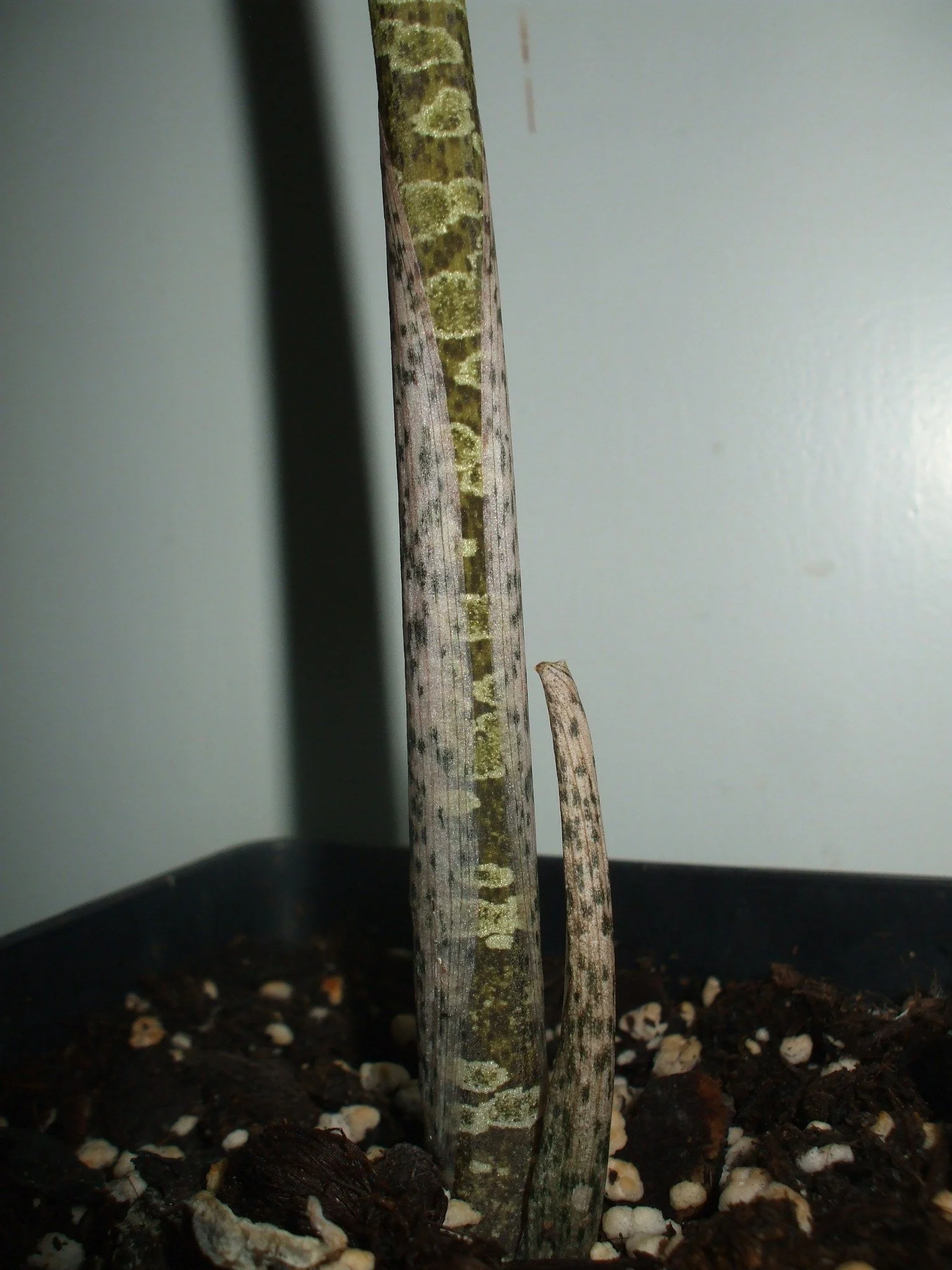
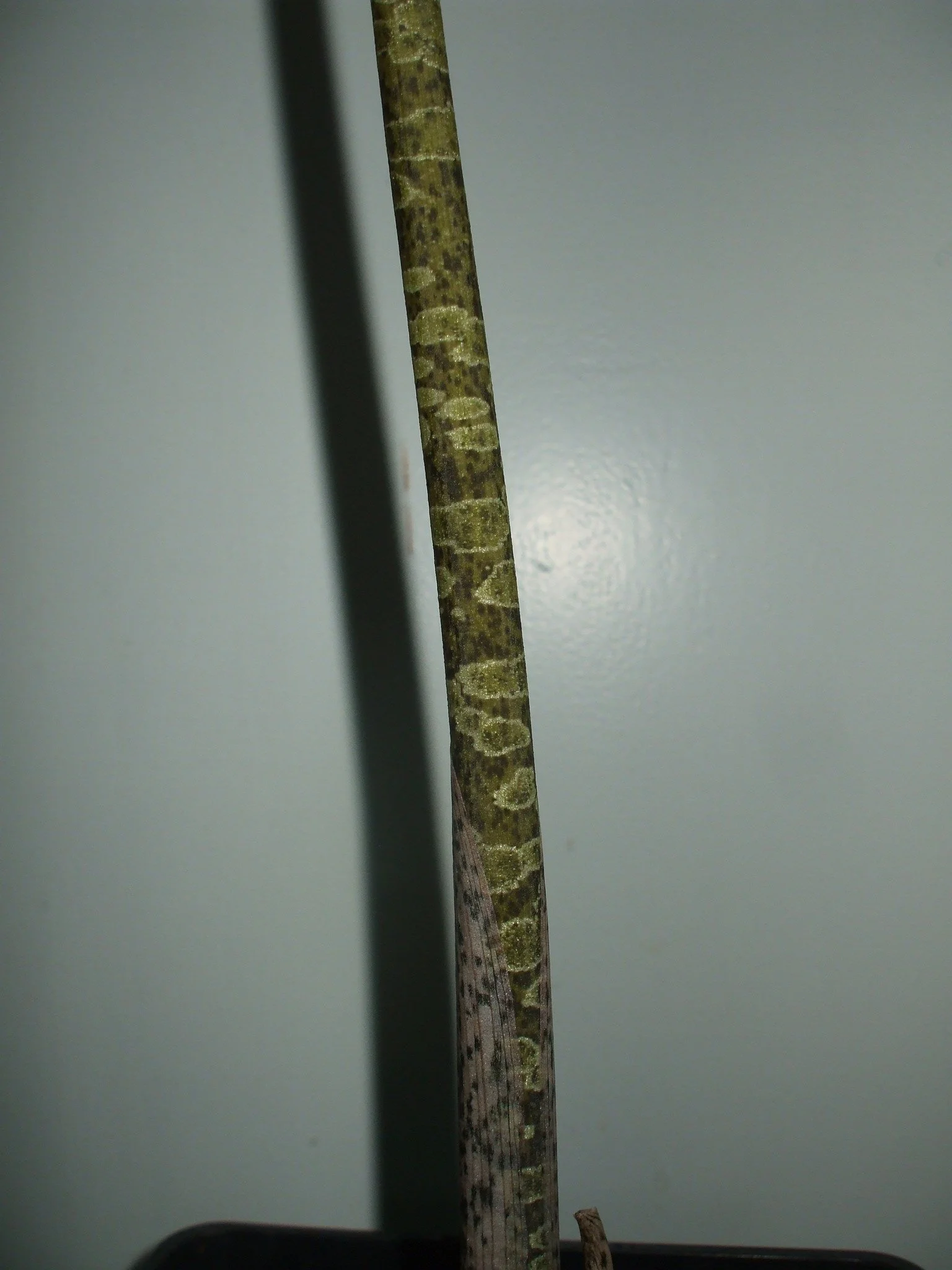
The leaf is borne on a stalk about 12 cm. high and prettily mottled with purple and white. The blade consists of 3 forked segments bearing long and finely acuminate elliptic-oblong or oblong leaflets increasing in size upwards, the longest measuring up to 13 cm. by 5 cm.
INFLORESCENCE:
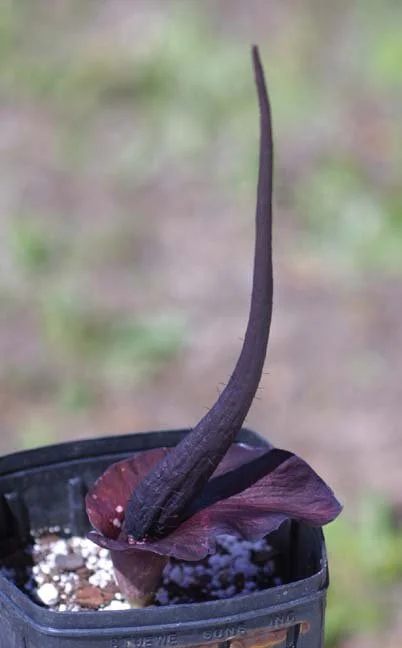
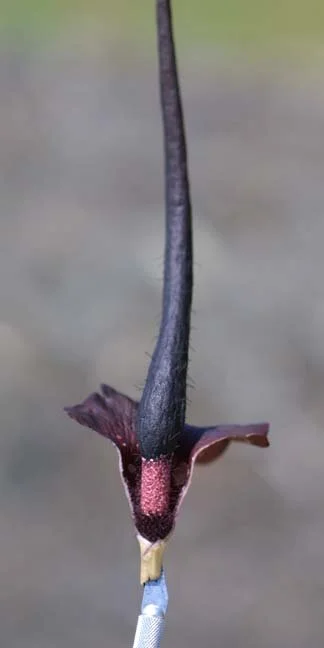
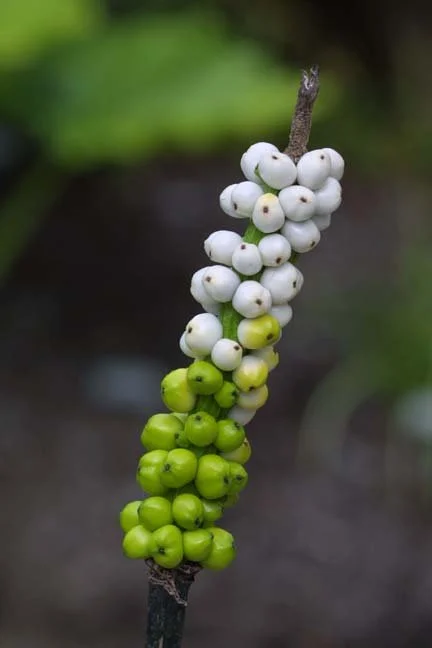
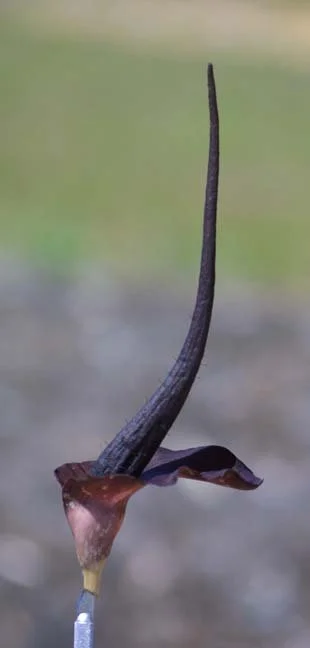
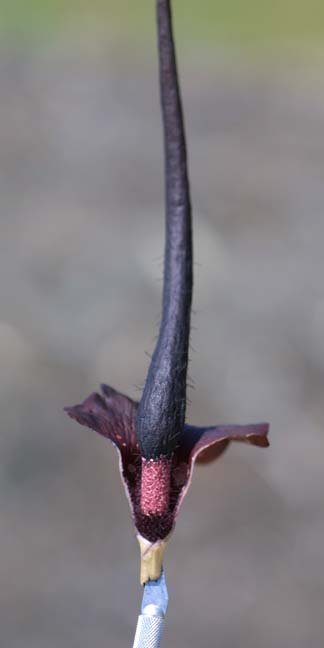
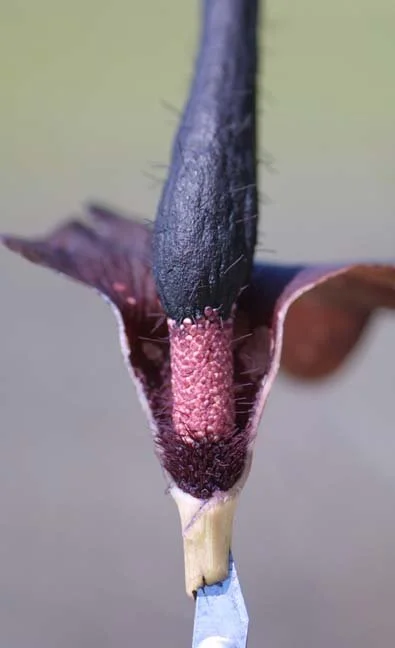
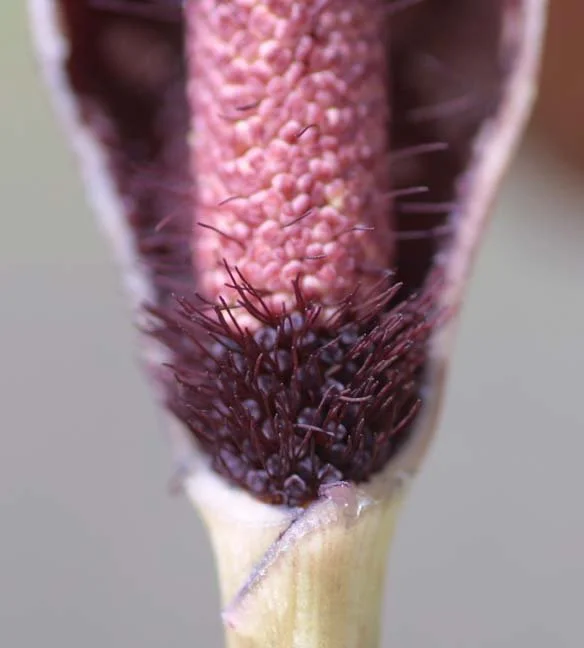
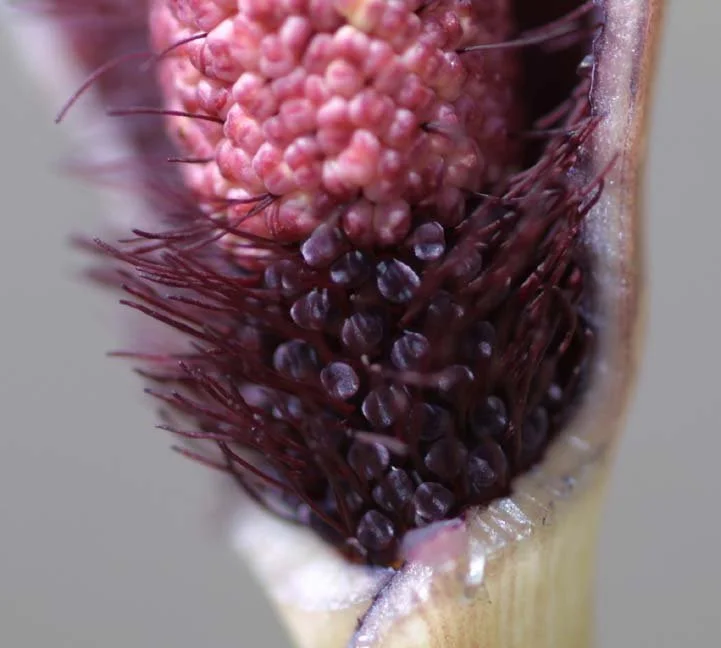
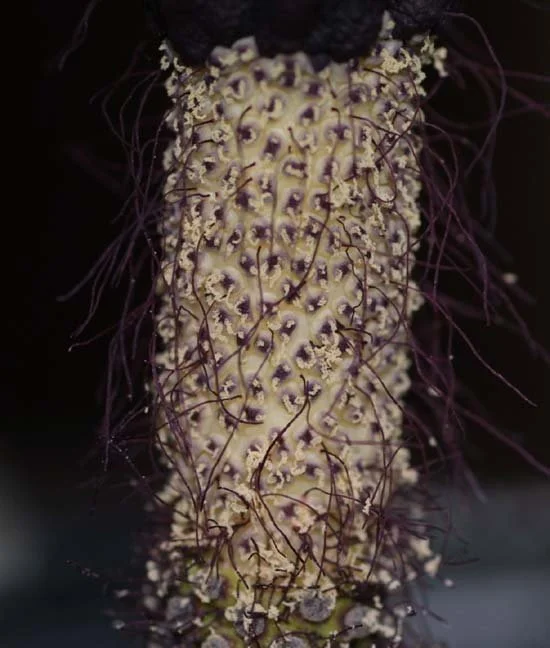
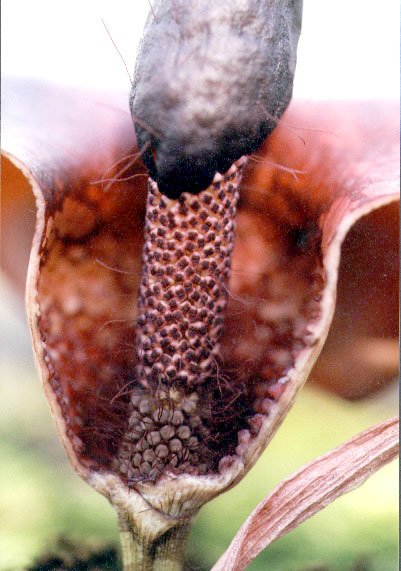
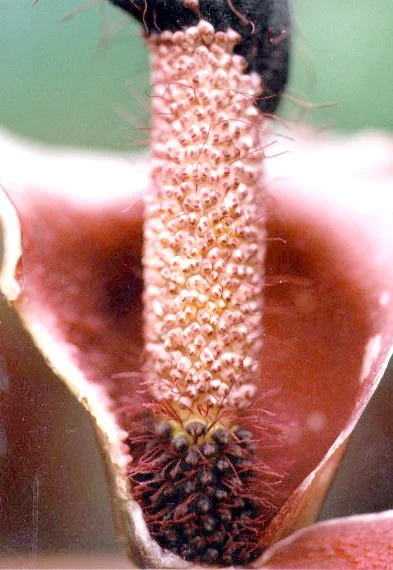
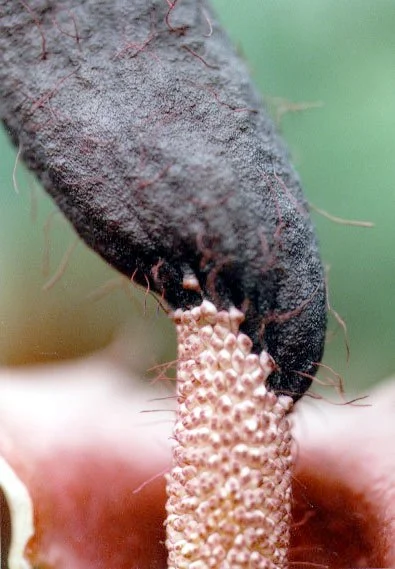
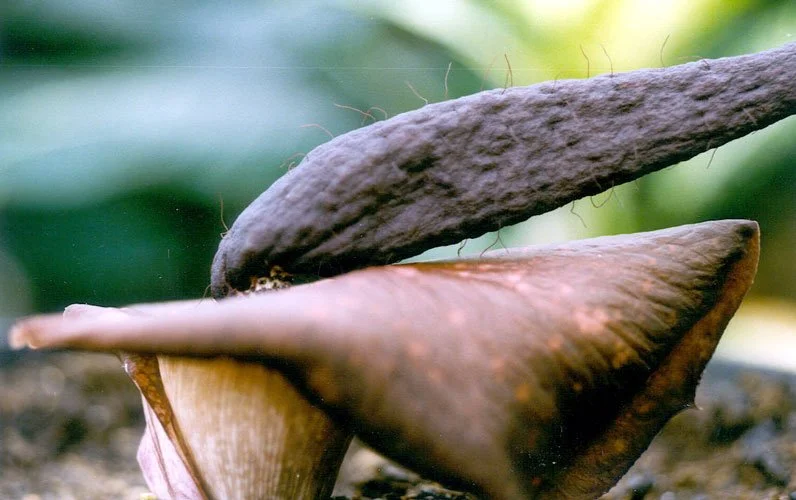
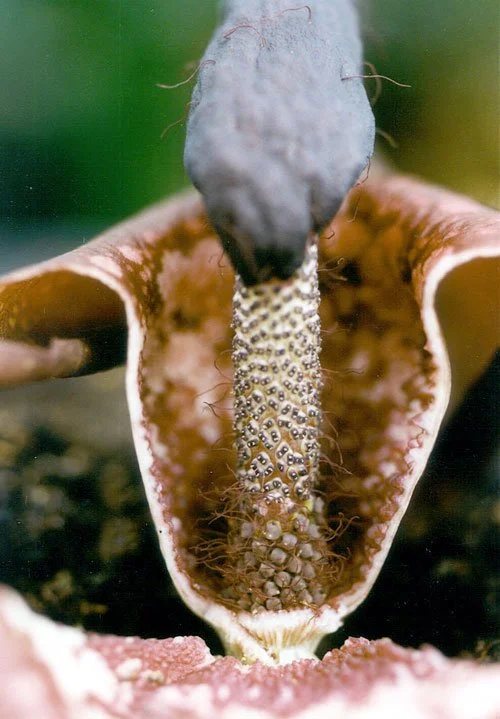
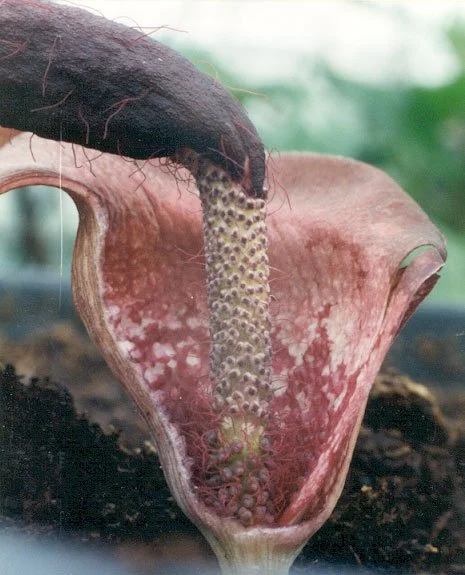
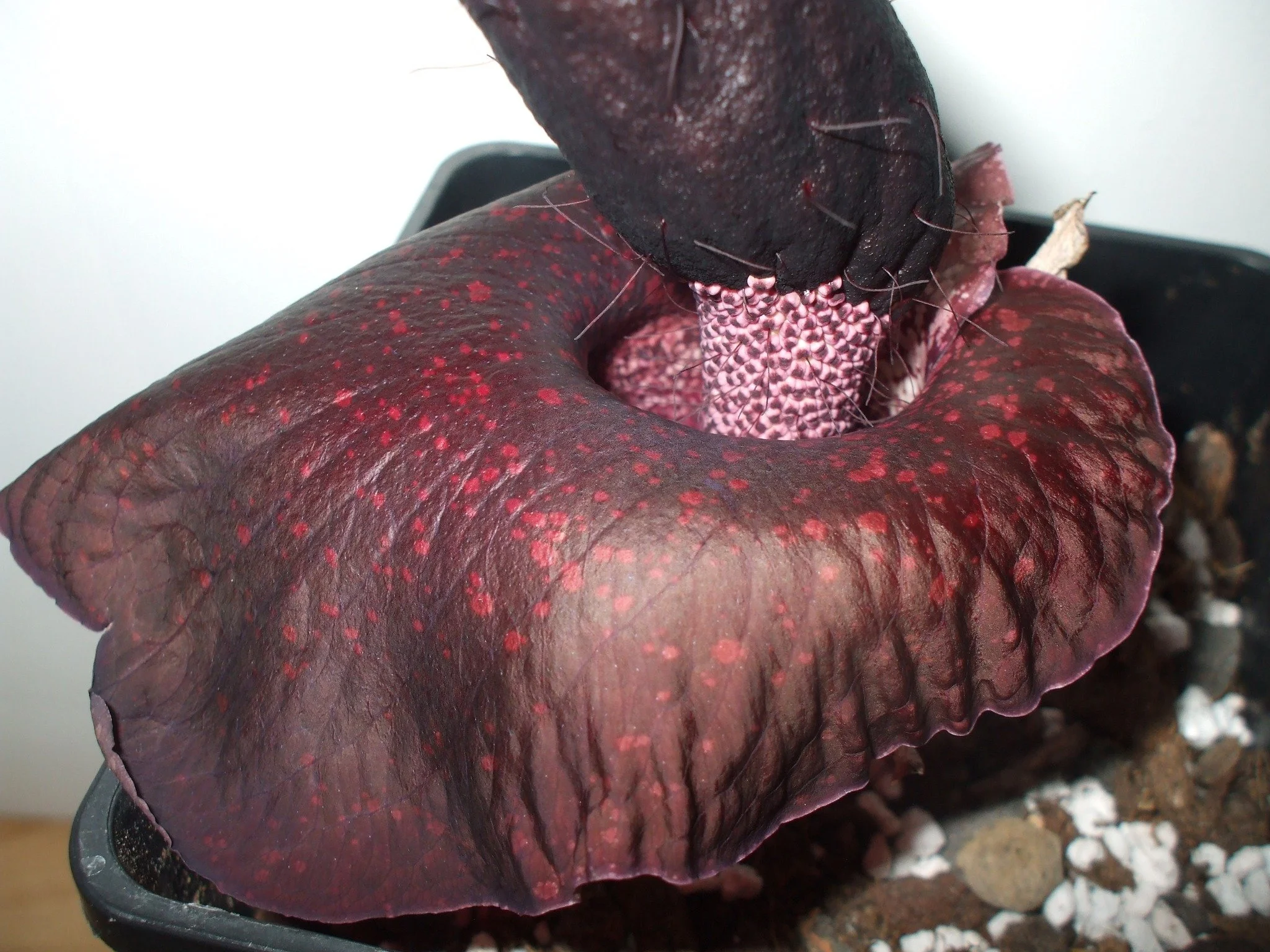
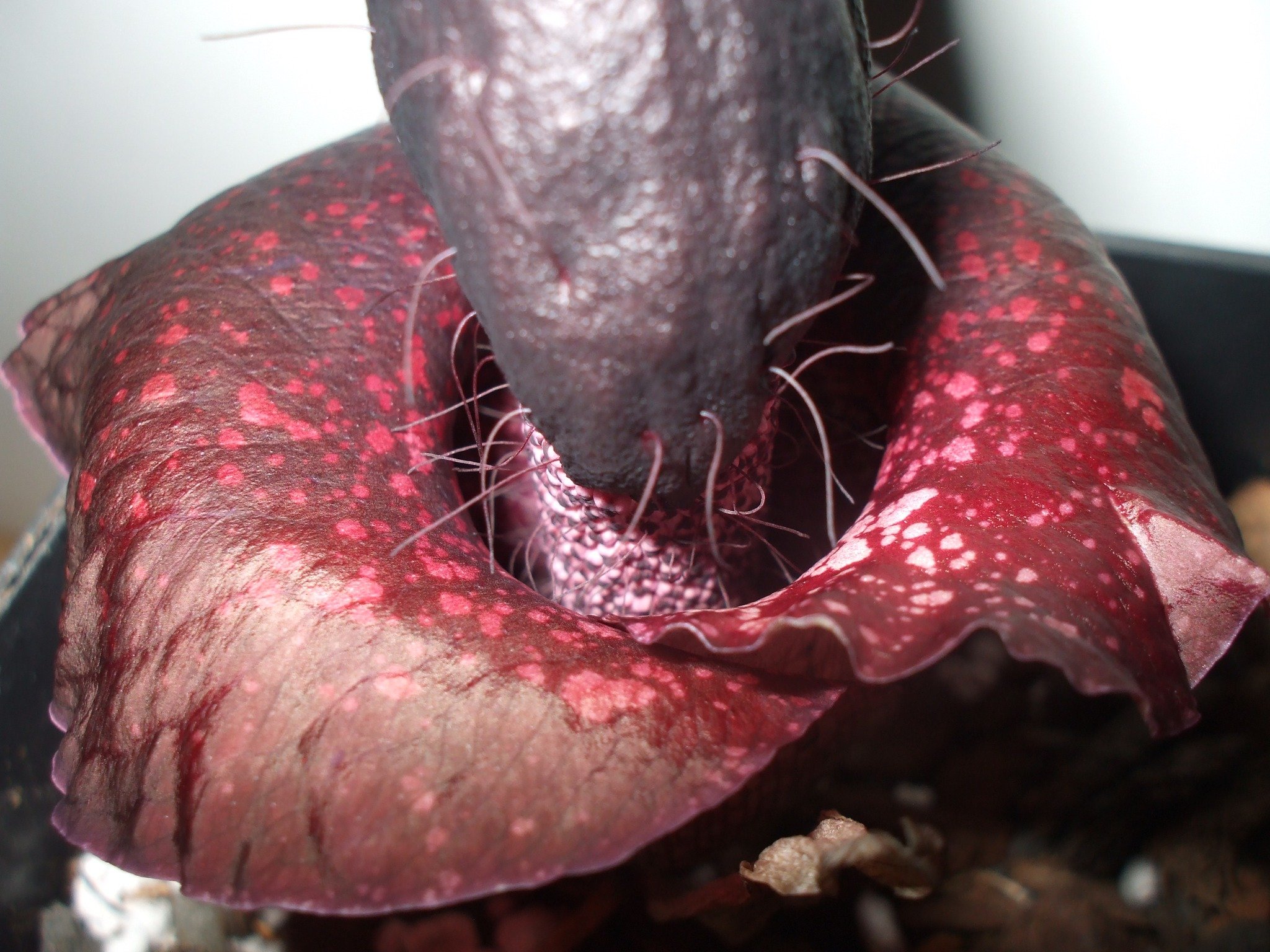
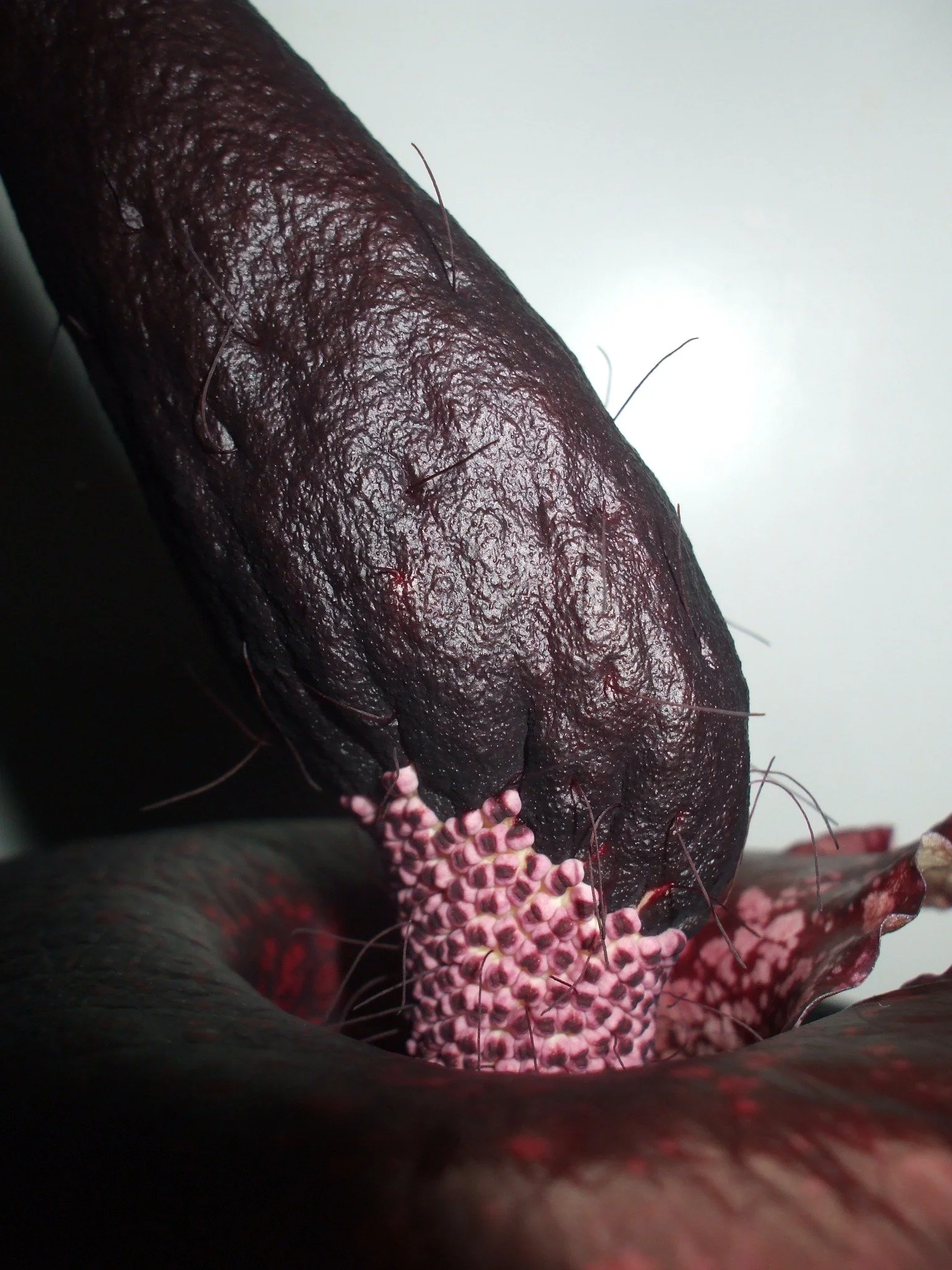
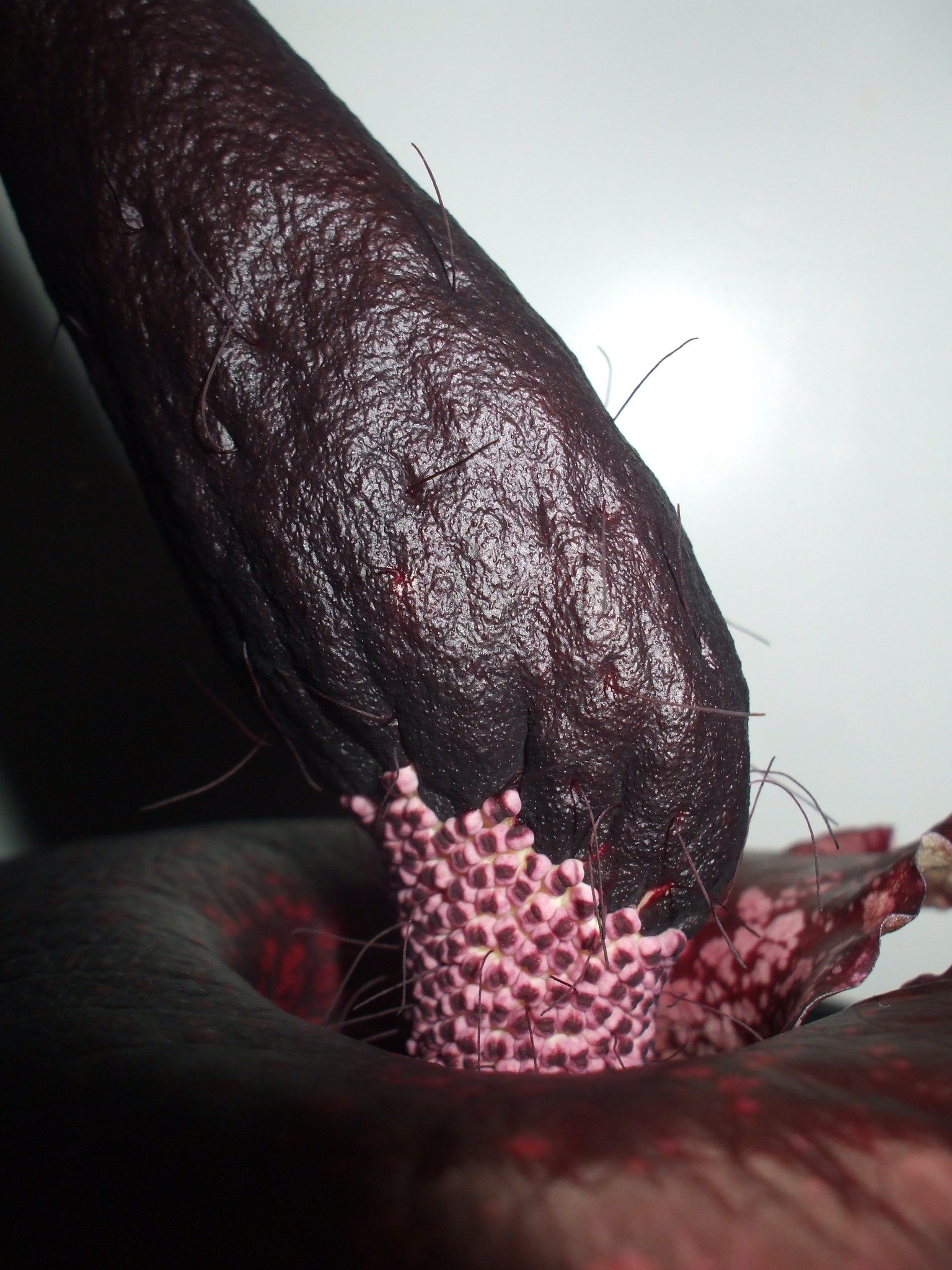
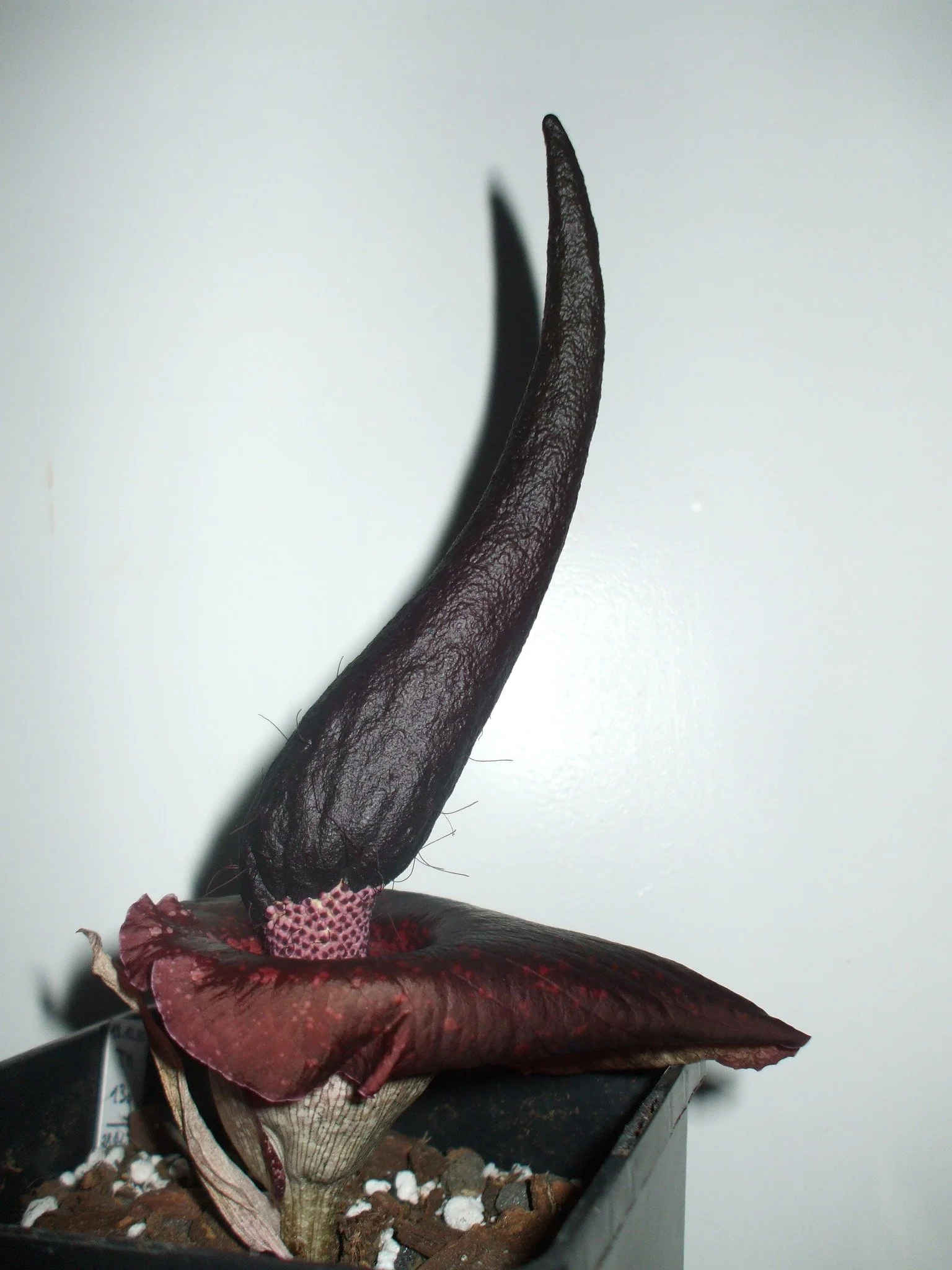
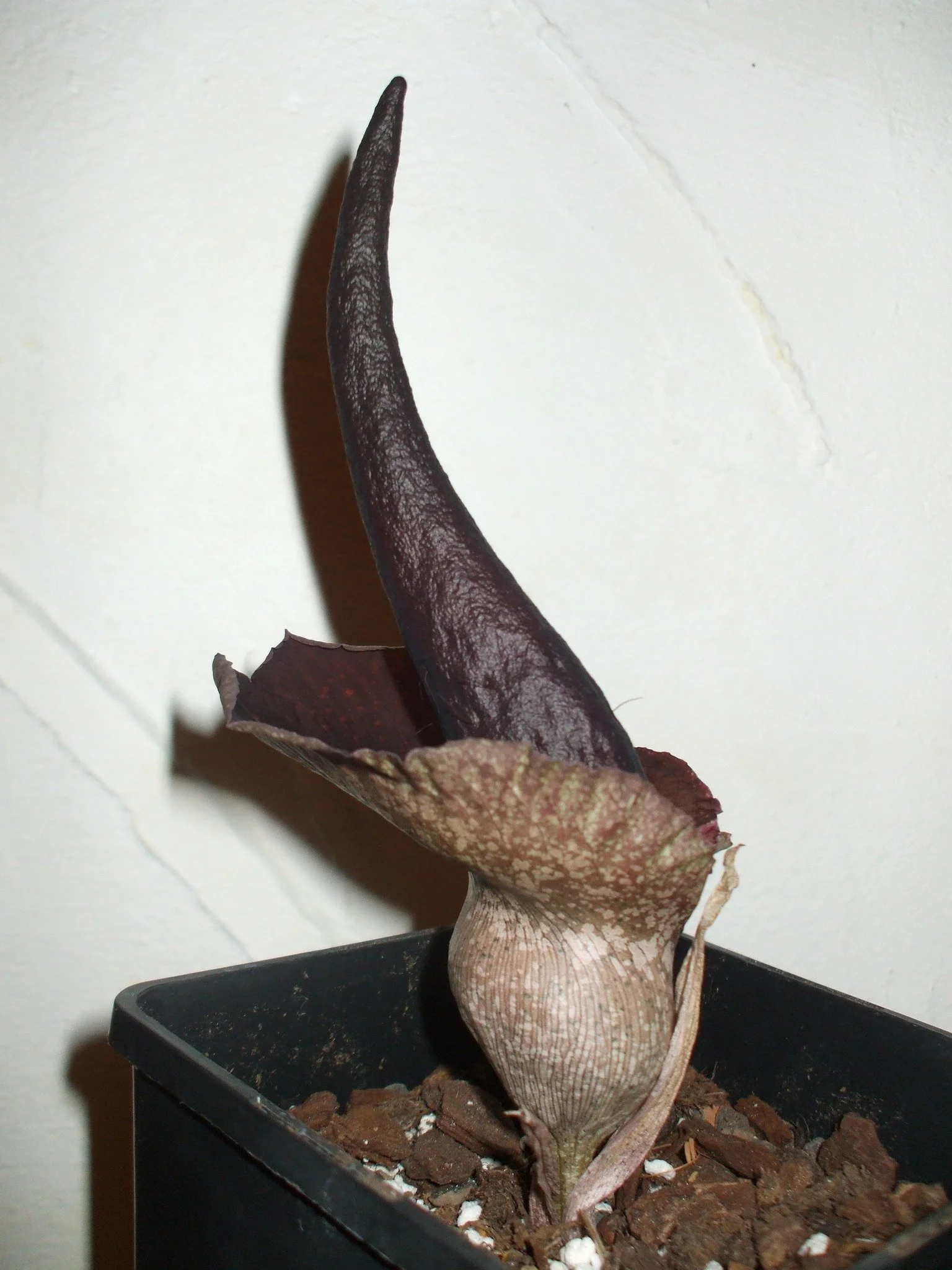
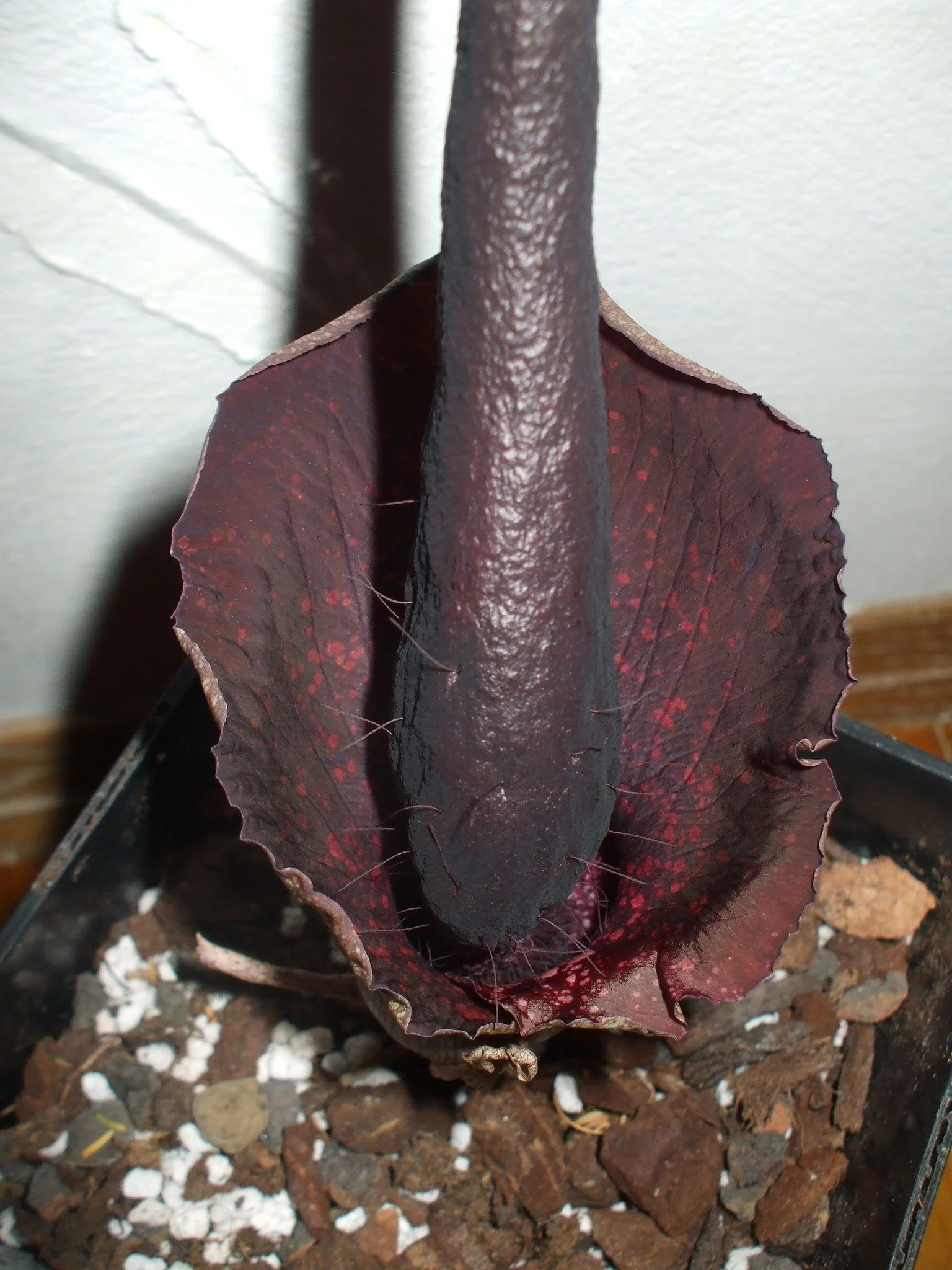
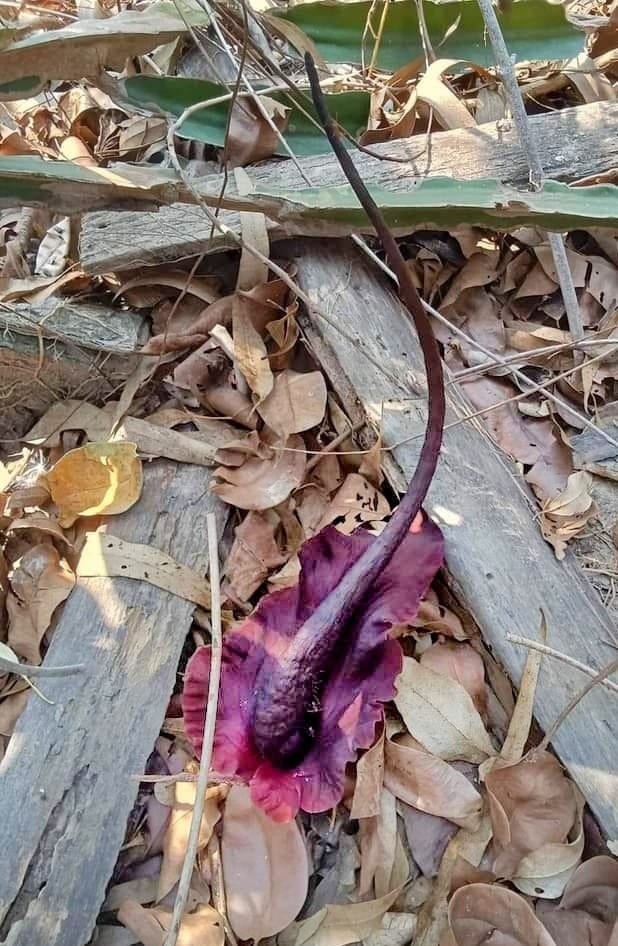
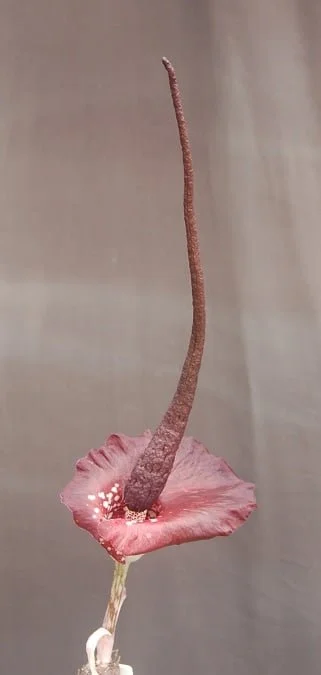
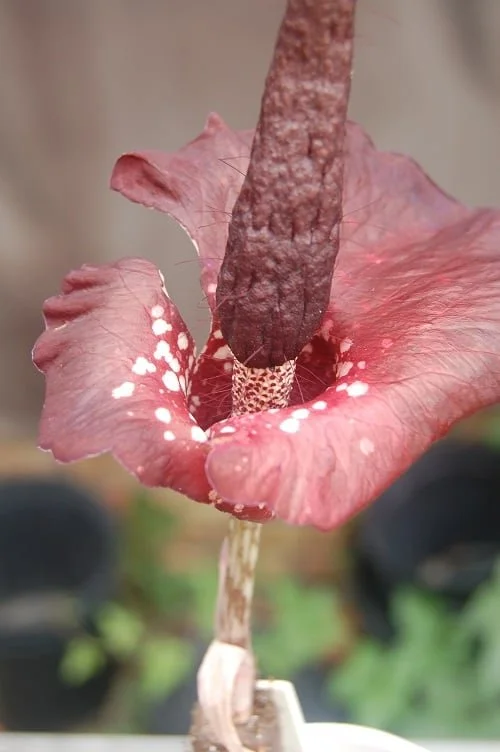
Inflorescence is raised above the ground 2 or 3 cm.; its spathe is twisted below into an inversely ovoid tube 2 to 3 cm. high and as wide or slightly wider and expanded above it into a broadly ovate acuminate blade which clasps the mouth of the tube completely and stands off almost horizontally; it measures 7 to 11 cm. by 5 to 7·5 cm.; for its complicated colouring we refer to the plate. The spike proper is shortly exserted from the spathe-tube and continued into a curved or flexuous dark livid-purple appendage which tapers from a more or less inflated base (1·5 to 3 cm. wide) to a long drawn out point and attains to up to 40 cm. in length, forming an obtuse or almost right angle with the spike proper; the female (lower) and male sections of the spike are 8 to 13 mm. and 20 to 22 mm. long respectively and separated by a very short neuter zone; this and the female section bear numerous purple hair-like processes up to 1 cm. long and spreading horizontally, such processes also occurring sparingly in the male section and on the appendage. The male flowers are reduced to sessile anthers which open by terminal purple-edged pores and are often grouped into clusters of 5 or arranged more or less irregularly. The ovaries are sessile, globose and crowned by a sessile disc-shaped stigma with a dark centric or two excentric dark points.
VARIEGATED FORMS: N/A
ETYMOLOGY: The species epithet cirrifer which translates to “tendril-bearing” or “filament bearing”, is based on the species’ most distinctive feature, the numerous thread-like, hair-like filamentous staminodes scattered throughout the inflorescence.
NOTES:
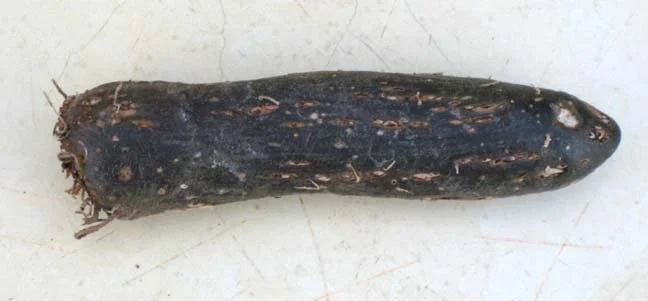
From Curtis’ Botanical Magazine V.137 (1923-1924): “This quaint species was received at Kew from Dr. Kerr of Chiengmay (Chiang Mai), Siam, in 1922 with the note "Bangkok." It flowered first in the middle of April of this year when the drawing reproduced here was made, the inflorescence being succeeded by a solitary leaf. Other tubers of the same consignment have so far produced only leaves except one which flowered at the end of April, the inflorescence being exactly like the first but for its considerably larger size.* Whilst the general appearance of the inflorescence as well as that of the leaf is distinctly of the Amorphophallus-type, the presence of numerous thread-like spreading bodies with bulbous bases between the male and female sections of the spike and, to a lesser extent, within those sections and sparingly also above them is distinctly a feature not observed so far in the genus, unless we accept them as homologous with the hair-like "emergences" of the appendix of Amorphophallus hirtus. Their occasional arrangement in a whorl around the pistil and in clusters in the interval between the male and female sections of the spike, when in arrangement they resemble the clusters of stamens in the male section, demonstrates their staminodial nature although the modification has gone very far indeed. They also occur sparingly towards and on the base of the appendix and even higher up on the latter. This is not surprising if we consider that the inflorescences of the Amorphophallus show, above the female spike, a complete series of transitions from purely male spikes to spikes male in the lower part and barren above, either (1) with the male flowers or their stamens replaced by "emergences"—more or less club-shaped, prismatic or discoid (Pseudohydrosme, Thomsonia, Pseudodraconium)—or (2) with the male flowers altogether suppressed and the barren part transformed into an "appendix" often considerably differentiated from the part which has retained its sexual functions. Engler has also claimed, probably rightly, staminodial character for the loosely scattered hair-like emergences of the appendix and of the neutral interval of the spike of Amorphophallus hirtus, a Formosan species described by Mr. N. E. Brown. However in none of those instances have the emergences been observed to occupy positions which mark them so clearly as staminodes as in Amorphophallus cirrifer, particularly in the female section of the spike. It appears therefore that the female spike of Amorphophallus cirrifer has preserved traces of the hermaphroditism of the more primitive genera of Amorphophallus, whilst the remainder of the spike has experienced as complete a differentiation into a sexual and an asexual part as any Amorphophallus. It may next be asked whether Amorphophallus cirrifer should not with Amorphophallus hirtus be placed in one section or subgenus (Dysamorphophallus, Engl.); but to my mind the facies of the two plants is so different as to suggest evolution on other lines. I consider with Engler the sections Dracontiopsis (West-African), Hydrosme (Tropical African), Cundarum, including Cundaropsis (Indo-Malayan) as natural geographically delimited groups within the genus. To these I would add Synantherias, including Raphiophallus (Deccan and Ceylon). The bulk of the genus, however, corresponding to Engler's section Conophallus, with the monotypic groups Rapyonkos and Interruptiflorus thrown in, requires further scrutiny before we can speak of it as a homogeneous phylum. It is within this section that we may expect a linkage with our plant and with Amorphophallus hirtus.
Amorphophallus cirrifer is grown at Kew along with other amorphophalluses in a warm range with a minimum temperature of 15 to 16° C. (60° F.). The inflorescences remain open about a week whilst the leaves which unfold very slowly last over two months. They emit like those of other species of the genus a somewhat offensive fetid smell.”
CULTIVARS: N/A
HYBRIDS: N/A
REFERENCES:
Additional photos by Rainier Königbauer, Randy Johnson and Nawaphon Sae-Lim