AMORPHOPHALLUS BOYCEANUS
ORIGINAL DESCRIPTION:
Amorphophallus boyceanus Hetterscheid
Amorphophallo variabilis similis, spathanon constrictus.
Typus: HetterscheidH.AM. 515-T (holo L, spirit coll.), Thailand (peninsular), Satun prov., Tale Ban (coll. from a plant cultivated in the Leiden Botanical Garden; orig. coll. M. Sizemore).
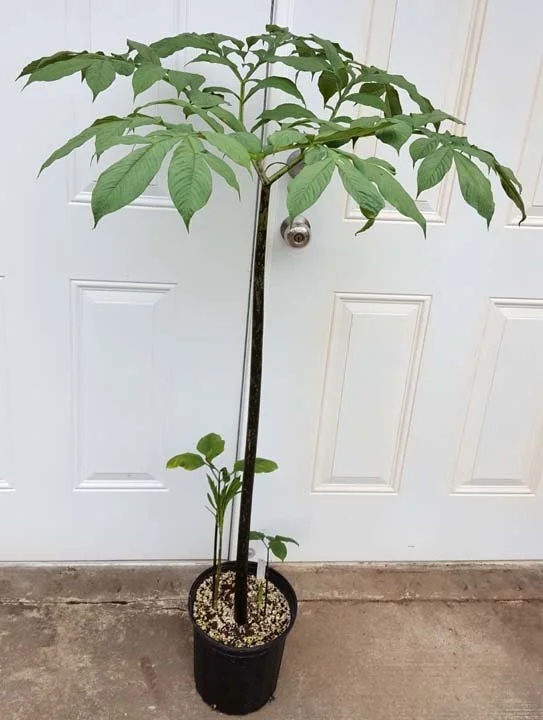
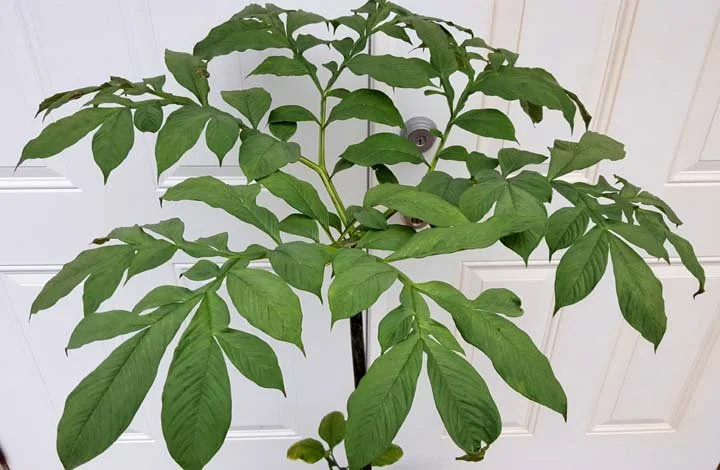
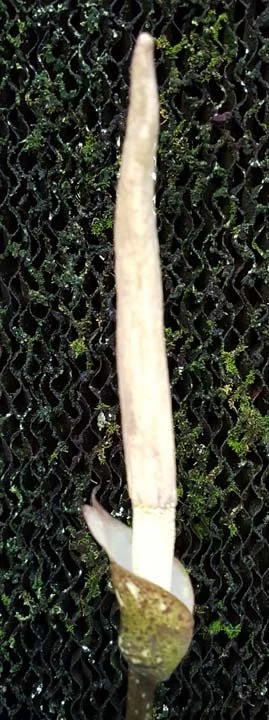
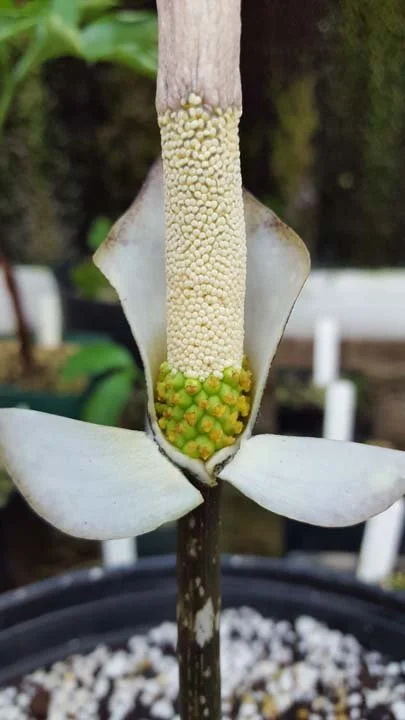
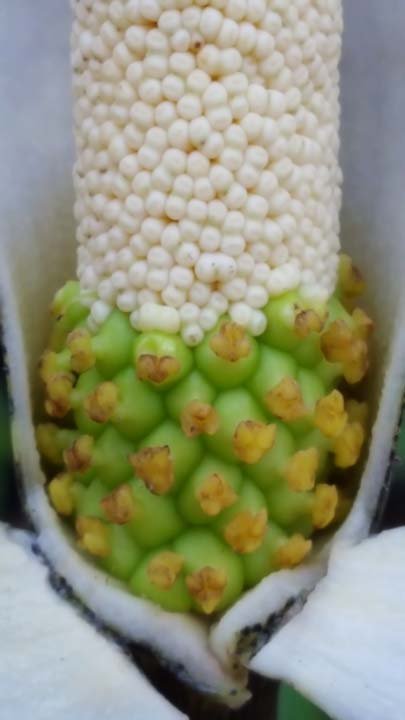
Photo by Alan Galloway
SYNONYMS:
HOMOTYPIC SYNONYMS: N/A
HETEROTYPIC SYNONYMS: N/A
ACCEPTED INFRASPECIFICS: N/A
OTHER: Buk (บุก) - common Thai name for Amorphophallus (Satun).
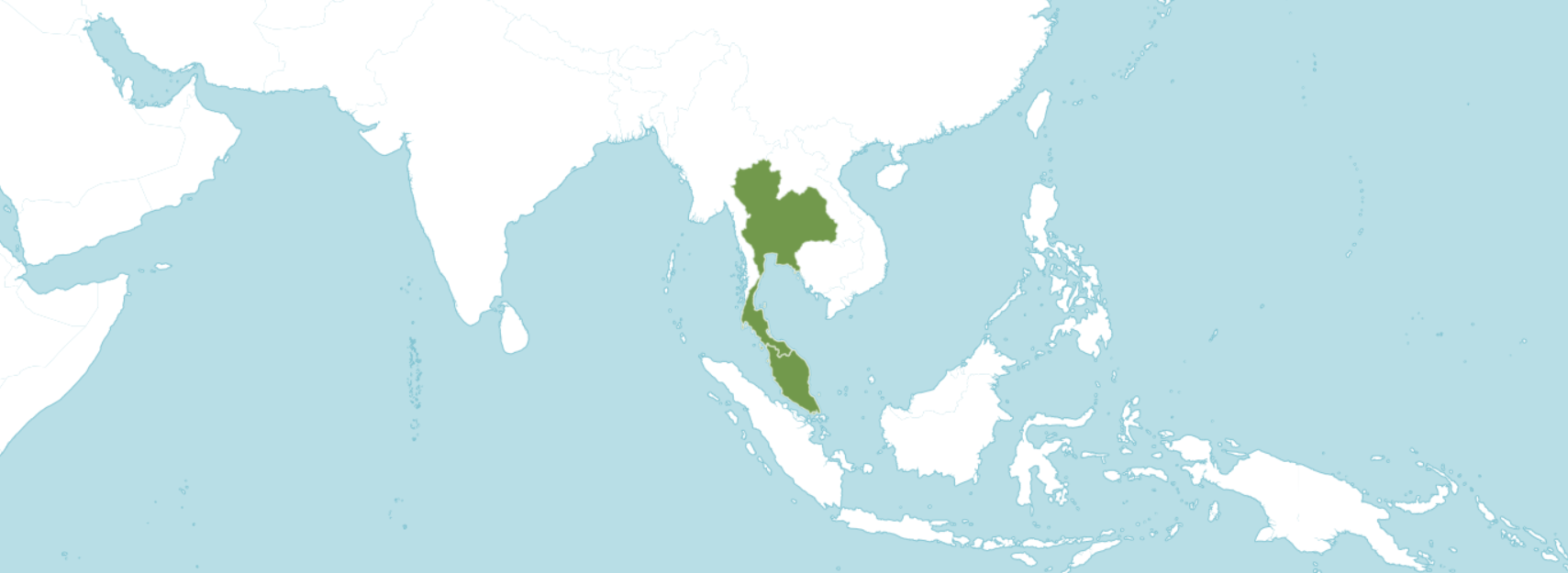
DISTRIBUTION: Thailand & Malaya | Satun
CLIMATE: N/A
ECOLOGY: N/A
SPECIES DESCRIPTION:
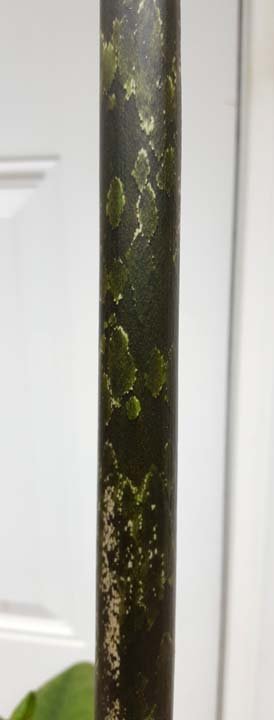
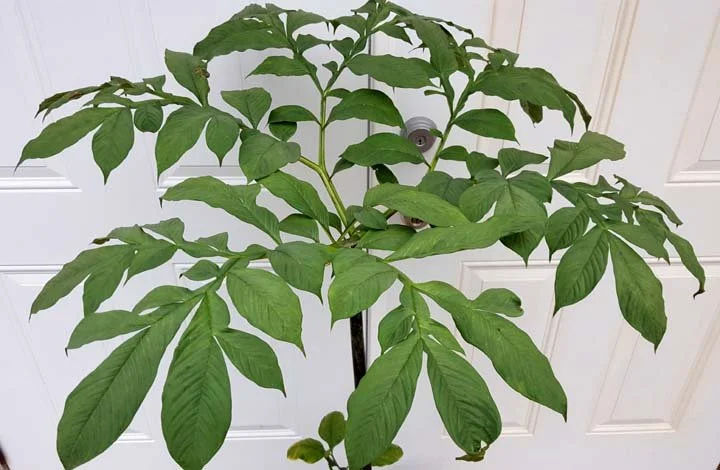
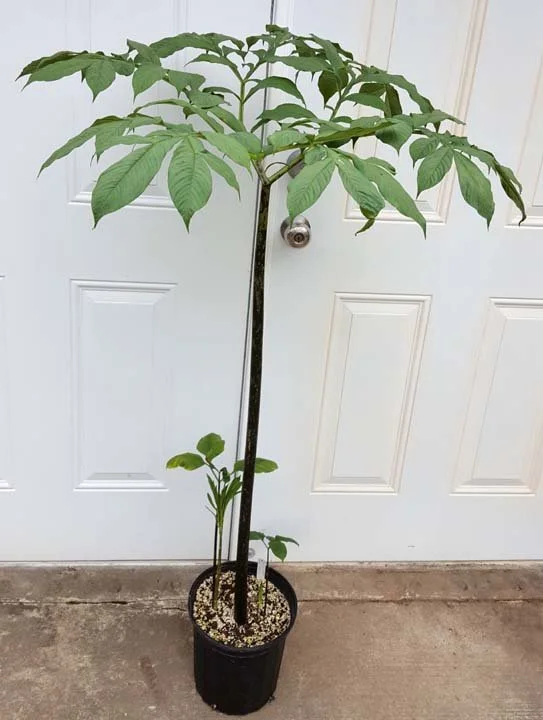
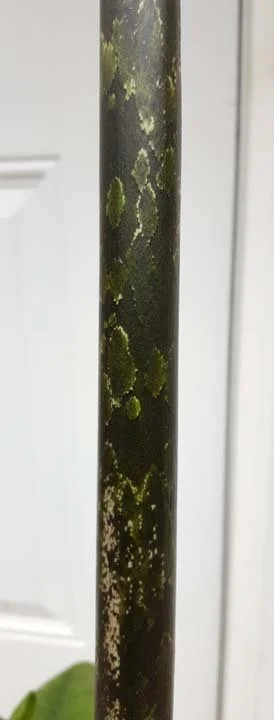
Tuber subglobose, 6 cm diam., 4.5 cm high, white, developing many offsets, these short, thick rhizomatous or with a swollen top, to 2.5 cm long, 1.5 cm diam., often with additional small offsets themselves. Leaves 2 or 3 simultaneous or in succession; petiole smooth, to 50 cm long, 1 cm diam., background dark brown, with many scattered or confluent, elongate elliptic spots, these brown with a whitish margin or entirely dirty whitish, or brownish with a white margin and a white spotted central region; lamina to 70 cm diam., rachises winged in the distal half; leaflets elliptic-lanceolate, to 17 cm long, to 6 cm diam., acuminate, base not or hardly decurrent.
INFLORESCENCE:
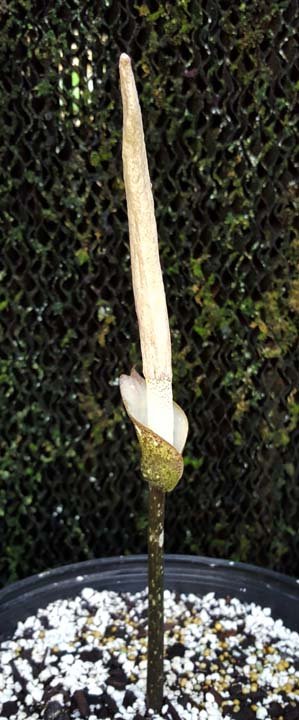
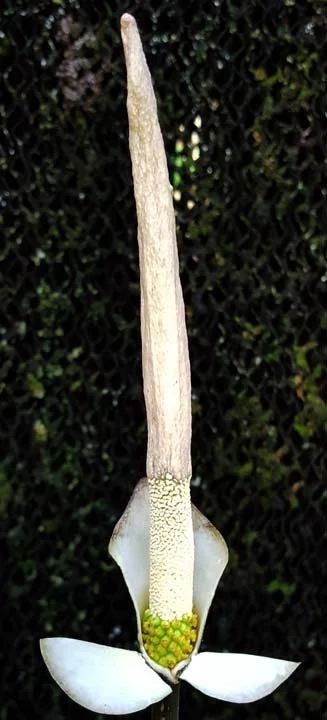
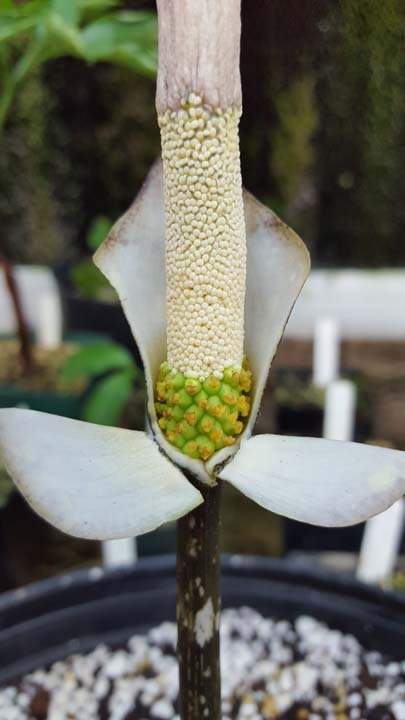
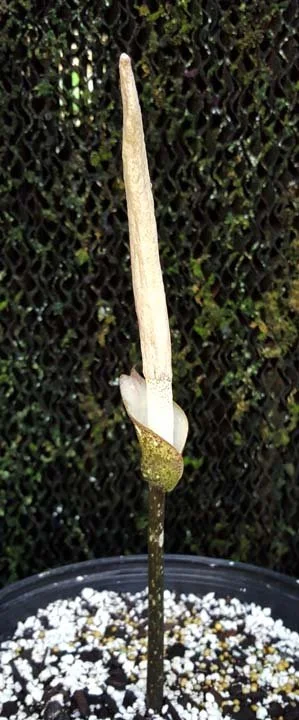
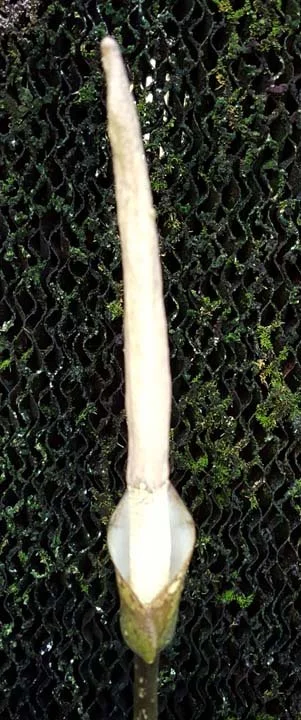
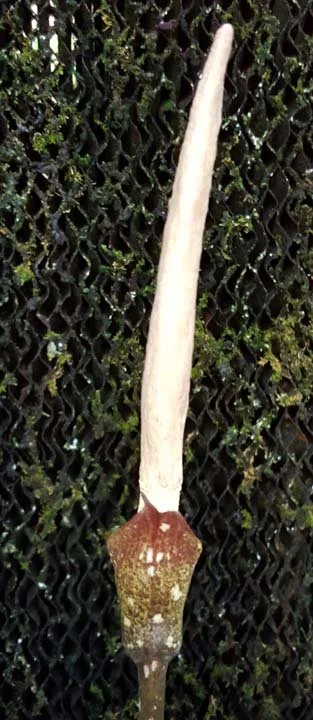
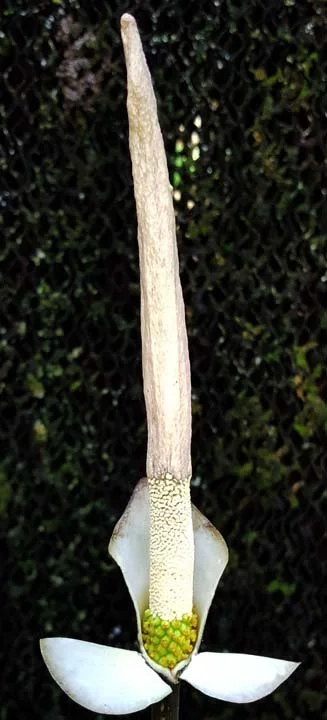
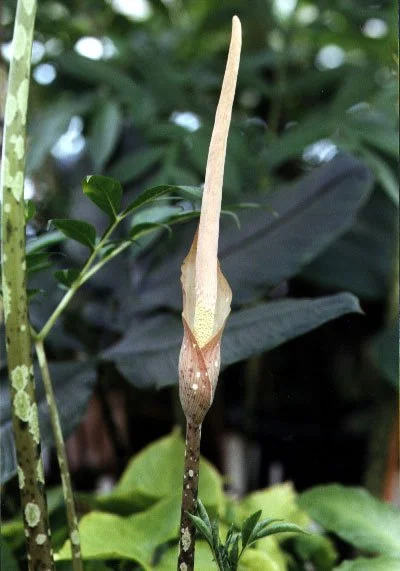
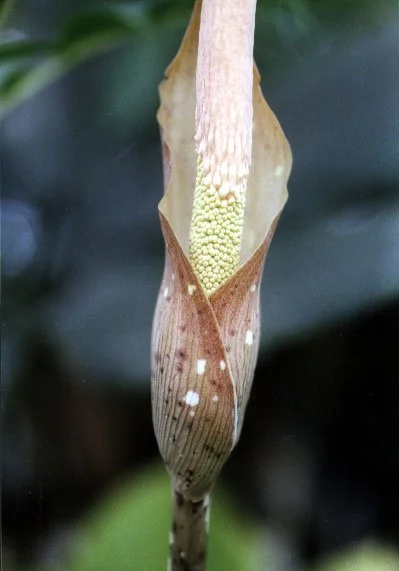
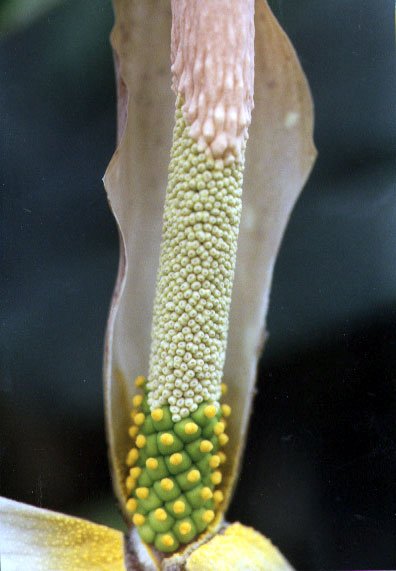
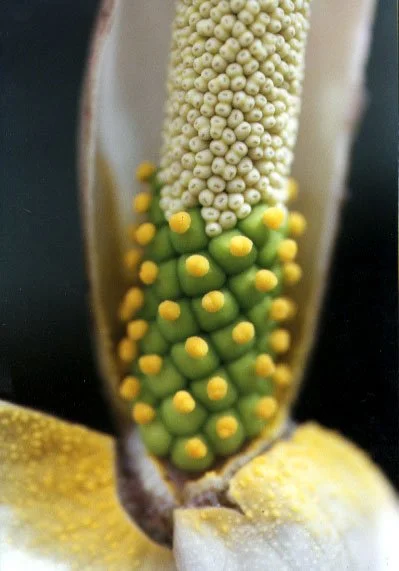
Inflorescence solitary, long peduncled; peduncle 25-30 cm long, 1 cm diam., as petiole; spathe elongate triangular, 11-12 cm long, 5-6 cm diam., acute, a very shallow constriction on the dorsal side, base convolute, outside background pale green or dirty greyish green, with scattered or nearly entirely covered by dark to mid-brown spots, often confluent, large and tiny, in between with or without a few scattered irregular pale green spots, inside whitish with a green flush, near the top with tiny purplish dots and a few veins purplish, base pale yellow or dark orangish yellow, with numerous shallow verrucae, especially on the dorsal side. Spadix sessile, longer than spathe, 20-28 cm long; female zone cylindric, 1.5-2.5 cm long, 1.2—1.3 cm diam., flowers congested; male zone cylindric, 3.5-5 cm long, 0.9-1.2 cm diam., terete or slightly laterally compressed, flowers congested; appendix 14-20 cm long, to 1.3 cm diam., elongate conic, narrow, terete or laterally compressed, base or lower half with short, shallow ridges, sometimes accompanied by shallow conical staminodes, upper halfsmooth, apex subacute, surface dirty pale yellowish brown or dirty creamish. Ovaries depressed, prismatic, 4 mm diam., 2 mm high, bright green, bilocular; style short or very short, curved upwards or nearly straight, 0.3-1 mm long, 0.8 mm diam., bright green; stigma slightly depressed, 2 mm diam., 1.5 mm high, shallowly bi- or trilobed, lobes slightly hemispheric, obtuse, surface yellowish, verruculate. Maleflowers consisting of 3 or 4 stamens; stamens c. 2 mm long, filaments c. 0.8 mm long, fused only at the base, offwhite; anthers c. 1.2 mm long, c. 1 by 2 mm diam., rectangular, off-white; pores apical, elongate, connective flat or sunken, dirty greyish green turning creamish; pollen striate (muri rather coarse and irregular), ellipsoidal (length/breadth 1.36), 50 pm long.
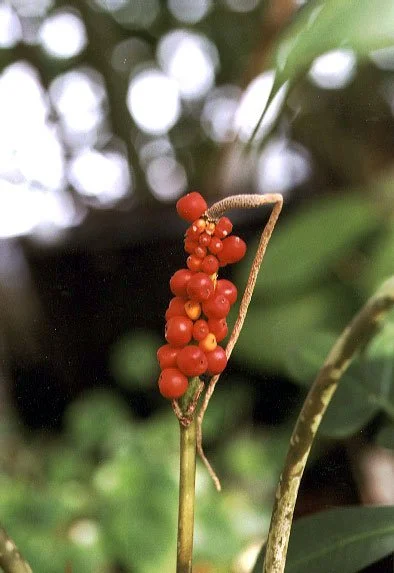
Fruiting part of infructescence 7 cm long, 2 cm diam., cylindric; berries subglobose, 0.8 cm long, 0.8-1 cm diam., bright red, 1- or 2-seeded; seeds subhemispheric, to 0.8 mm diam., and 0.6 mm thick, greyish black, with whitish dots, raphe short, irregular.
VARIEGATED FORMS: N/A
ETYMOLOGY: The species is named in honor of Aroid botanist, Peter Boyce, a good friend and colleague of Wilbert Hetterscheid, who collected valuable information on Amorphophallus during his many expeditions in SE Asia.
NOTES: Amorphophallus boyceanus resembles most closely Amorphophallus elegans Ridl. (West Malaysia, Peninsular Thailand), but the latter has a much shorter and straight style and the spathe is broadly triangular, the petiole and peduncle are verruculate. The Javan Amorphophallus variabilis Blume is also very similar but has a distinctly narrowed base of the spathe limb and many more and smaller annual offsets and the appendix usually being three times or more the length of the fertile part of the spadix.
CULTIVARS: N/A
HYBRIDS: N/A
REFERENCES:
Additional photos by Wilbert Hetterscheid