AMORPHOPHALLUS BRACHYPHYLLUS
ORIGINAL DESCRIPTION:
Amorphophallus brachyphyllus Hetterscheid
Amorphophalloeburneo persimilis, petioli longitudine dimidio vel minore, foliolis centralibus petiolatis, cataphyllis semper eburneis, stigmatis longitudine dimidio differt.
Typus: Hetterscheid H.AM.032C-T (holo L, spirit coll.), Malaysia, Sarawak, 1st Div., Bau distr., exact loc. unknown (coll. from a plant cultivated in the Leiden Botanical Garden; orig. coll. P. Kefiler EVK 246)
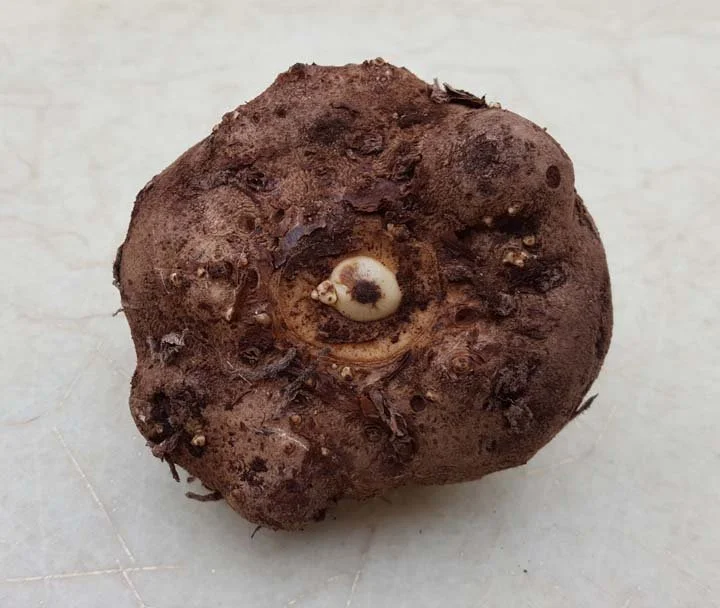
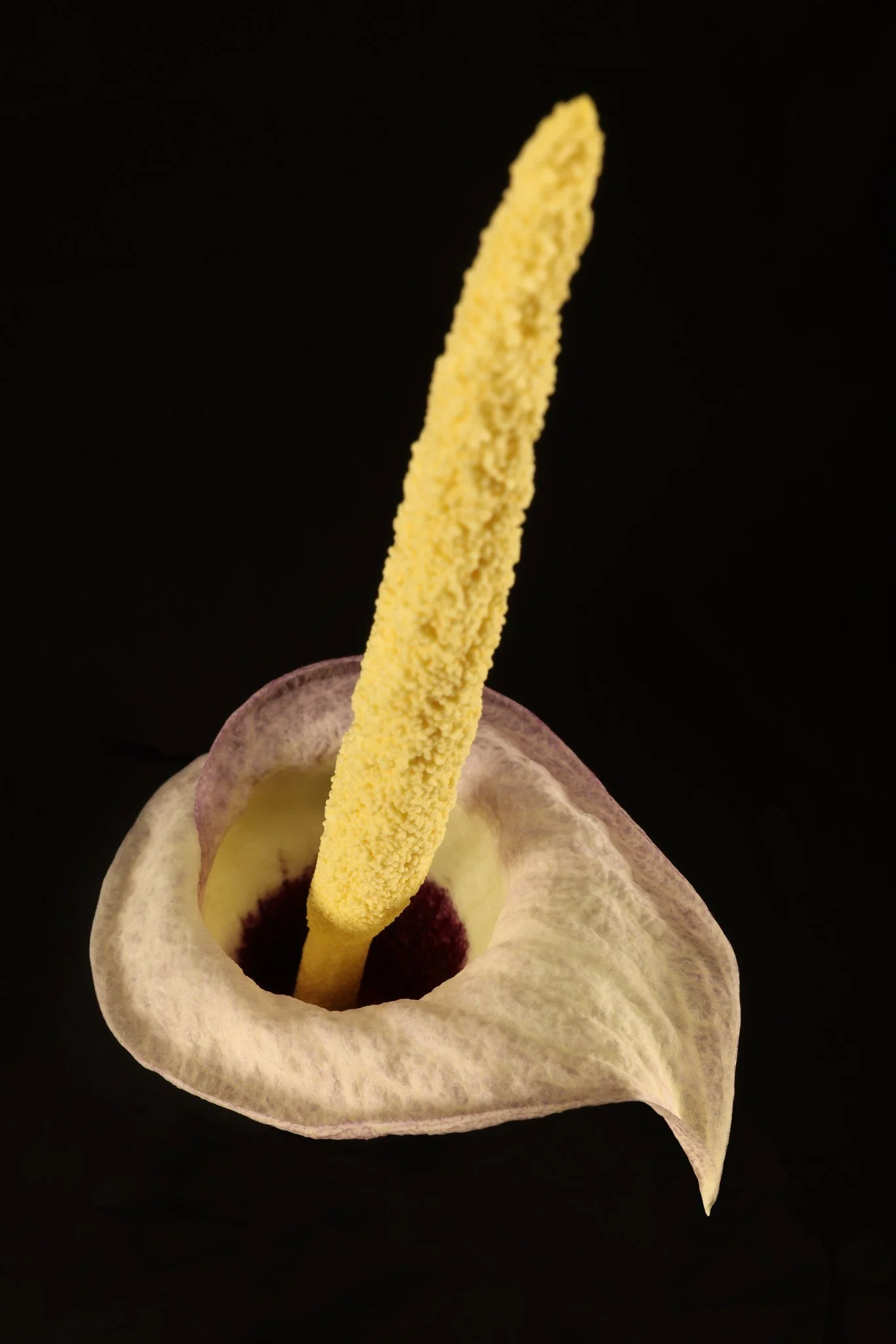
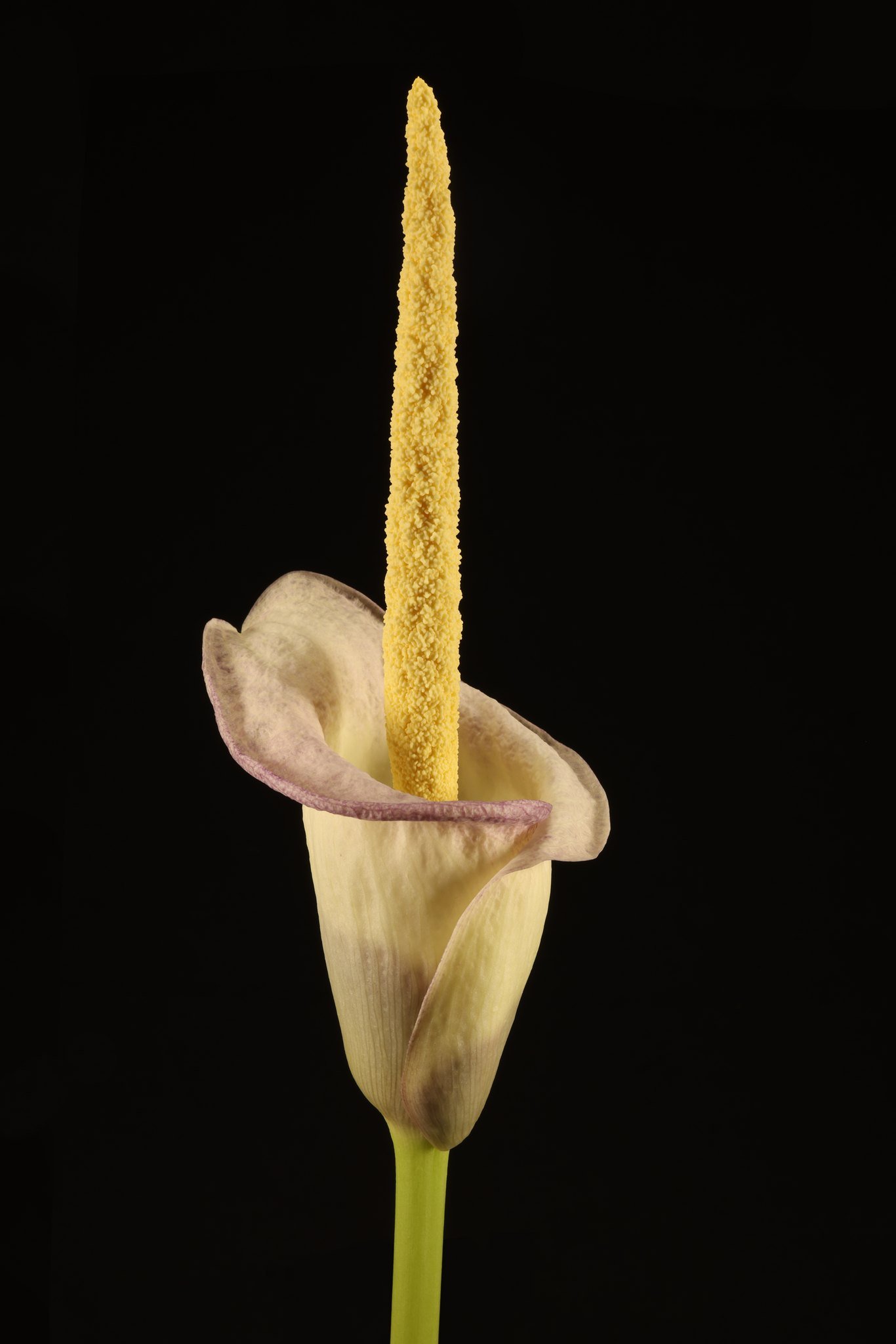
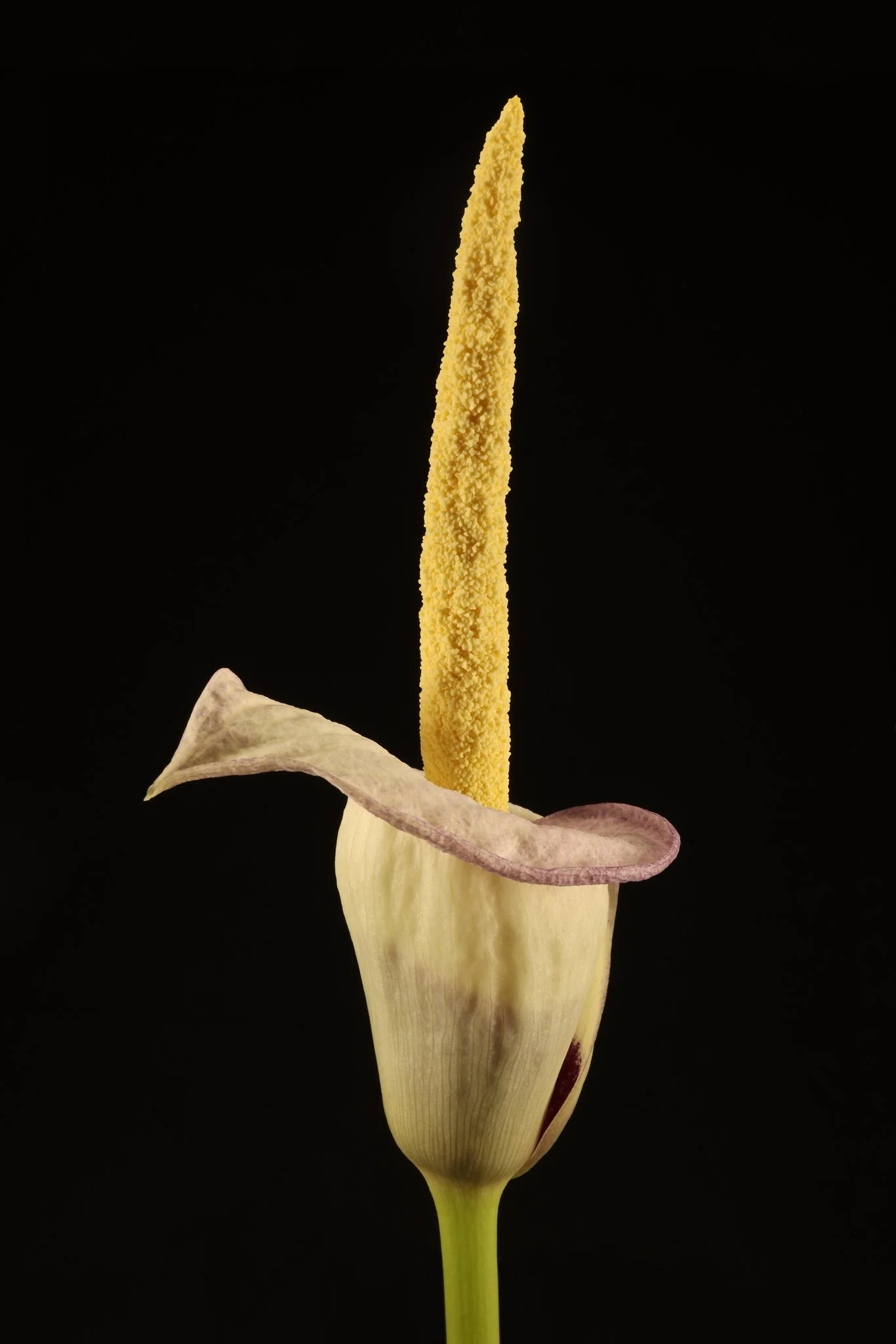
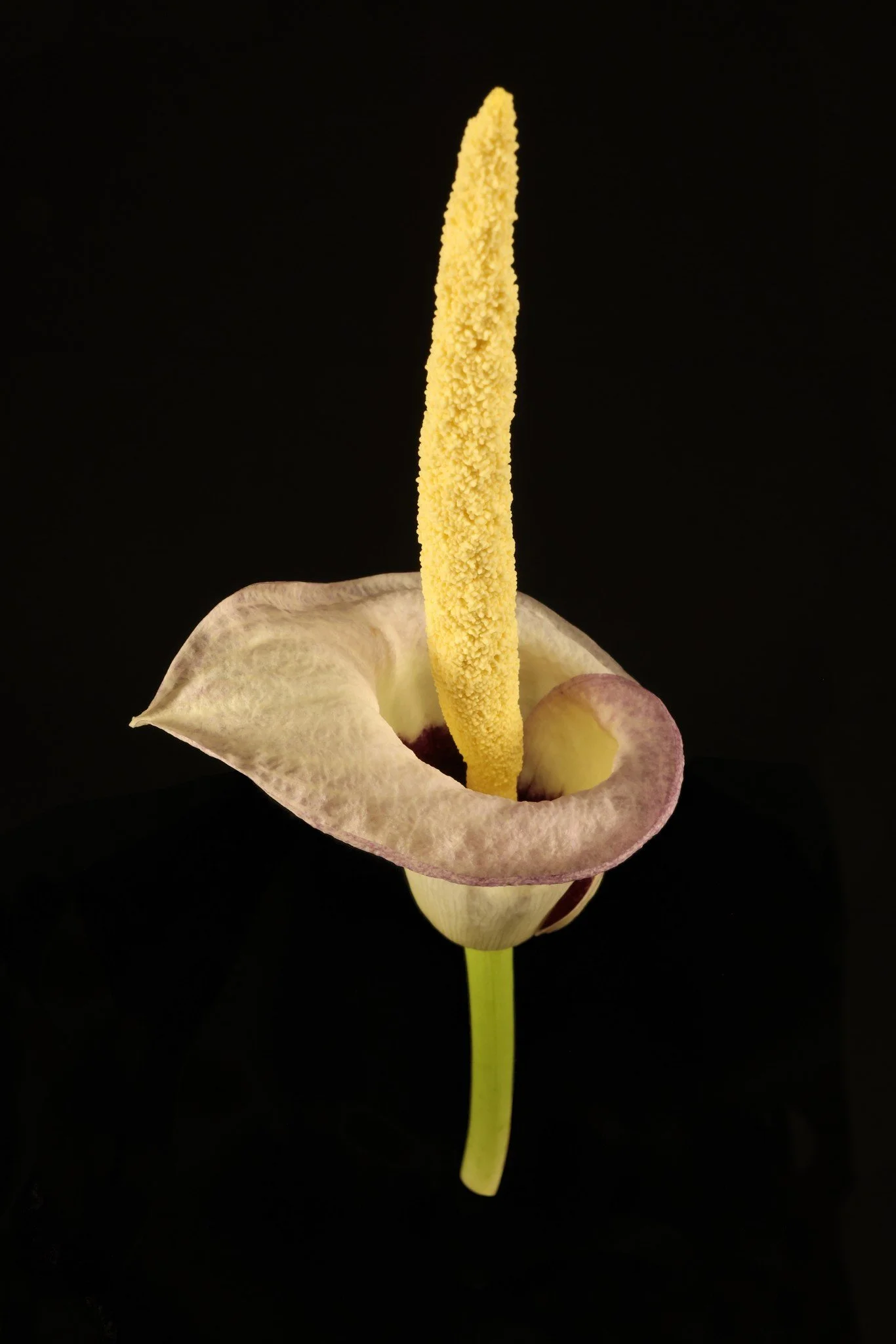
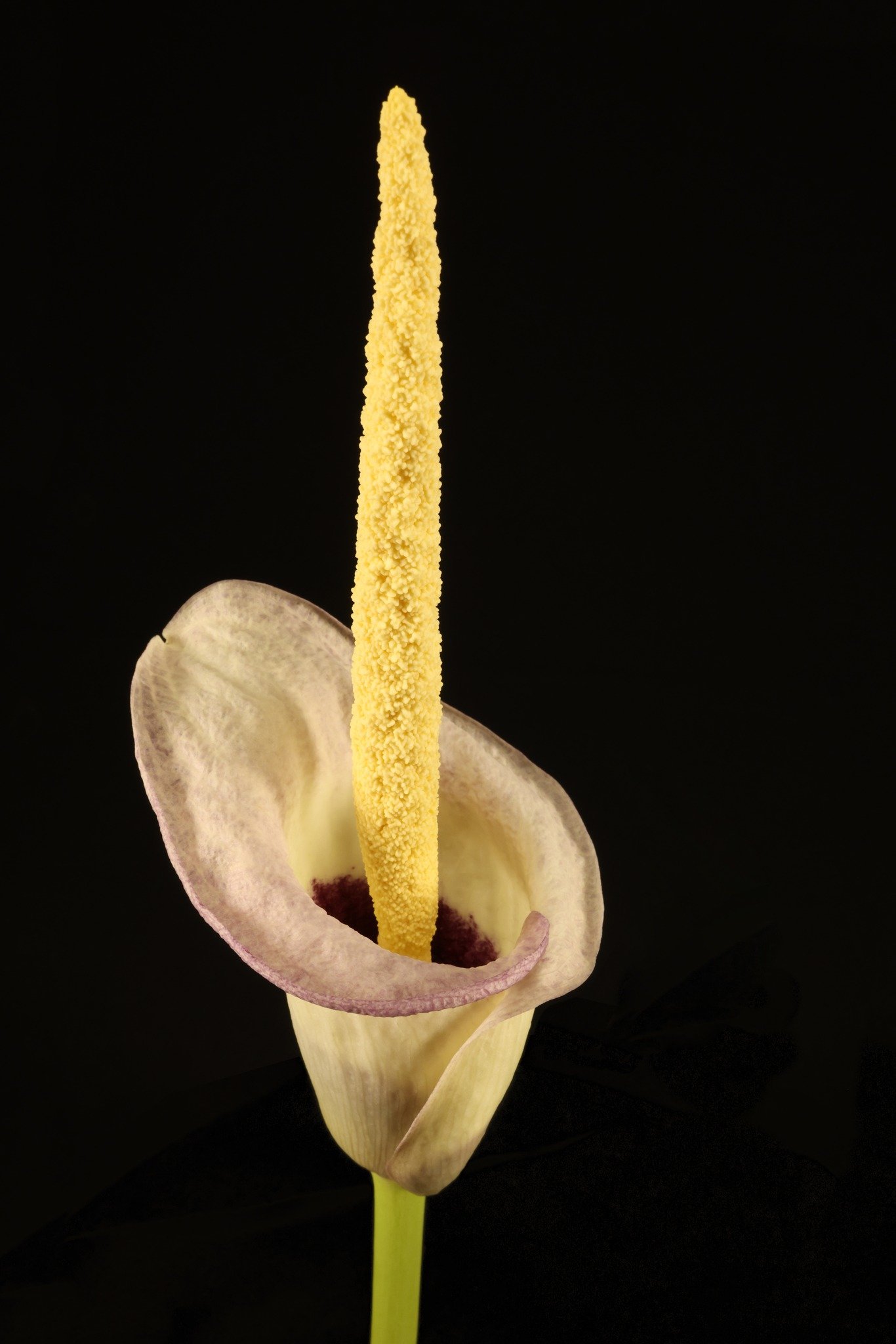
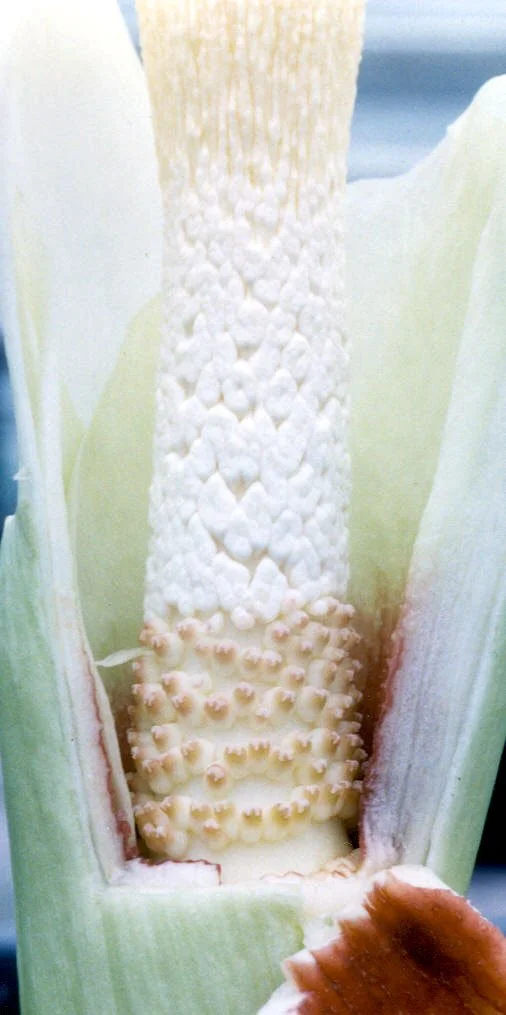
Photo by Alan Galloway
SYNONYMS:
HOMOTYPIC SYNONYMS: N/A
HETEROTYPIC SYNONYMS: N/A
ACCEPTED INFRASPECIFICS: N/A
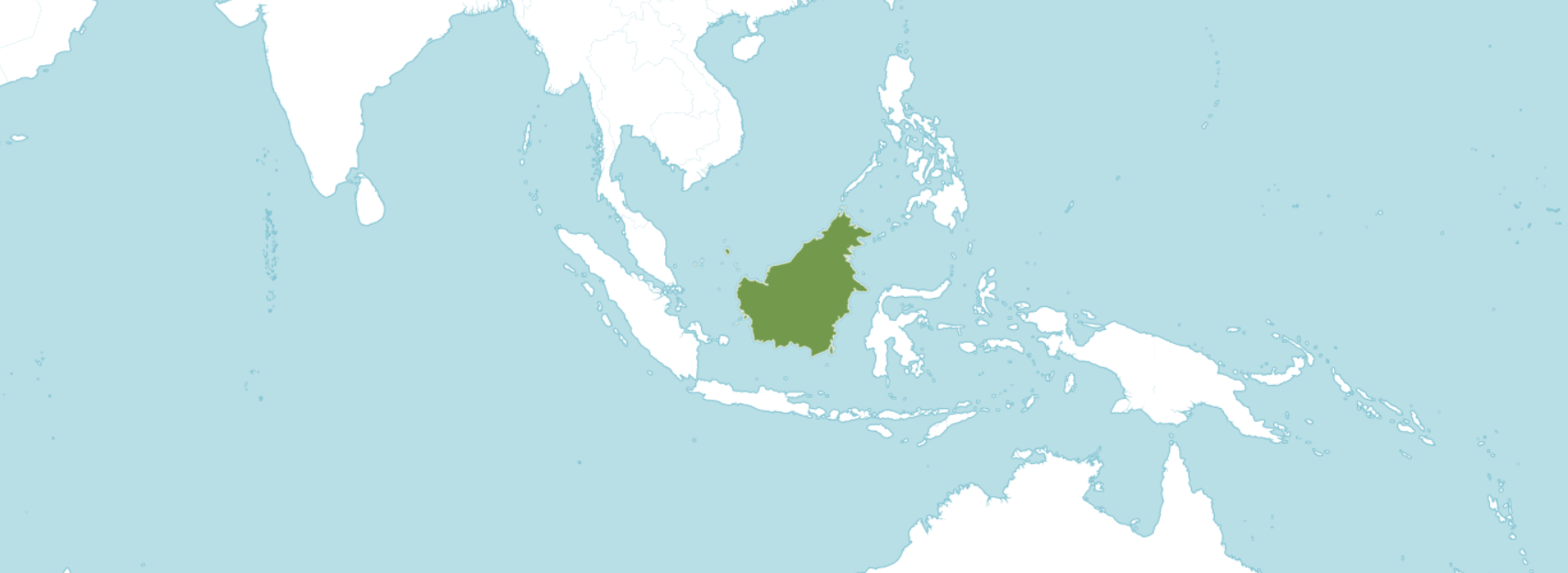
DISTRIBUTION: Malaysia | Borneo | Sarawak
CLIMATE: N/A
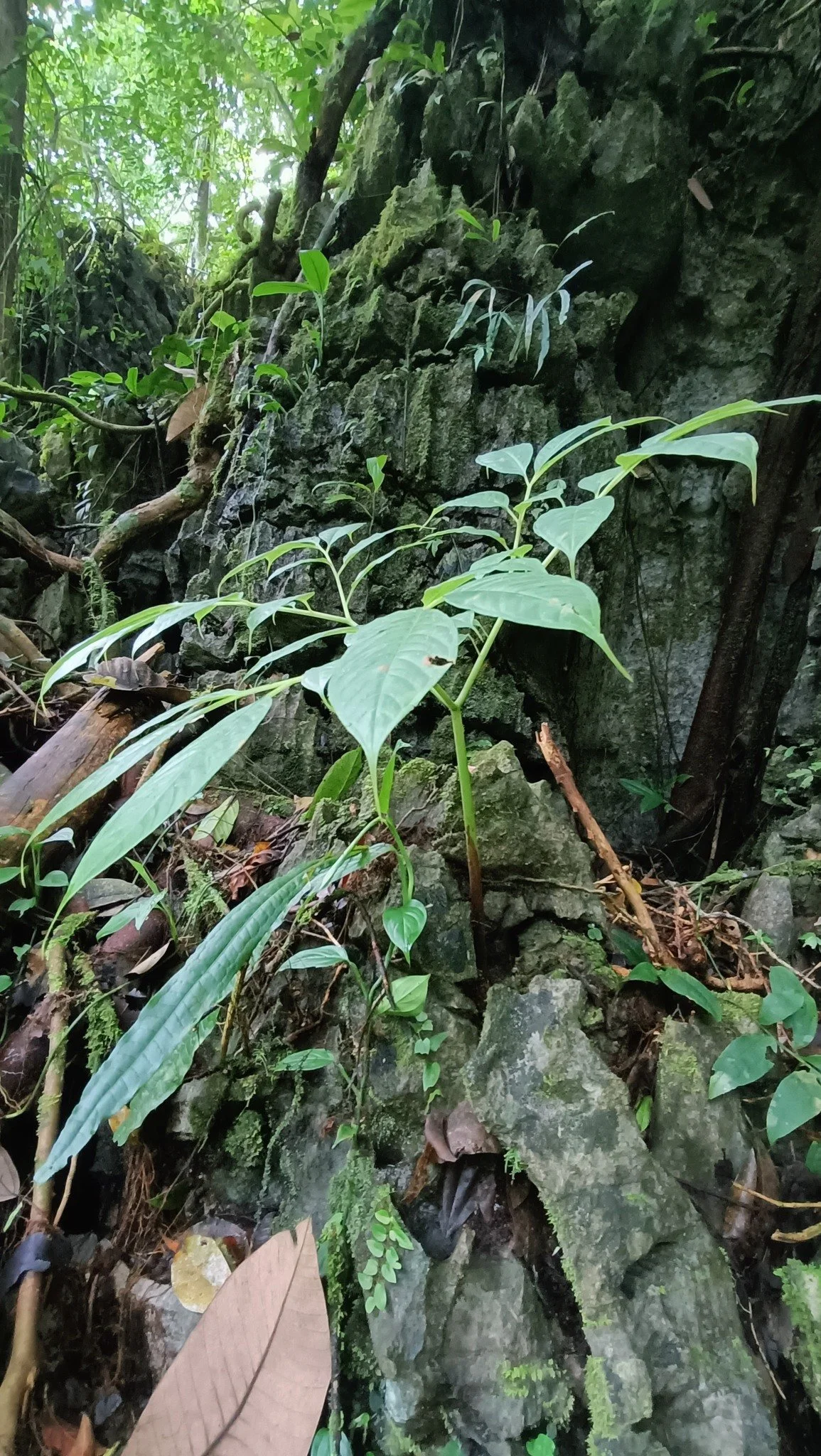
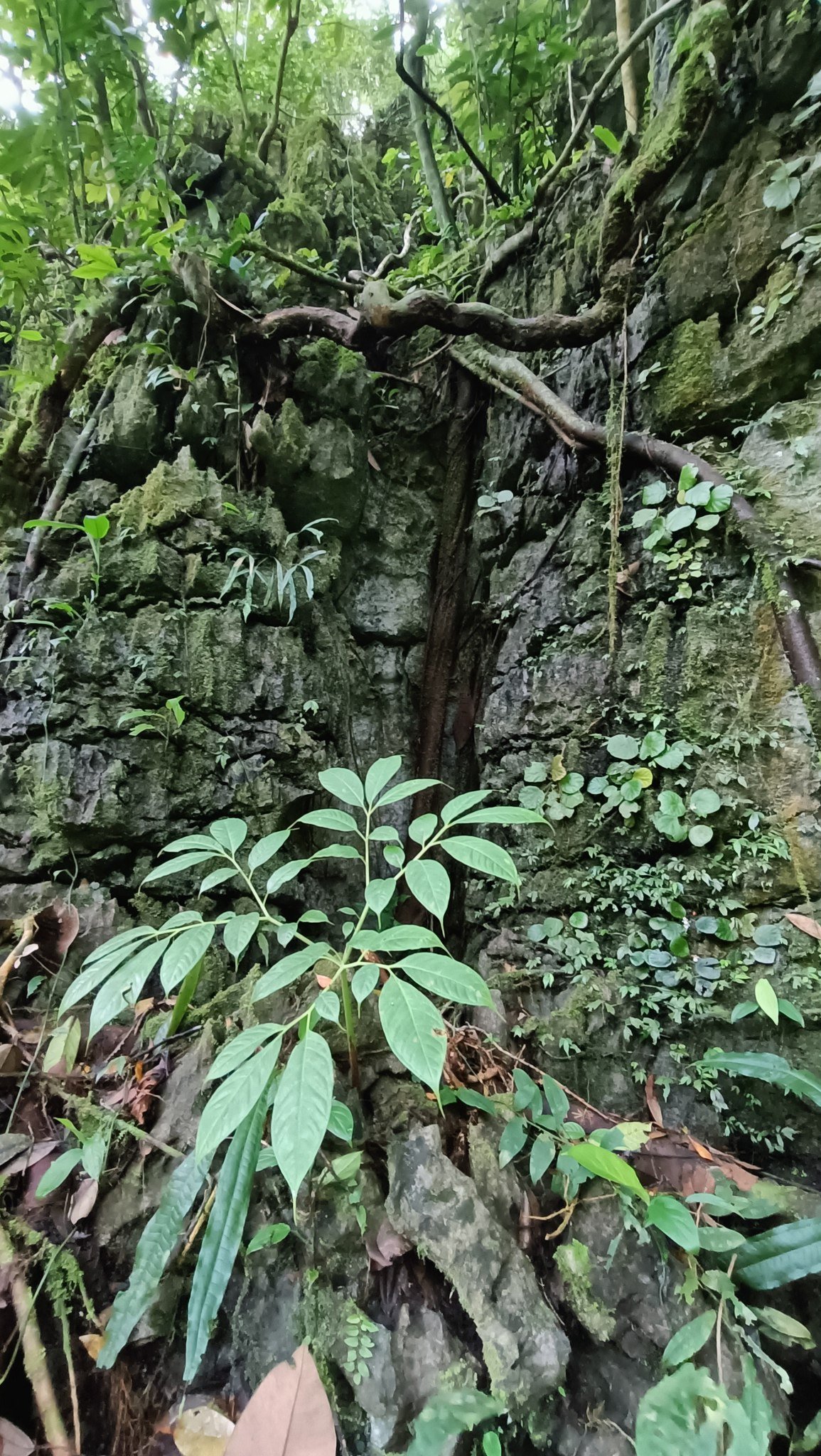
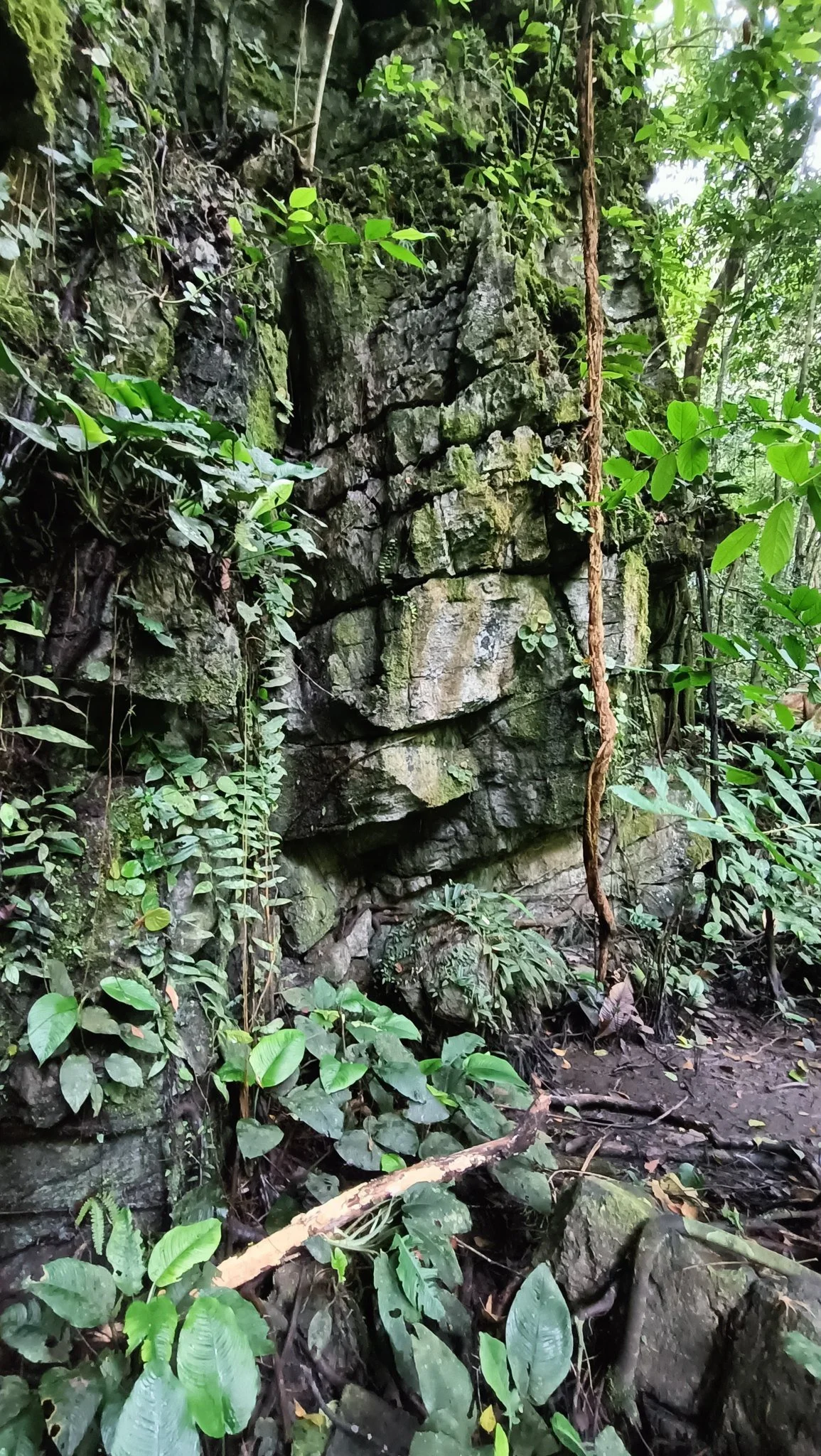
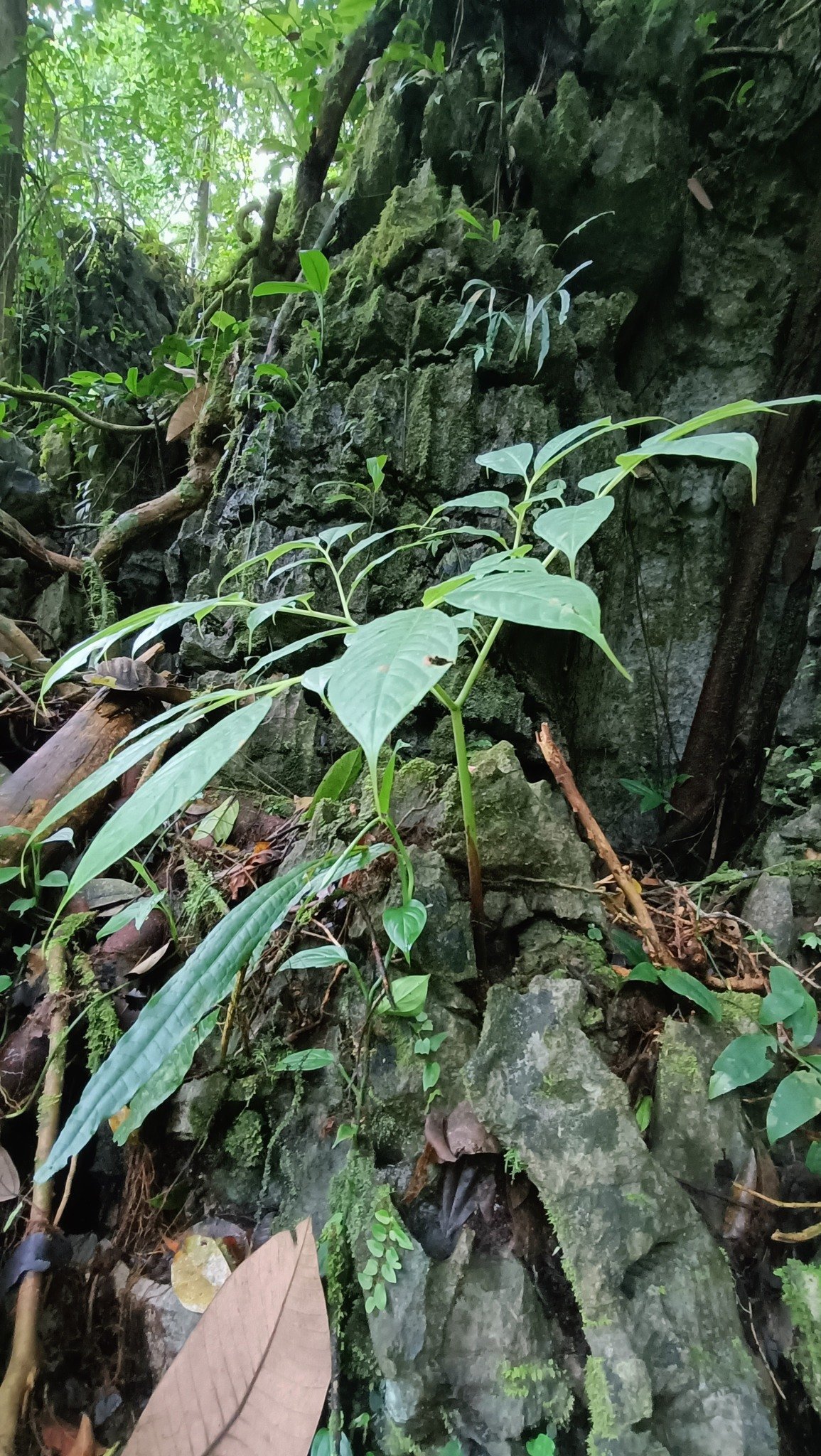
ECOLOGY: On rocky limestone slopes, in humus layer or clay.
SPECIES DESCRIPTION:
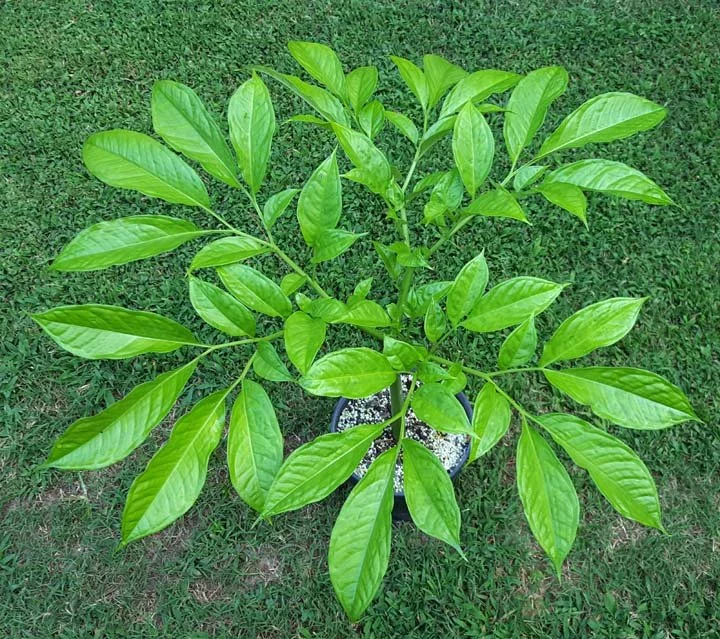
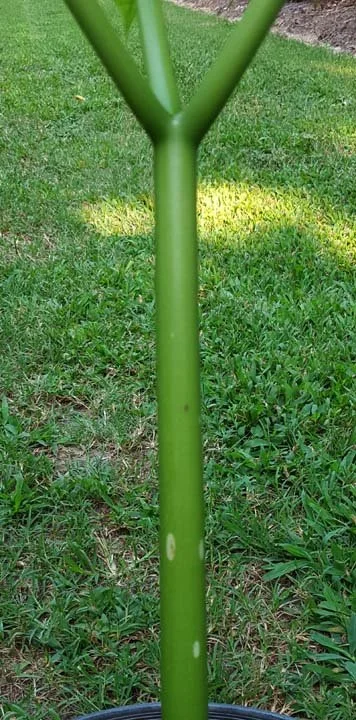
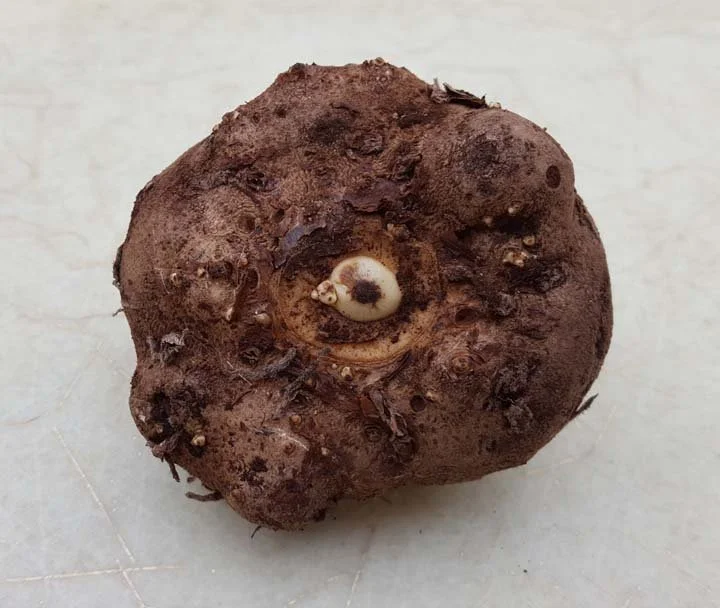
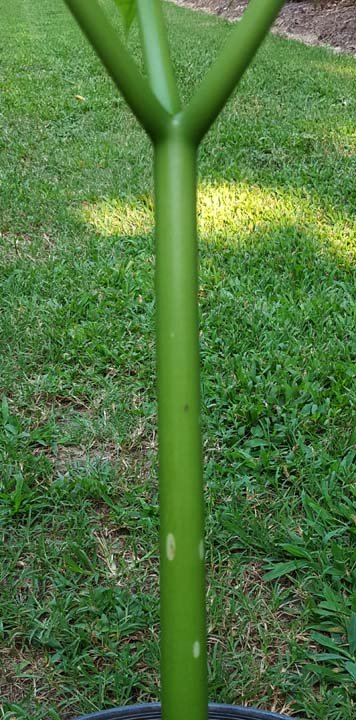
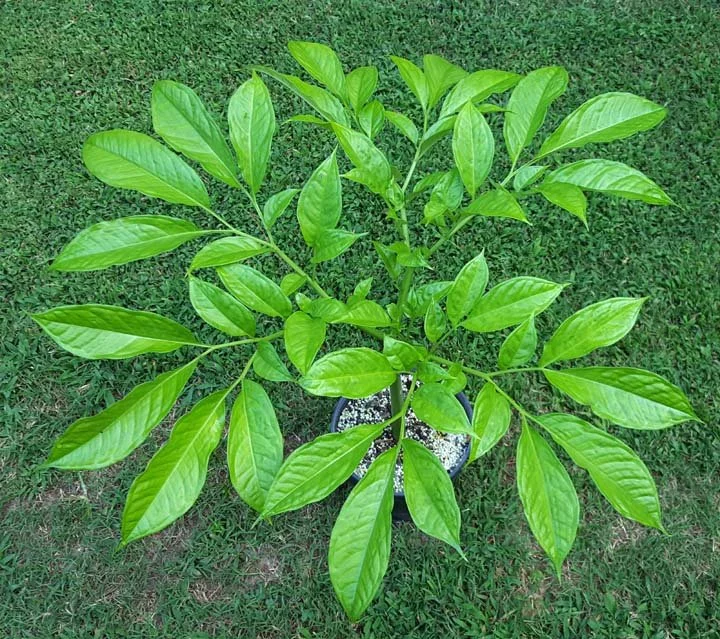
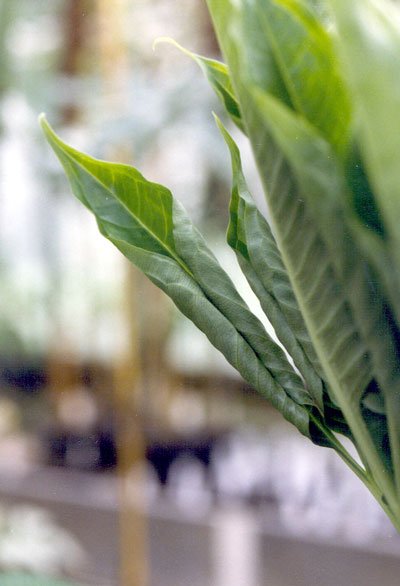
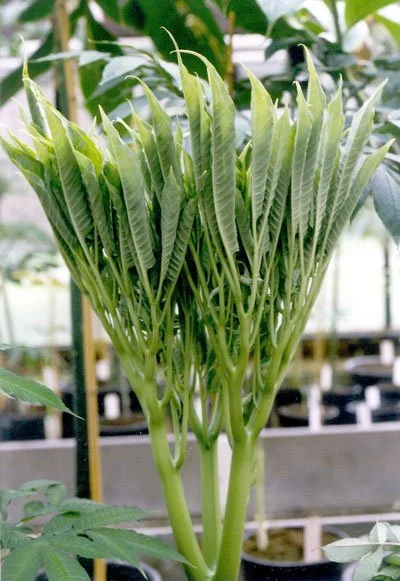
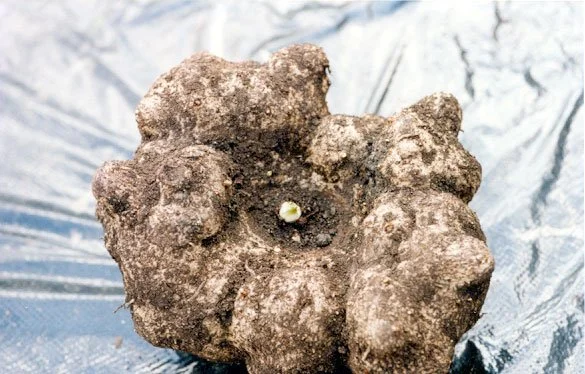
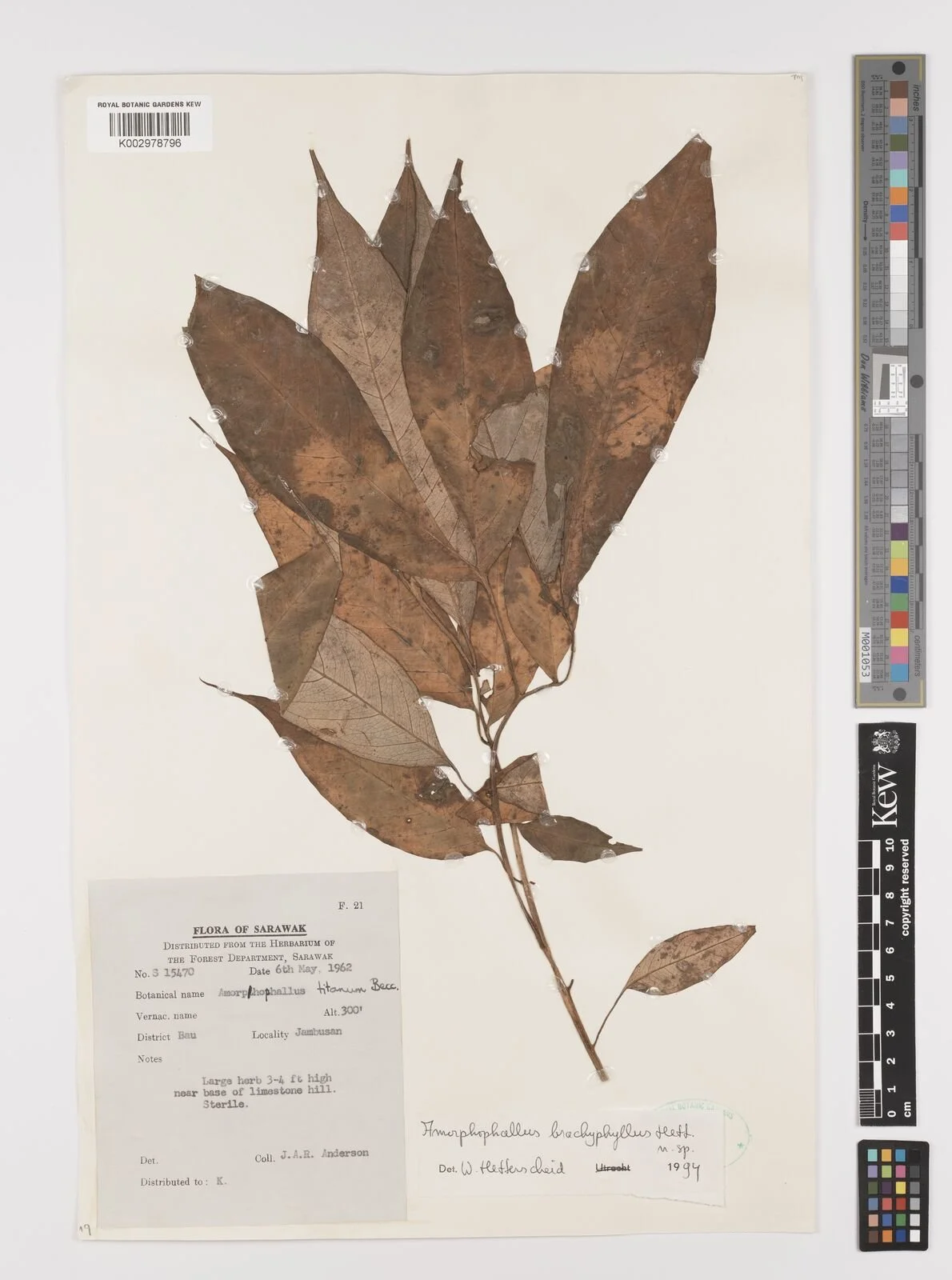
Tuber depressed globose, with irregular raised areas, to 32 cm diam., to 15 cm high, surface with a grey, corky layer. Petiole short, to 50 cm long, to 5 cm diam., uniformly green, very turgid; lamina to 188 cm diam., highly dissected, rachises naked; leaflets elliptic-lanceolate, to 35 cm long, to 11 cm wide, those on the most proximal parts of the rachises petiolulate, upper surface mid-green, slightly glossy or dull, texture slightly coriaceous.
INFLORESCENCE:
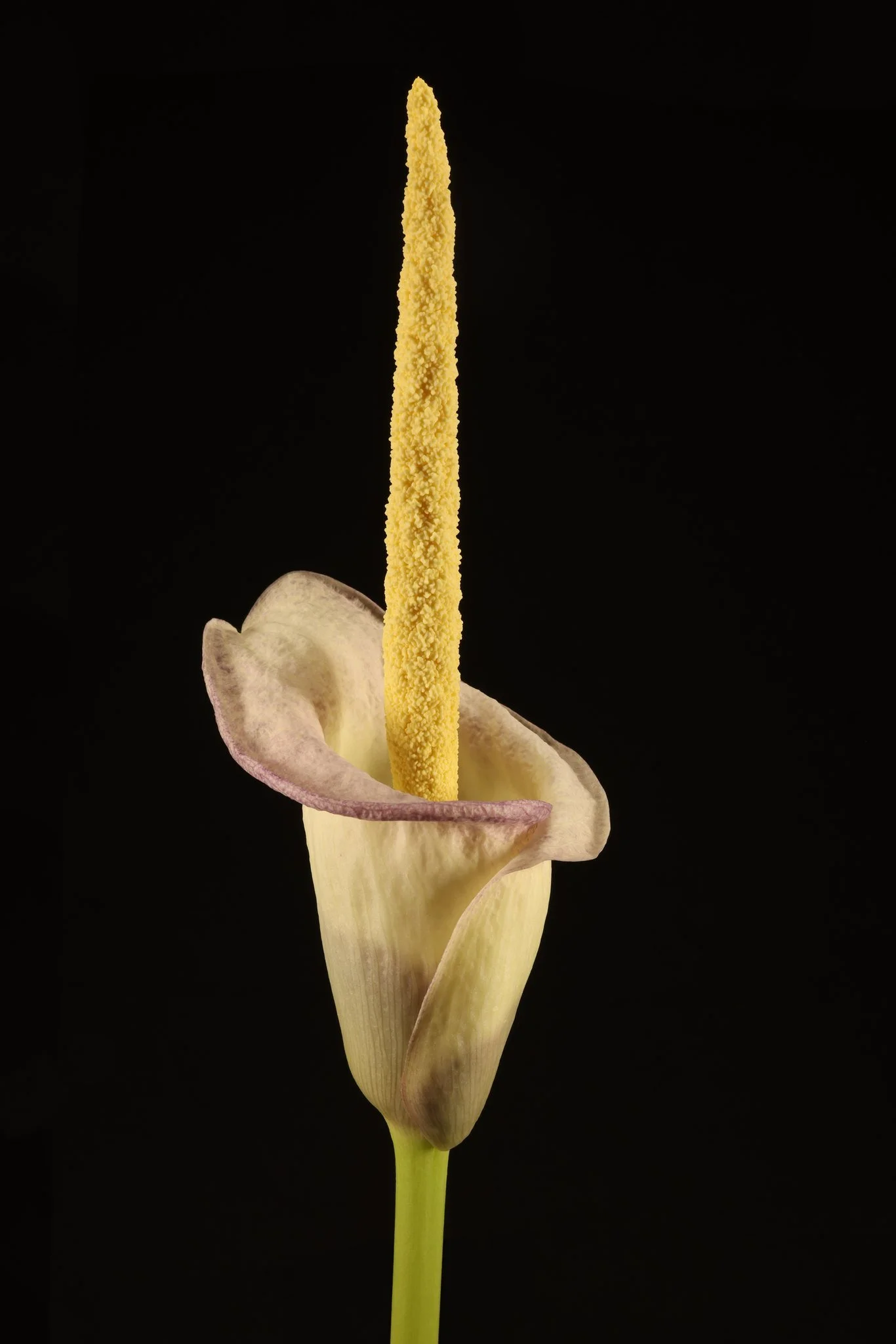
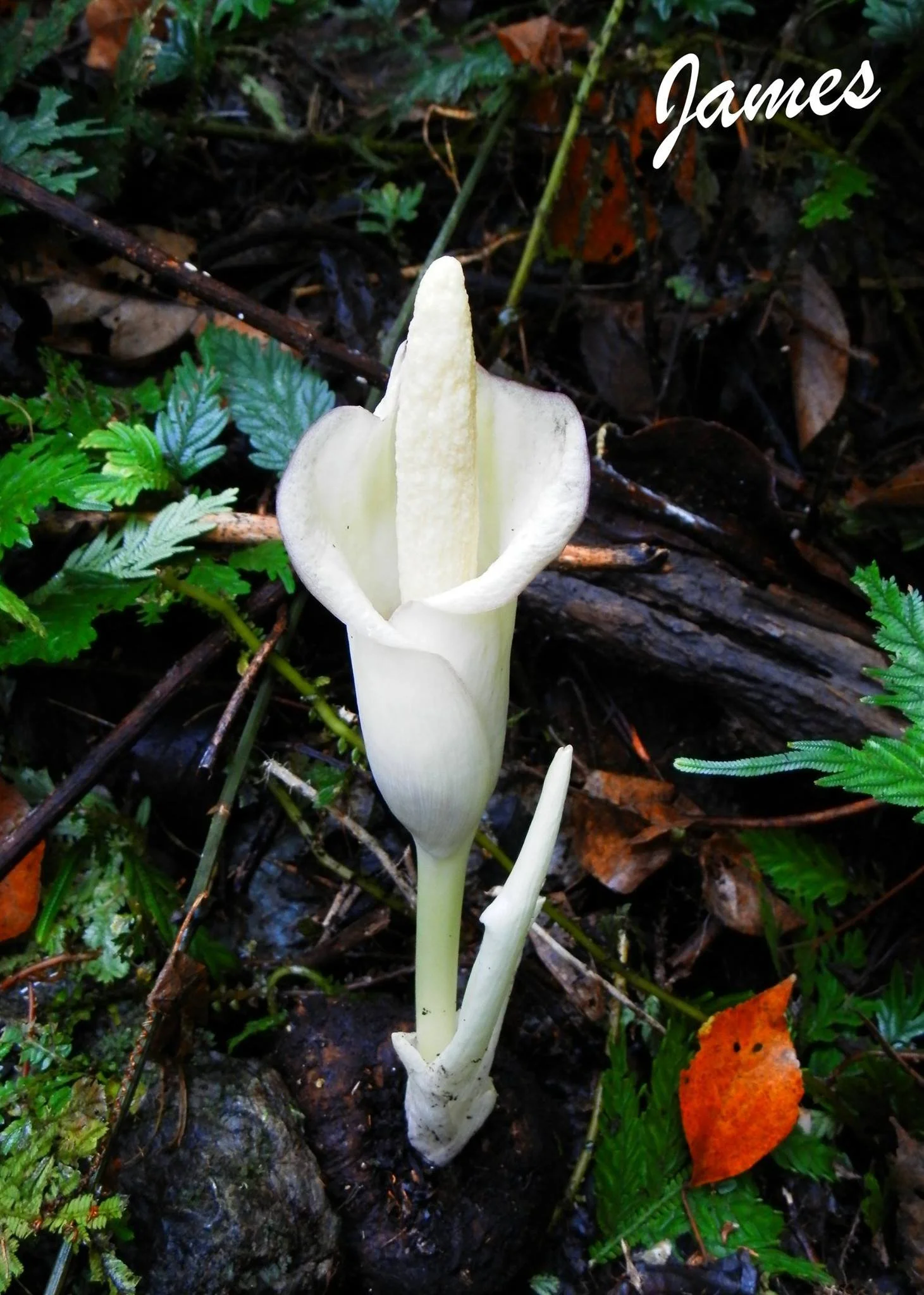
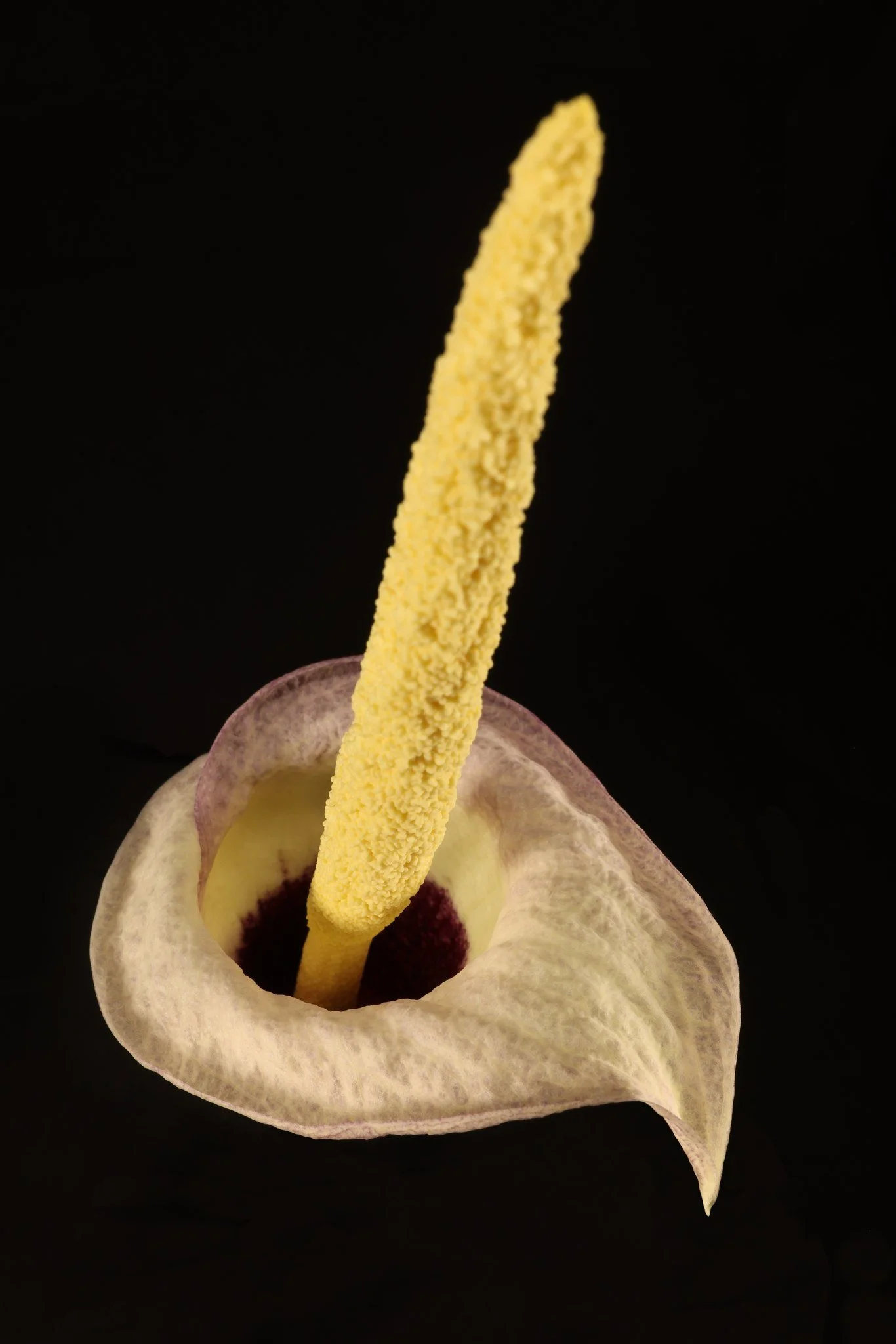
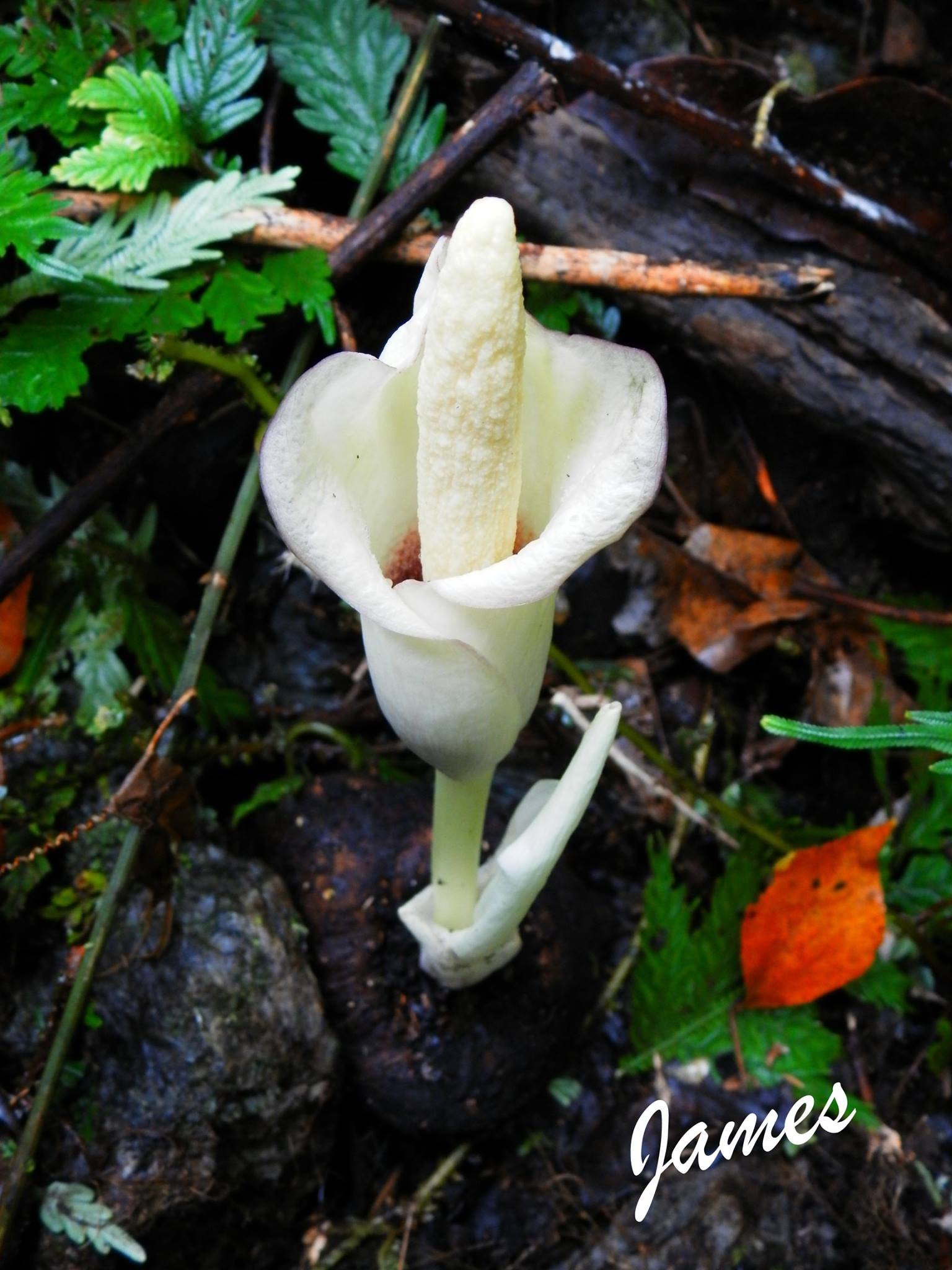
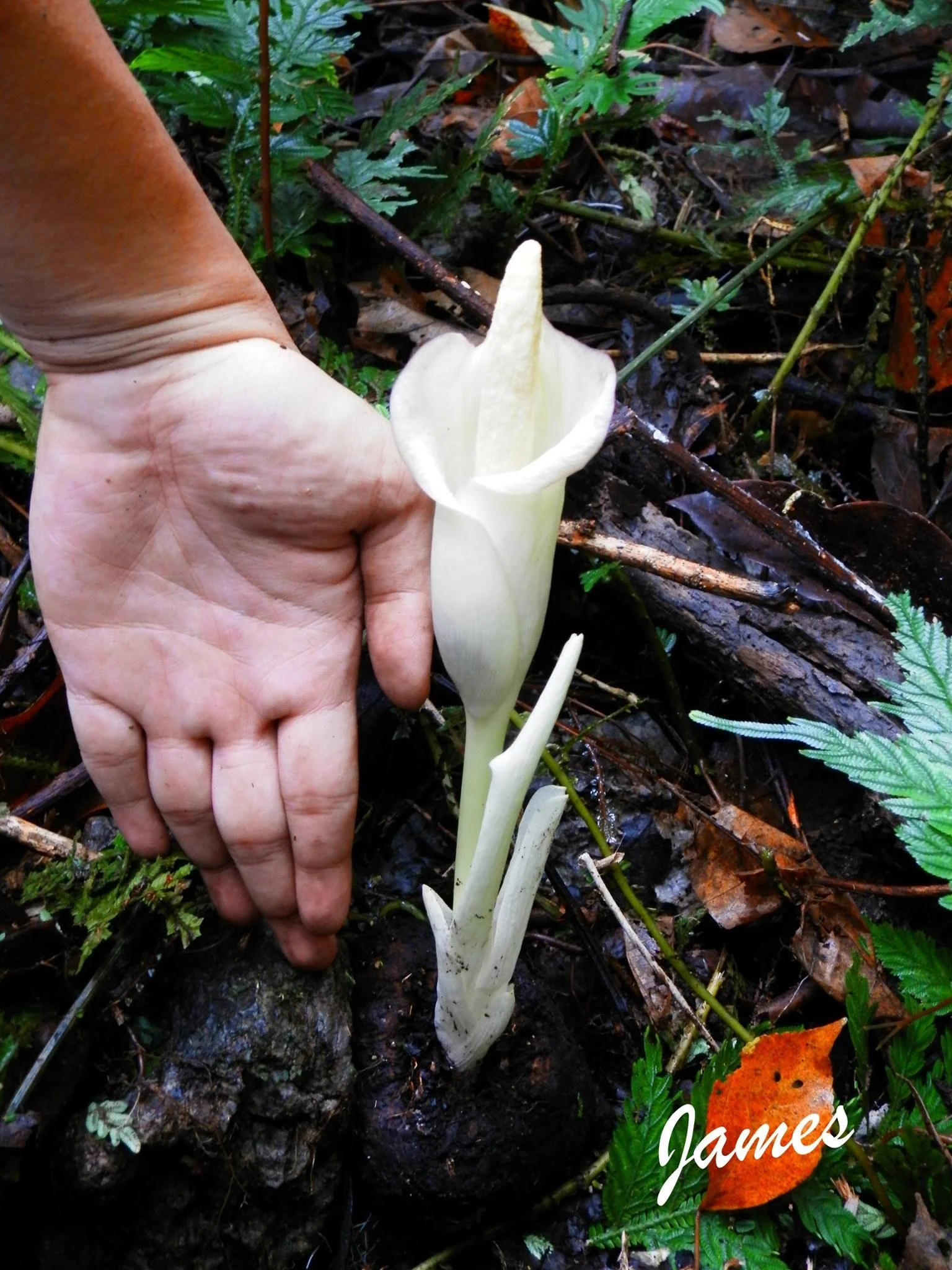
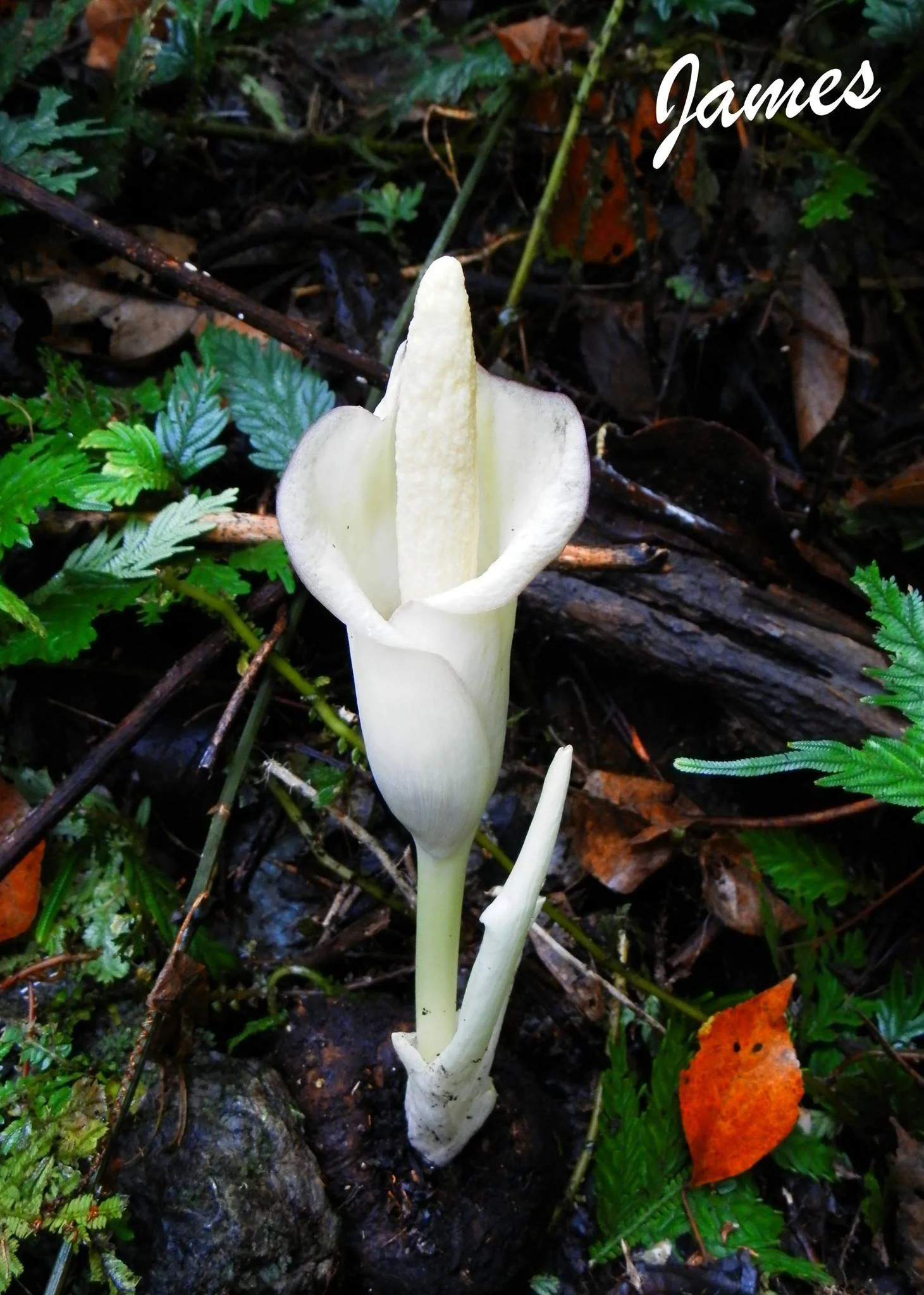
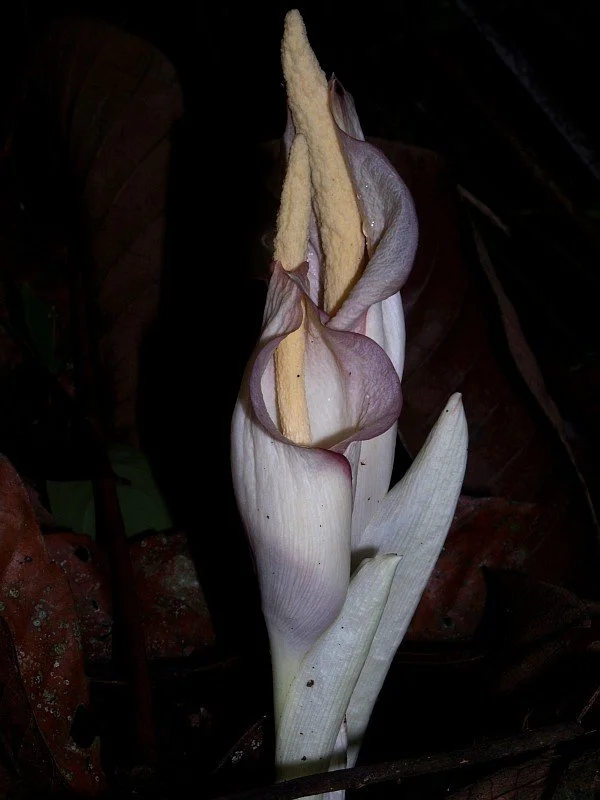
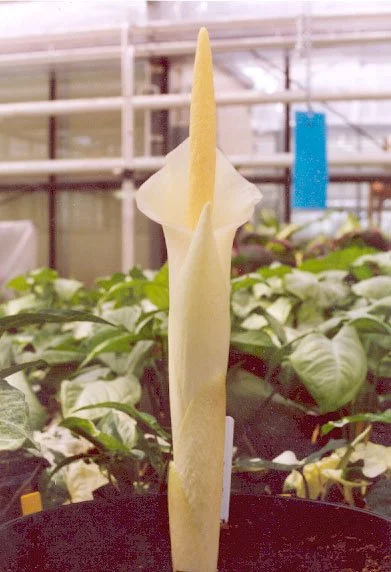
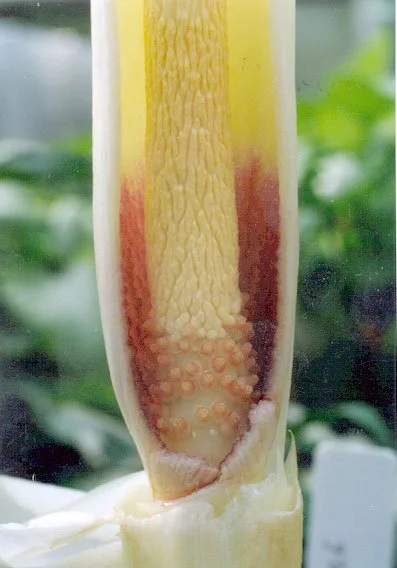
Inflorescence solitary, short peduncled; cataphylls off-white; peduncle 8-13 cm long, 1-2.2 cm diam., entirely subterranean, white with a faint greenish flush, smooth, very tightly enveloped by the cataphylls; spathe erect, suborbicular, often broader than long, 10-13.5 cm long, 11.5-16 cm diam., limb obliquely spreading at female anthesis, erect at male anthesis, base tubular, strongly convolute, largely hidden in cataphylls, outside spathe entirely off-white, inside similar but base reddish purple, base within with scattered small warts or coarsely grooved, grooves distinctly verruculate. Spadix longer than spathe, stipitate, 13.5-21 cm long; stipe massive, oblique, off-white, 0.6-1 cm long, 1.6 cm diam. (base); female zone 1.5-2.5 cm long, 1.5-2.3 cm diam., slightly conic, flowers in vertically separate, horizontal, sinuous chains; male zone conic, 3-4.5 cm long, 1.1-2.2 cm diam., flowers arranged as female flowers but chains closer together, or partly or entirely fused vertically, sometimes forming vertical chains; appendix fusiform, 8-14 cm long, 1.2-2.8 cm diam., slightly laterally compressed, subacute, yellowish white, surface rugulose and with narrow, shallow grooves, producing a strong smell of fried fish and oozing out droplets at female anthesis. Ovaries ovate or slightly depressed, 2-3 mm diam., 2.5-3 mm high, base off-white, top dirty reddish brown, unilocular, one basal ovule; style excentrically placed, consisting of three acute branches, two acroscopic small ones and one basiscopic longer one, pale dirty reddish brown, c. 1.5 mm diam., 0.3-0.8 mm long; stigma thin, c. 1.5 mm diam., c. 0.5 mm high, irregularly, shallowly lobed-sinusoid, surface very pale dirty brownish, verruculate. Maleflowers consisting of c. 3 stamens but pattern often obscured by lateral and vertical fusion of flowers; stamens c. 1 mm high, c. 1-2 mm diam., often fused with adjacent stamens,filaments c. 0.5 mm long, entirely connate; anthers c. 0.5 mm long, truncate, often entirely connate, ivory-white; pores apical, rounded, oval or variously elongate, often confluent with adjacent pores in various ways; pollen striate, ellipsoidal (length/breadth 1.15), 47 pm long, or fossulate to coarsely striate, spheroidal (length/breadth 1.09), 39 pm long.
VARIEGATED FORMS: N/A
ETYMOLOGY: The species epithet refers to the very short petiole relative to the diameter of the lamina.
NOTES:
Amorphophallus brachyphyllus is a close relative of Amorphophallus eburneus Bogner (Malaysia, Sarawak) and the inflorescence is deceptively similar. However, there is a marked difference in leaf morphology. In Amorphophallus eburneus the leaf has a long petiole (to 120 cm) relative to the lamina diameter (the reverse in Amorphophallus brachyphyllus); the lamina in Amorphophallus eburneus is much less strongly divided, the leaflets are distinctly larger (to 60 cm) and never petiolulate. The cataphylls of Amorphophallus eburneus are greyish brown, those in Amorphophallus brachyphyllus off-white. These vegetative differences have been observed several times in cultivation and in the habitat and remain constant, even though both species occur in the same areas and habitats. Notable differences in the inflorescence are: the stigma of Amorphophallus eburneus is twice as large as that in Amorphophallus brachyphyllus and the pistils are much more regularly placed and more congested. Bogner's (1989) observation of bilocular ovaries in Amorphophallus eburneus could not be confirmedafter investigating several inflorescences, in which all ovaries were unilocular.
Additional material: Hetterscheid HAM.031A (L), Sarawak; Vogel 940011 (L, cult, in Bot. Garden, Hetterscheid H.AM.402), Sarawak, 1st Div., Padawan; Vogel 940012 (L, cult, in Bot. Garden, Hetterscheid H.AM.394), Sarawak, 1st Div., Padawan; Vogel 970518 (L, cult, in Bot. Garden, Hetterscheid H.AM.1045), Sarawak, exact loc. unknown; Vogel 970519 (L, cult, in Bot. Garden, Hetterscheid H.AM. 1044), Sarawak, exact loc. unknown; Vogel 970520 (L, cult, in Bot. Garden, Hetterscheid H.AM. 1042), Sarawak, exact loc. unknown; Vogel 970606 (L, cult, in Bot. Garden, Hetterscheid H.AM. 1043), Sarawak, exact loc. unknown; Vogel 970607 (L, cult, in Bot. Garden, Hetterscheid H.AM. 1037 & 906), Sarawak, 4th Div., Mulu; Vogel 970616 (L, cult, in Bot. Garden, Hetterscheid H.AM.895), Sarawak, 4th Div., Niah.
CULTIVARS: N/A
HYBRIDS: N/A
REFERENCES:
Additional photos by Peter Boyce, Wilbert Hetterscheid, Michael Lo, Pio Swiat and James Sim