AMORPHOPHALLUS BULBIFER
ORIGINAL DESCRIPTION:
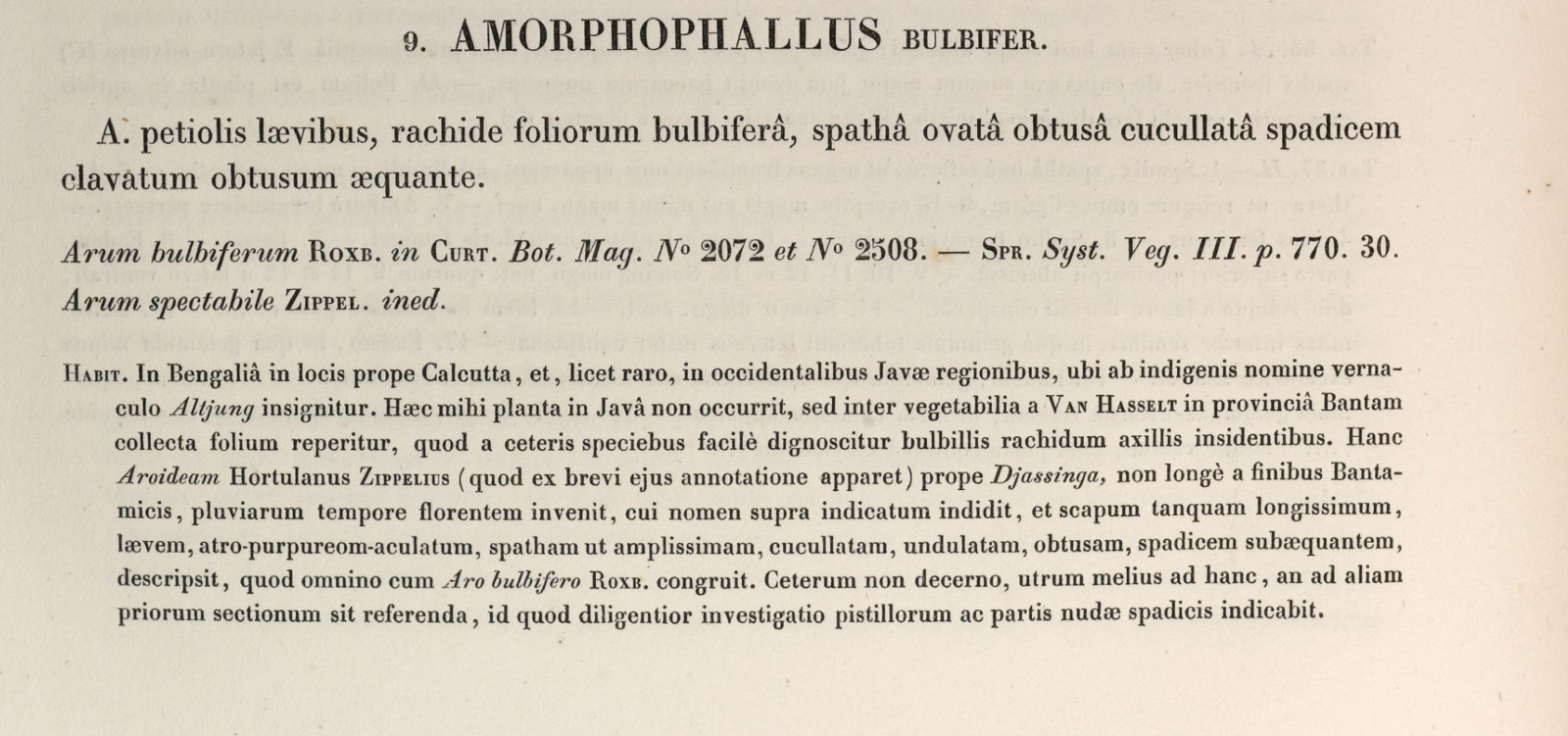
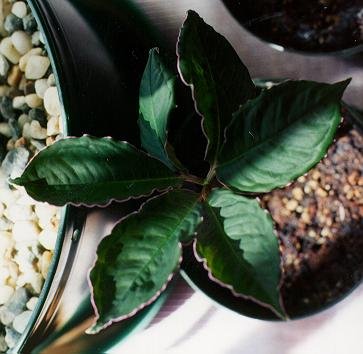
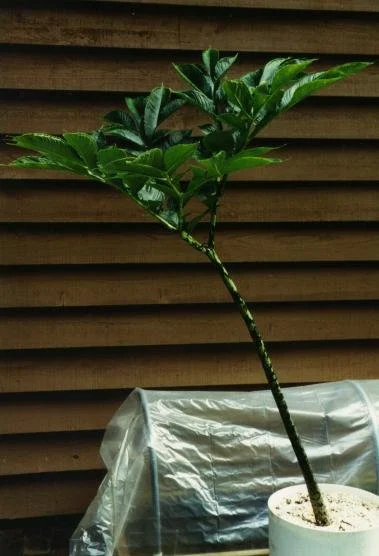
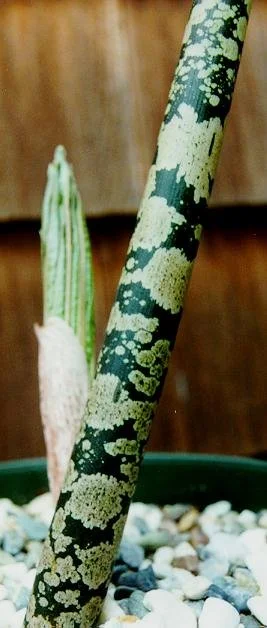
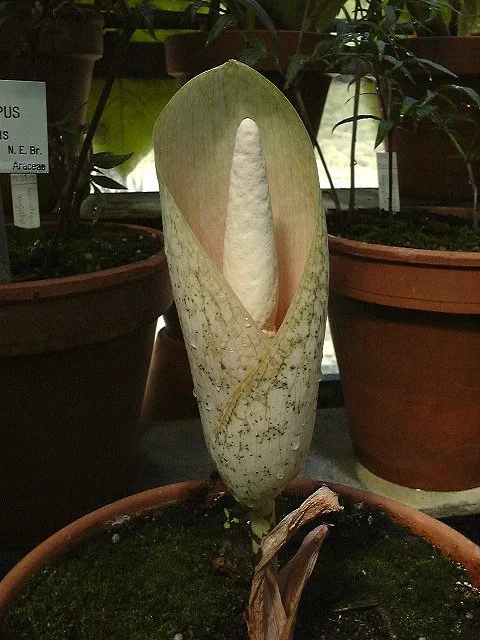
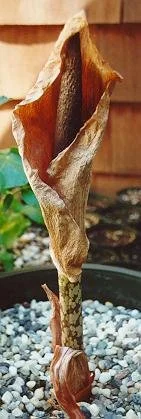
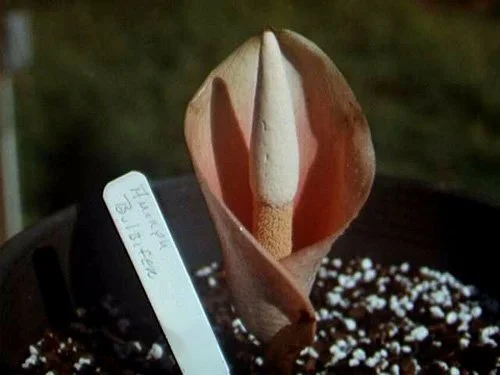
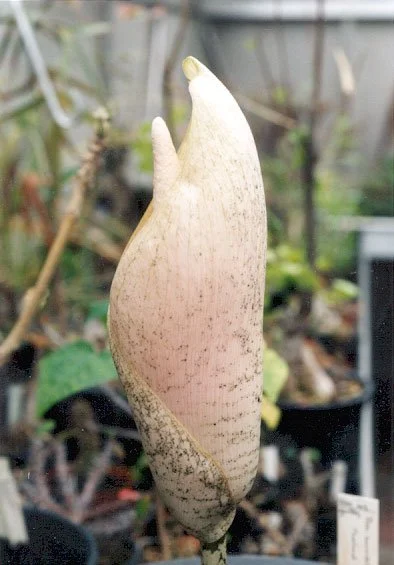
Photo by Alan Galloway
SYNONYMS:
HOMOTYPIC SYNONYMS: Arum bulbiferum Roxb. in Bot. Mag. 46: t. 2072 (1819), nom. illeg., Conophallus bulbifer (Schott) Schott in Syn. Aroid.: 34 (1856) Pythonium bulbiferum Schott in H.W.Schott & S.L.Endlicher, Melet. Bot.: 18 (1832)
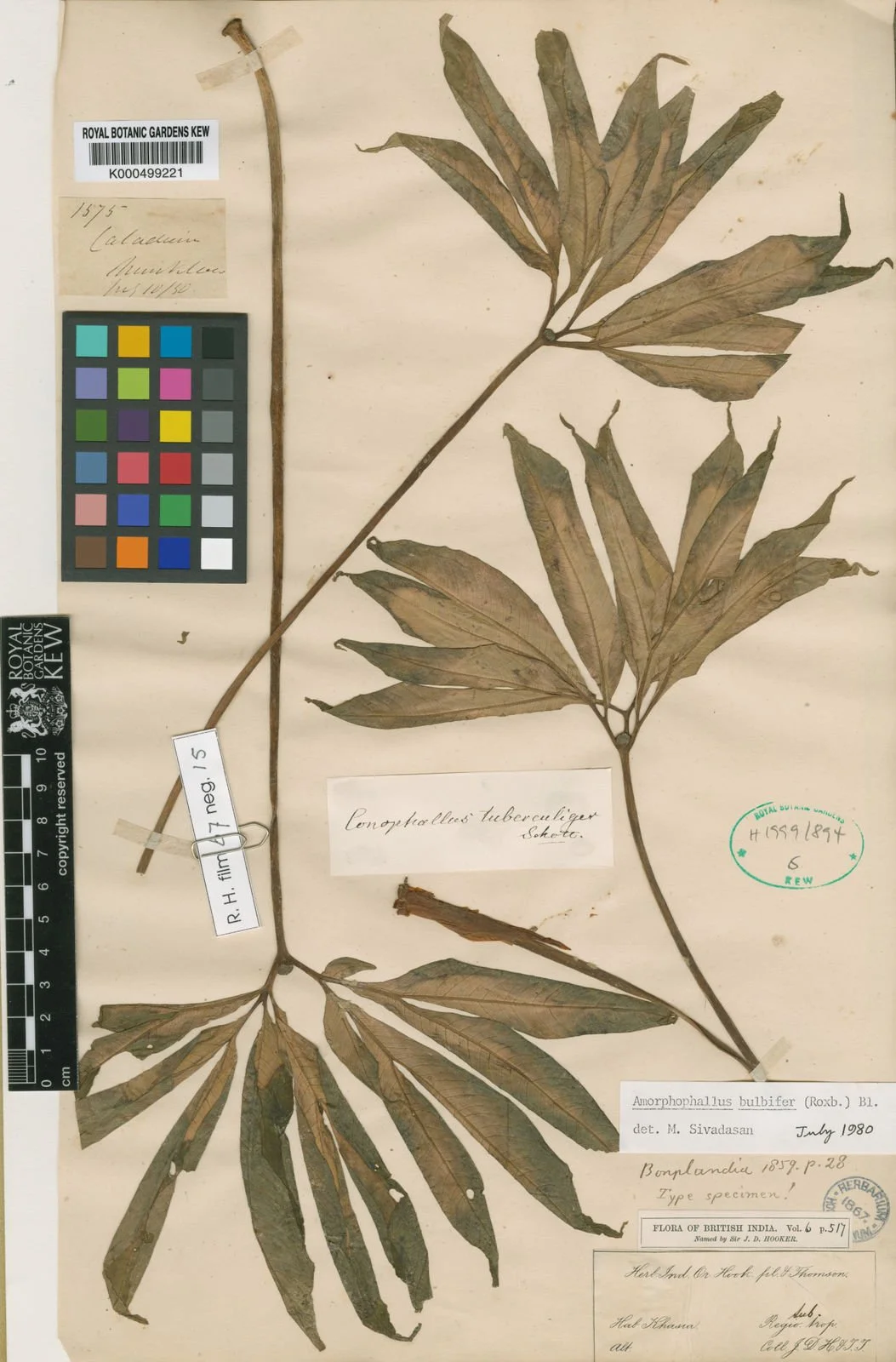
HETEROTYPIC SYNONYMS: Amorphophallus aculatum Hook.f. in Fl. Brit. India 6: 515 (1893), Amorphophallus bulbifer var. atroviridimaculata Engl. in Pflanzenr., IV, 23C: 99 (1911), Amorphophallus bulbifer var. marmoratus Engl. in Pflanzenr., IV, 23C: 99 (1911), Amorphophallus bulbifer var. tuberculiger (Schott) Engl. in Pflanzenr., IV, 23C: 99 (1911), Amorphophallus taccoides Hook.f. in Fl. Brit. India 6: 515 (1893), Amorphophallus tuberculiger (Schott) Engl. in A.L.P.P.de Candolle & A.C.P.de Candolle, Monogr. Phan. 2: 317 (1879), Arum punctatum Voigt in Syll. Pl. Nov. 2: 50 (1826), Arum punctulatum Zipp. ex Kunth in Enum. Pl. 3: 34 (1841), not validly publ., Arum spectabile Zipp. ex Kunth in Enum. Pl. 3: 34 (1841), pro syn., Conophallus tuberculiger Schott in Bonplandia (Hannover) 7: 28 (1859)
ACCEPTED INFRASPECIFICS: N/A
OTHER: 珠芽魔芋 (Zhū yá mó yù - translated as bulbil Amorphophallus)
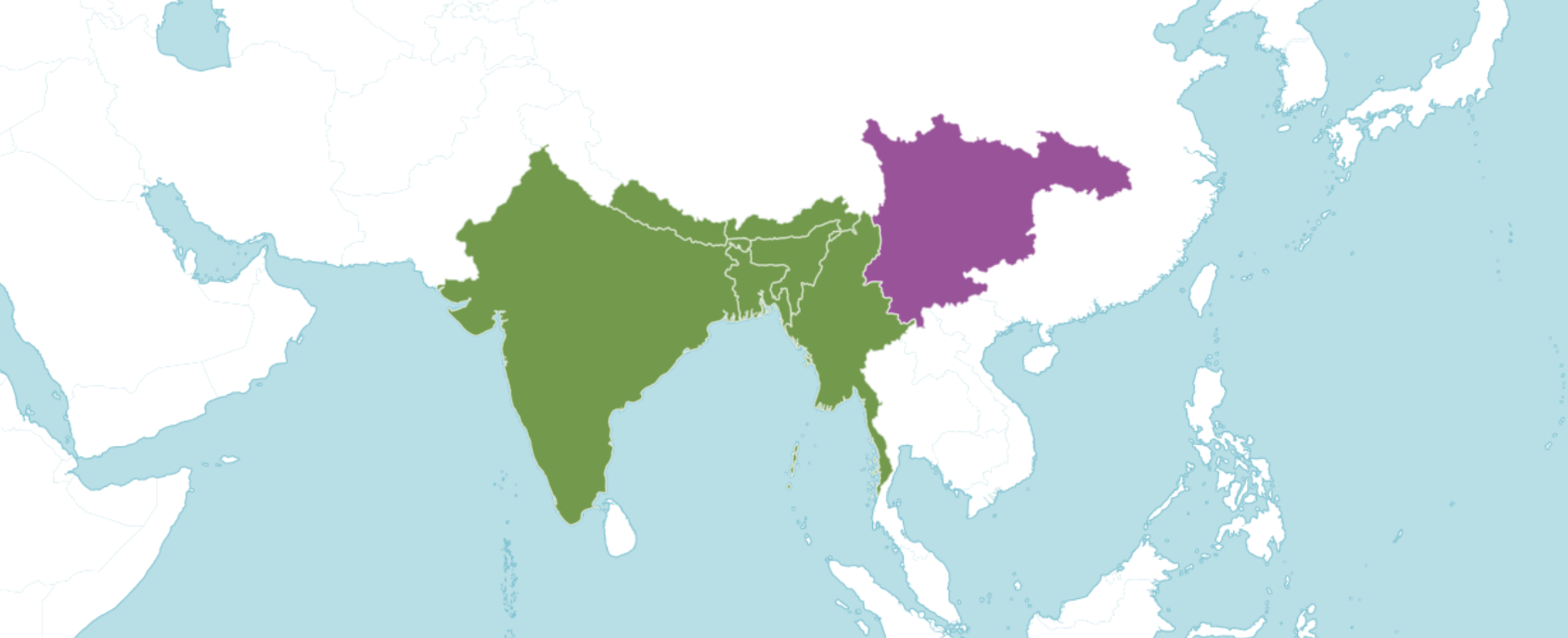
DISTRIBUTION: India, Bangladesh, Myanmar, Nepal, Assam, East Himalaya, Andaman Islands and introduced into China (South-Central)
CLIMATE: N/A
ECOLOGY: N/A
SPECIES DESCRIPTION:
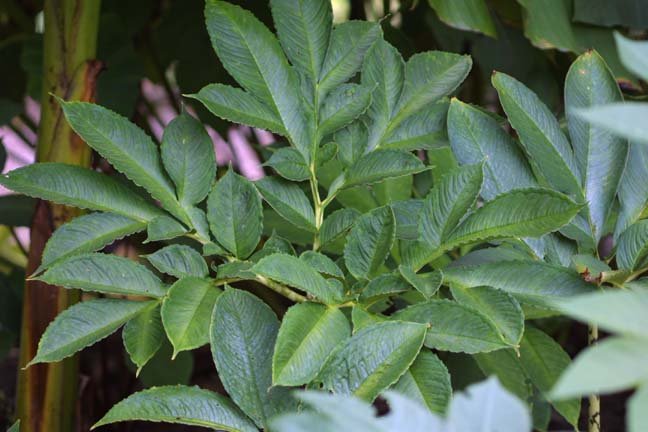
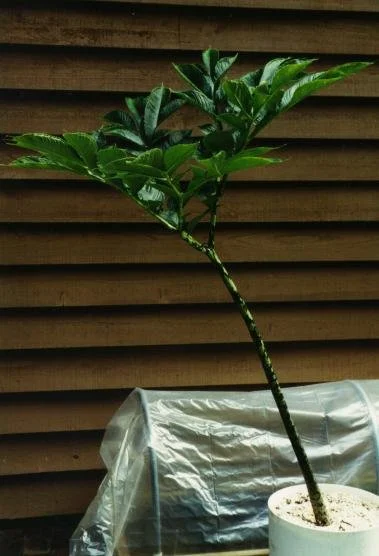
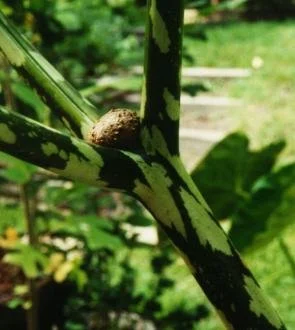
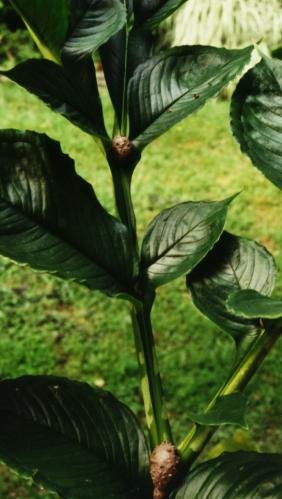
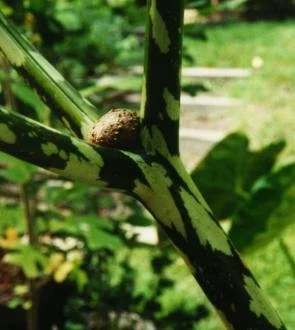
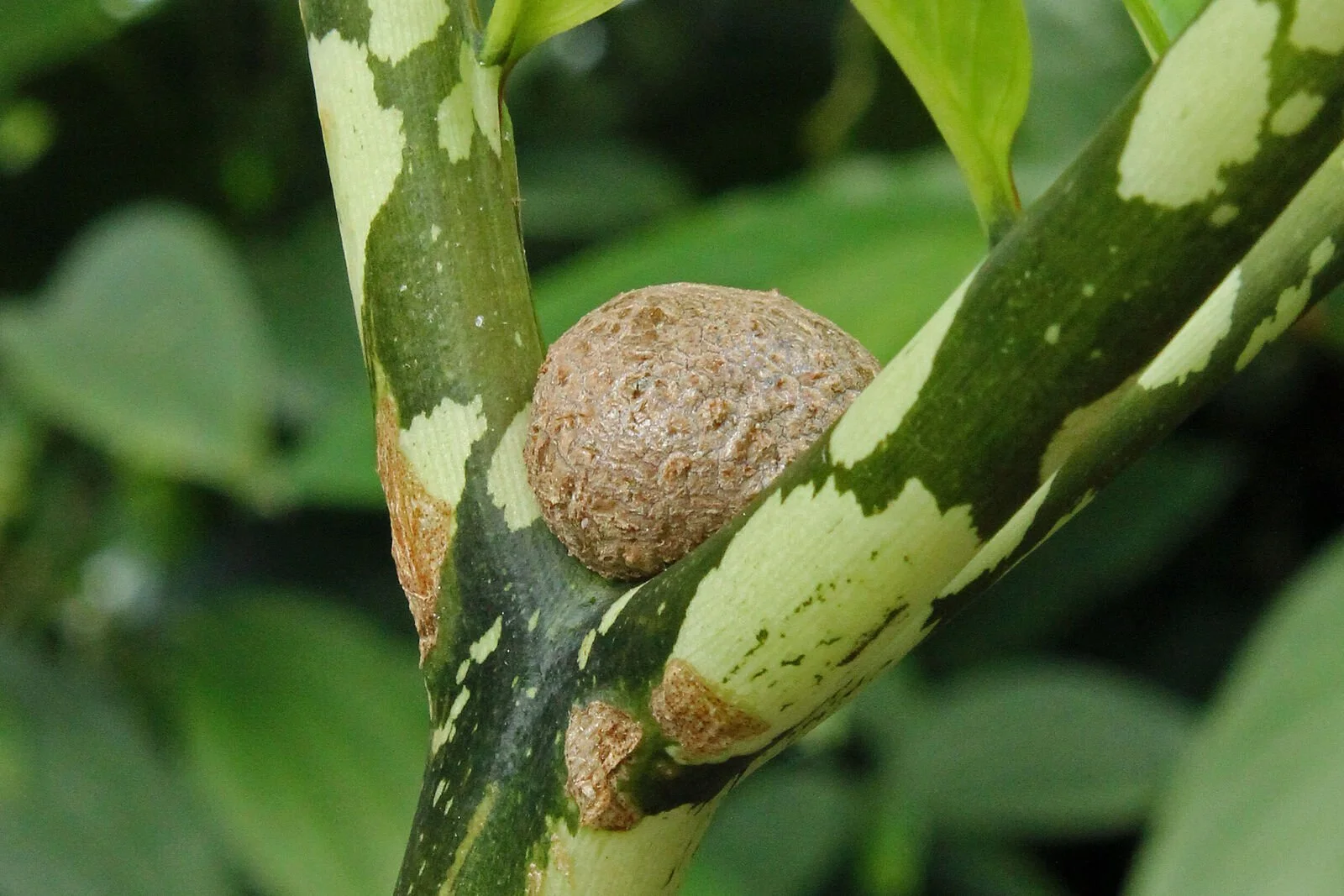
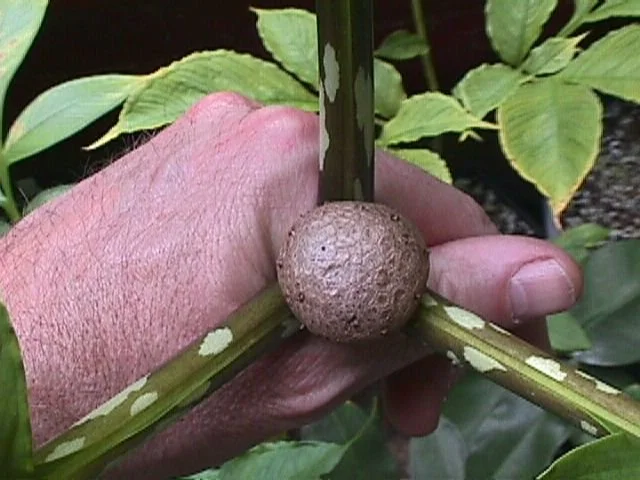
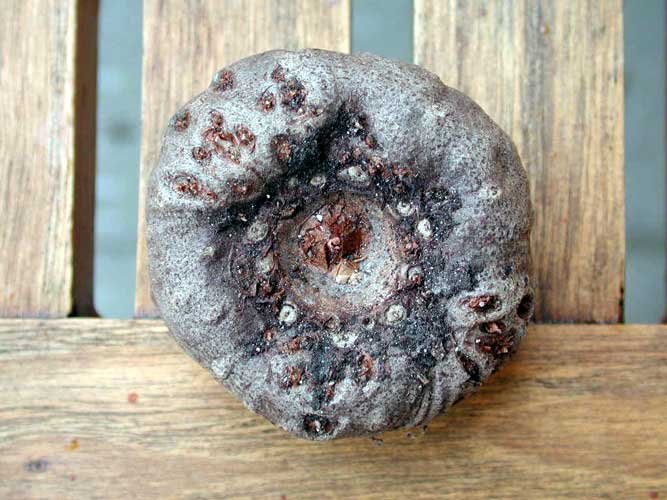
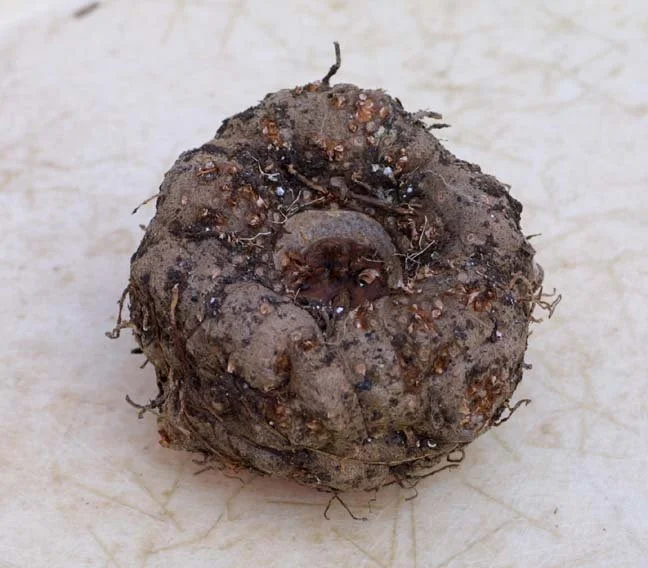
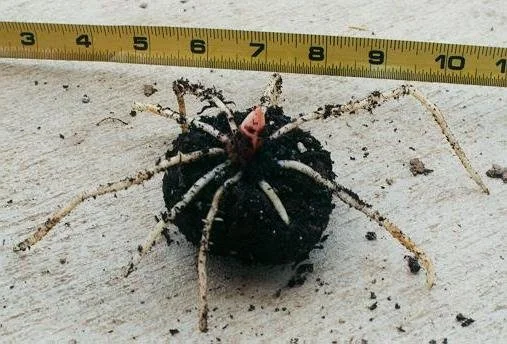
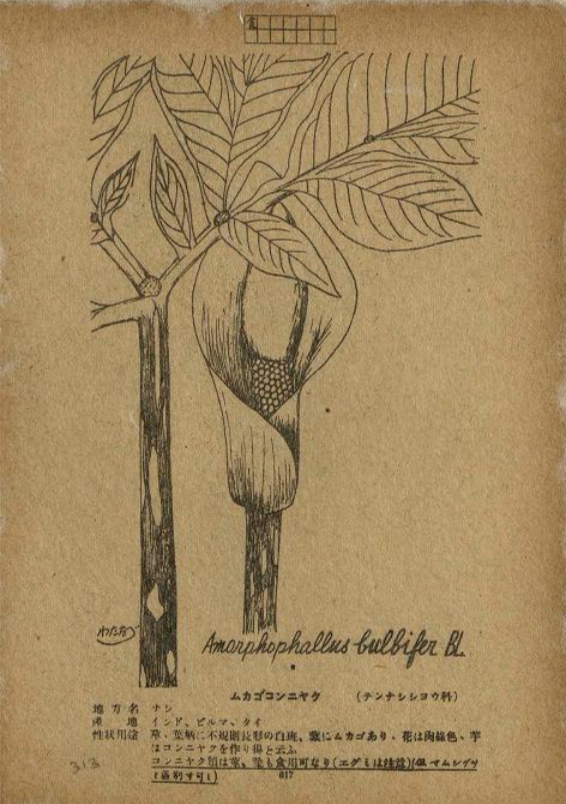
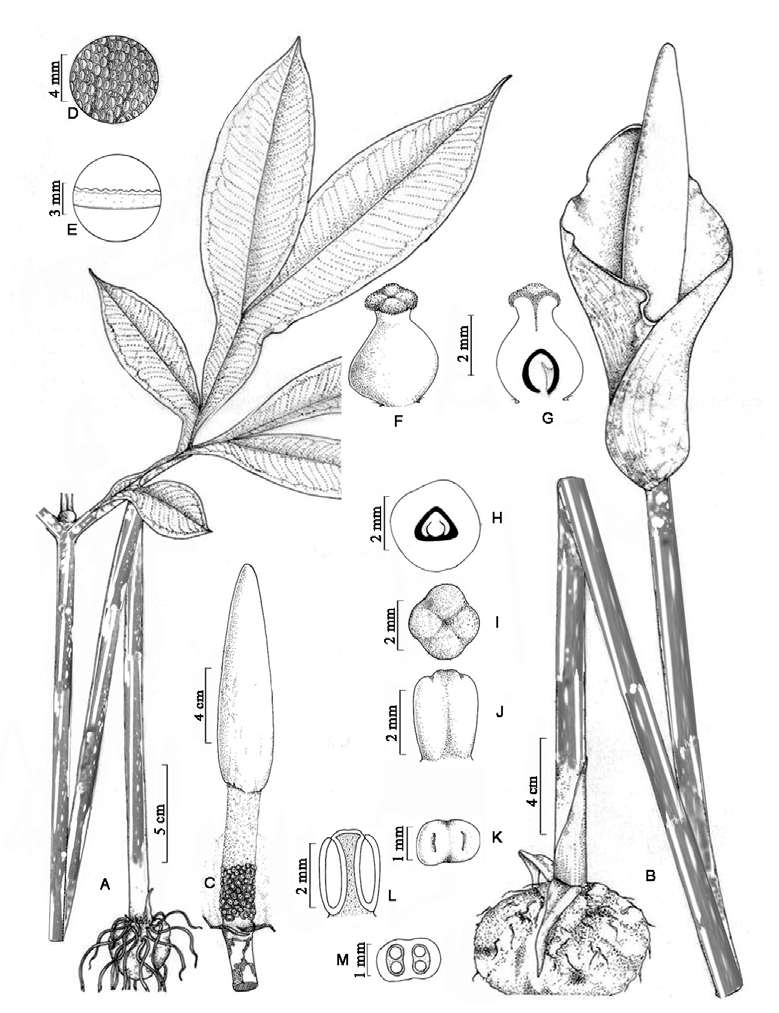
Monoecious, perennial, erect herb, 50-90 cm tall. It has a tuber (bulbous rhizome) to 15 cm in diameter, producing 1 leaf, characterized by bulbils borne at the fork (hence the name). The bulbils are like "little bulbs" and when the plant goes dormant they fall to the ground and start new plants the next spring.
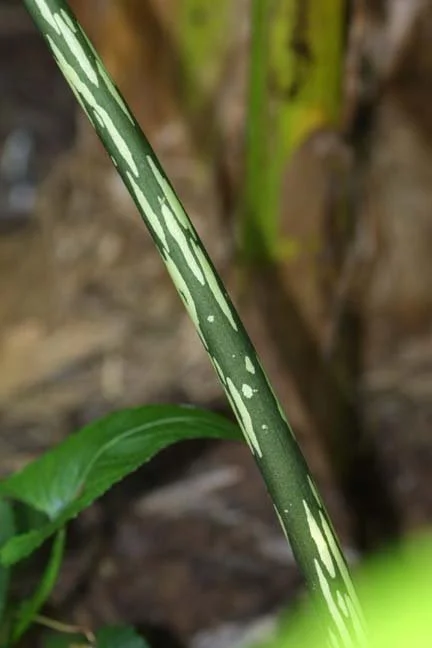
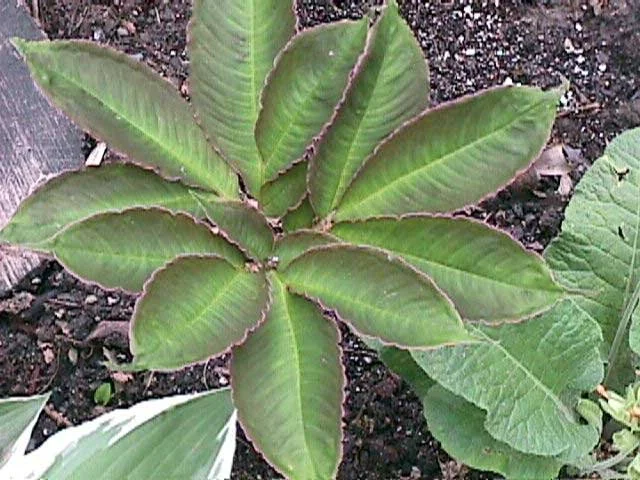
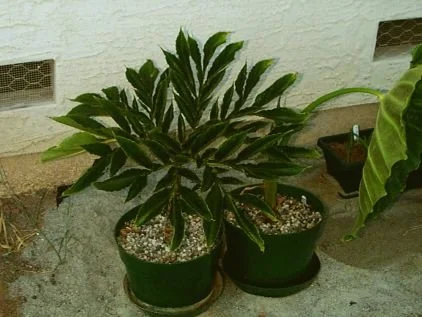
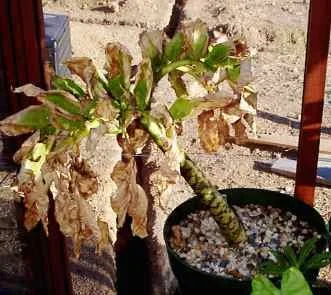
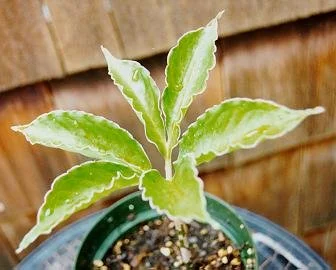
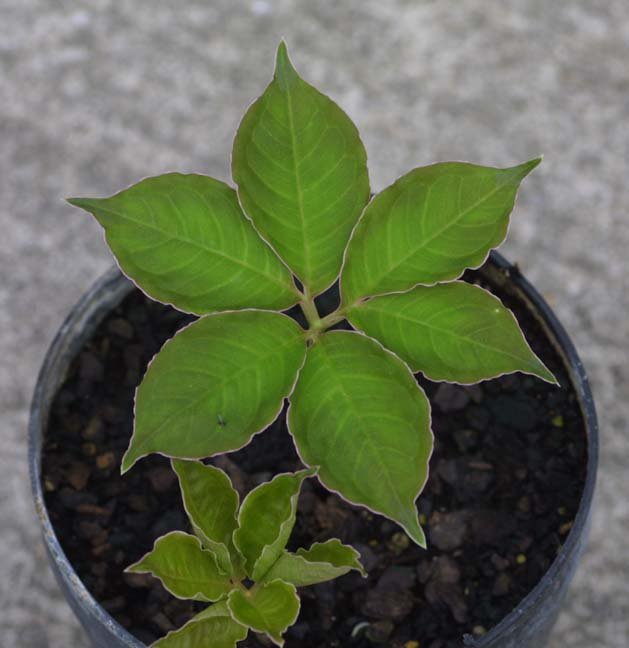
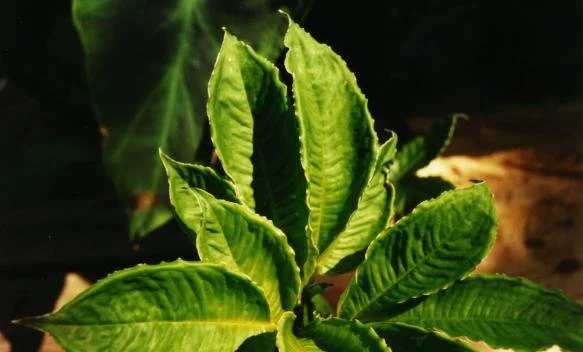
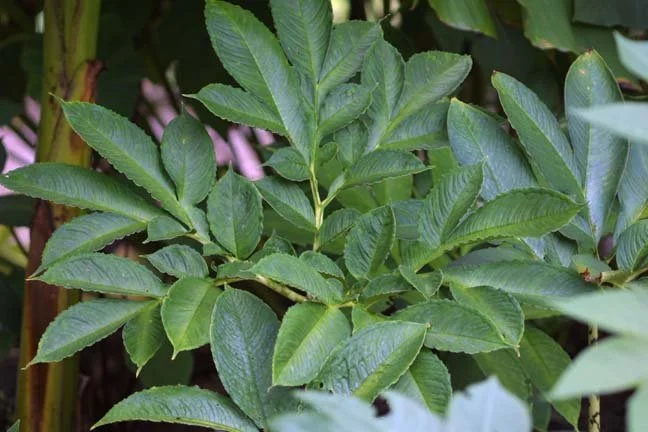
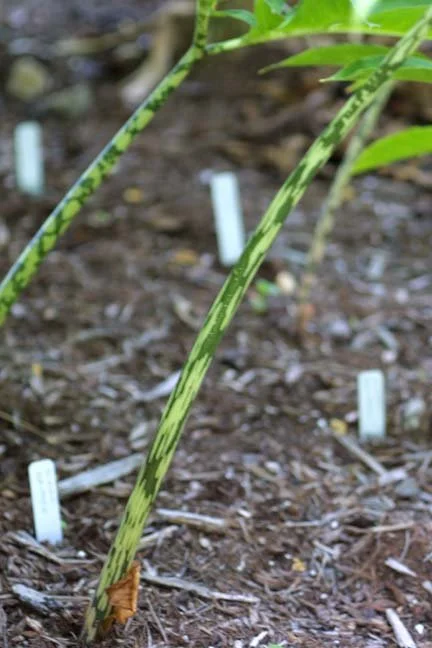
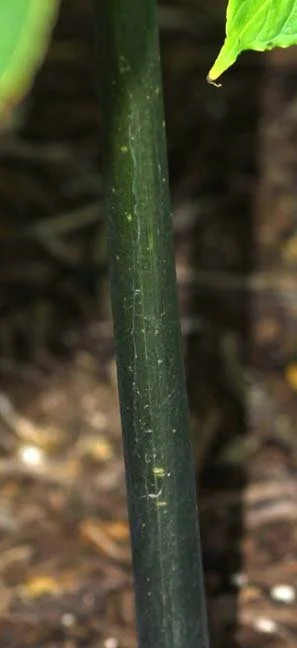
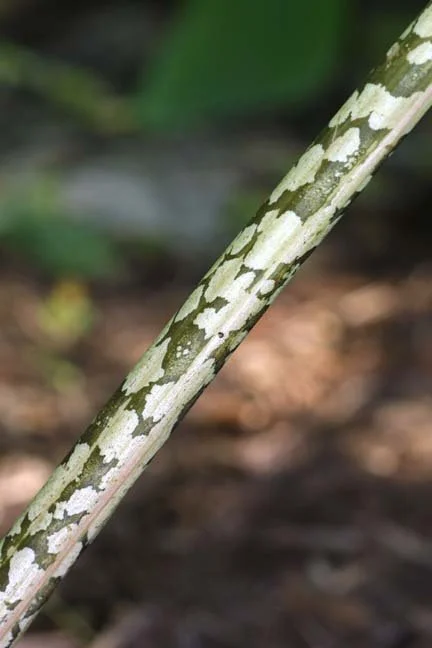
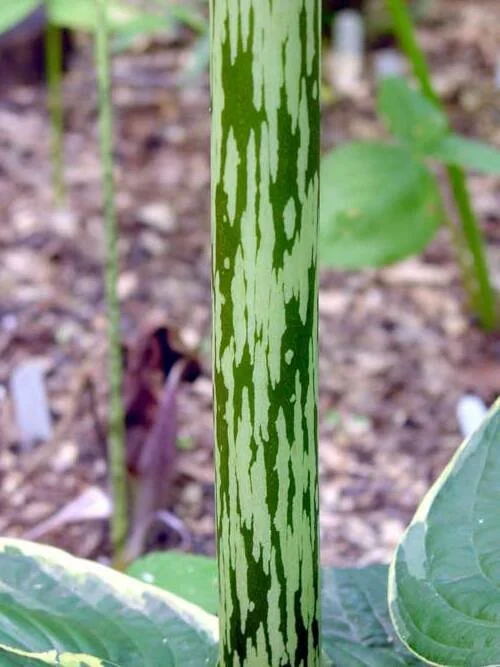
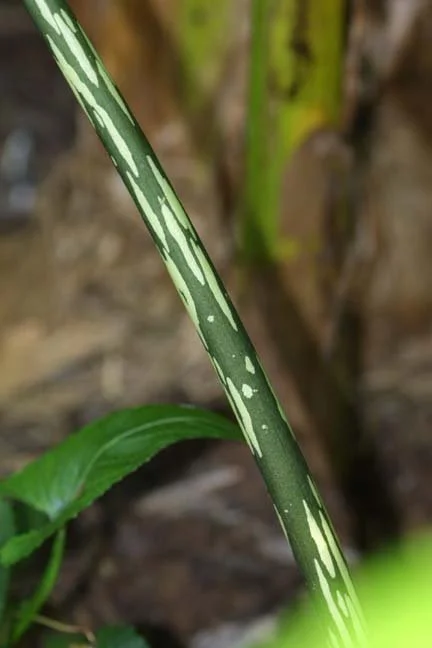
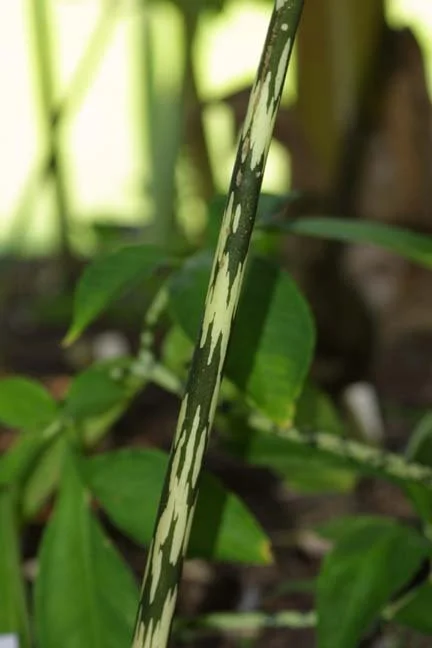
Leaves solitary (rarely a secondary leaf may develop under favorable growing conditions) much-branched umbrella-like and compound, held aloft on a single, very long petiole to form a lush jungly-looking mini-canopy. The leaf appears after flowers, and is 24-40 cm across, bulbiferous at the forks, lobes obovate-lanceolate, acuminate, 5-12 cm long. Leafstalk smooth, fleshy, dark green, mottled with whitish pink spots. Seedlings tend to make several subsequent leaves before they will enter their true first dormancy period.
INFLORESCENCE:
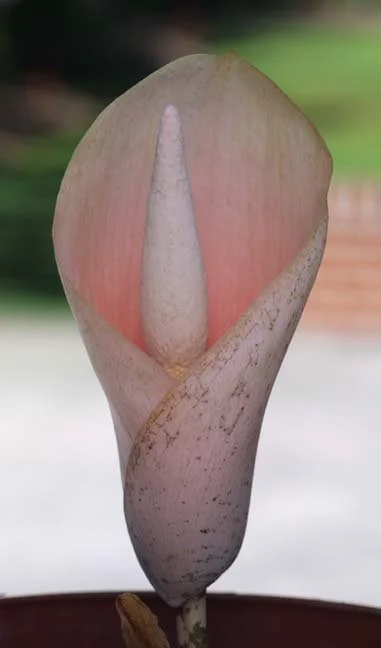
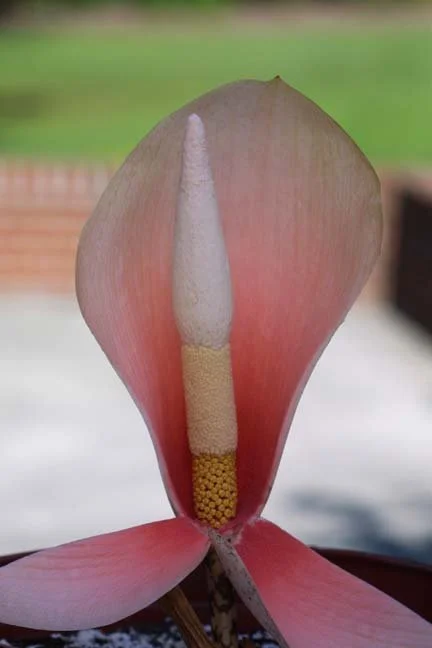
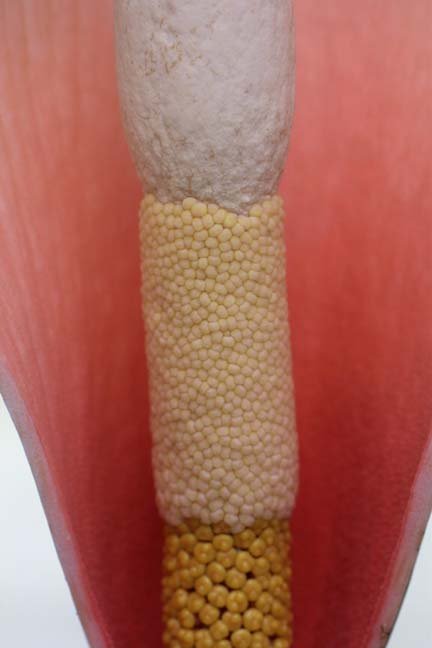
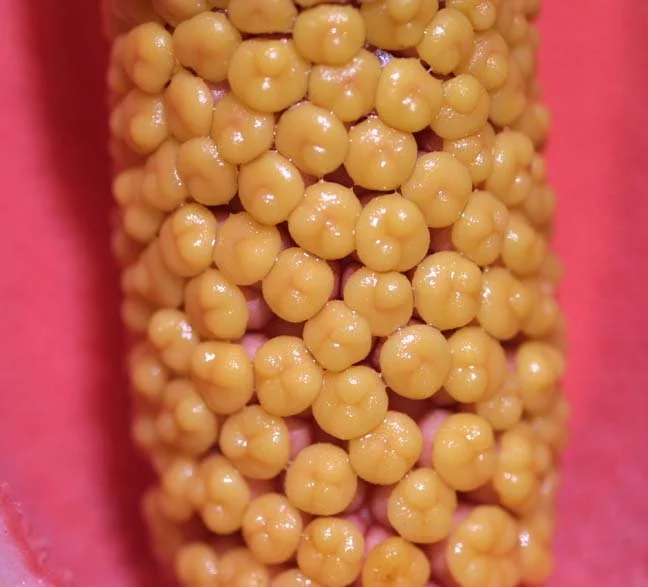
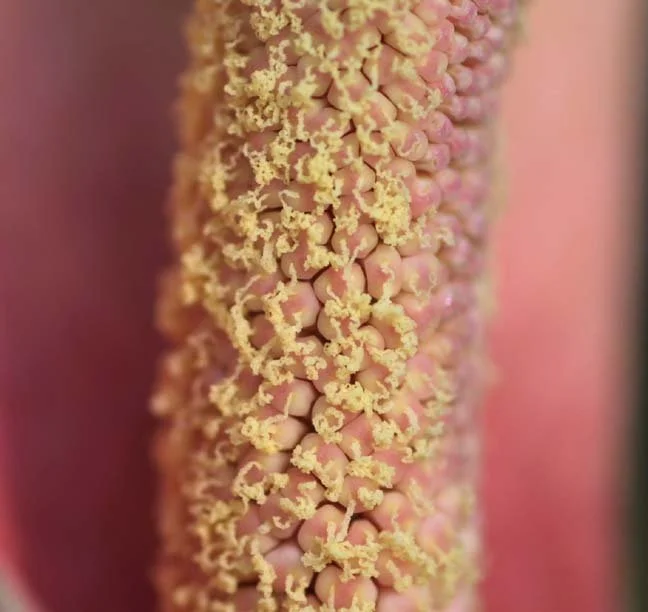
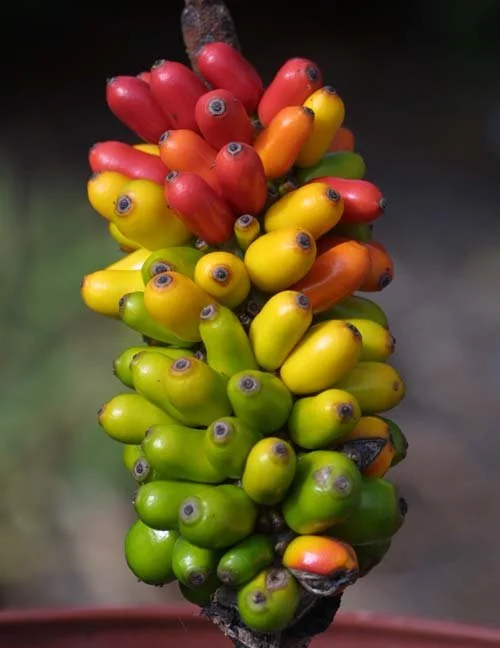
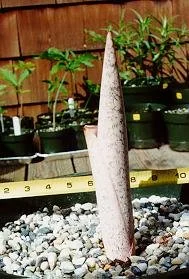
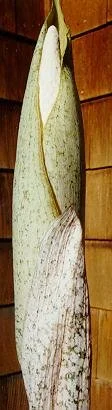
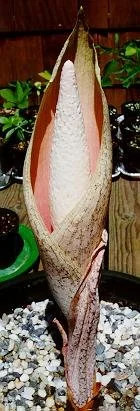
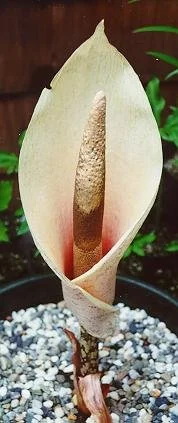
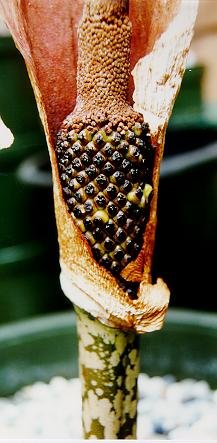
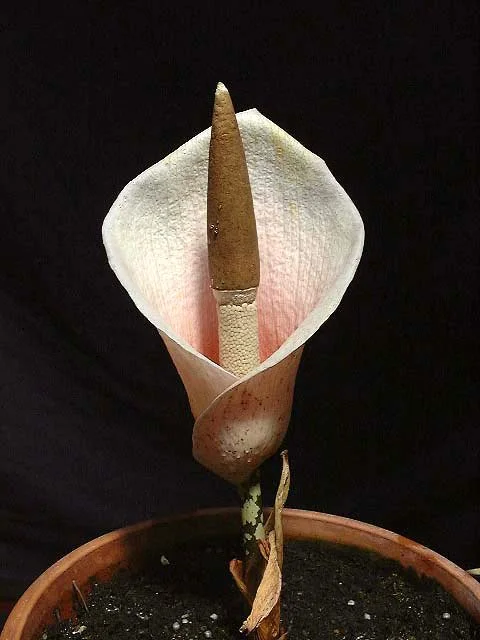
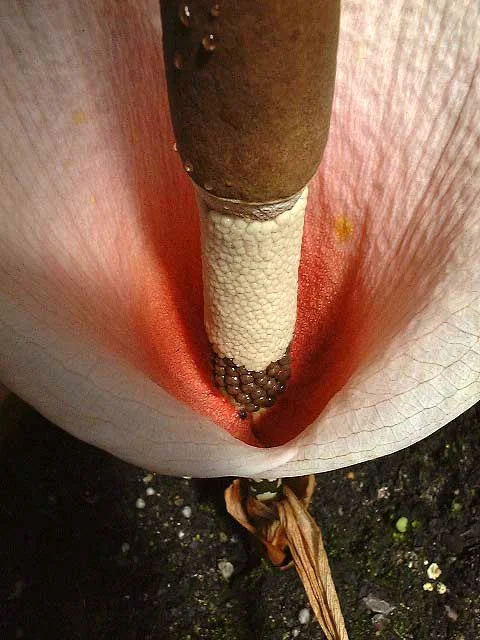
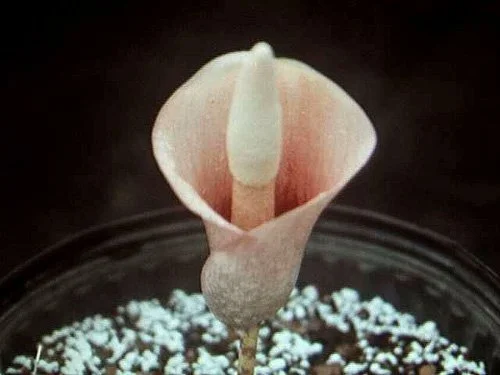
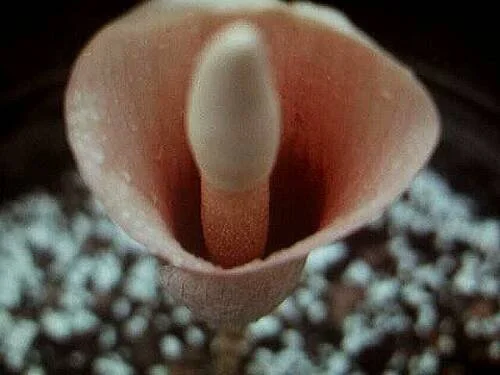
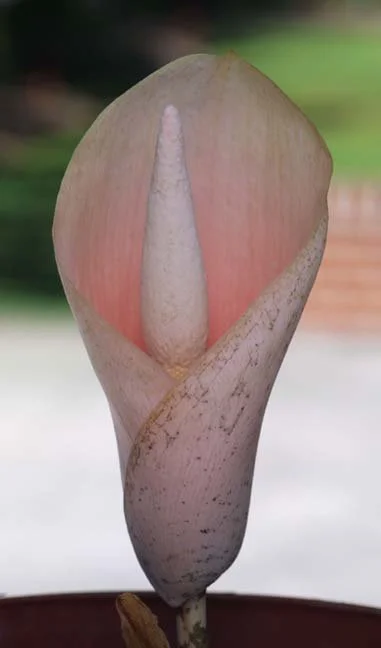
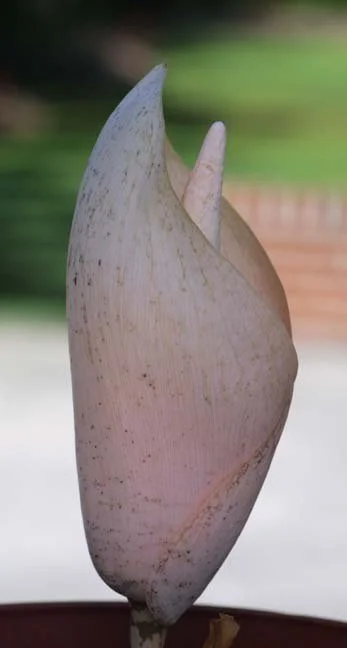
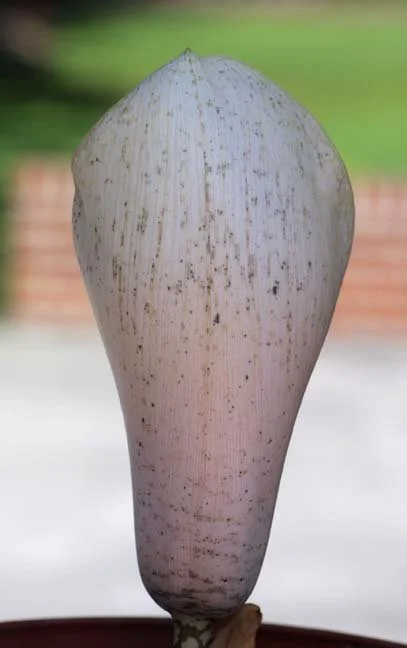
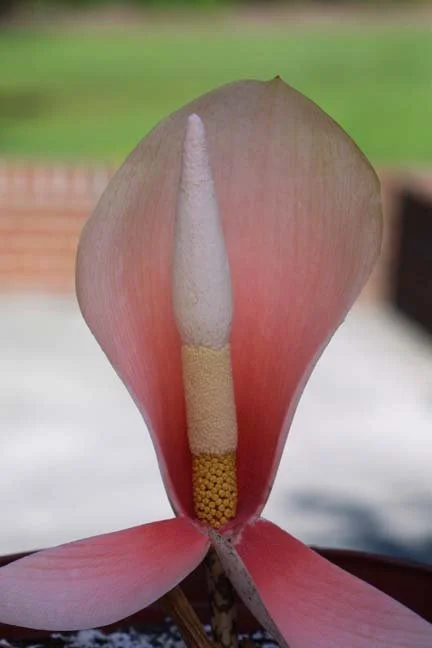
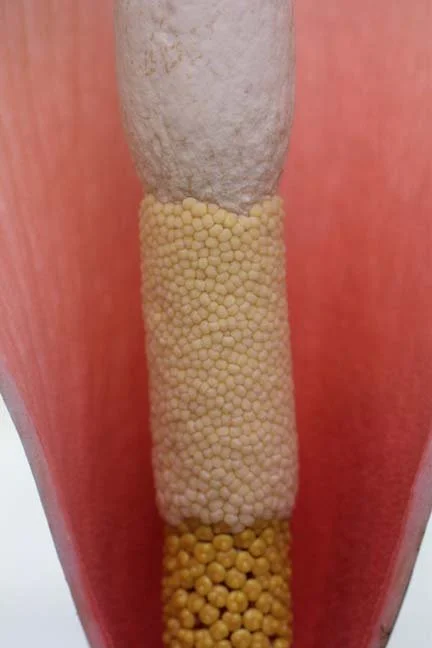
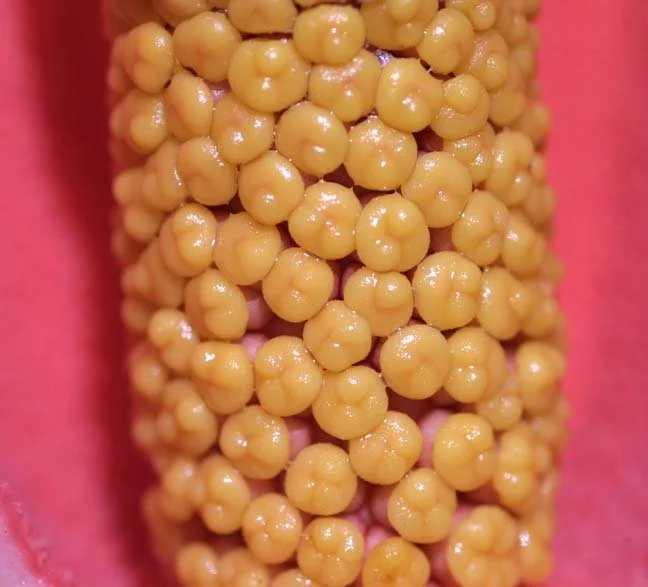
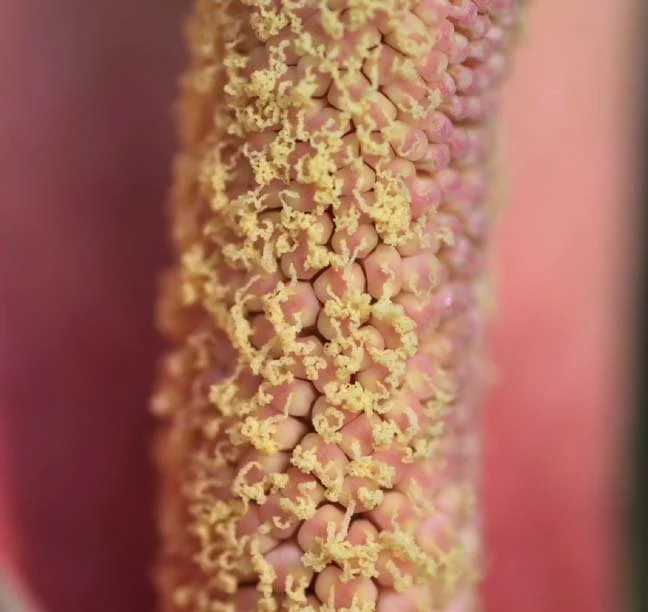
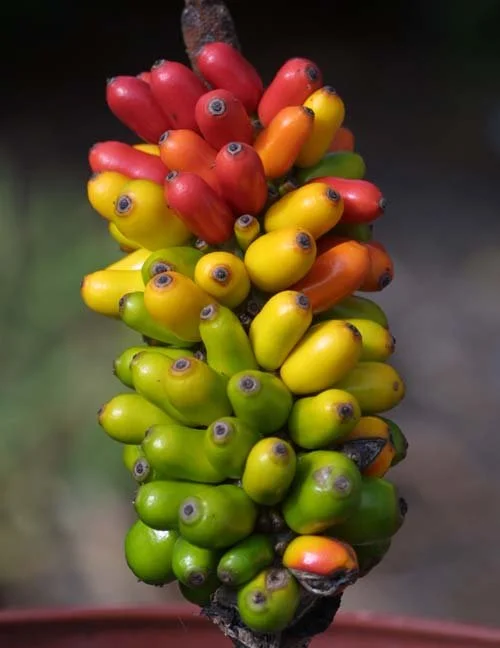
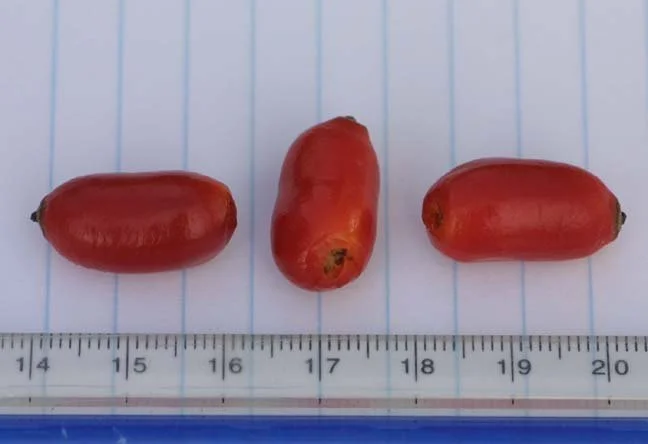
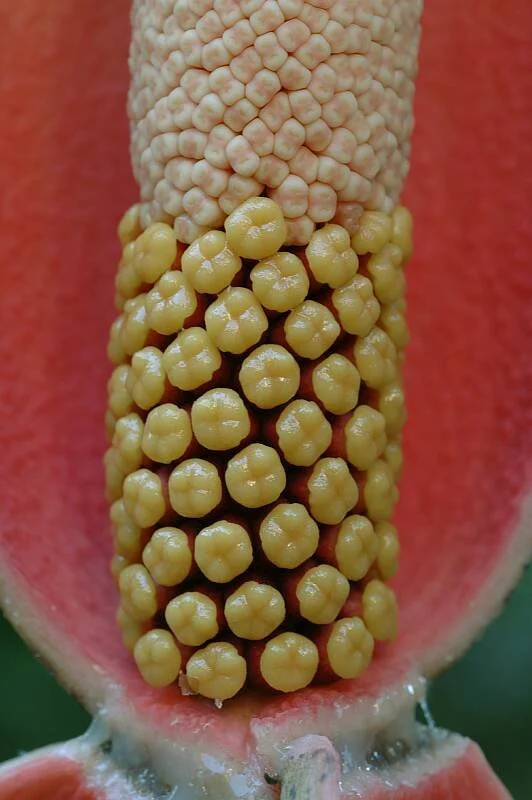
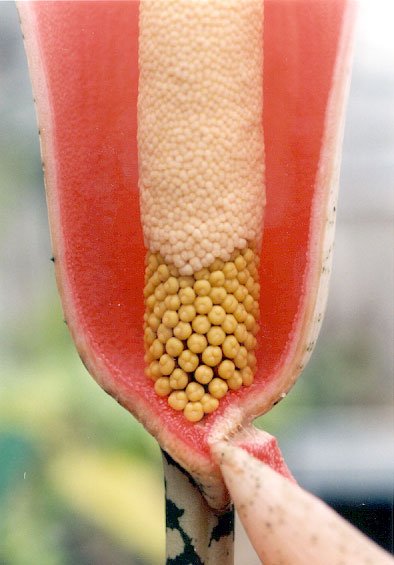
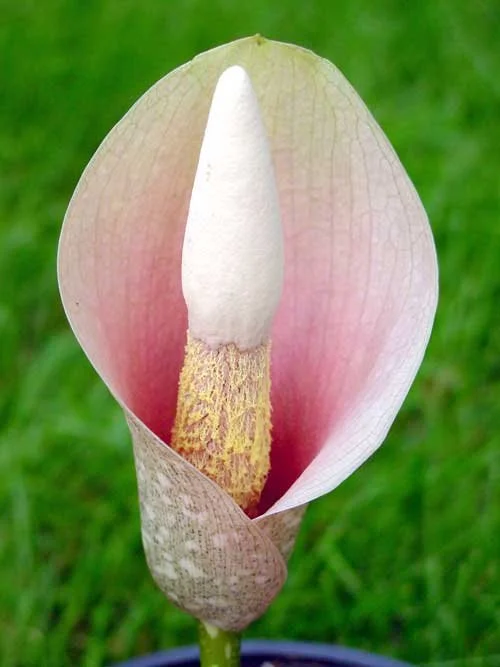
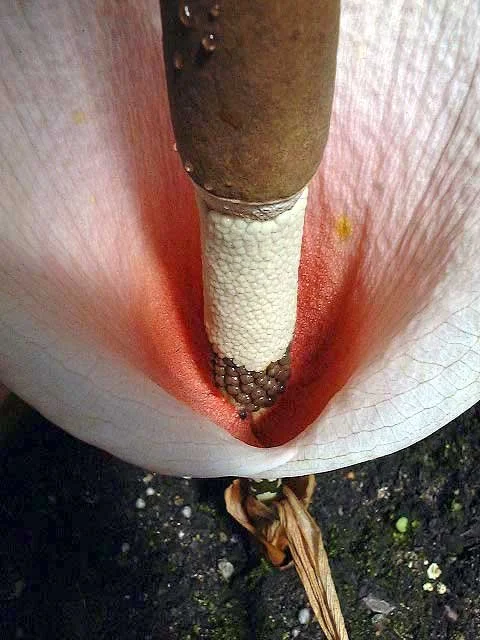
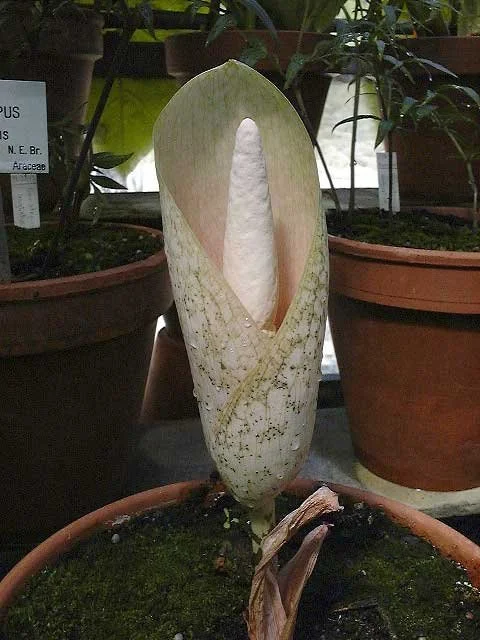
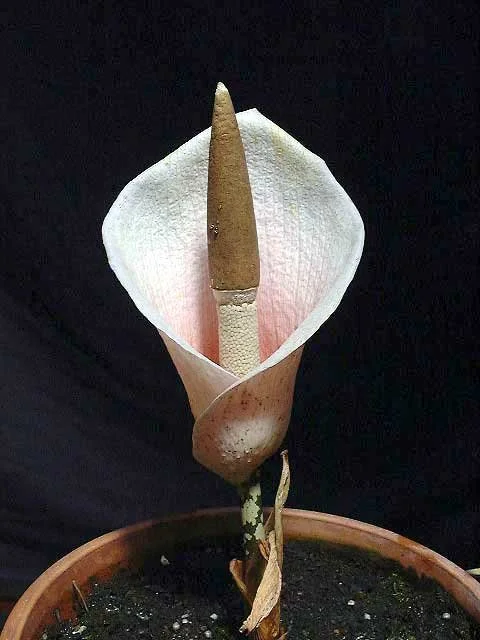
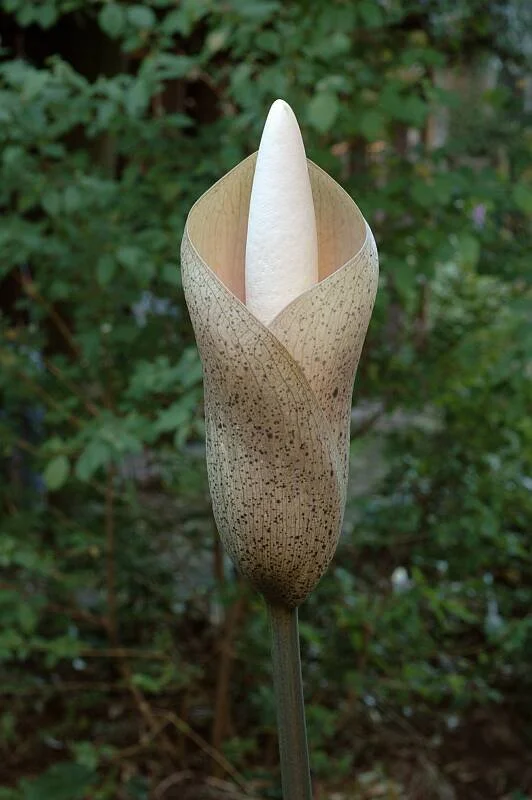
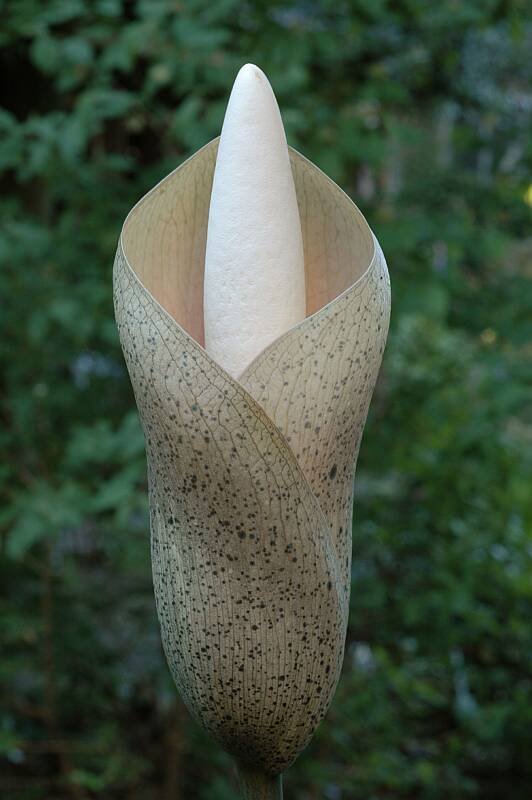
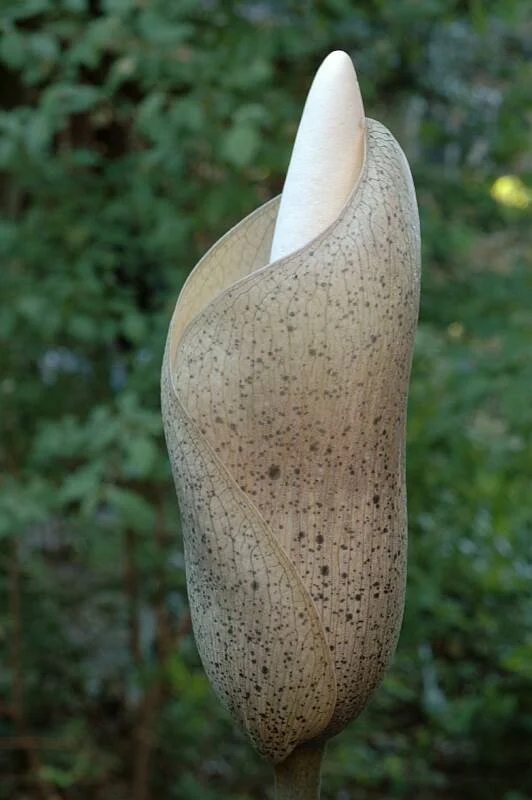
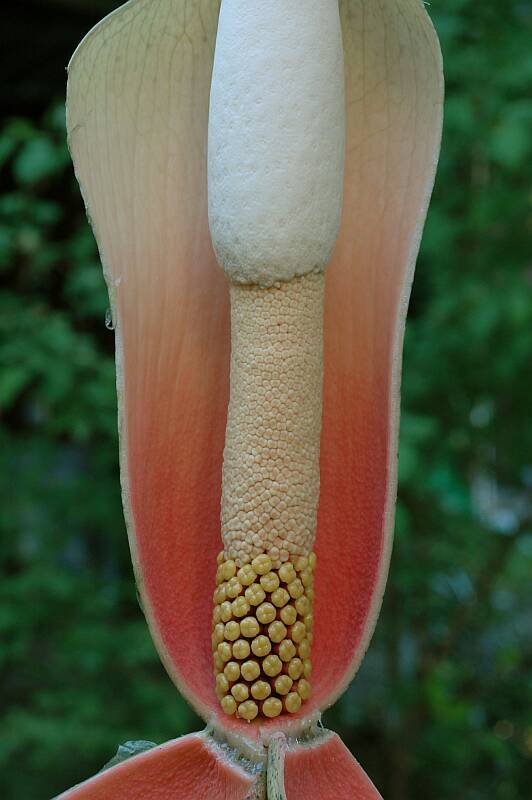
Peduncle 10-70 cm long. Spathe is 10-30 cm long, oval to boat-shaped, convolute at base, opening above into an ovate obtuse limb, outside greyish green with blackish green spots, inside at base dark pink, paler towards the top. Spadix sessile, flesh-coloured, about the same length as spathe, male part (above) up to 4 mm long, female part (at the base) up to 2.5 cm long which consists of flower reduced to the style only. Stamens and ovaries many. At the top there is a sterile appendix. Fruit clustered, sub-globose berries. Berries change colors from green to red as they mature
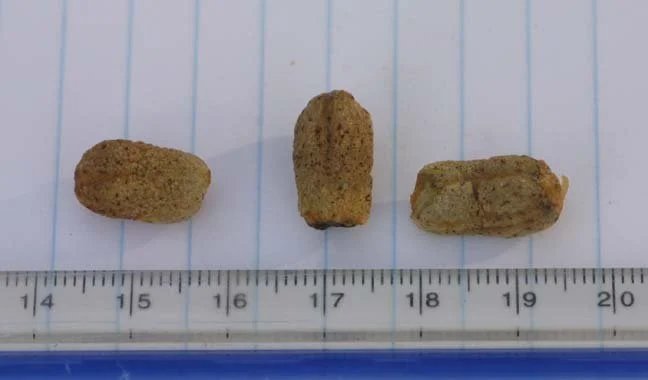
Inflorescences typically appears in April-June. If pollinated successfully by flies, berries take close to one year to ripen and produce viable seed. Amorphophallus only blooms when mature and even so it doesn't bloom every year. Leaves appear during August-September.
Chromosome number: 2n=26 (KARYOMORPHOLOGICAL ANALYSIS OF SOME EDIBLE AROIDS OF UPPER BRAHMAPUTRA VALLEY OF ASSAM)
VARIEGATED FORMS: N/A
ETYMOLOGY: The species epithet stands for the Latin for ‘bearing bulbils’, pointing to this species’ defining habit of producing bulbils in the axils of the rachis, which can grow into clones of the mother plant.
NOTES:
Amorphophallus bulbifer has spadix similar to Amorphophallus commutatus, however, the spathe is white pink and appendage is short, thick and blunt at apex.
Arnorphophallus bulbifer is used in Ayurveda. Corm powder with honey taken for duo-denal and intestinal ailments and ulcers. Corms made into a paste with Curcuma longa and applied on cuts and wounds; corms and petioles made into a paste and applied on burns; Amorphophallus bulbifer rhizome paste mixed with leaves of Litsea monopetala and Mikania micrantha applied externally in stomachache.
The species first description mentions a few more details about its discovery:
“It grows in Bengal, in places near Calcutta, and, though rarely, in the western regions of Java, where it is known among the indigenous people by the vernacular name Altjung. This plant has not been observed by me in Java itself, but among the vegetative specimens collected by Van Hasselt in the province of Bantam, a leaf was found which is easily recognized from other species by the bulbils borne in the axils of the rachis. This aroid was found by the horticulturist Zippelius (as appears from a brief note of his) near Djassinga, not far from the borders of Bantam, flowering during the rainy season; to it he gave the above-mentioned name, and he described the scape as very long, smooth, dark purple and aculeate, the spathe as very large, hooded, undulate, obtuse, and the spadix as nearly equal to it, which entirely agrees with Arum bulbiferum Roxb. Nevertheless, I do not decide whether it should better be referred to this species or to another of the previously established sections, a question which a more careful investigation of the pistils and the naked portion of the spadix would indicate.”
CULTIVARS: N/A
HYBRIDS: N/A

REFERENCES:
Rumphia, sive, Commentationes botanicae imprimis de plantis Indiae Orientalist V.1 (1835) P. 148
KARYOMORPHOLOGICAL ANALYSIS OF SOME EDIBLE AROIDS OF UPPER BRAHMAPUTRA VALLEY OF ASSAM
Additional photos by Wilbert Hetterscheid, David Scherberich, Martin Neitz, M. J. Hatfield