AMORPHOPHALLUS CALABARICUS
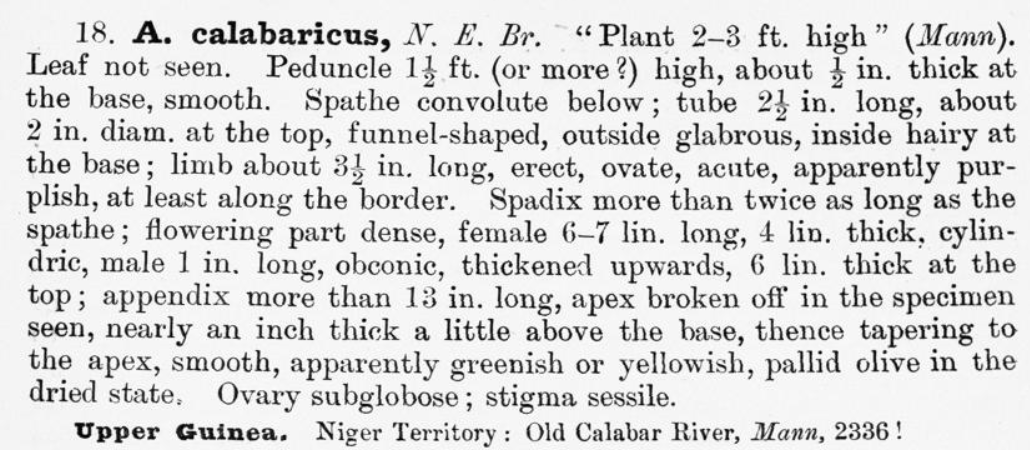
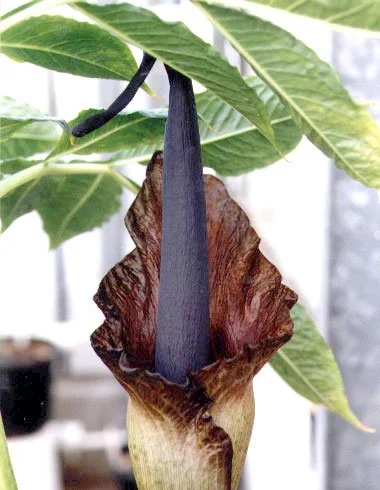
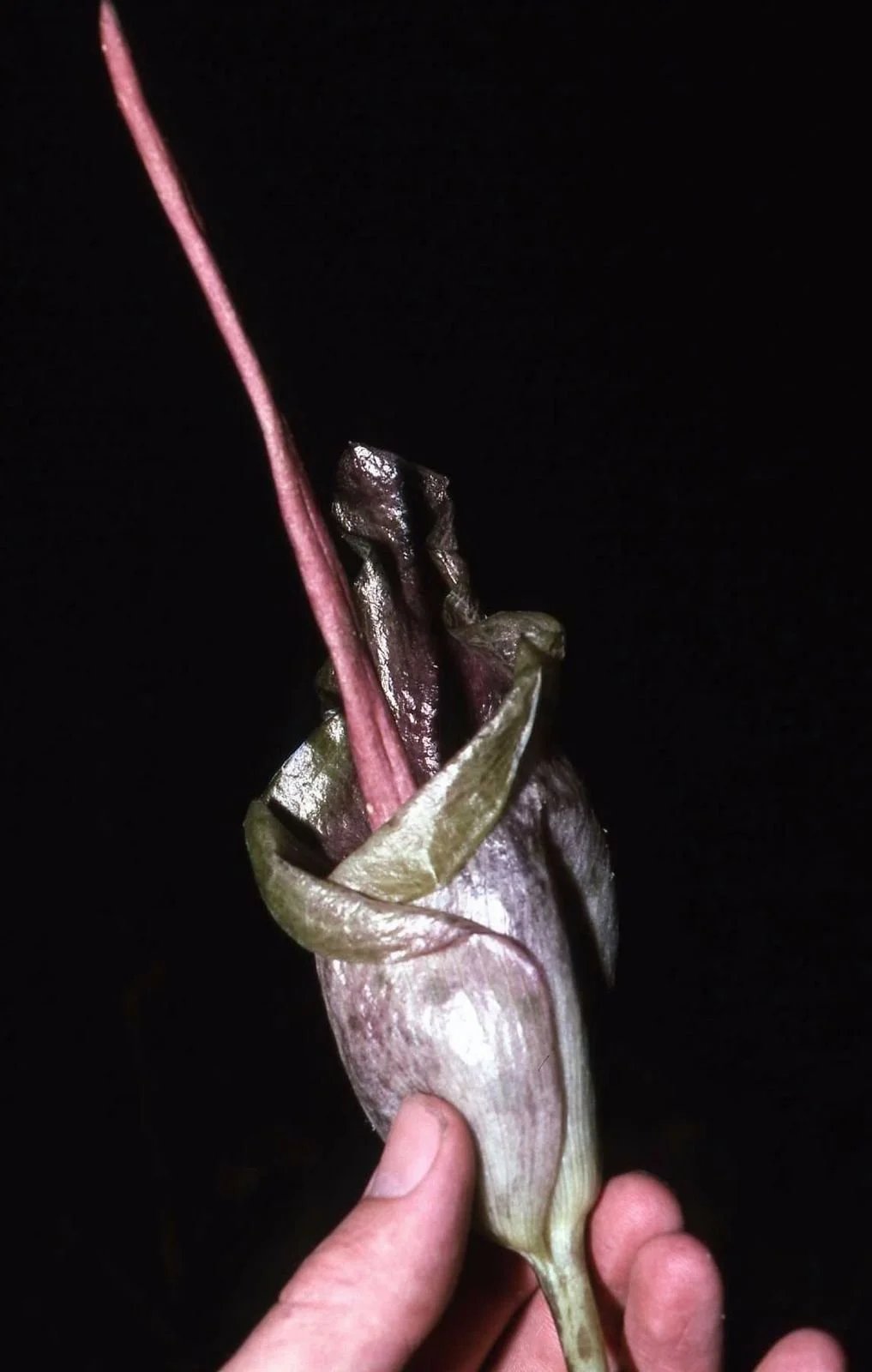
Photo by Kew Gardens
SYNONYMS:
HOMOTYPIC SYNONYMS: N/A
HETEROTYPIC SYNONYMS: N/A
ACCEPTED INFRASPECIFICS: N/A
OTHER: N/A
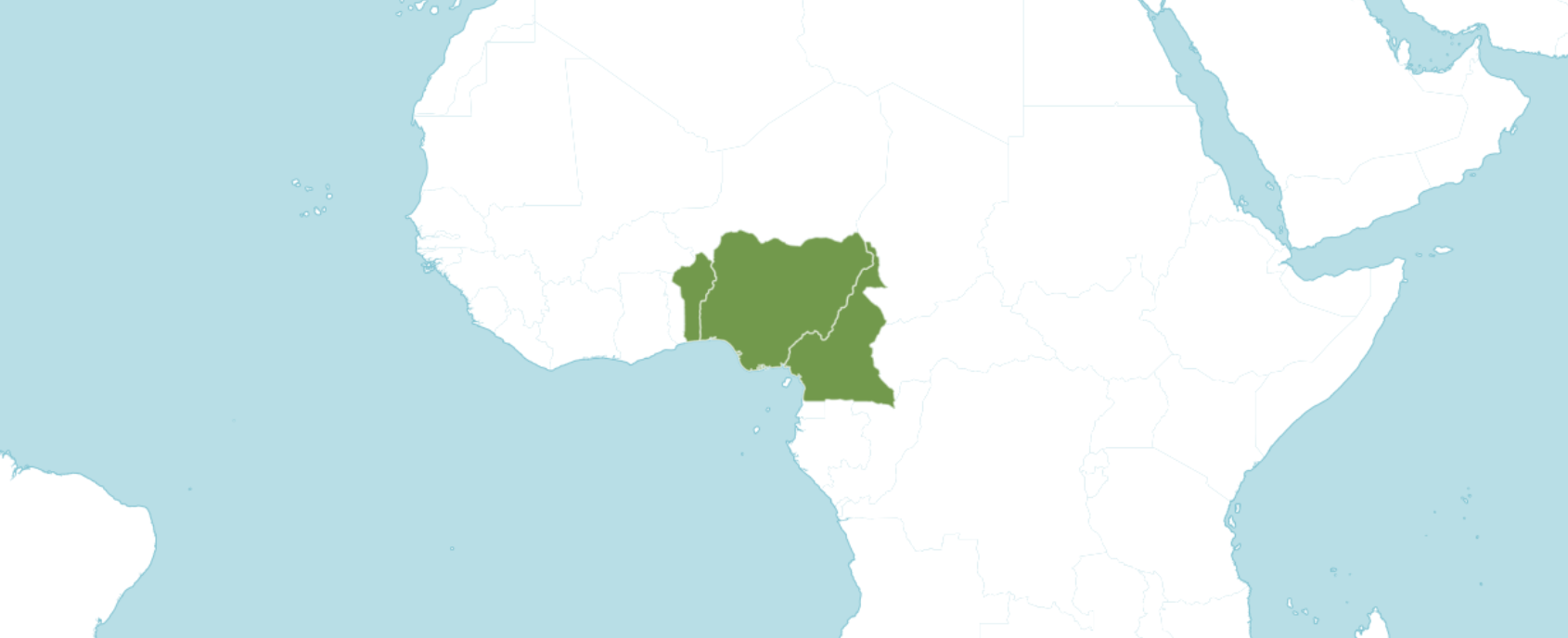
DISTRIBUTION: Benin, Cameroon, Nigeria
CLIMATE: N/A
ECOLOGY: N/A
SPECIES DESCRIPTION:
N/A
INFLORESCENCE:
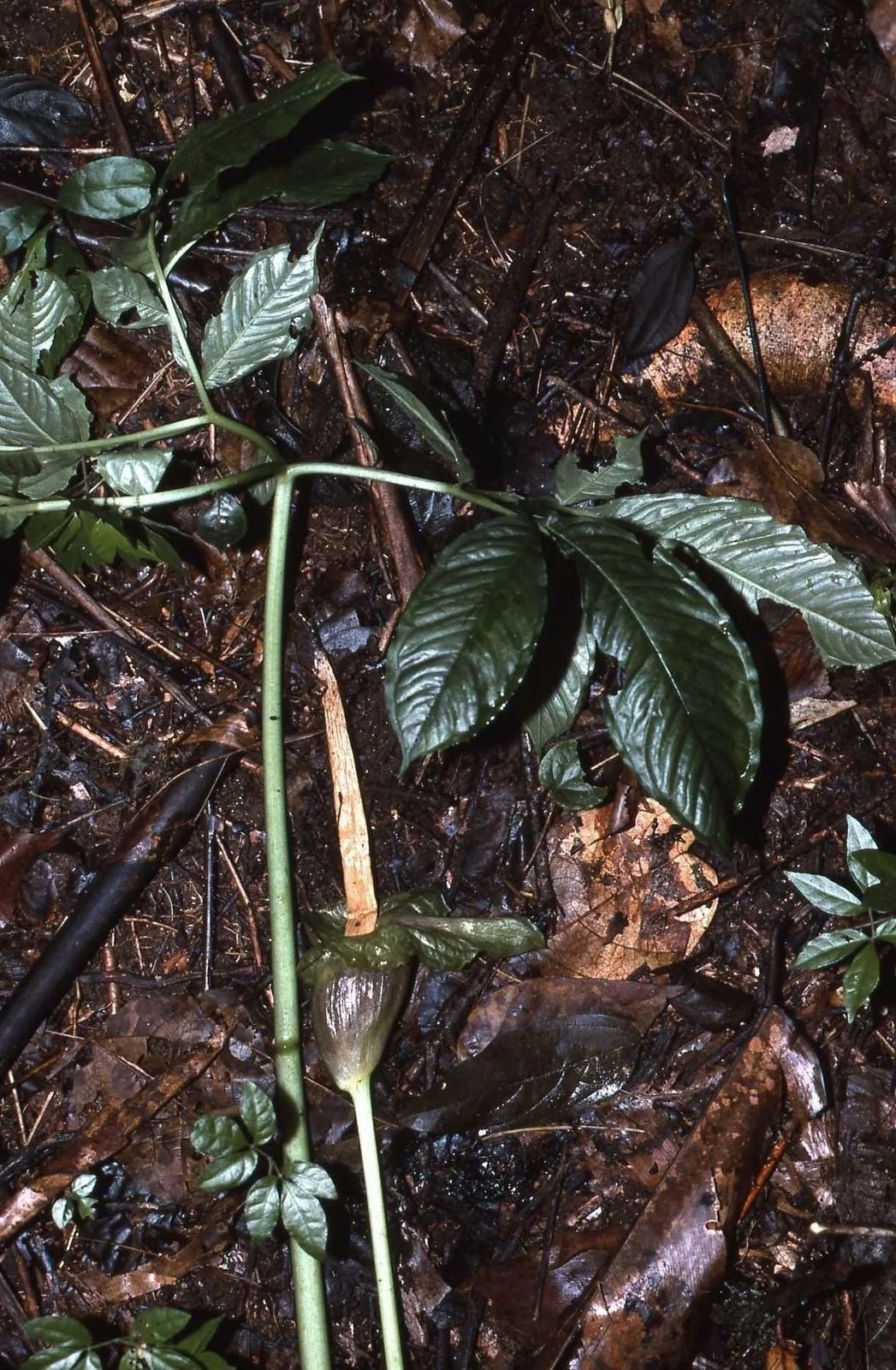
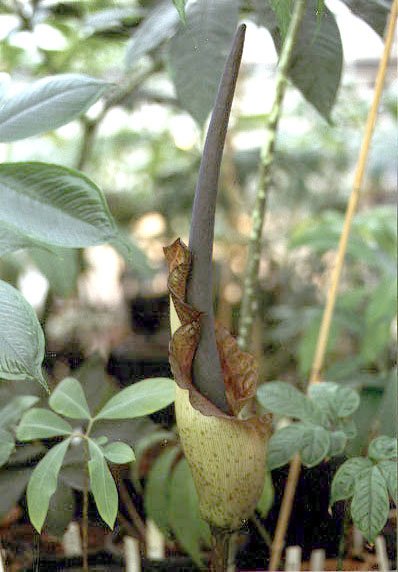
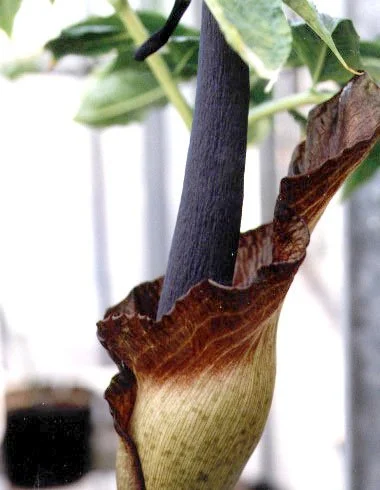
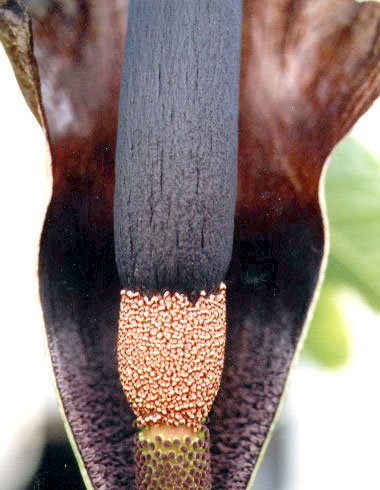
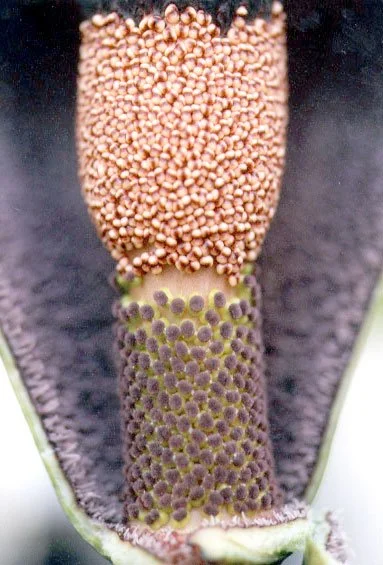
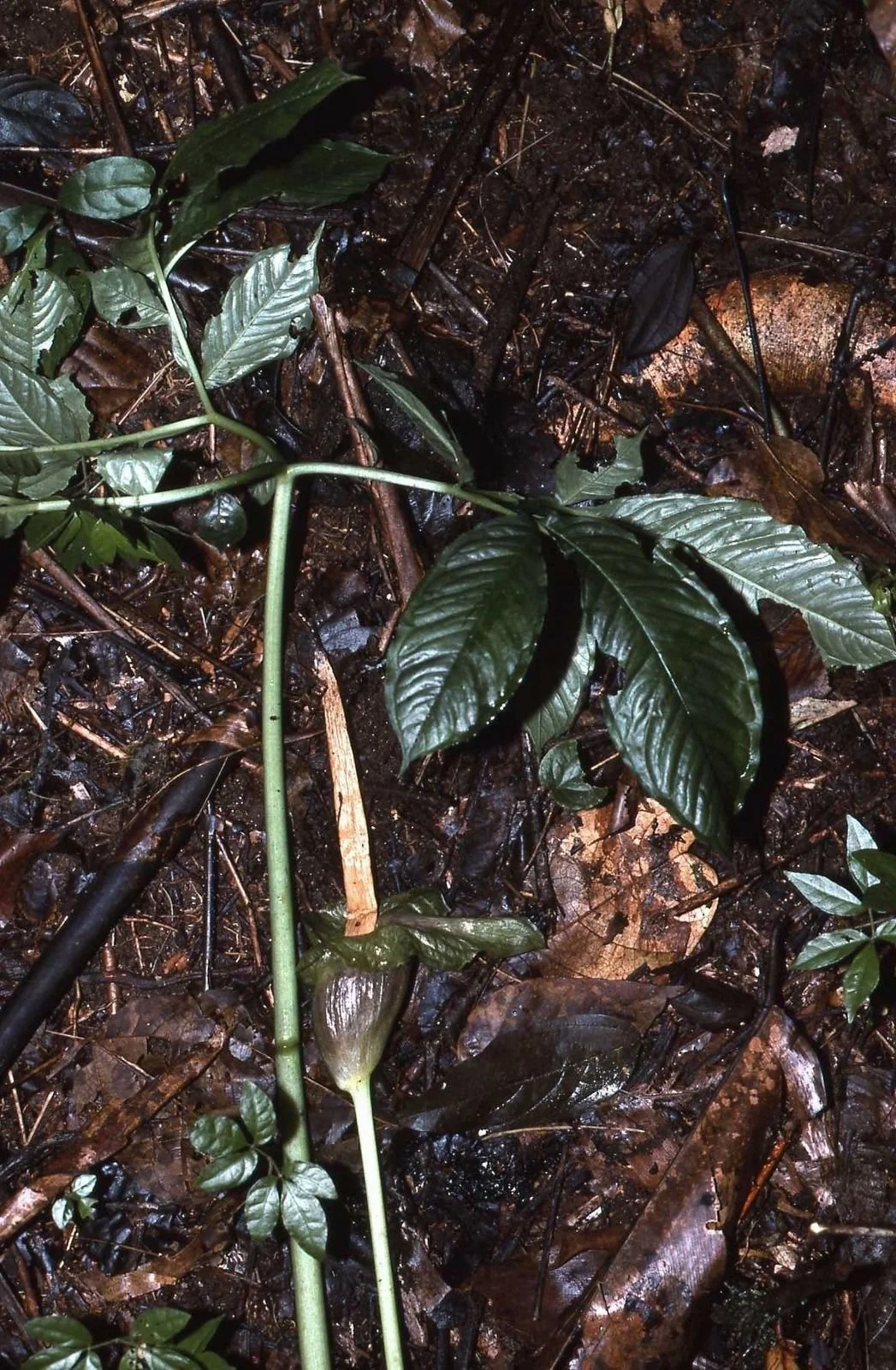
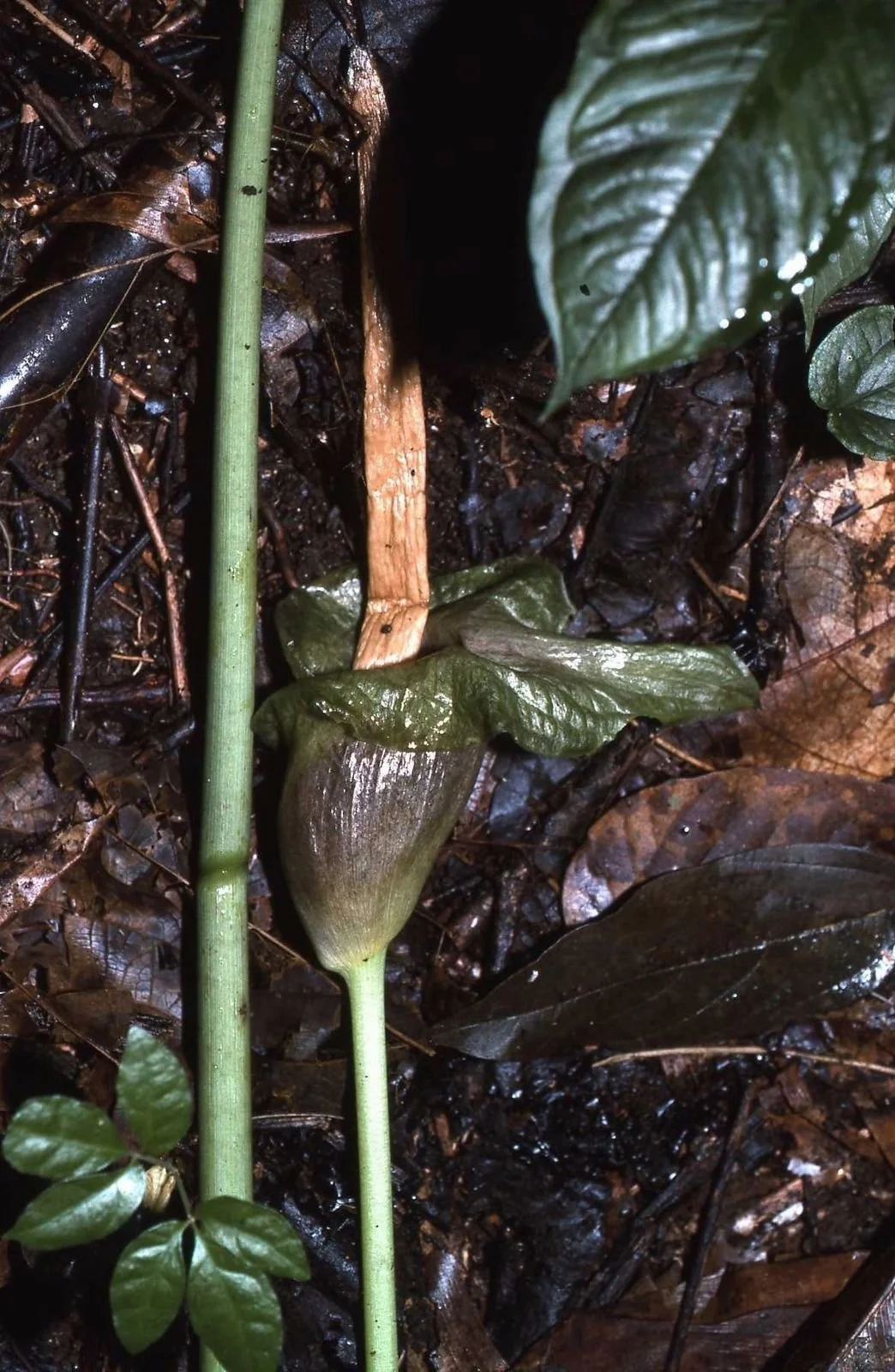
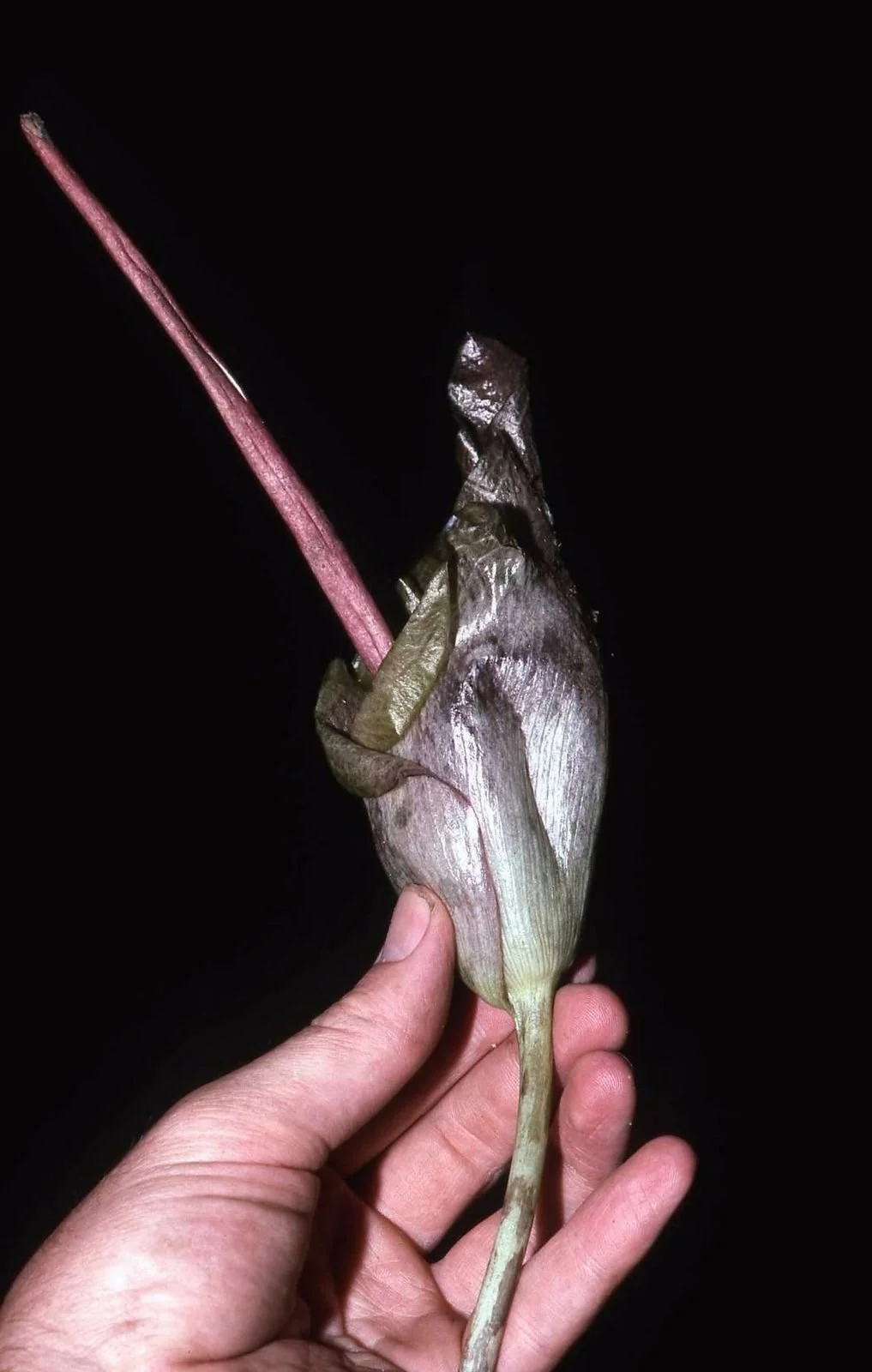
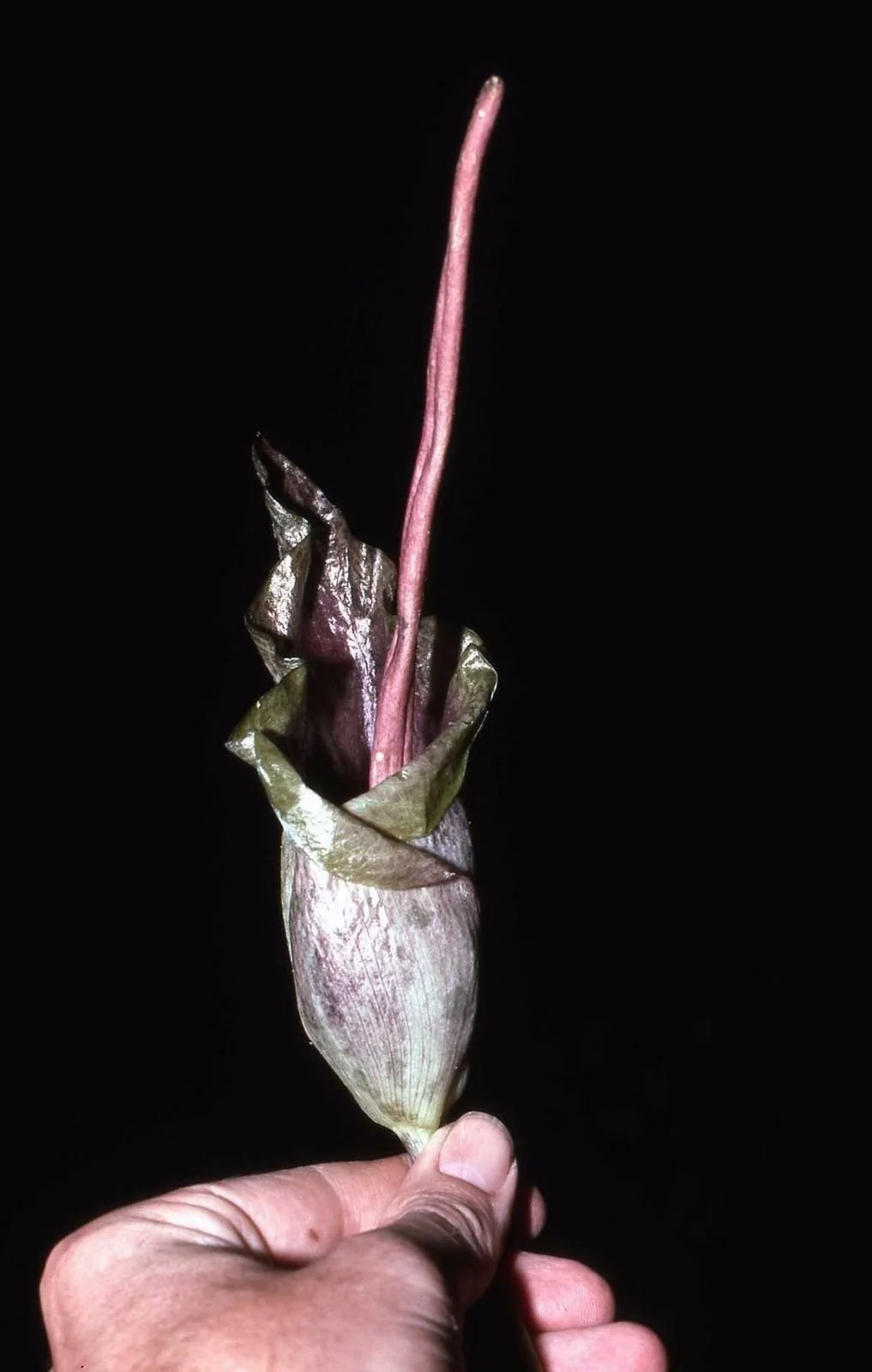
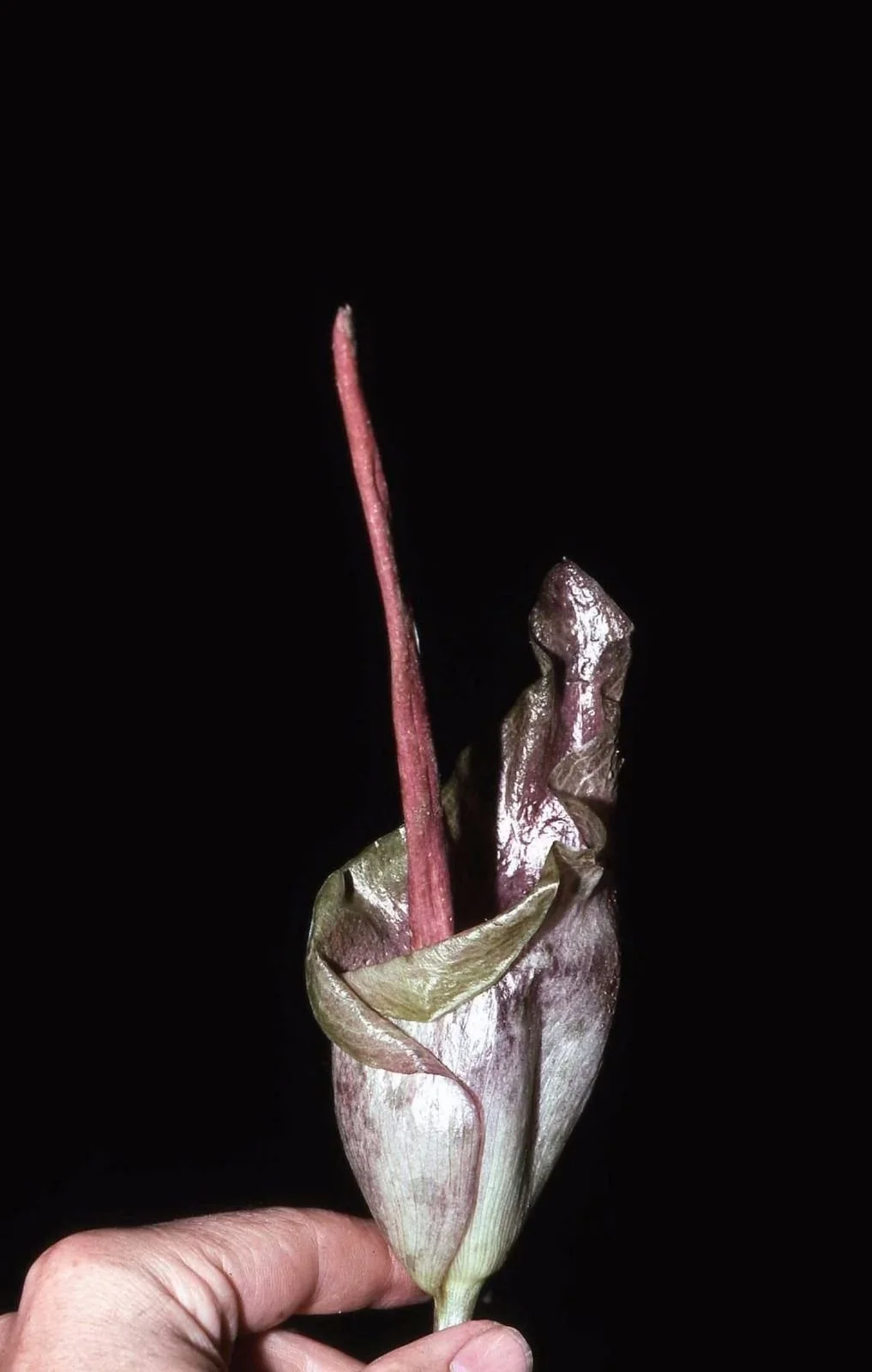
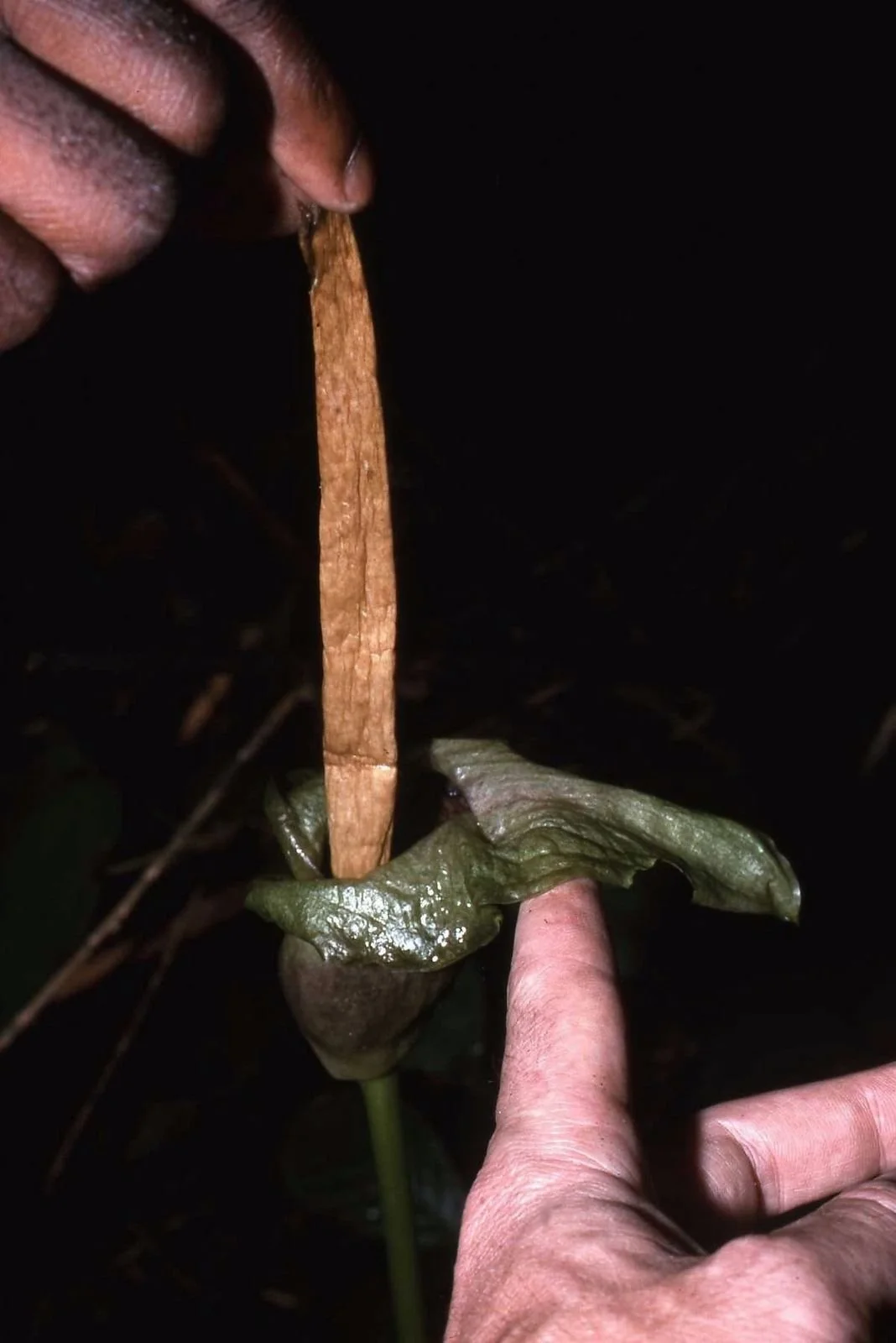
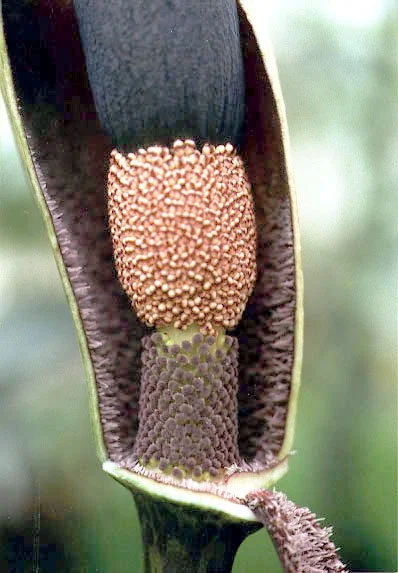
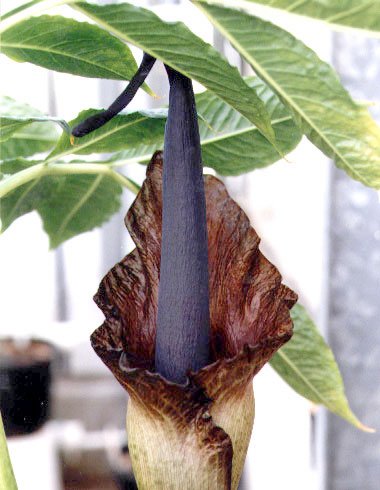
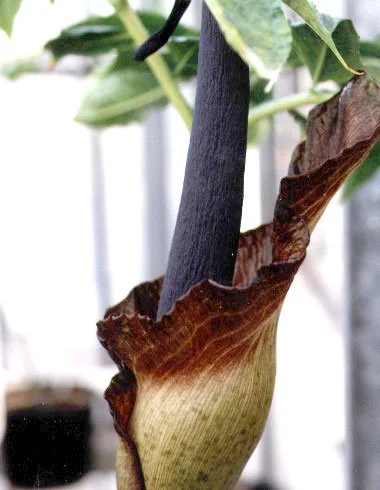
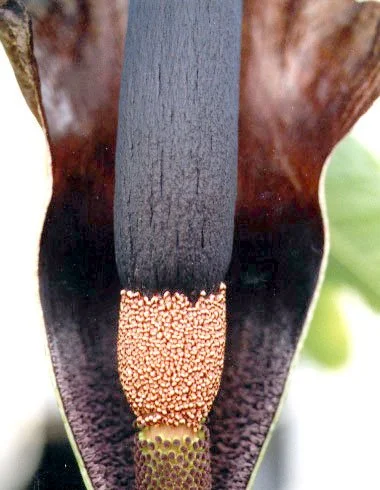
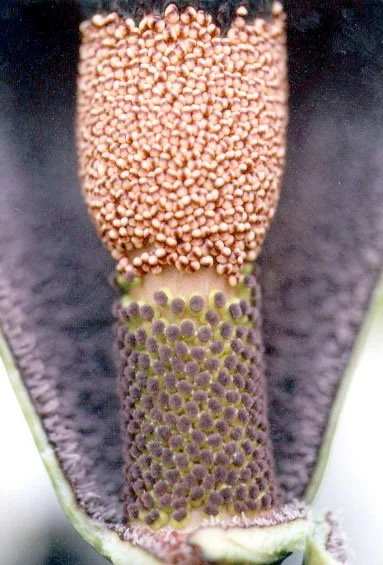
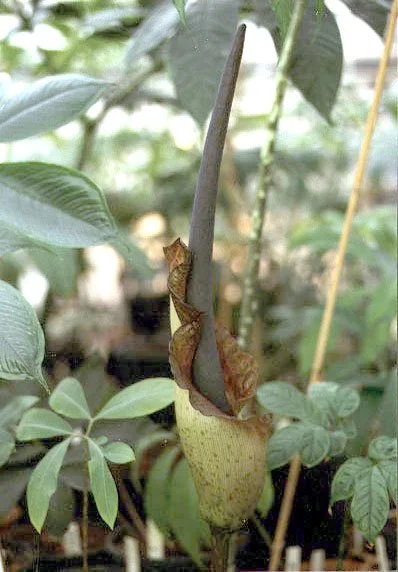
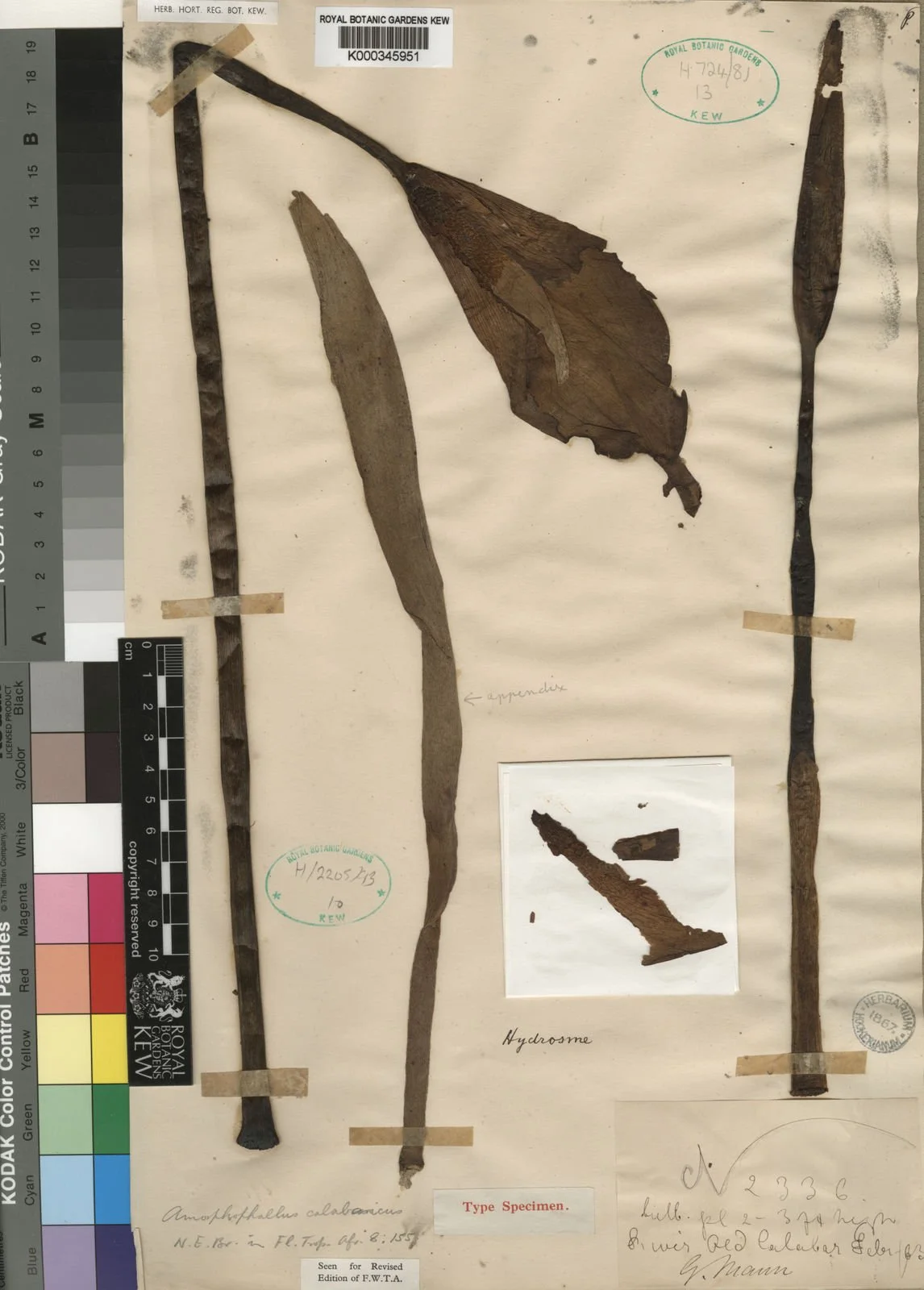
Peduncle 1½ ft. (or more?) high, about ½ in. thick at the base, smooth. Spathe convolute below; tube 2½ in. long, about 2 in. diam. at the top, funnel-shaped, outside glabrous, inside hairy at the base; limb about 3½ in. long, erect, ovate, acute, apparently purplish, at least along the border. Spadix more than twice as long as the spathe; flowering part dense, female 6–7 lin. long, 4 lin. thick, cylindric, male 1 in. long, obconic, thickened upwards, 6 lin. thick at the top; appendix more than 13 in. long, apex broken off in the specimen seen, nearly an inch thick a little above the base, thence tapering to the apex, smooth, apparently greenish or yellowish, pallid olive in the dried state. Ovary subglobose; stigma sessile.
VARIEGATED FORMS: N/A
ETYMOLOGY: The species epithet comes from the Calabar river in Nigeria, where this species was first discovered in the early 1900s
NOTES: In 1997 a revision of African Amorphophallus described a new taxon Amorphophallus calabaricus subsp. mayoi, but in 2022, it was raised from subspecies to full rank as Amorphophallus mayoi
CULTIVARS: N/A
HYBRIDS: N/A
REFERENCES:
Additional photos by Wilbert Hetterscheid