AMORPHOPHALLUS CANALICULATUS
ORIGINAL DESCRIPTION:
Amorphophallus canaliculatus Ittenb., Hett. & Lobin, sp. nova
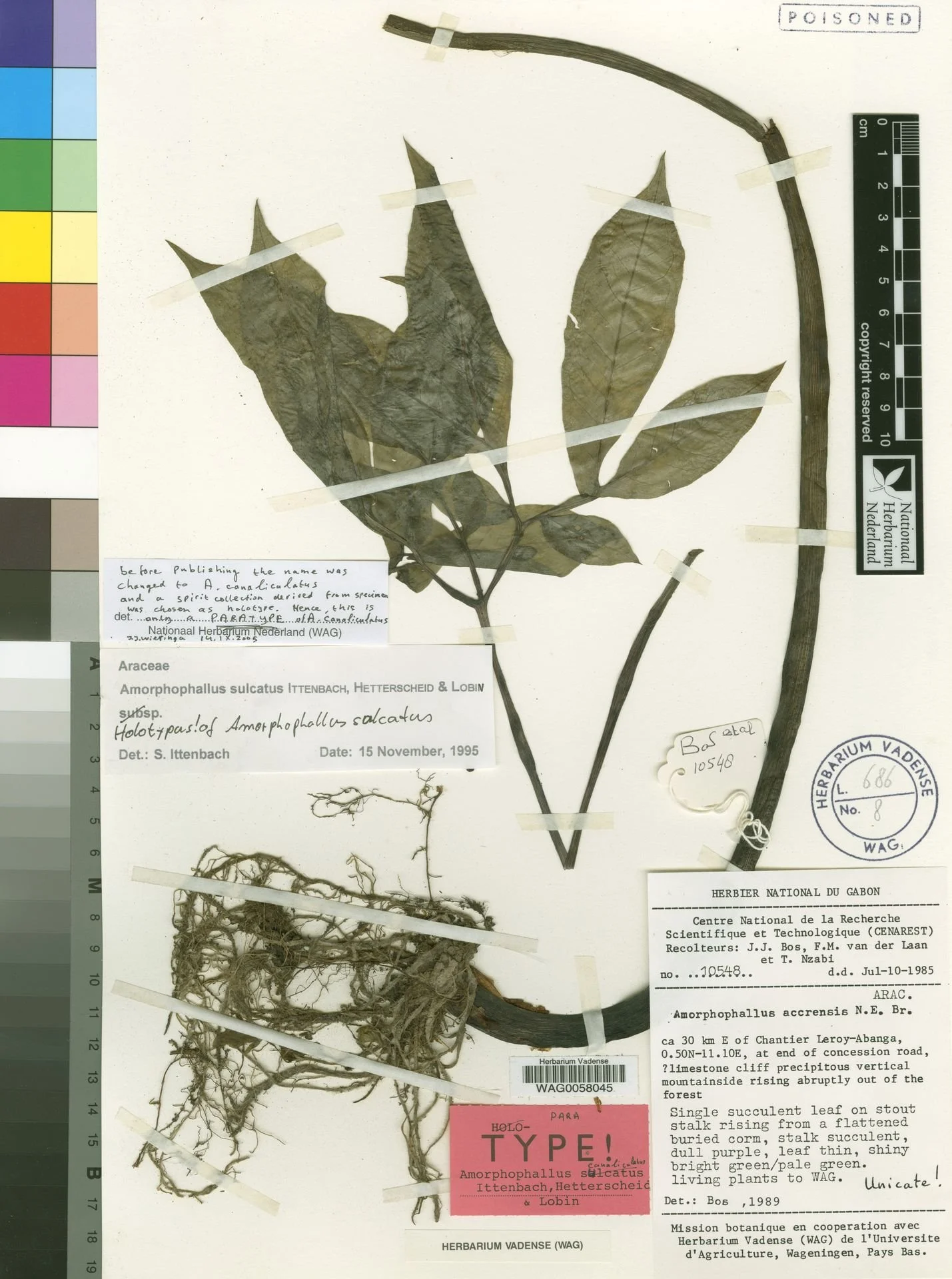
Holotypus: Cult. [from J.J. Bos, F.M. van der Laan & T. Nzabi 10548, Gabon, 0°50′N, 11°55′E, 75 km ouest Societé Exploitation Forestier, Acumea Hang, 10.7.1985], W. L. A. Hetterscheid H.AM 014-T (L! [spirit coll.]).
Differt ab omnibus speciebus generis Amorphophalli cum emergentiis piliformibus et inflorescentia brevi pedunculata appendici valde canaliculata et rugosa. Ab Amorphophallus stuhlmannii subsp. congoensi aheno cortina spathae asymmetrico et ovali late laminato et stigmate non recurvo et non conico differt.
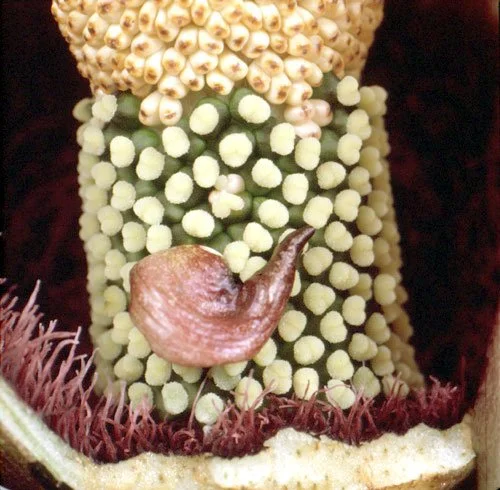
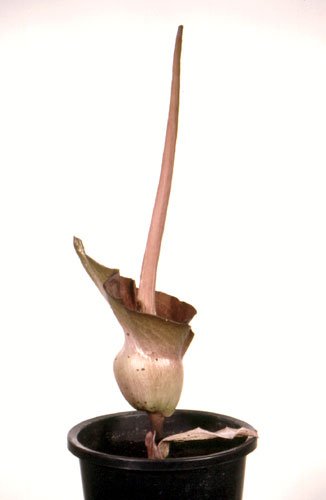
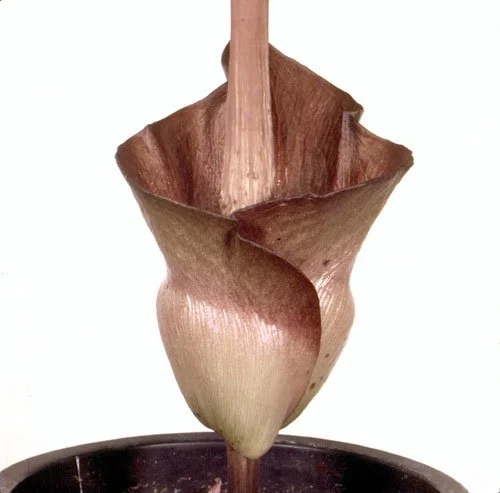
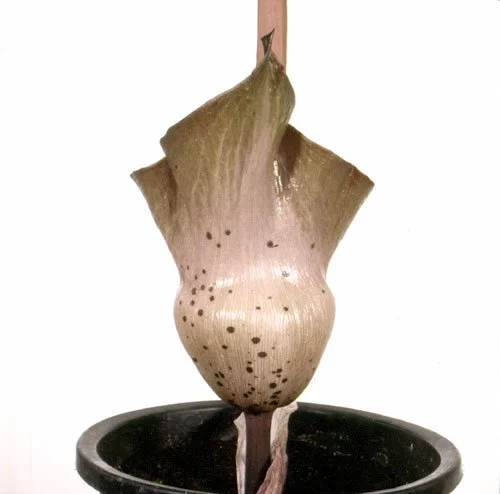
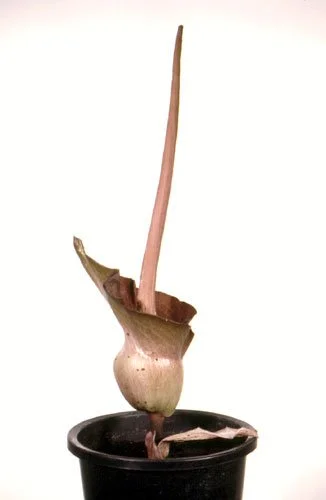
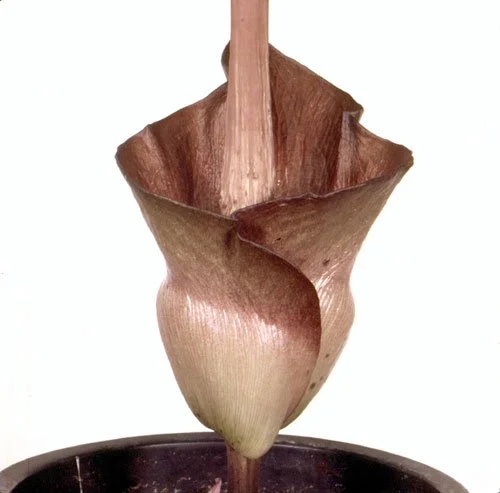
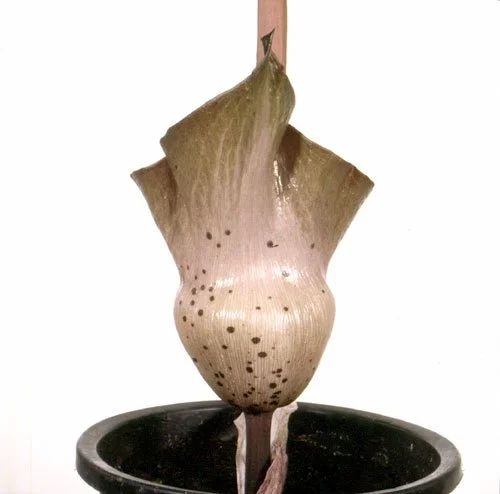
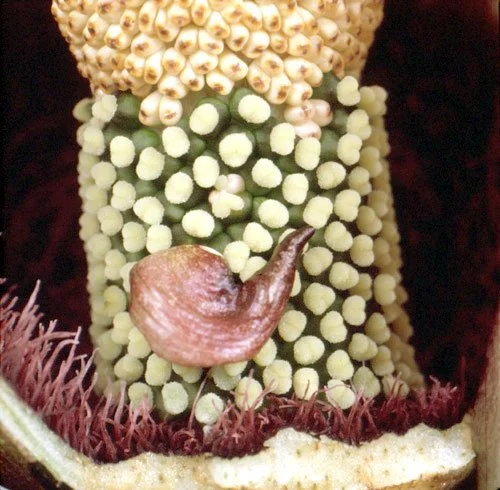
Photo by Hetterscheid et al.
SYNONYMS:
HOMOTYPIC SYNONYMS: N/A
HETEROTYPIC SYNONYMS: N/A
ACCEPTED INFRASPECIFICS: N/A
OTHER: N/A
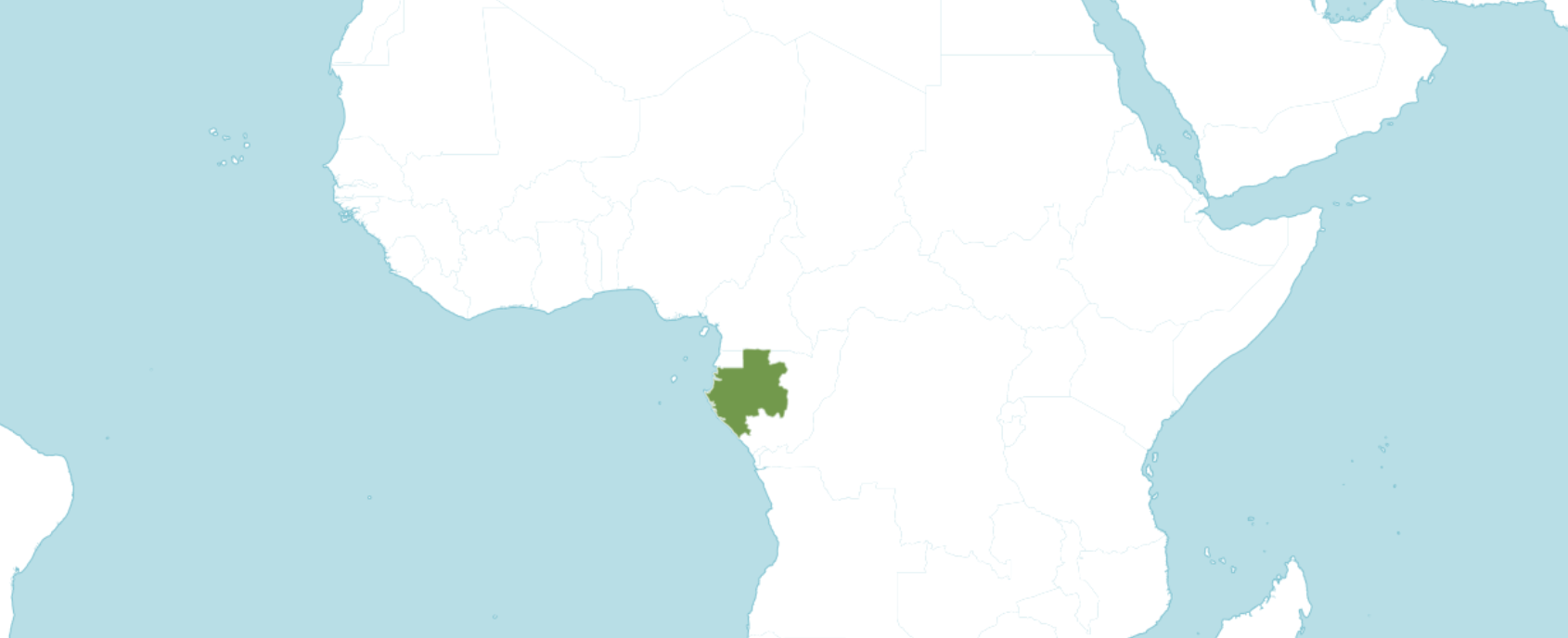
DISTRIBUTION: NW Gabon, only known from one site (see below)
CLIMATE: N/A
ECOLOGY: N/A
SPECIES DESCRIPTION:
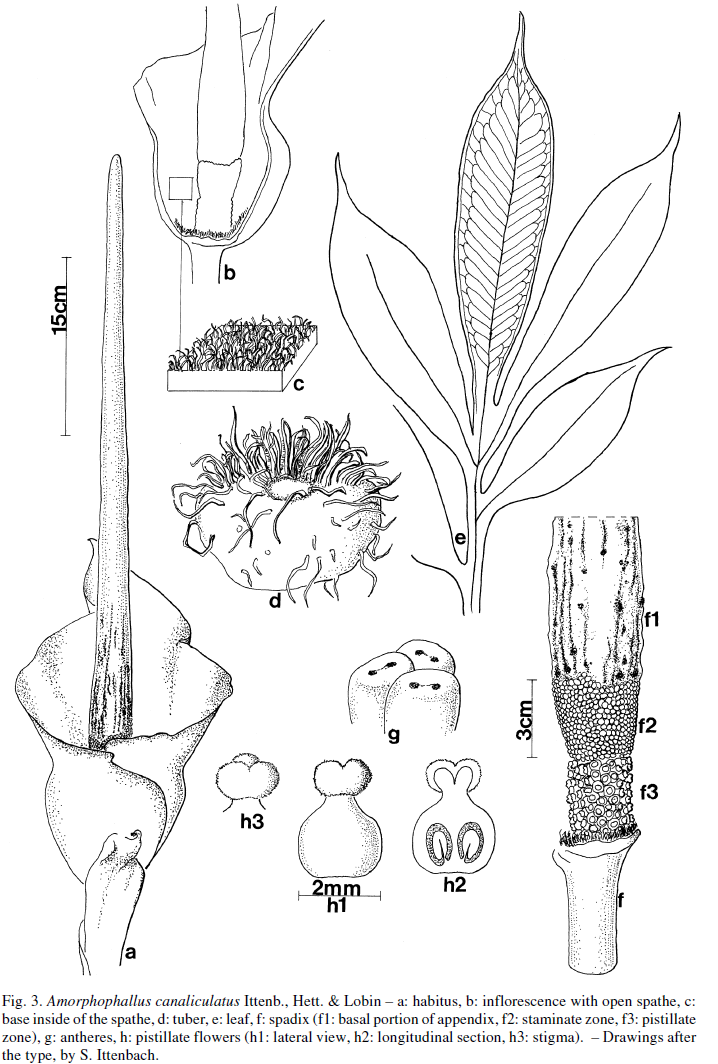
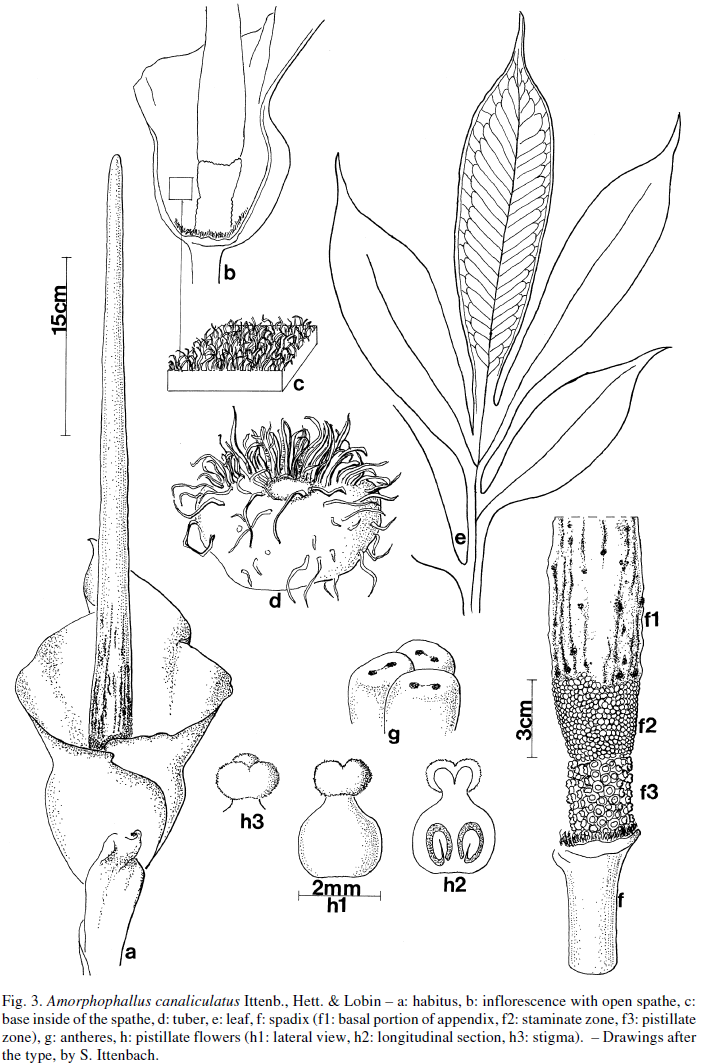
Tuber subglobose, brown, 12 7 8 cm, no offset development. Leaf to 0.6−1 m long; petiole 40−70 7 1.5−2.5 cm, dark purplish brown with blackish-purplish spots, smooth; lamina to 50−60 cm in diameter, rhachises winged distal from the first leaflets; terminal leaflets elongateoval, 9−12 7 3 cm, attenuate into a 1.5 cm long tip. Cataphylls 2, membranous, the inner twice as long as and the outer half as long as the peduncle, inside whitish pink, outside purple with small, brown to blackish spots.
INFLORESCENCE:
Inflorescence short-peduncled, developing before the leaf, c. 70−75 cm long, somewhat succulent; peduncle 4−10 cm long and 2 cm in diameter, brownish to purple with few small dark green to blackish spots, smooth. Spathe urceolate, 20−30 cm long, separated by a constriction in a wide, asymmetrical, ovoid tube and a spreading, triangular, limb; left side of the spathe overlapping with widely arched edge; tube 8.5−12 7 9−12 cm, in cross section asymmetrically oval to slightly depressed-circular, outside greyish green with a purple flush, with dark brown to dark green scattered spots and purple veins, inside basally purple, upwards changing to creamy or whitish green, the lower half densely covered with 2−4 mm long, dark purple hairlike emergences; limb spreading at an angle of c. 120° from the tube, 10−18 cm long, broad-triangular-acute, slightly recurved, outside brownish green and purple, inside glossy dark purple, margin undulate and purple. Spadix sessile, 60−70 cm long, more than twice as long as spathe; pistillate zone cylindrical, 3.5 7 2.5 cm, flowers congested; staminate zone obconical, 3.2 7 2.5−3.2 cm, flowers densely congested; appendix c. 56 cm long, 3.2 cm in diameter at the base, long-clavate, above the staminate zone slightly constricted, lower third with elongate, irregular, deep grooves, base creamy with irregular purple stripes, upwards becoming evenly pinkish, basally with antherlike staminodes higher up passing over into irregular warts and grooves; ratio of pistillate to staminate zone length 1 : 1; without a sterile zone between the pistillate and staminate zone. Pistillate flowers 4 mm long; ovaries ovoid-globose to cubic, (1−)2(−3)-locular, 2.5−3 7 2 mm, with one basal to slightly lateral, elongate, anatrop ovule; stigma subsessile, oval in both cross and lateral section, slightly 2(−3)lobed, 1 7 2 mm, lobes cylindrical, tapering to a roundish tip, light green to creamy; style very short, 0.2−0.6 mm long, dark green. Staminate flowers 1.7−2 7 2 mm, creamy to light brown; anthers ovoid to elongate, free, or rarely pairwise unilaterally connate; filaments only 0.2−0.5 mm long but rather wide, sometimes connate to a roundish or irregular, flat columna; pores circular with reddish brown edges, one apical pore per theca; connective with two parallel short grooves, each with an apical brownish to purplish spot. Infructescence unknown. Pollen globular, inaperturate, exine smooth (psilate).
VARIEGATED FORMS: N/A
ETYMOLOGY: The species epithet canaliculatus derives from the Latin canaliculus (“small channel” or “groove”) and refers to the irregular, deeply channelled surface of the spadix appendix.
NOTES:
Amorphophallus canaliculatus also belongs to the large African section with hairlike emergences at the base of the spathe tube, but differs from all other African species with short peduncles in the strongly grooved appendix base. Amorphophallus canaliculatus is most similar to Amorphophallus zenkeri.
Additional specimen seen Gabon: 0° 50′N, 11°55′E, 75 km ouest Societé Exploitation Forestier, Acumea Hang, 10.7.1985, JJ. Bos, F.M. van der Laan & T. Nzabi 10548 (WAG).
CULTIVARS: N/A
HYBRIDS: N/A
REFERENCES: