AMORPHOPHALLUS CAUDATUS
ORIGINAL DESCRIPTION:
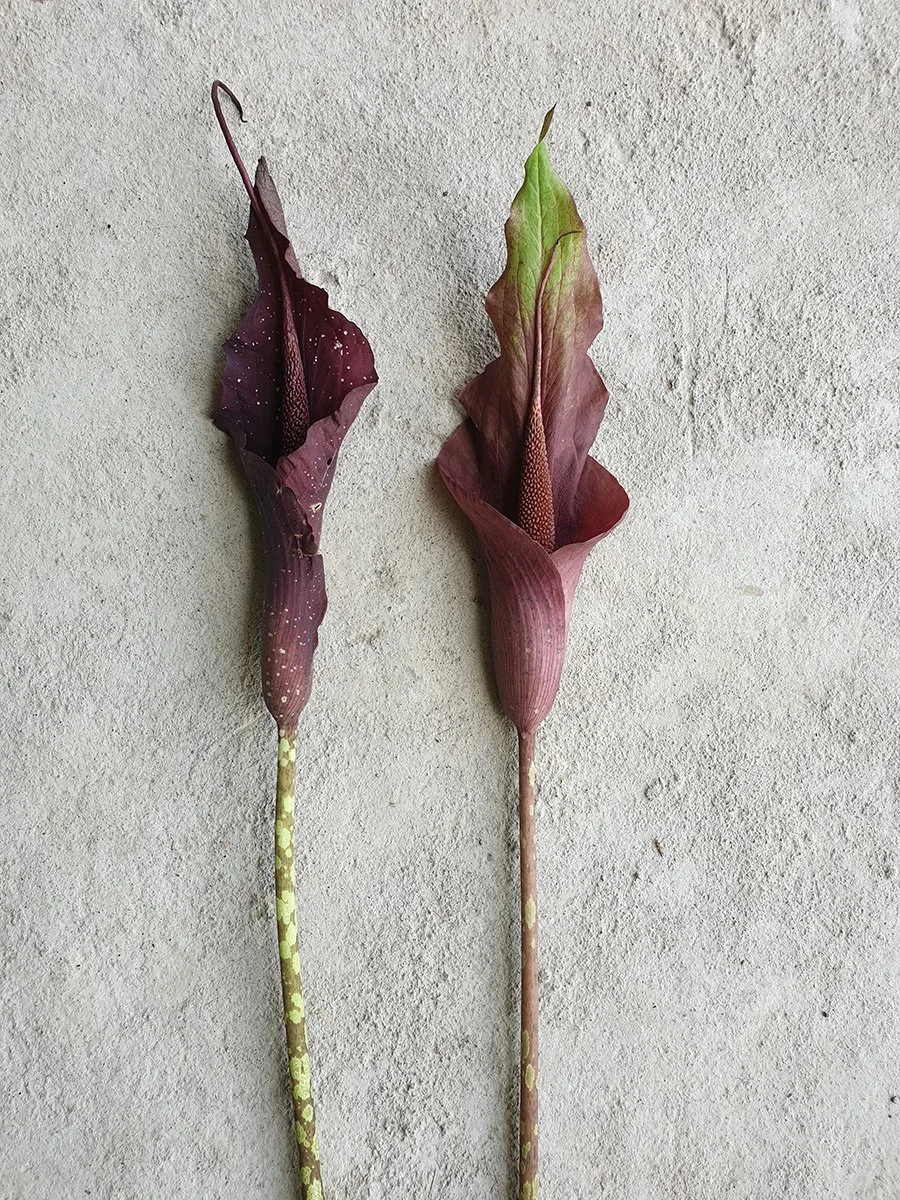
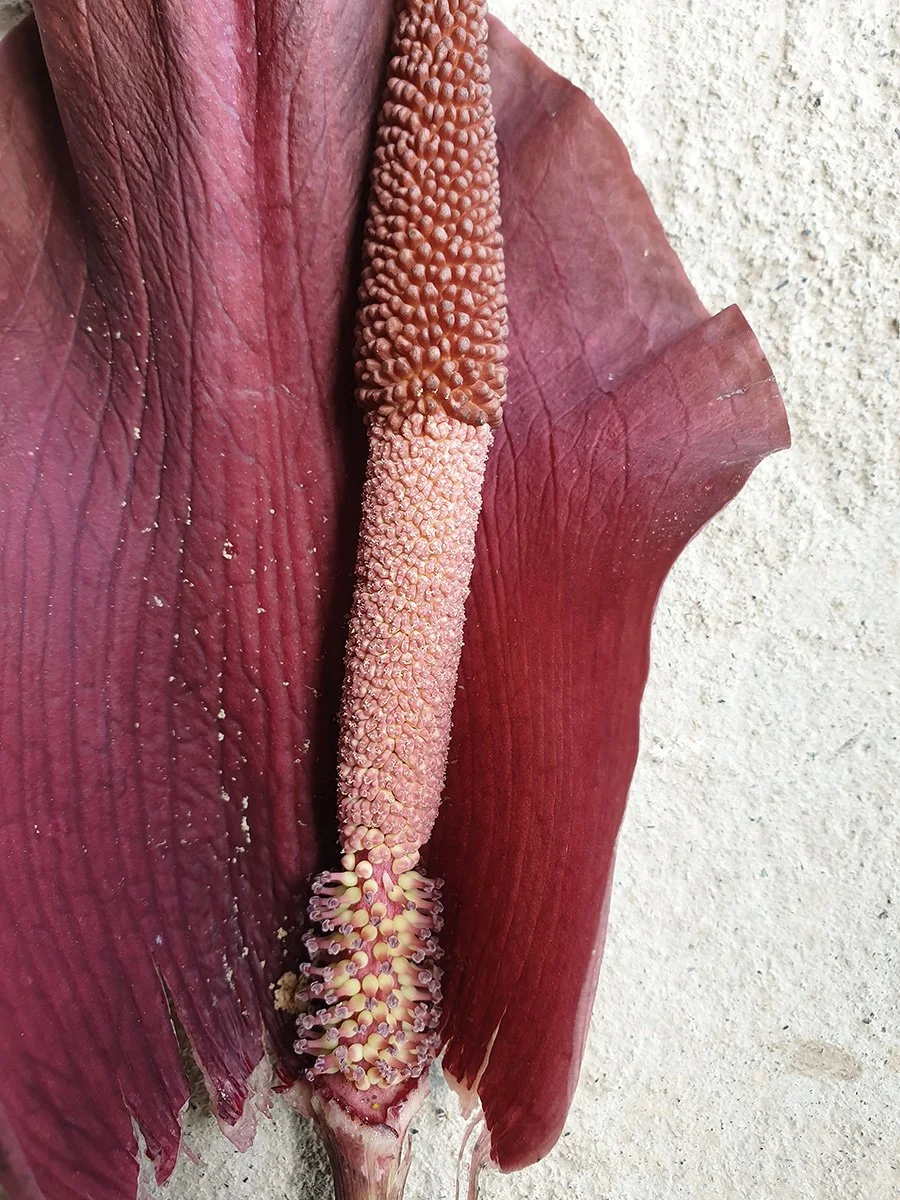
A new species of Amorphophallus is described and illustrated here, from the province of Camarines Norte, Luzon island, the Philippines. The new species, Amorphophallus caudatus, is morphologically close to Amorphophallus luzoniensisin having a verruculose spadix, a similar spathe shape, and similar size of the ovary. However, the new species is distinct by its larger leaves, a longer peduncle, a longer and wider spathe, an inflated, verruculose spadix which strongly narrows to the caudate upper half, a fusiform ovary, and a shorter style with a shallowly 2–3-lobed stigma. The peculiar shape of the spadix with its verruculose inflated base and caudate upper half is unique amongst Philippine Amorphophallus species.
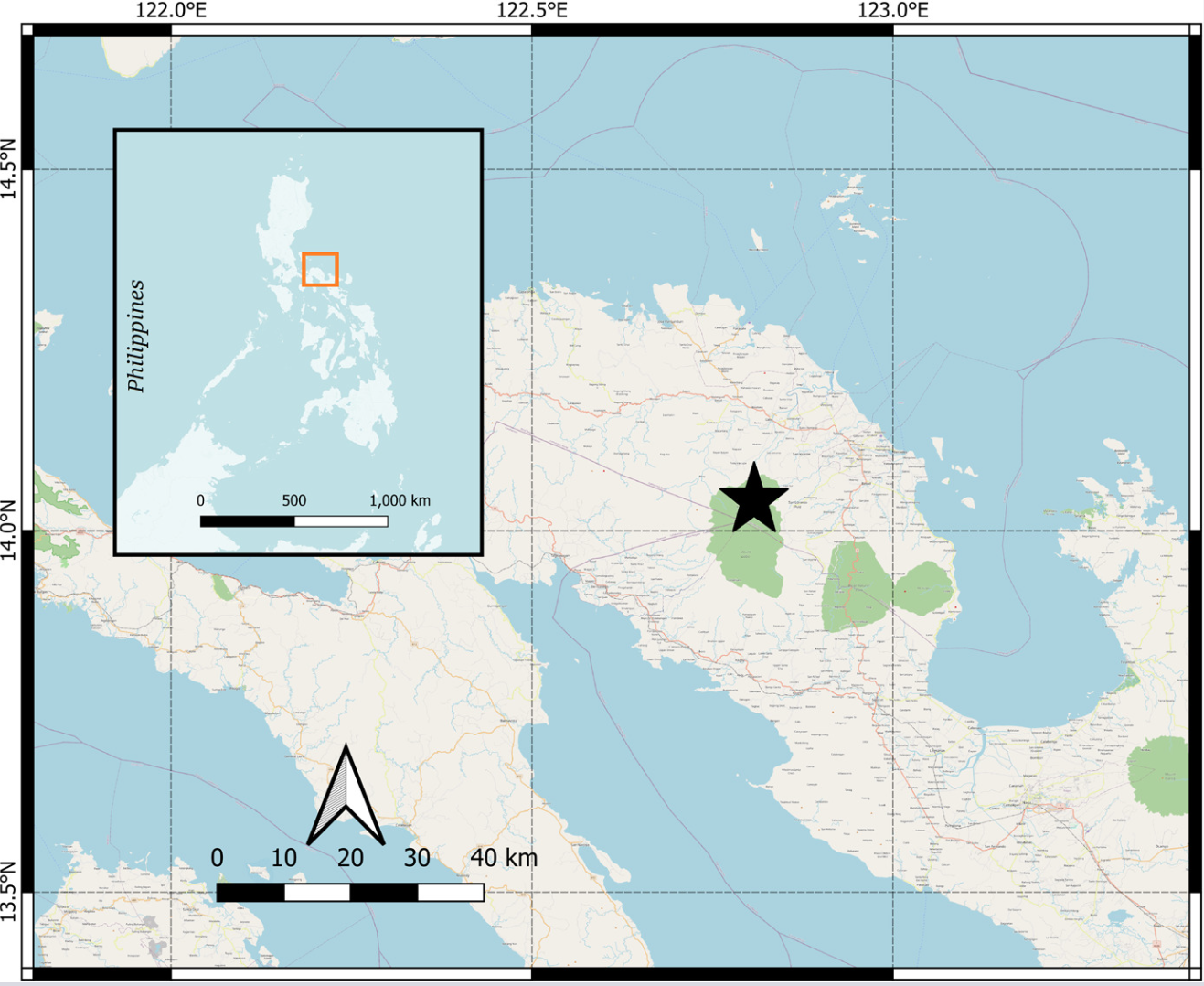
Type: Philippines, Luzon, Camarines Norte Province, Municipality of San Vicente, in shaded areas, with clay and loam substrate of the Abasig-Matogdon-Mananap Natural Biotic Area (AMMNBA), 14°2′59″N, 122°49′19″E, above 380 m a.s.l., 31 Mar 2020, PTI 0001 with J. Violeta, H. Villanueva and M. Sevilla (holotype: PNH, isotype: NLUH).
Paratype: Philippines, Luzon, Camarines Norte Province, Municipality of San Vicente, in shaded areas, with clay and loam substrate of the Abasig-Matogdon-Mananap Natural Biotic Area (AMMNBA), 14°2′59″N, 122°49′19″E, above 380 m a.s.l., 31 Mar 2020, PTI 0002 with J. Violeta, H. Villanueva and M. Sevilla (paratype: NLUH).
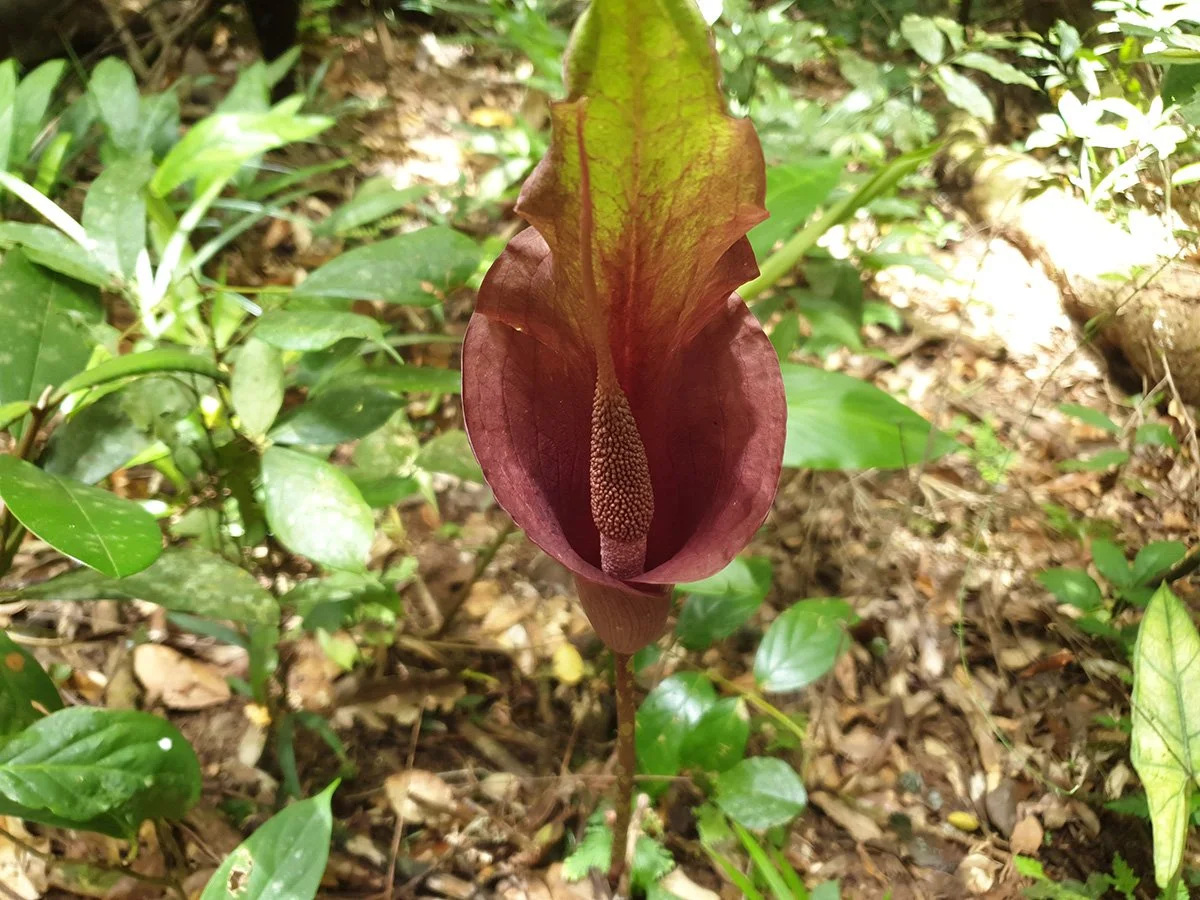
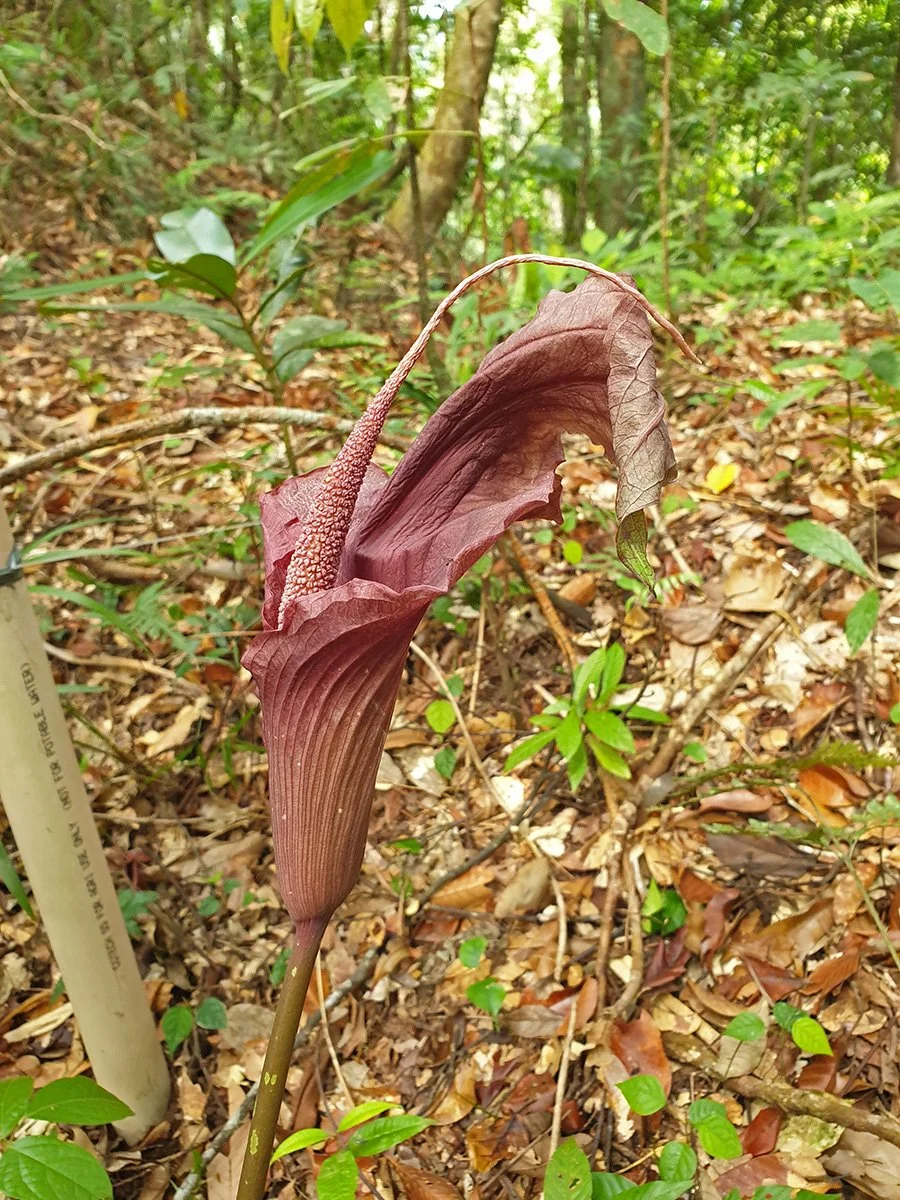
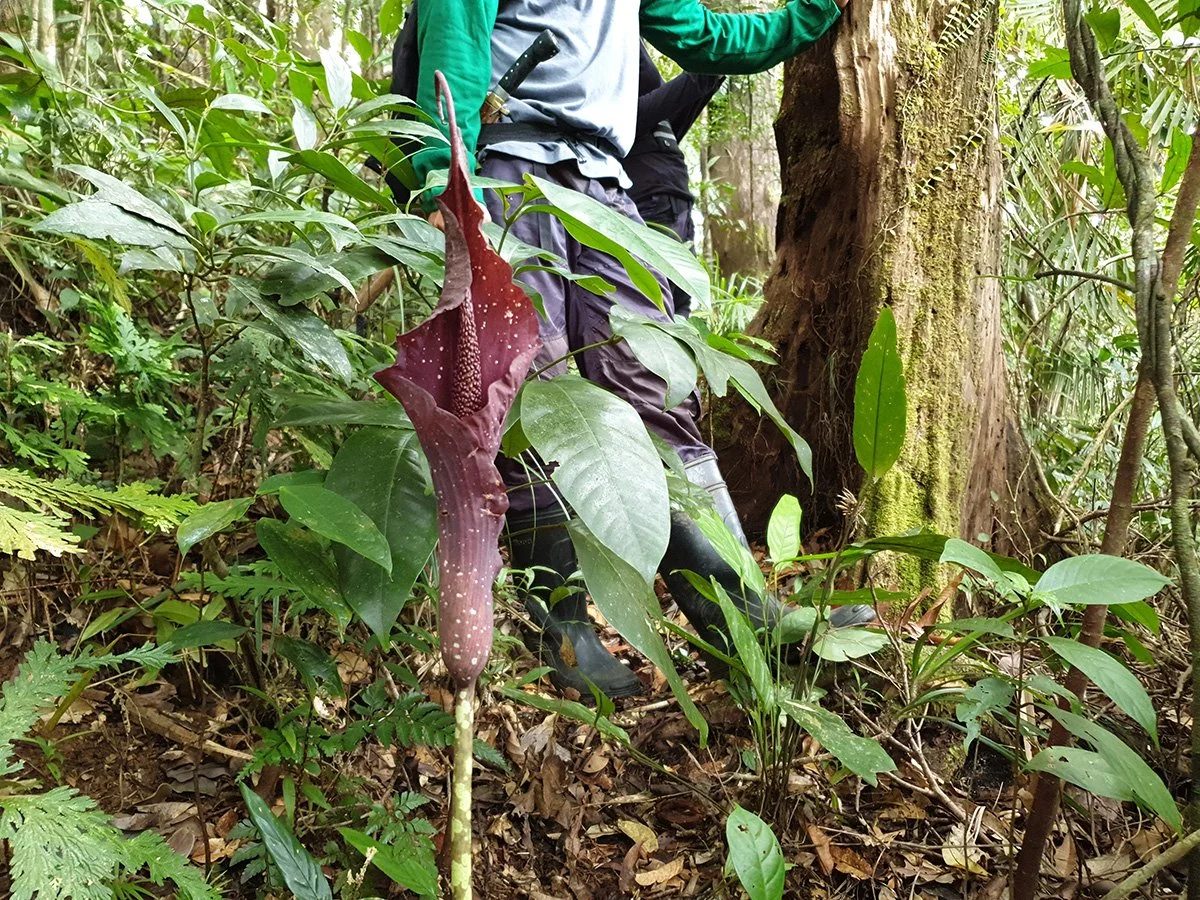
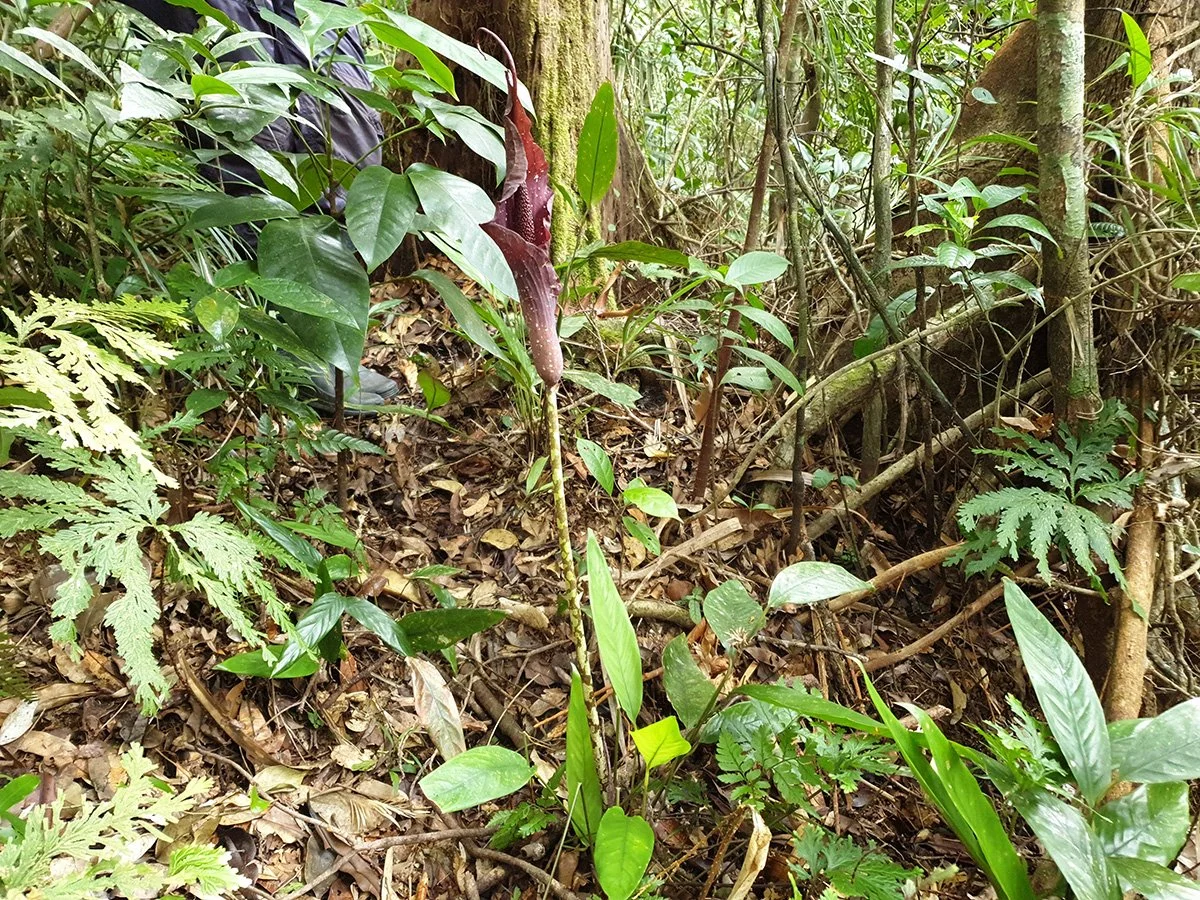
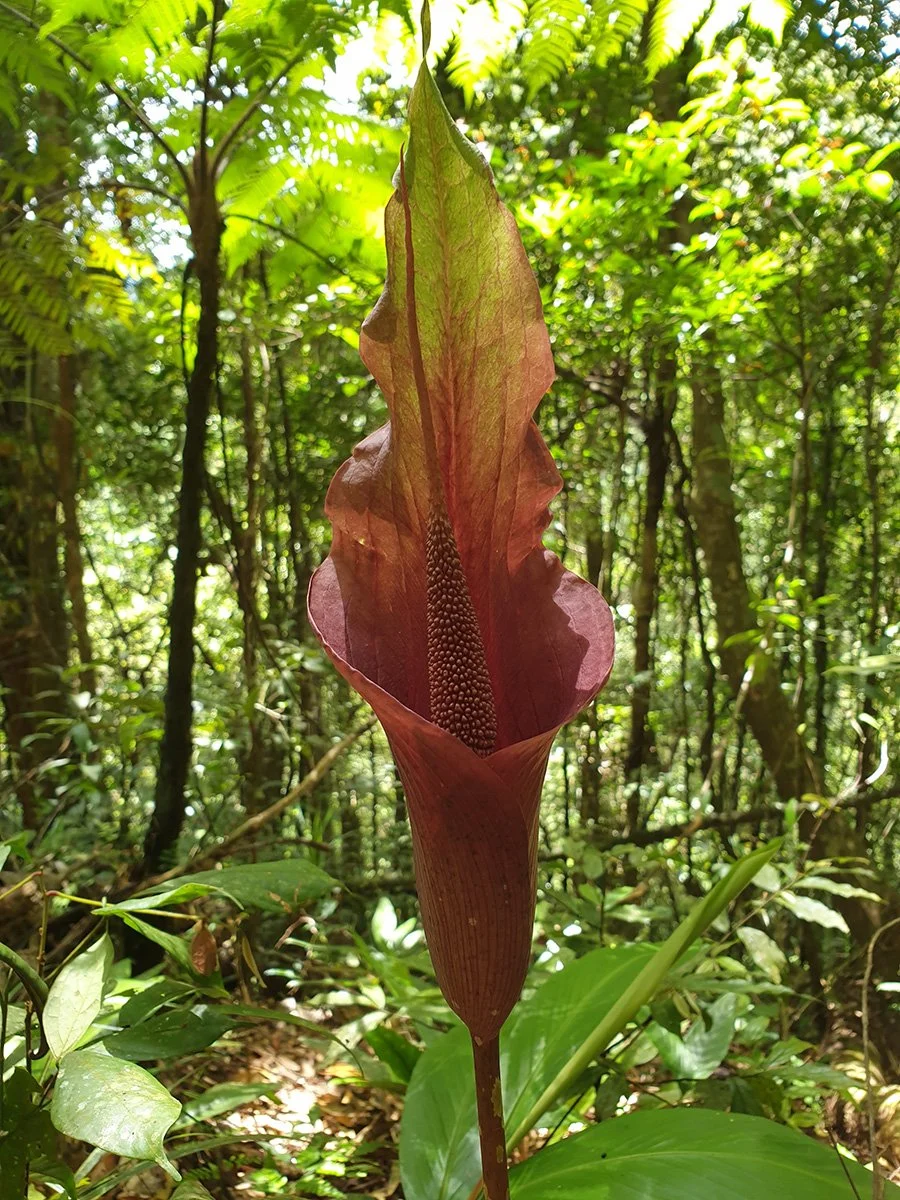
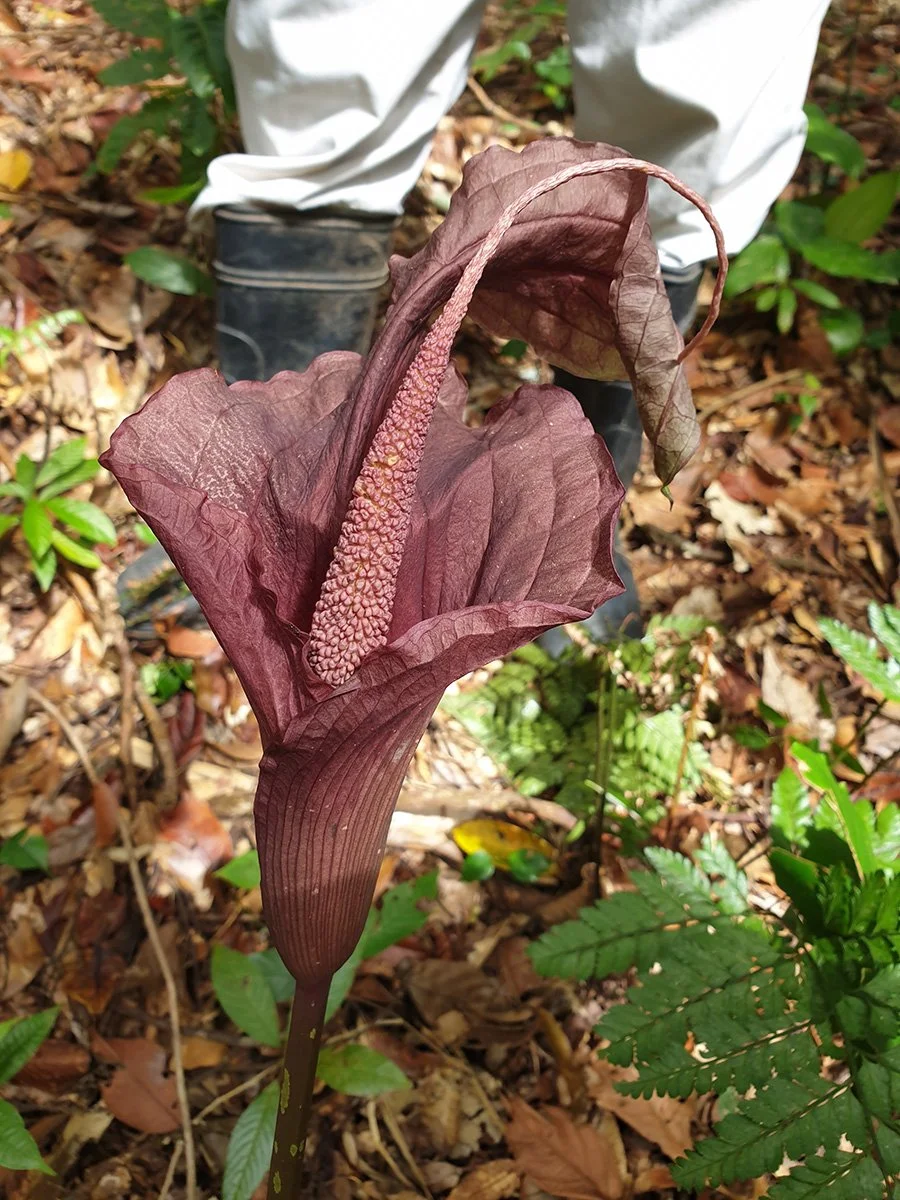
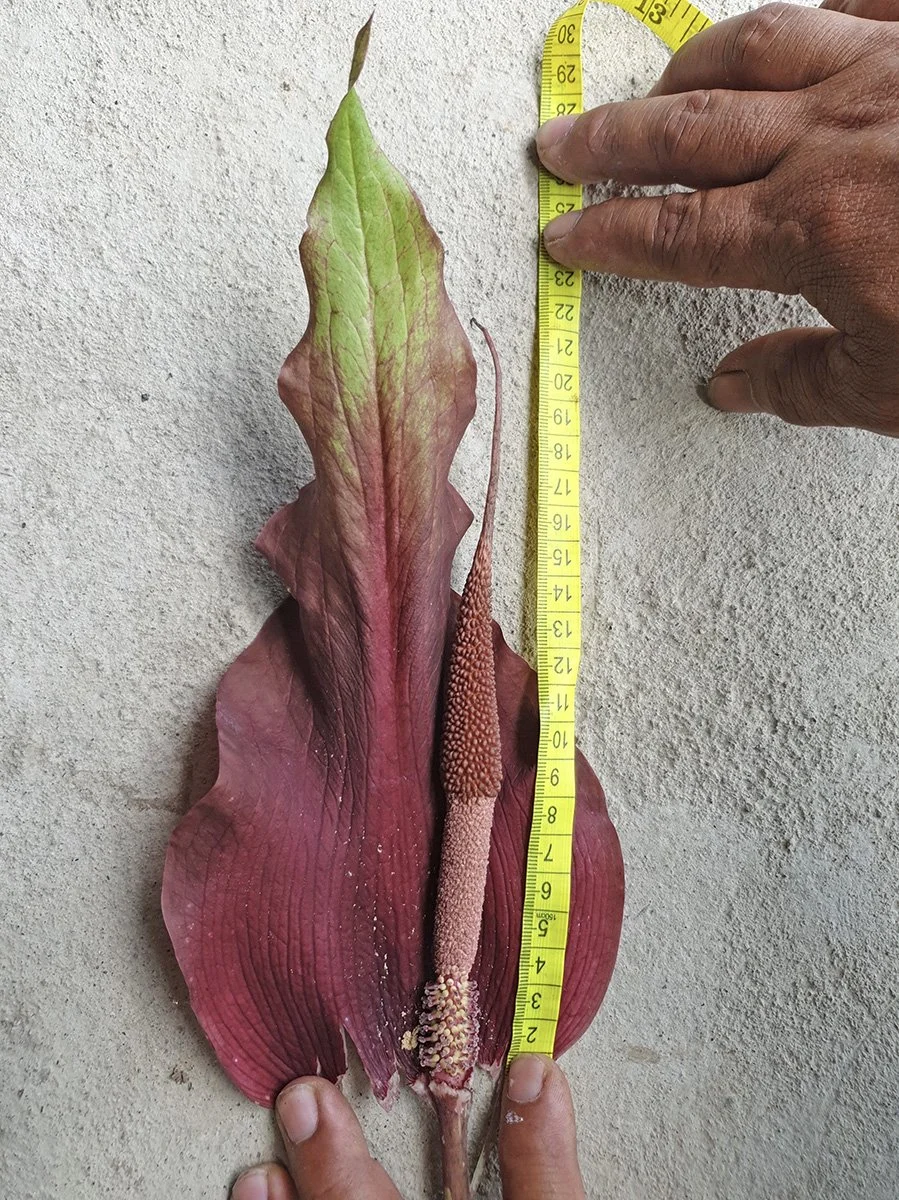
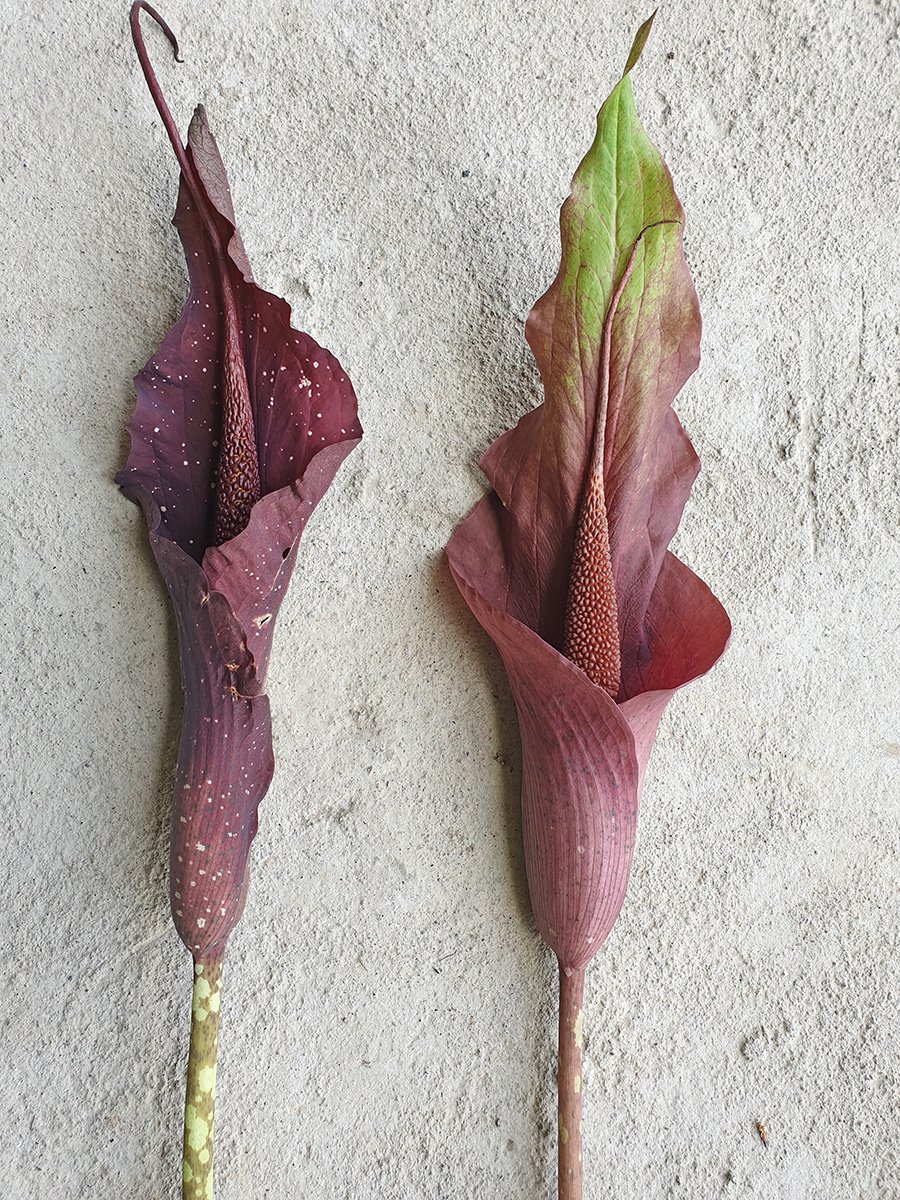
Photo by John Mark Violetta
SYNONYMS:
HOMOTYPIC SYNONYMS: N/A
HETEROTYPIC SYNONYMS: N/A
ACCEPTED INFRASPECIFICS: N/A
OTHER: N/A
DISTRIBUTION: Philippines | Luzon

CLIMATE: N/A
ECOLOGY: Amorphophallus caudatus is only known from the type locality and hence restricted to the lowland forests of Abasig- Matogdon-Mananap natural biotic area, at elevations above 380 m a.s.l. Also found in the type locality are the following species: Selaginella P.Beauv. spp. (Selaginellaceae), Phrynium simplex (Elmer) Suksathan & Borchs (Marantaceae), Palaquium gigantifolium Merr. (Sapotaceae), Cyathea Smith spp. (Cyatheaceae), Cycas riuminiana Regel (Cycadaceae) with dominant epiphyte species belonging to Orchidaceae, Medinilla Gaudichaud spp. (Melastomataceae) and Agalmyla Blume spp. (Gesneriaceae).
SPECIES DESCRIPTION:
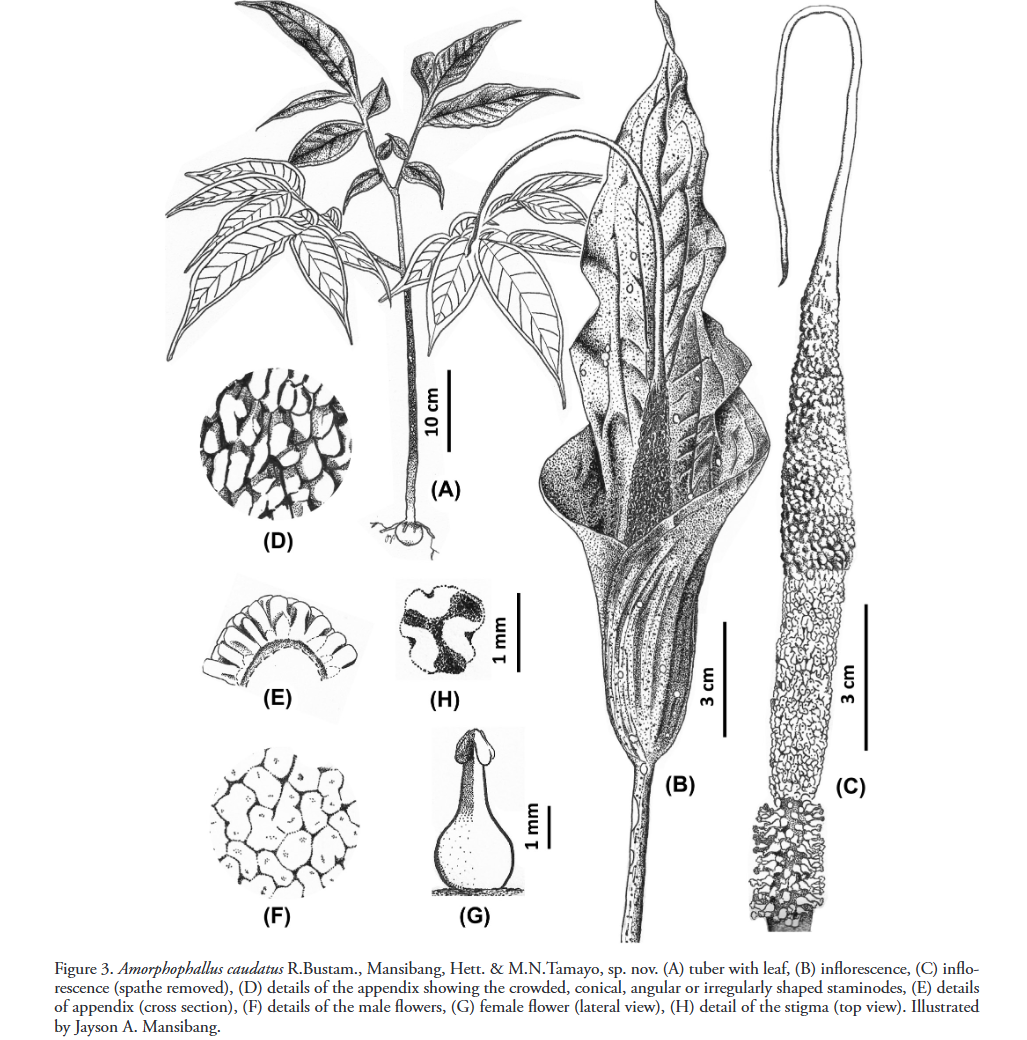
Tuber depressed subglobose, 2–3 cm in diameter and 2.5–4.0 cm high. Leaf solitary. Petiole ca 31.5 cm × 7.0–10.0 mm in diameter at base, gradually tapering towards the tip, its sur- face generally smooth, light to dark brown, sometimes green- ish in color, with white patches and light pink to dark brown spots, paler towards the tip, at base pale pink or sometimes greenish. Leaflets shortly petiolate, lanceolate or elliptical, the larger 10–18 cm long, 3.5–5.0 cm in diam., the smaller ca 6 cm long, ca 2 cm in diameter, unequal or oblique at base, slightly decurrent on the rachis, long acuminate at apex, with 2–3 cm long acumen, with deeply impressed veins, dark green above and paler below; lateral veins in 6–18 pairs, strongly raised abaxially, sunken adaxially.
INFLORESCENCE:
Inflorescence solitary, long peduncled. Peduncle 42–45 cm long, 0.8–1.5 cm in diam. at base, gradually tapering towards tip. Spathe elongate, triangular-ovate, acuminate, 24–26 cm long, 10.0– 11.5 cm wide, erect, with base and limb distinctly differenti- ated; base convolute, outside purple brown, with or without a few scattered white spots, inside dark purple, shallowly ridged between a prominent, reticulated impressed venation; limb triangular, undulating and sometimes helically twisted, slightly appressed to the spadix, outside and inside entirely purplish or turning green upwards; top undulate, oval to ovate (when spread), gradually turning lanceolate to sharply trian- gular towards the apex. Spadix slightly shorter or longer than spathe, 17.5–27.5 cm long; fertile zones contiguous; female zone cylindric, 2.0–2.5 cm long, 1.6–1.8 cm in diam., with flowers slightly distant; male zone elongate, slightly obconi- cal, 4.0–5.0 cm long, 1.5–1.7 cm in diam., with flowers con- gested; appendix 12.0–21.0 cm long, 1.5–2.0 cm in diameter at the base, with basal part inflated, verruculose from coni- cal, angular or irregularly shaped staminodes, suddenly nar- rowing to a long, thin and smooth, flagelliform upper part. Female flowers with ovary fusiform, 1.5–1.7 × 1.2–1.5 mm, pale yellow, unilocular; placentation basal; style 1.2–1.5 mm, pinkish, long conical, broader at the base, tapering towards the stigma; stigma 1.0–1.2 mm in diameter, shallowly 2–3- lobed, pale pink, its surface minutely papillate. Male flowers irregularly shaped, 1.4–1.8 mm long, 1.0–1.5 mm in diam., constricted in the middle; thecae and the connective pinkish. Staminodes 3–5 mm long, 2–3 mm in diam., crowded, coni- cal, angular or irregularly shaped. Pollen pale yellow. Fruits not observed.
Phenology: Amorphophallus caudatus was observed flowering in March– April, and fruiting in late April–May.
VARIEGATED FORMS: N/A
ETYMOLOGY: The species epithet ‘caudatus’ is from the Latin word ‘cauda’ (a tail or appendage) referring to the flagelliform shape of the upper half of the appendix
NOTES: Conservation status Amorphophallus caudatus is currently only known from the type locality. The plant is rare in the area and was only observed at one location in the forest. Observations made in situ satisfy the IUCN category of Critically Endangered (CR), with less than 250 mature individuals observed with an extent of occurrence (EOO) of < 100 km2, and an area of occupancy of < 10 km2 (IUCN Standards and Petitions Committee 2019). Moreover, anthropogenic disturbances like coconut plantations in the lower part of the area is seen as a potential threat to this species.
CULTIVARS: N/A
HYBRIDS: N/A