AMORPHOPHALLUS COSTATUS
ORIGINAL DESCRIPTION:
Ab Amorphophallus pendulo Bogner & Mayo in pedunculo brevi, appendice multo breviore et foliolis ellipticis inornate viridis differt. — Typus: Hetterscheid H.AM.. 225-T (L holo; spirit coll.), 23-iv-1992, cult. Hort. Bot. Leiden ex Indonesia, S Kalimantan, Datar Alei, W of Mt Batu Besar, alt. 400 m, along stream (orig. coll. J. Murata s.n., 24-vi-1991).
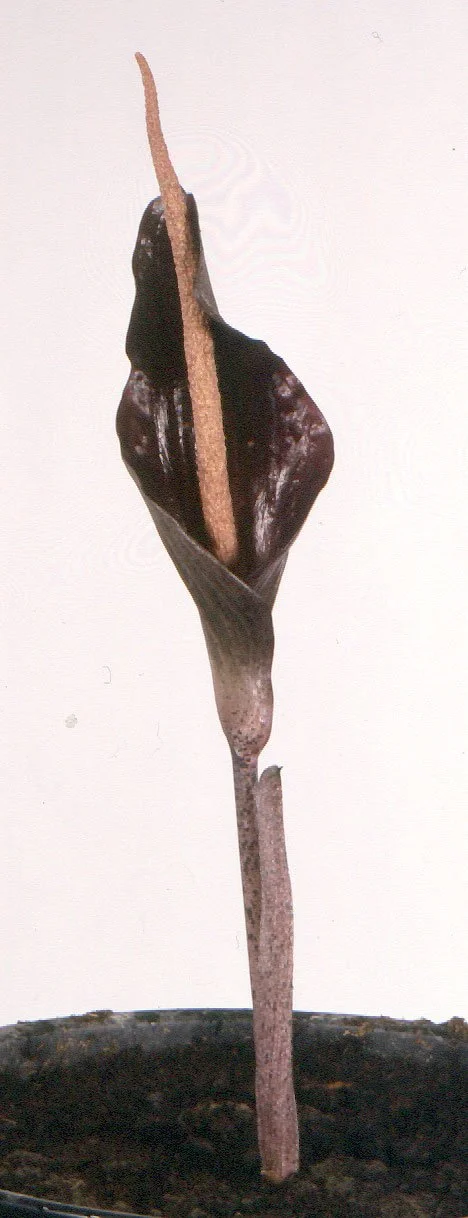
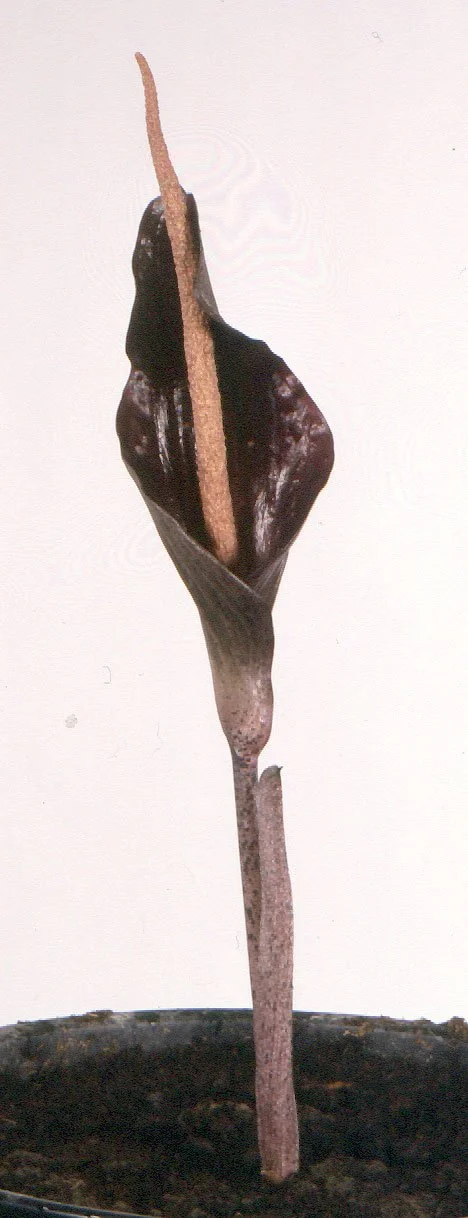
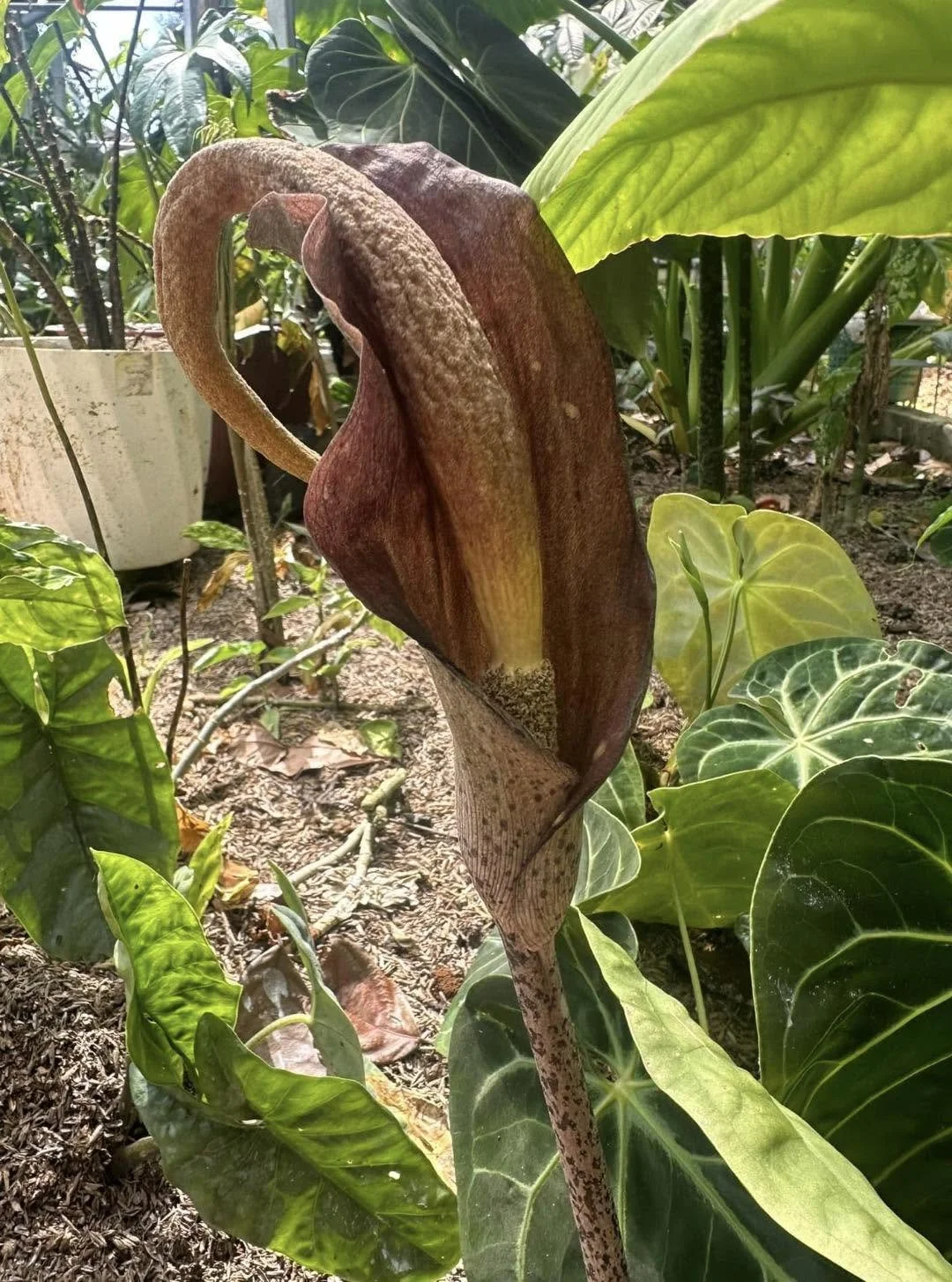
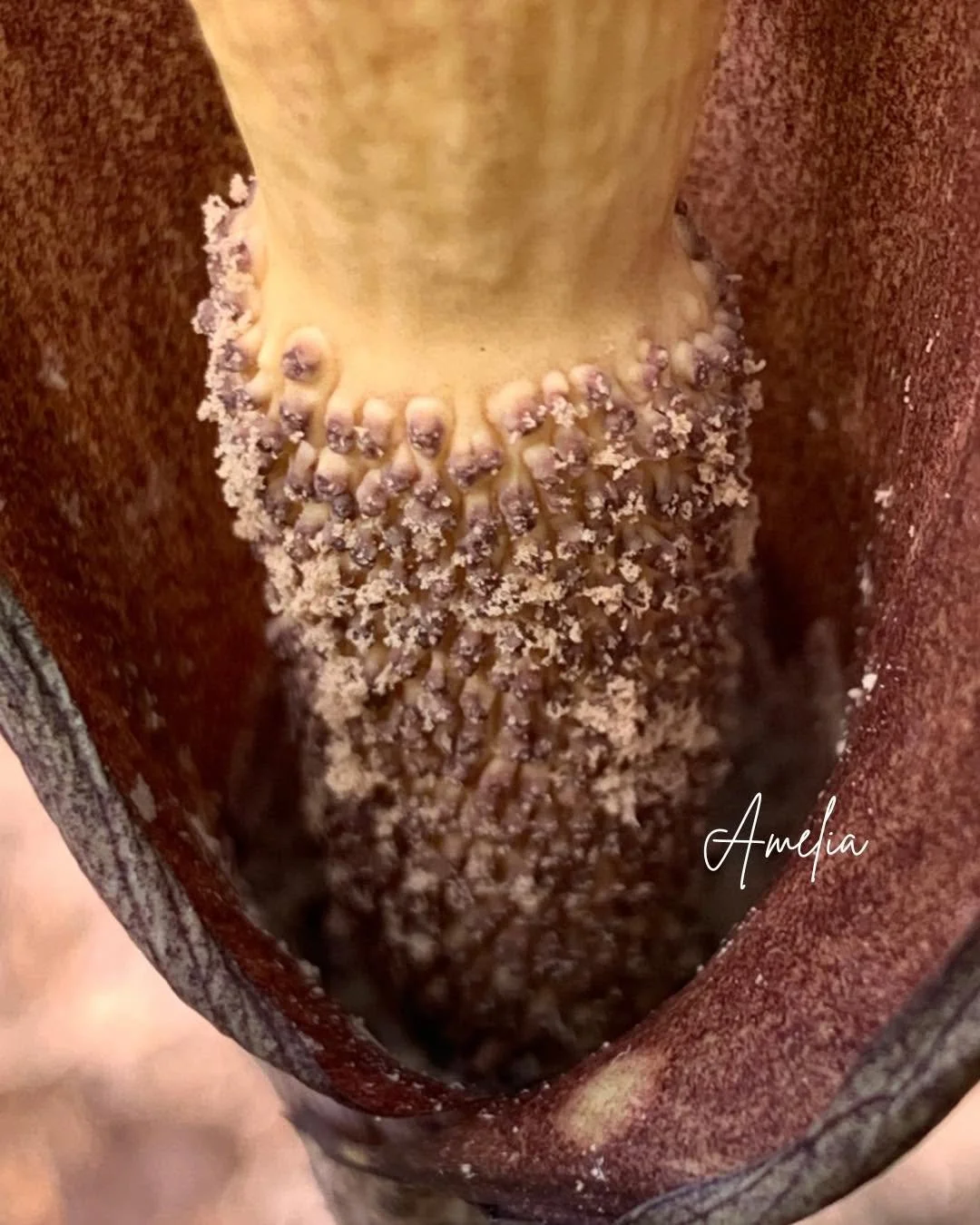
Photo by Michael Lo
SYNONYMS:
HOMOTYPIC SYNONYMS: N/A
HETEROTYPIC SYNONYMS: N/A
ACCEPTED INFRASPECIFICS: N/A
OTHER: N/A
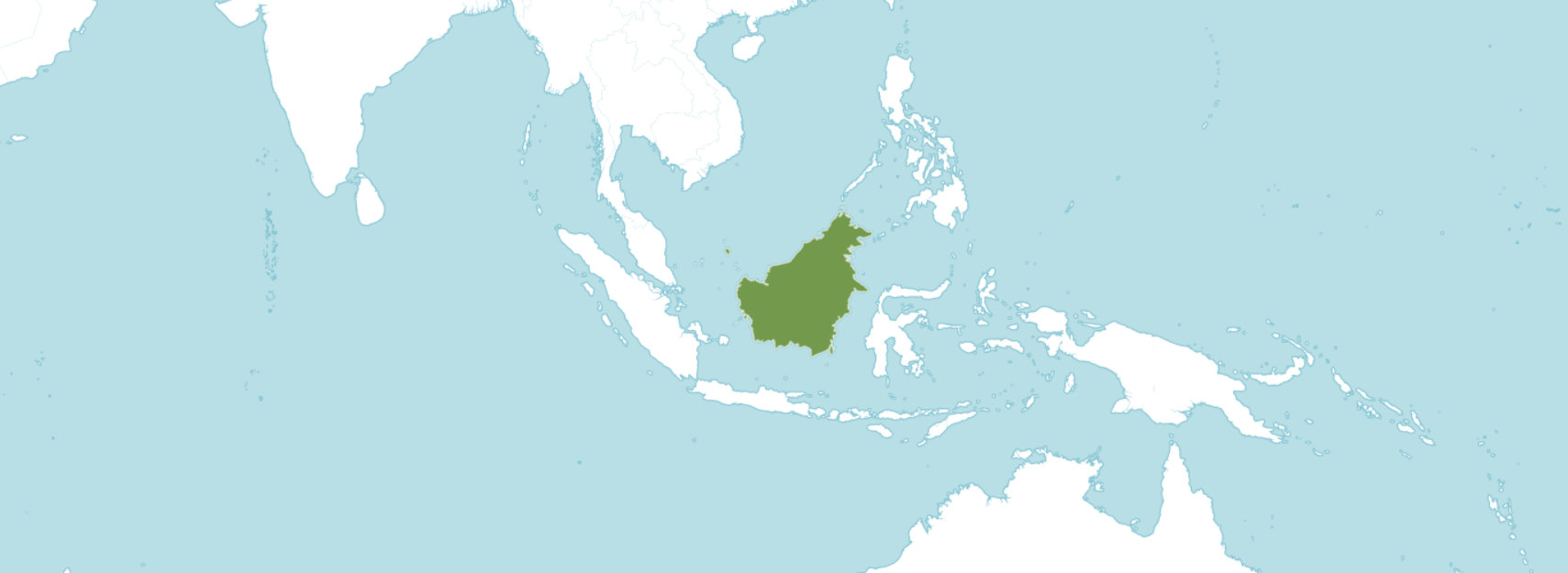
DISTRIBUTION: Indonesia | Borneo | South Kalimantan
CLIMATE: N/A
ECOLOGY: N/A
SPECIES DESCRIPTION:
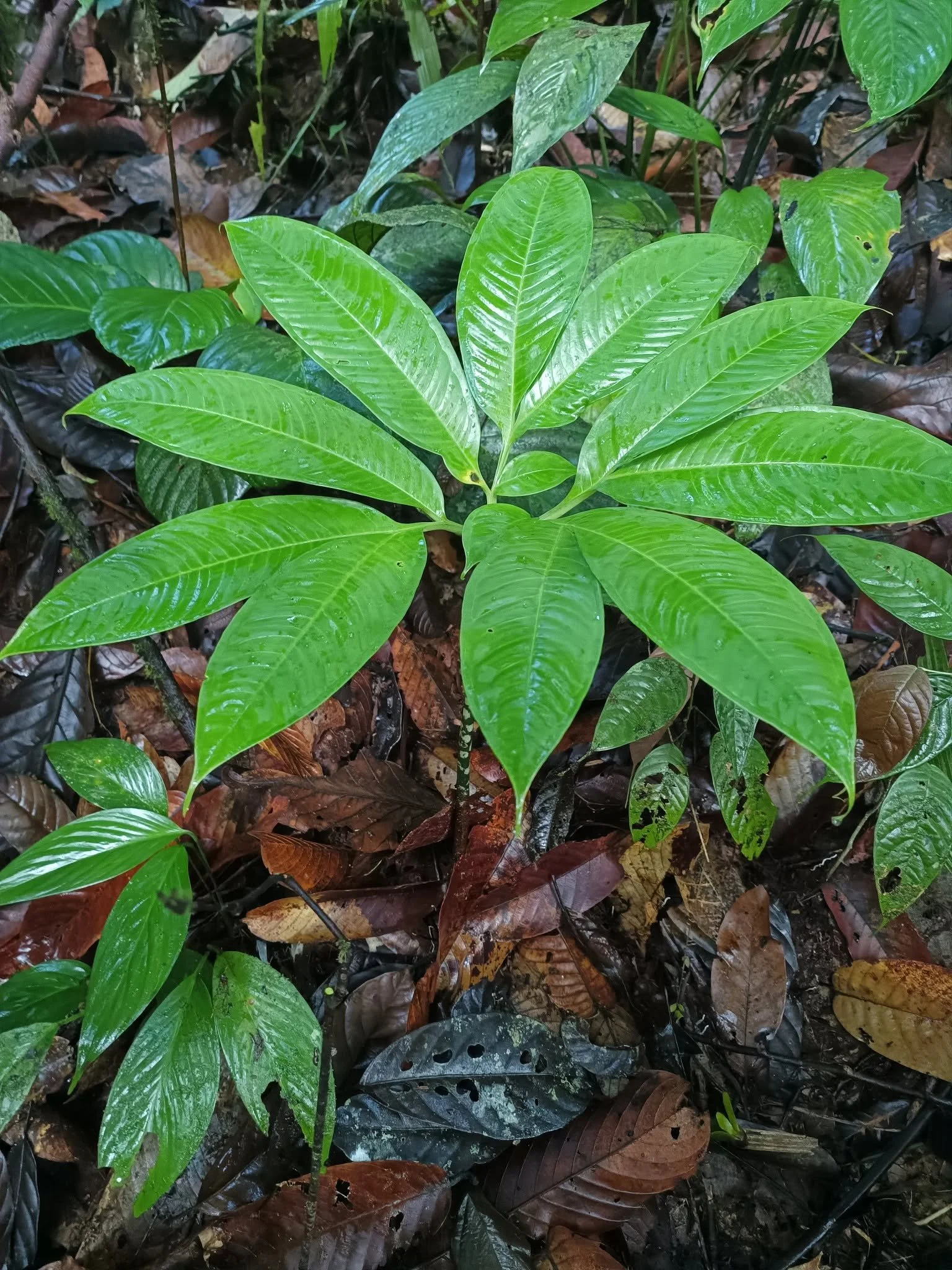
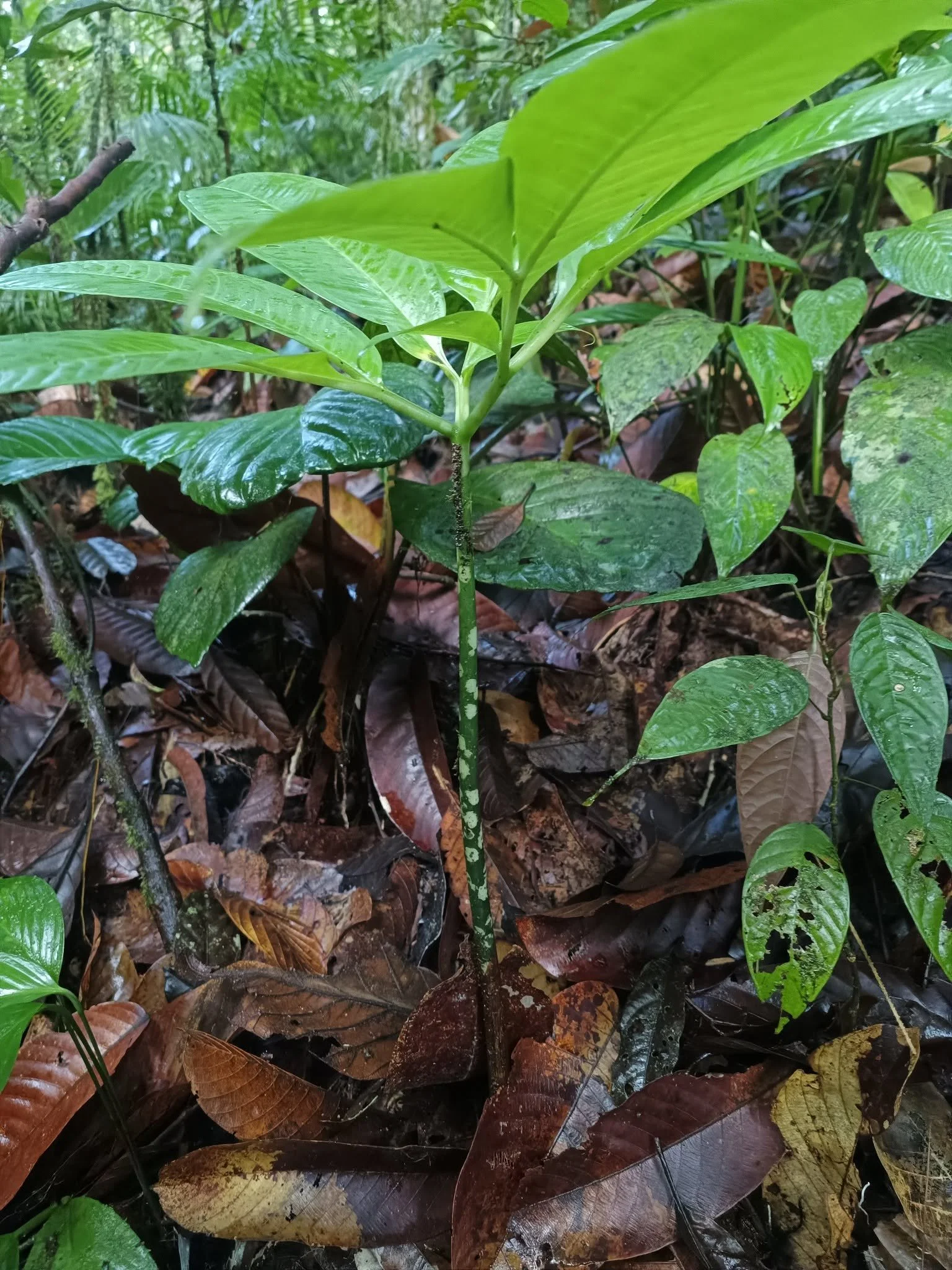
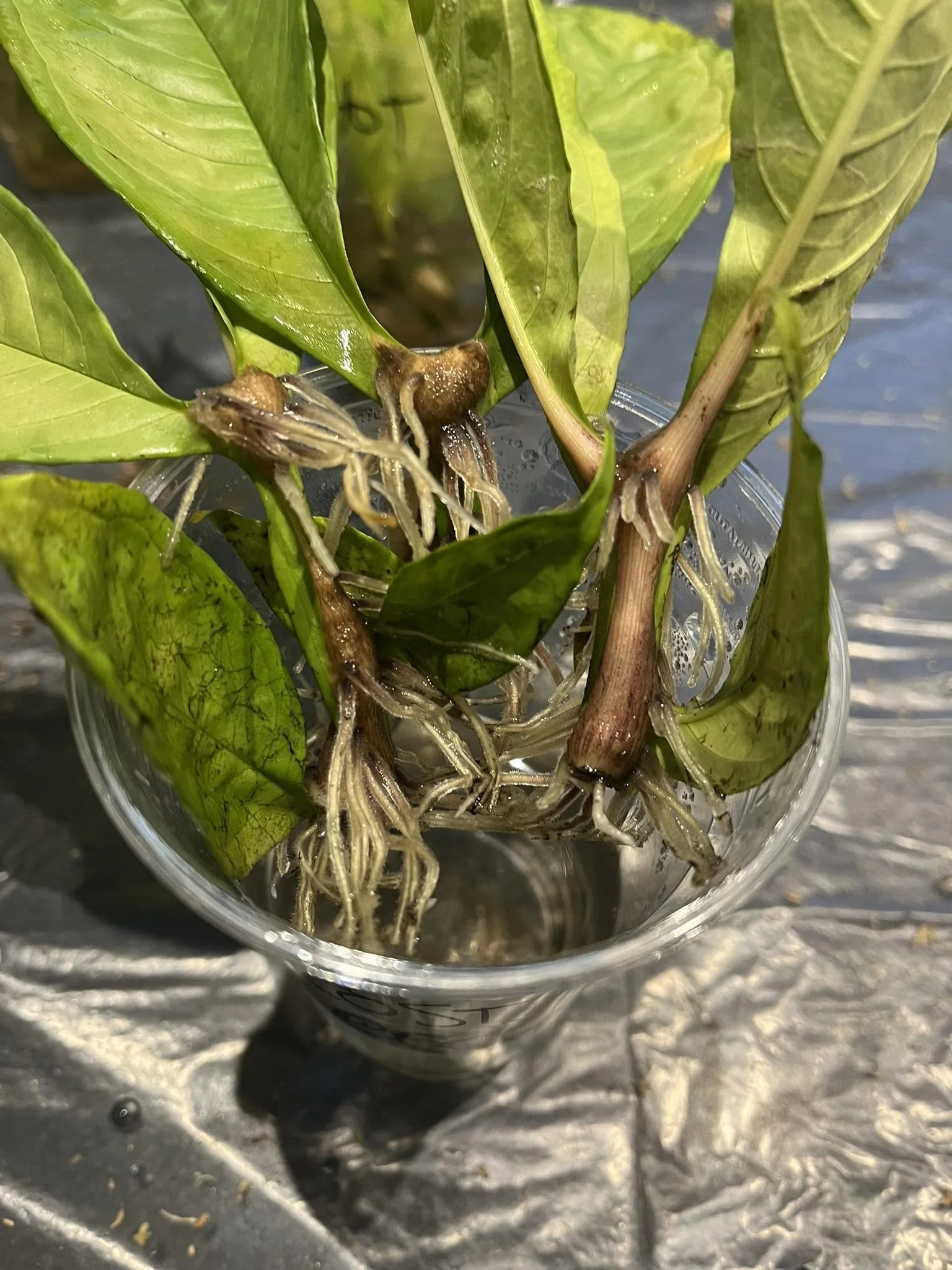
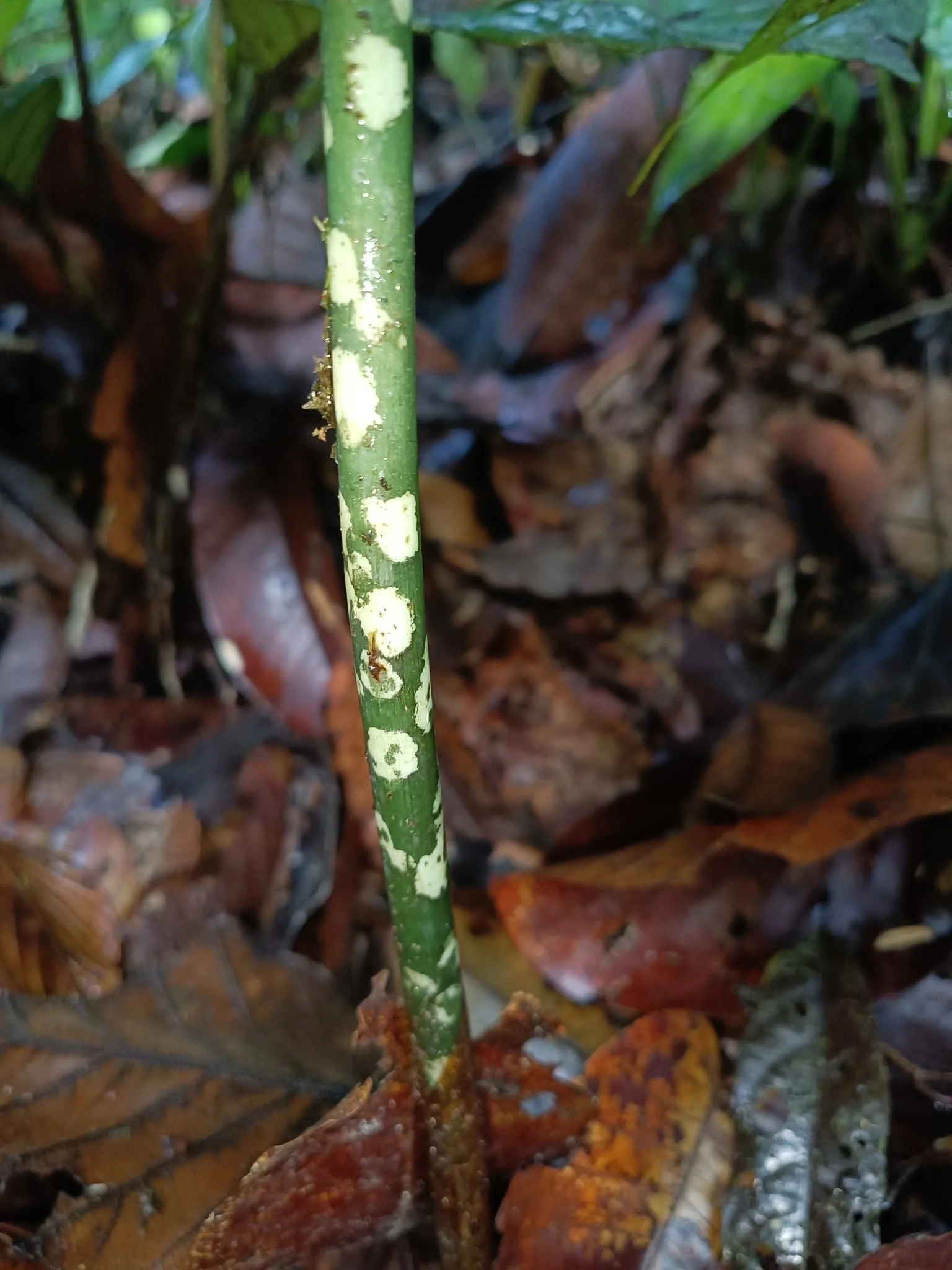
Tuber subglobose, to ca. 10 cm in diam., brown, no offset development. Leaf solitary; petiole 60–90 cm long, 1.5–2 cm in diam., smooth, background whitish, largely obscured by irregular, confluent, dark emerald-green spots with obscurely dark violet-brown upper margins and flushes; lamina 100–122 cm in diam.; leaflets oblanceolate, acuminate, base cuneate, 8–23 cm long, 2.5–5 cm in diam., upper side moderately glossy dark green, margin irregularly undulate.
INFLORESCENCE:
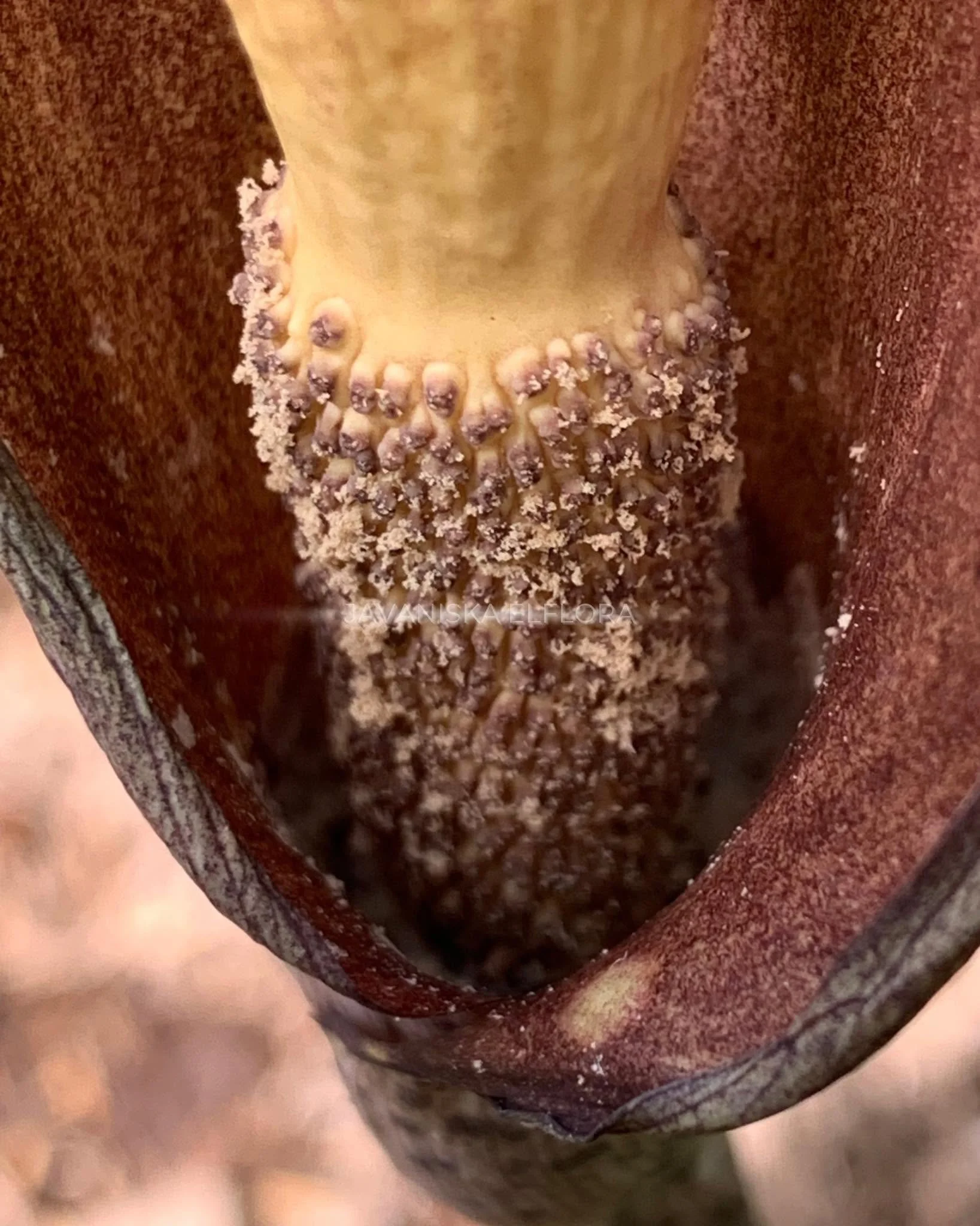
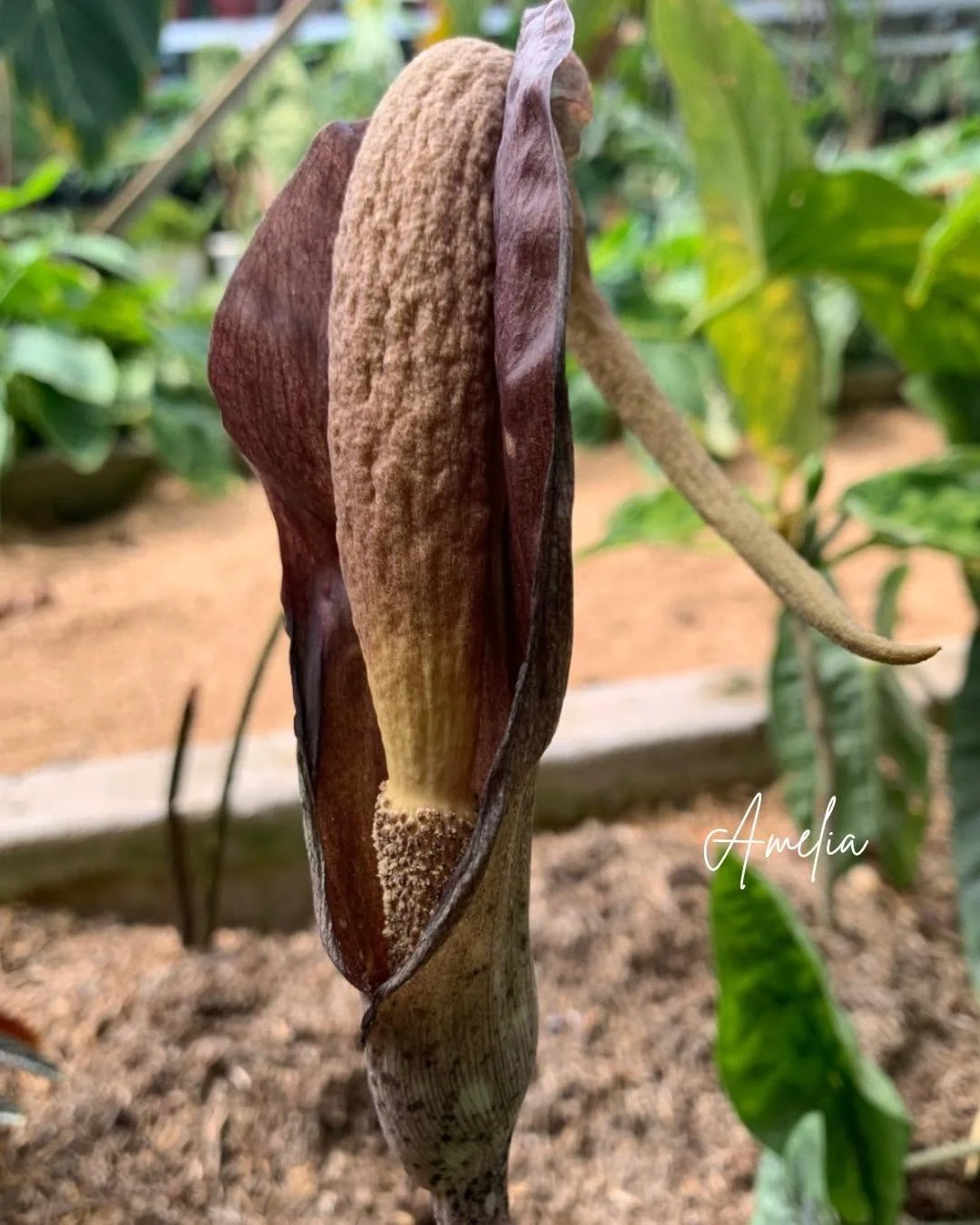
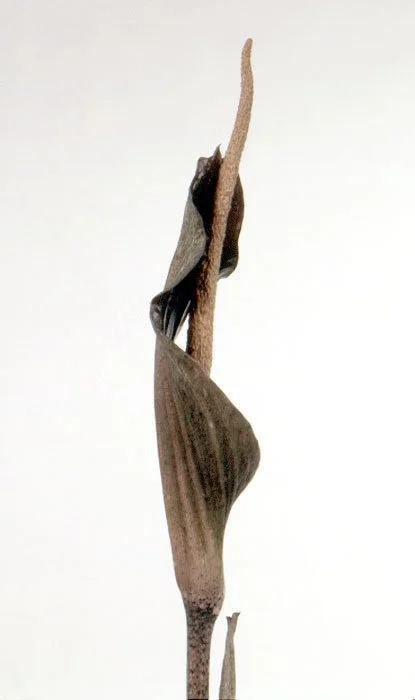
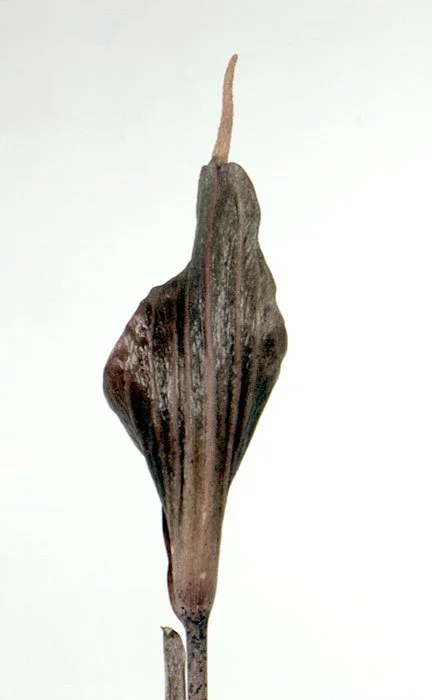
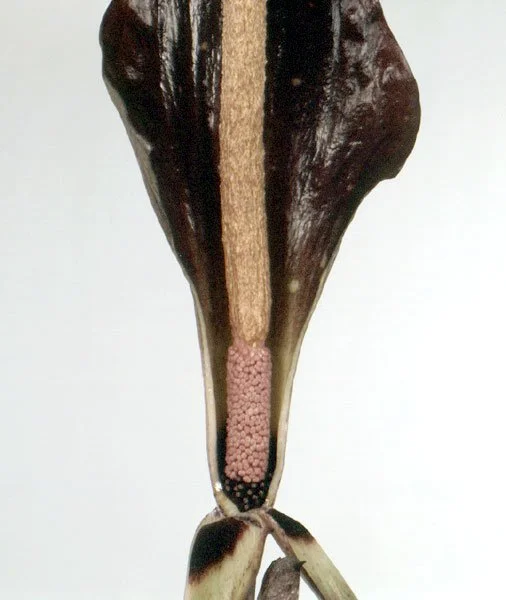
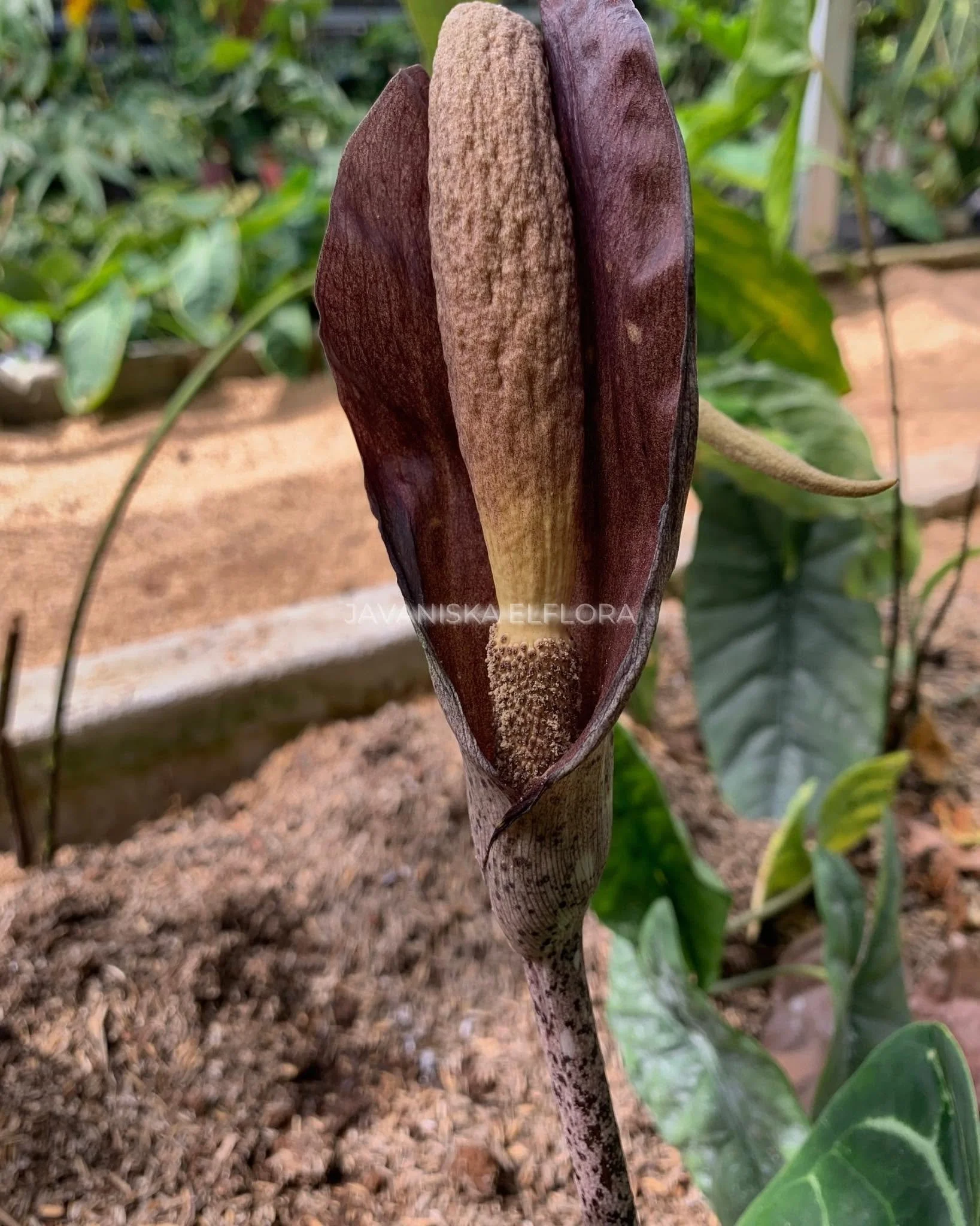
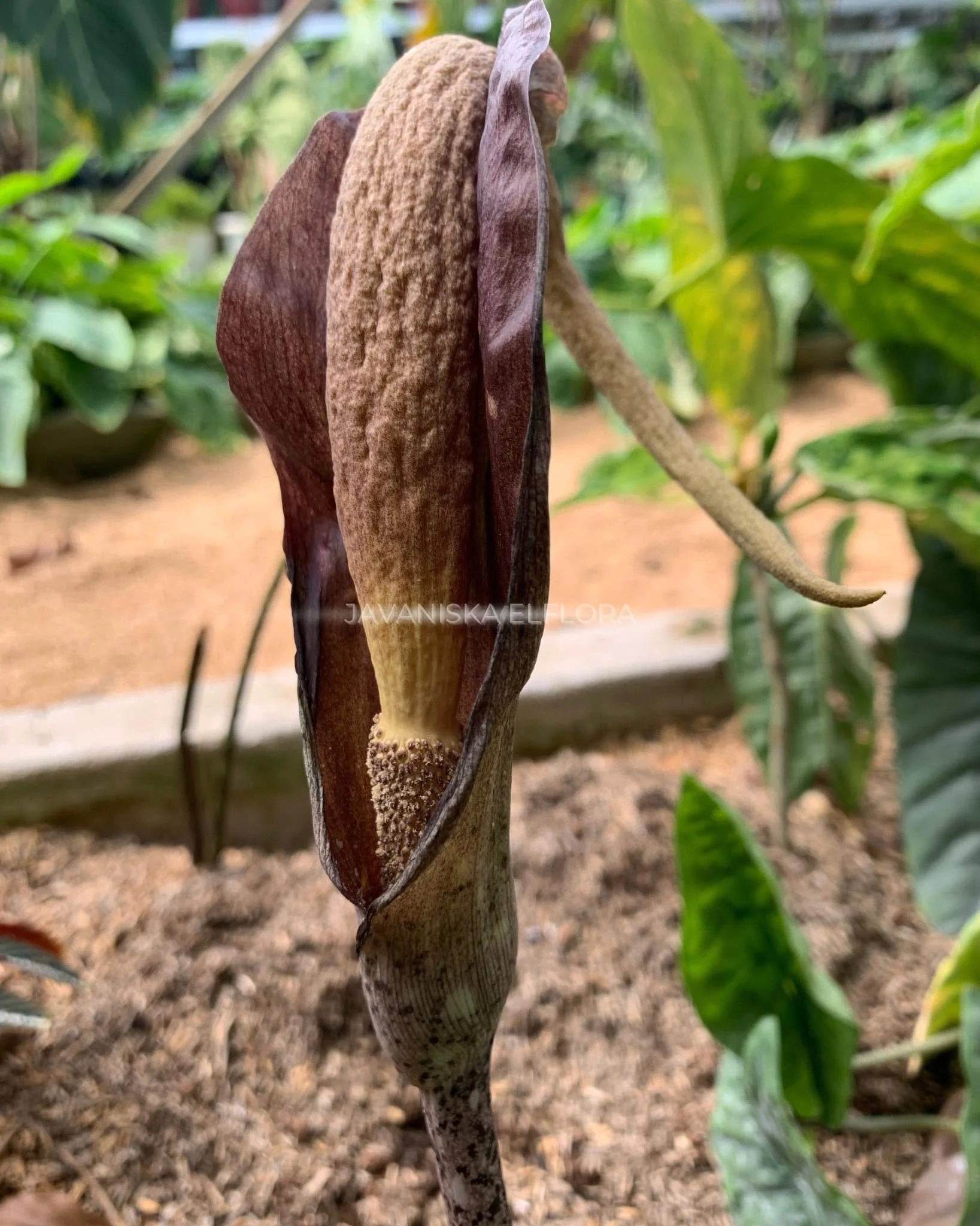
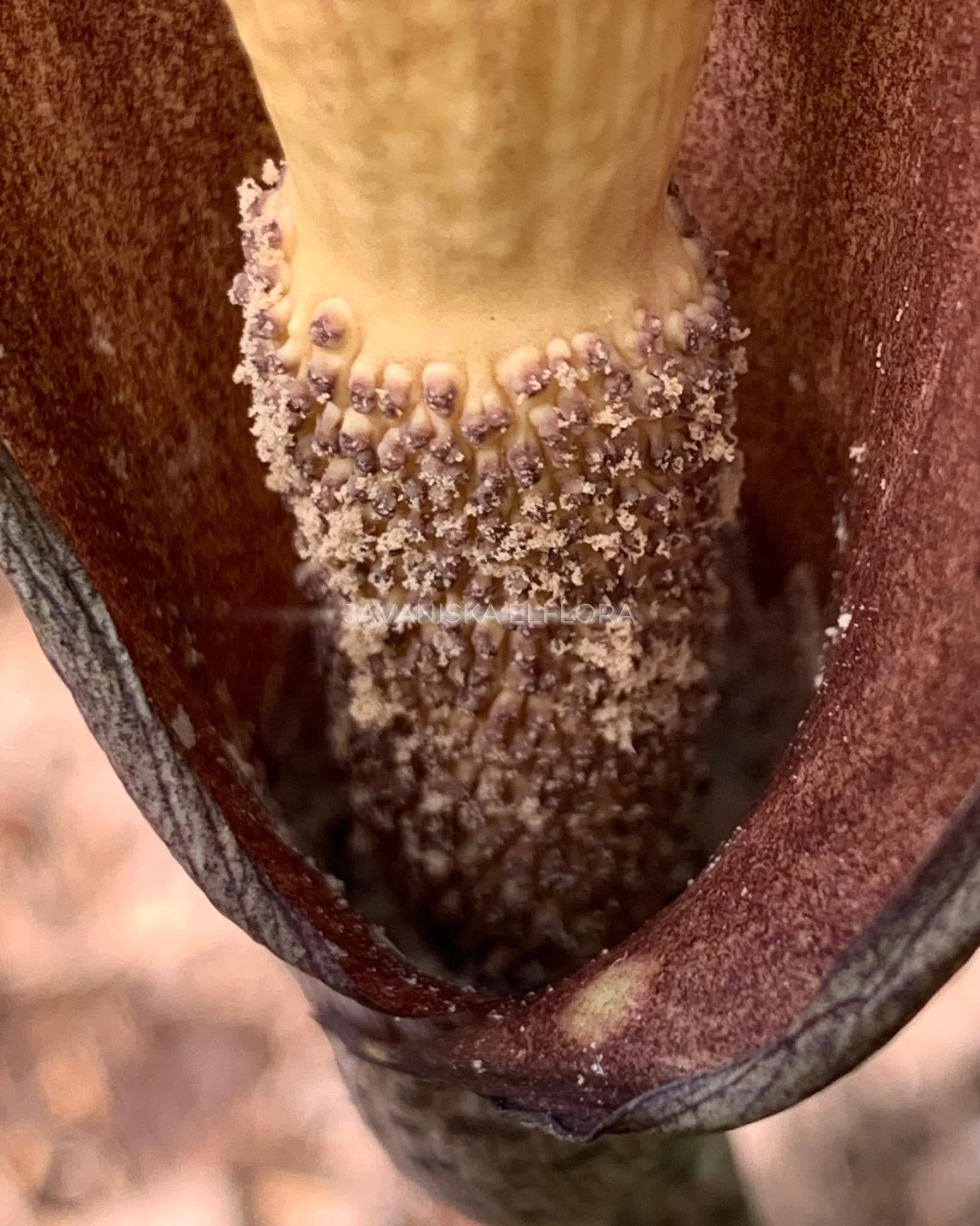
Inflorescence solitary, short peduncled; peduncle 14-16.5 cm long, c. 1 cm in diam. (base), lilac-pink with several blackish green ± elliptic or irregular small blackish green spots; spathe erect, elongate triangular, 16-24 cm long, 8-10 cm in diam., base strongly convolute, forming a narrow tube, limb shortly acuminate, lower margin outwardly reflexed, subauriculate, base outside pinkish with brownish veins and a few punctiform blackish spots, inside lowermost zone dark maroon, otherwise dirty white to yellowish white, limboutside dirty greyish green with strongly raised dirty brownish violet main veins, inside entirely glossy maroon and with a few rounded dirty white spots, base within with several shallow warts, these shortly ridge-like. Spadix longer than spathe, sessile, 19.5-26.5 cm long; female zone obliquely cylindric, 0.7-1.3 cm long, 0.8-1.1 cm in diam., flowers congested or some more distant; male zone cylindric, 2.5-3 cm long, 0.8-1.1 cm in diam., flowers slightly distant, irregularly arranged or in longitudinal or oblique interrupted rows; appendix narrowly elongate, acute, base slightly constricted, 16-22 cm long, 0.8-1.1 cm in diam., surface densely rugulose, ground colour dirty pale yellow, strongly suffused with brownish, giving off a strong cheesy smell at female anthesis. Ovaries ± pyriform, c. 1.5 mm high, 1.2-1.4 mm in diam., base white, rest blackish maroon, unilocular; style inconspicuous, conic, bi- or trifurcate, slightly rugulose, c. 0.5 mm long, c. 0.8 mm high, blackish maroon; stigma often subapical, 2- or 3-lobed, thin, verruculate and with some longer scabrae, pale brown, 0.8-1 mm high, 1 mm in diam., lobes conic.
Male flowers consisting of 2-4 stamens but their limits often obscured through fusion into irregular longitudinal ridges; stamens c. 2 mm long; filaments c. 1.5 mm long, free to the base or connate up to 2/3 of their length; anthers subtruncate, rounded or elliptic in cross section, c. 0.5 mm long, carrying 1 or 2 thecae, these consisting of 1 or 2 locules; pores apical, rounded or elliptic. Pollen irregularly striate to irregularly areolate.
VARIEGATED FORMS: N/A
ETYMOLOGY: The species epithet costatusrefers to the strongly raised main veins (costae) on the outside of the spathe.
NOTES:
Amorphophallus costatus resembles Amorphophallus pendulusBogner & Mayo (Sarawak) in the overall shape of the inflorescence but the latter species has a much longer, whip-like, pendulous appendix and a longer peduncle. Floral details of Amorphophallus costatus resemble those of Amorphophallus eburneusBogner (Sarawak) in the alignment of the male flowers and the shape of the female flowers, also the shape of the spathe is similar. However, Amorphophallus eburneus has a much larger leaf with much larger leaflets (up to c. 50 cm long), an ivory-white spathe and appendix, the latter being much thicker than that in Amorphophallus costatus.
CULTIVARS: N/A
HYBRIDS: N/A
REFERENCES:
Additional photos by Michael Lo, Amelia Putri Wijaya, Javaniska Elflora, Furkon Muhammad and Pascal Bruggeman