AMORPHOPHALLUS CURVISTYLIS
ORIGINAL DESCRIPTION:
Amorphophallus curvistylis Hett., spec. nov. — Ab Amorphophallus napalense (Wall.) Bogner & Mayo in stylis valde curvatis, stigmatibus bilabiatis ad spadicis axem vergentibus, appendice laevi differt.
Typus: Hetterscheid H.AM.002-T (L holo; spirit coll.), 9-xi-1989, cult. Hort. Bot. Leiden ex Thailand, Kanchanaburi Prov., Sai Yok, between Kwae Noi and Kwae Yai, N of Kanchanaburi, along Burmese border, on limestone hills (orig. coll.K. Larsen FOT10754, 1964).
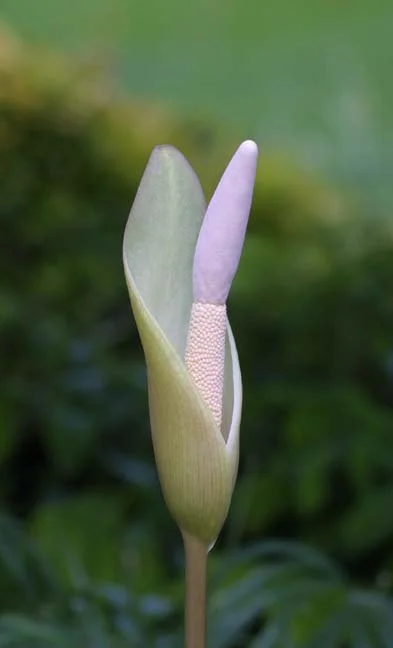
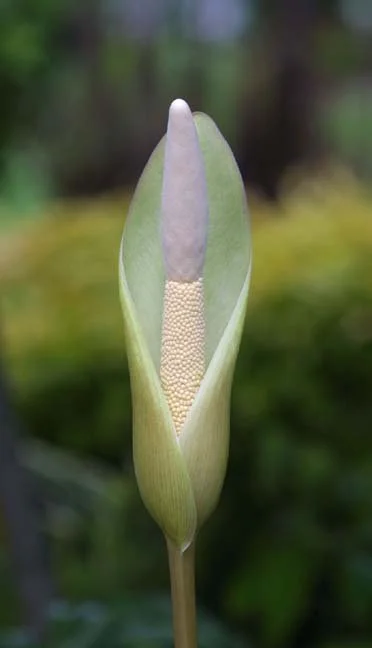
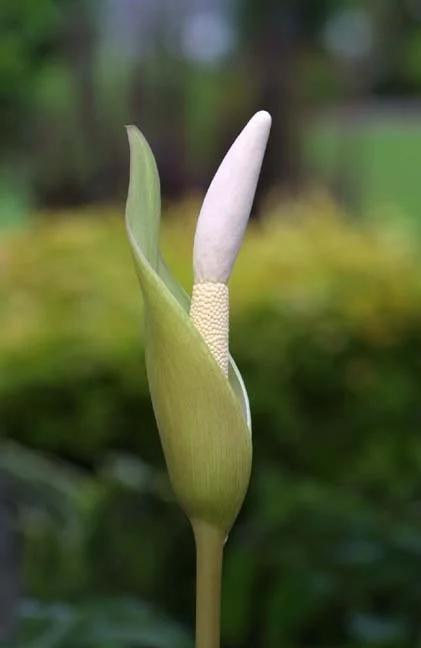
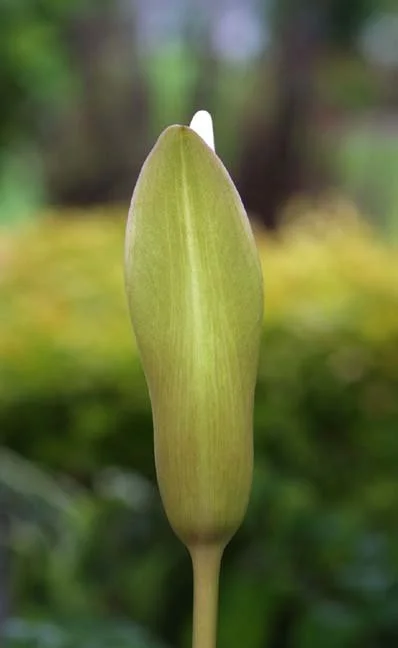
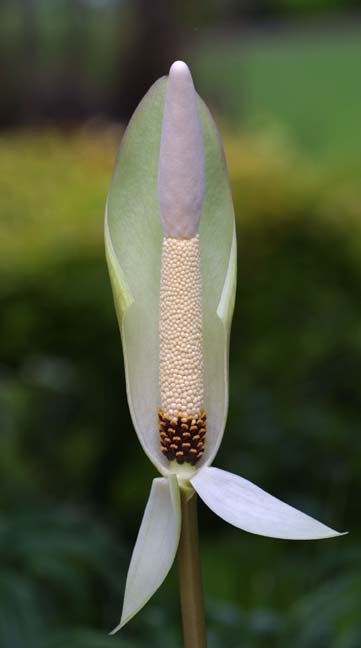
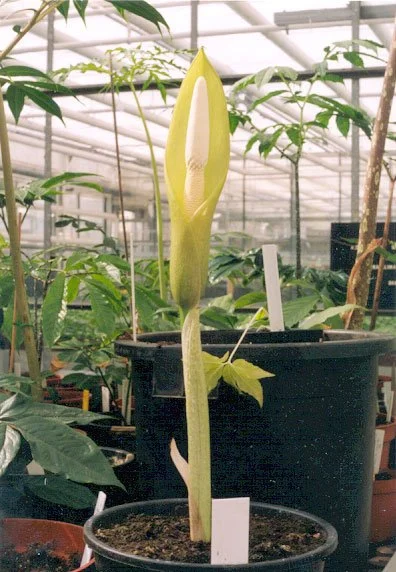
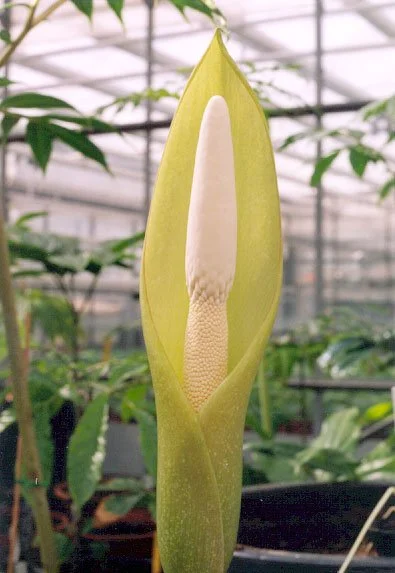
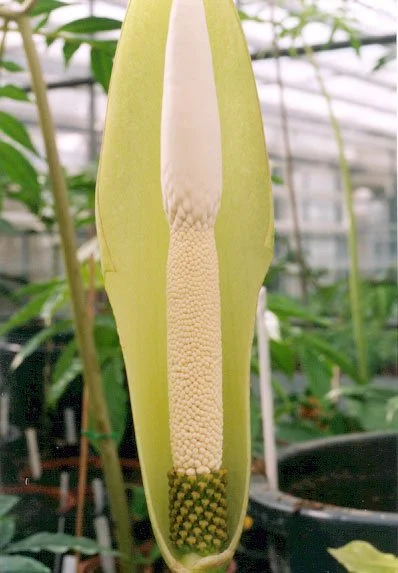
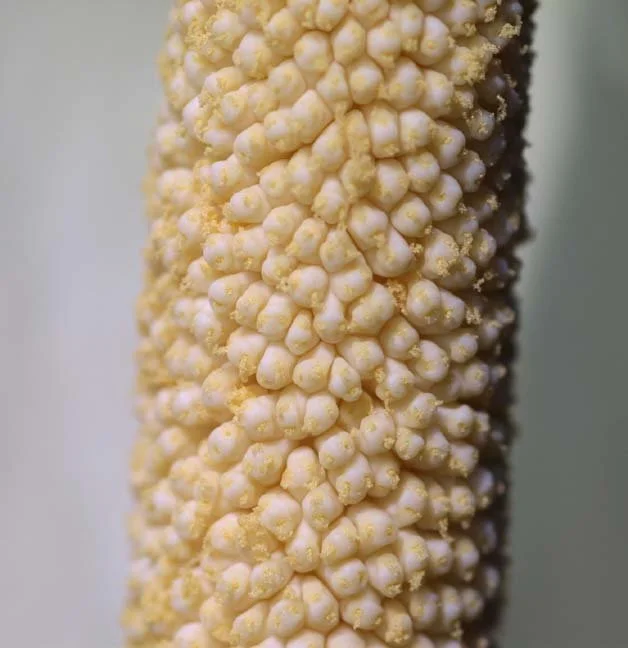
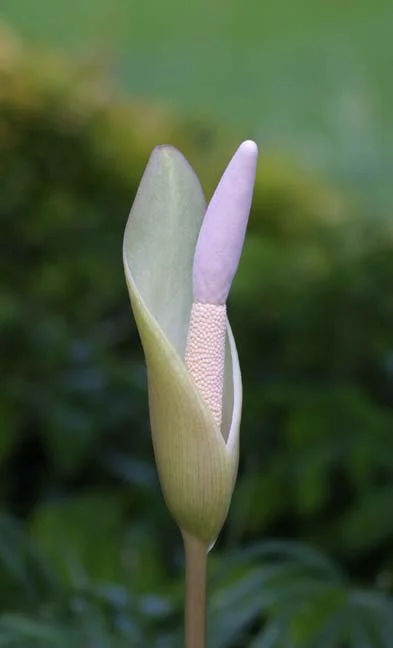
Photo by Alan Galloway
SYNONYMS:
HOMOTYPIC SYNONYMS: N/A
HETEROTYPIC SYNONYMS: N/A
ACCEPTED INFRASPECIFICS: N/A
OTHER: N/A
DISTRIBUTION: Thailand | Kanchanaburi Province
CLIMATE: N/A
ECOLOGY: 800 m altitude, on shaded limestone slopes and outcrops in bamboo/hardwood forest,
SPECIES DESCRIPTION:
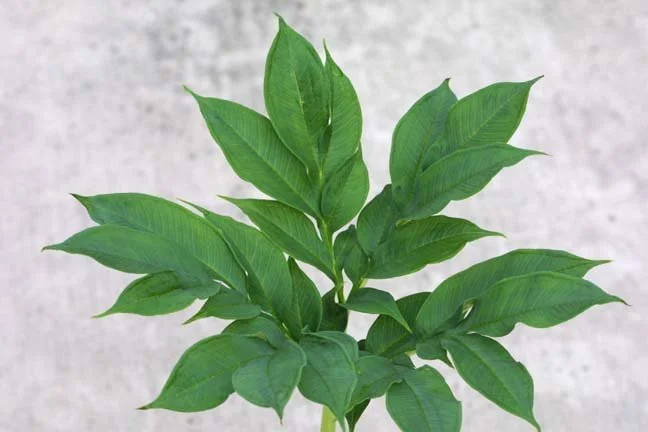
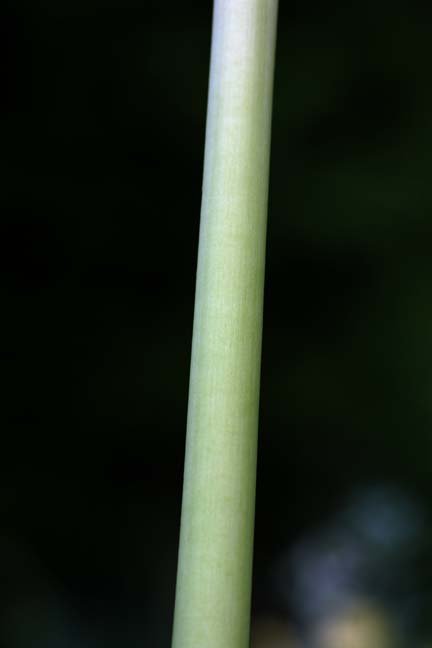
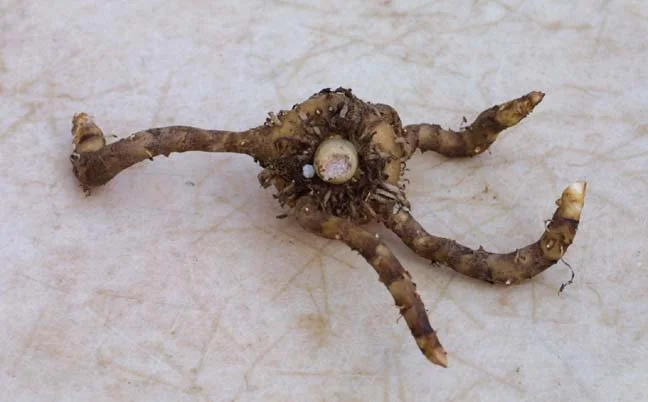
Tuber subglobose or slightly depressed, up to 12 cm in diam., dark brown, smooth, developing long rhizomatous offsets. Lea/solitary; petiole very turgid, smooth, 50120 cm long, c. 3 cm in diam. at the base, entirely green or spotted white-tan and brown; blade highly dissected, up to 130 cm in diam.; basal parts of the rhachises naked, distal parts narrowly winged; leaflets elongate elliptic, acuminate, base decurrent on the rhachis, upper surface mid-green, 22-30 cm long, 7.5-8.5 cm in diam., venation strongly impressed on the upper surface.
INFLORESCENCE:
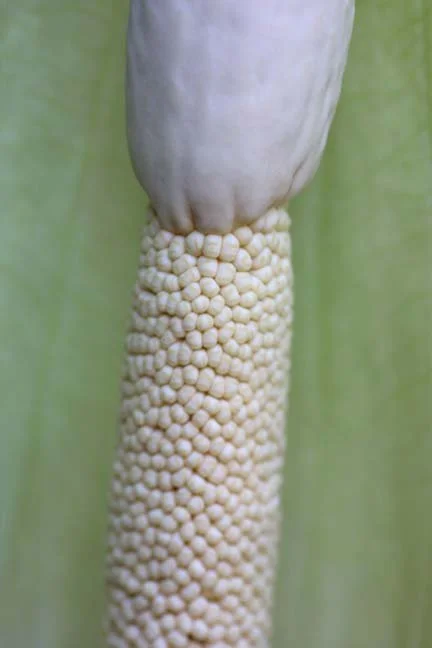
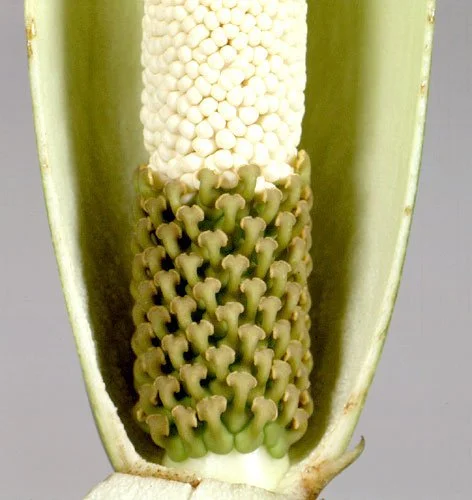
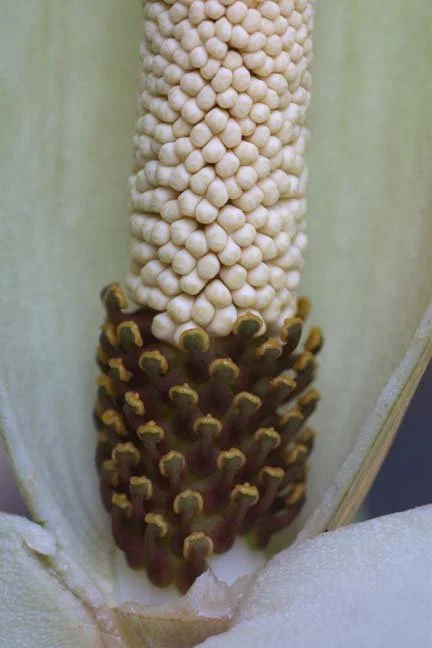
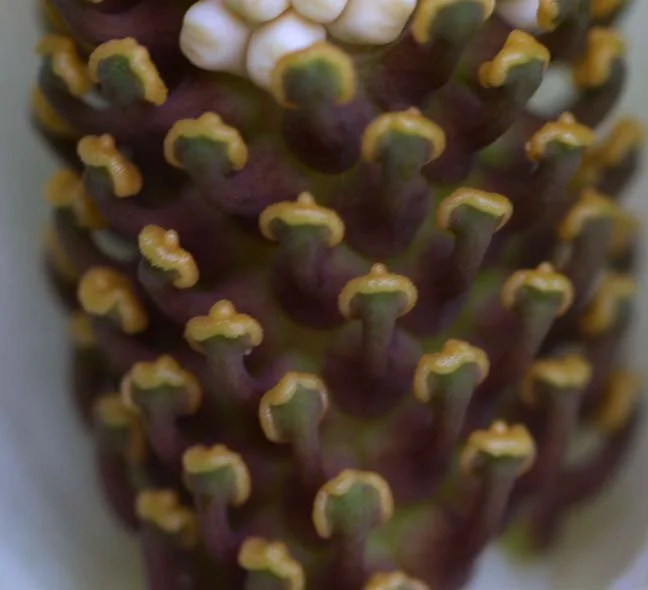
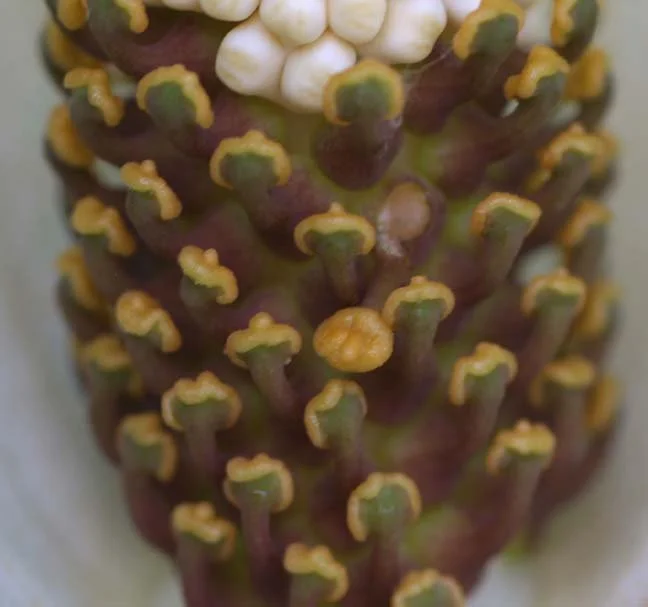
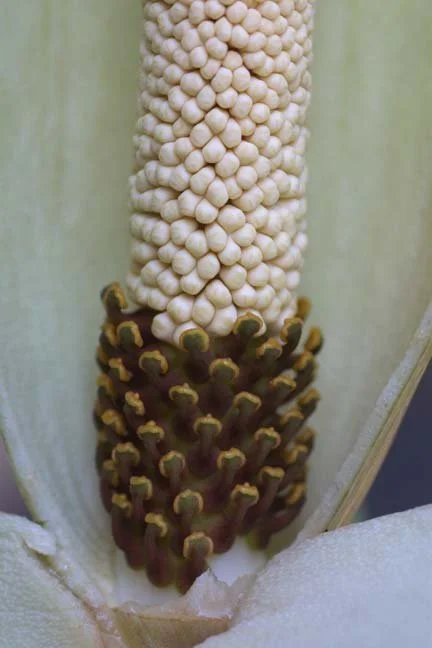
Inflorescence moderately long peduncled; peduncle 20-40 cm long, c. 1.5 cm in diam., colour as petiole; spathe erect, cymbiform, elongate triangular, slightly constricted at the middle, acute, 10-30 cm long, 8-17 cm in diam., subcoriaceous, base convolute, outside dull green with a few paler spots and with a faint brownish hue or spotted white-tan and brown, inside side pale green, limb outside and inside as base, base within with numerous small shallow longitudinally elongate warts. Spadix shortly stipitate, subequalling the spathe, 9-28 cm long; female zone cylindric, 1-5 cm long, 0.8-2.5 cm m diam., flowers congested; male zone cylindric or slightly conic, 4-12.5 cm long, 0.9-2.1 cm in diam., flowers congested, the lower ones distant, upwards irregularly connate or in ascending spirals; appendix elongate, fusiform conic, 4-10.5 cm long, 1.5-2.5 cm in diam., top rounded, base with a few grooves or with a few rounded staminodes, ivory-white, surface at first smooth but rugulose at male anthesis, developing considerable heat at female anthesis and a heavy gaseous stench. Ovaries depressed, angulate, green or greenish white, 4-5 mm in diam., 2 mm high, unilocular; style placed eccentrically on the acroscopic part of the ovary, laterally compressed, strongly curved upwards and to the spadix-axis, suddenly enlarged near the top, 3-4 mm long, white or green with a pale brownish hue, turning entirely brown at male anthesis; stigma large, pointing towards the spadix-axis, more or less strongly transversely folded, bilabiate, auricled, with two central depressions, the acroscopic margin emarginate, surface verruculate, dirty yellow or orange, turning entirely brown at male anthesis, 3x2 mm in diam. Male flowers consisting of (2-)3-7 stamens; stamens ivory-white, 1.5-3 mm long, c. 2 mm in diam, in the lowermost flowers c. 3 mm in diam., these sometimes sterile through reduction of the anther; filaments 1-2.5 mm long, basal half connate, length varying considerably within one flower; anthers c. 0.5 mm long, truncate or subglobose, pores apical, elongate, narrow. Pollen striate.
VARIEGATED FORMS: N/A
ETYMOLOGY: The species epithet refers to the curved shape of the style (appendix)
NOTES:
Additional specimen - Maxwell 73-146 (BK), Thailand, Kanchanaburi Province, Tawng Pa Poom District, Cow Ngoo River area, 800 m altitude, on shaded limestone slopes and outcrops in bamboo/hardwood forest
CULTIVARS: N/A
HYBRIDS: N/A