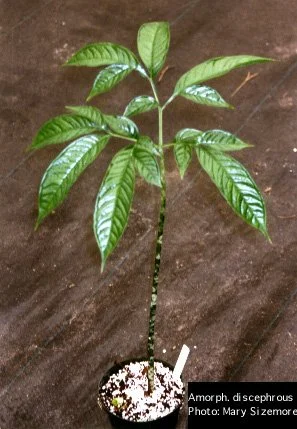
AMORPHOPHALLUS DISCOPHORUS
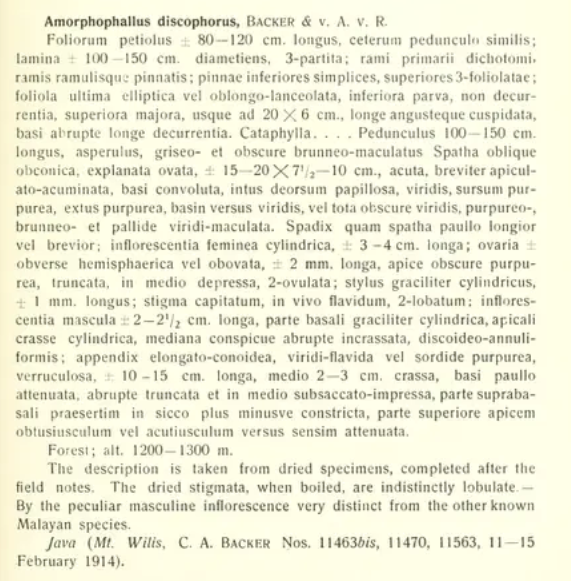
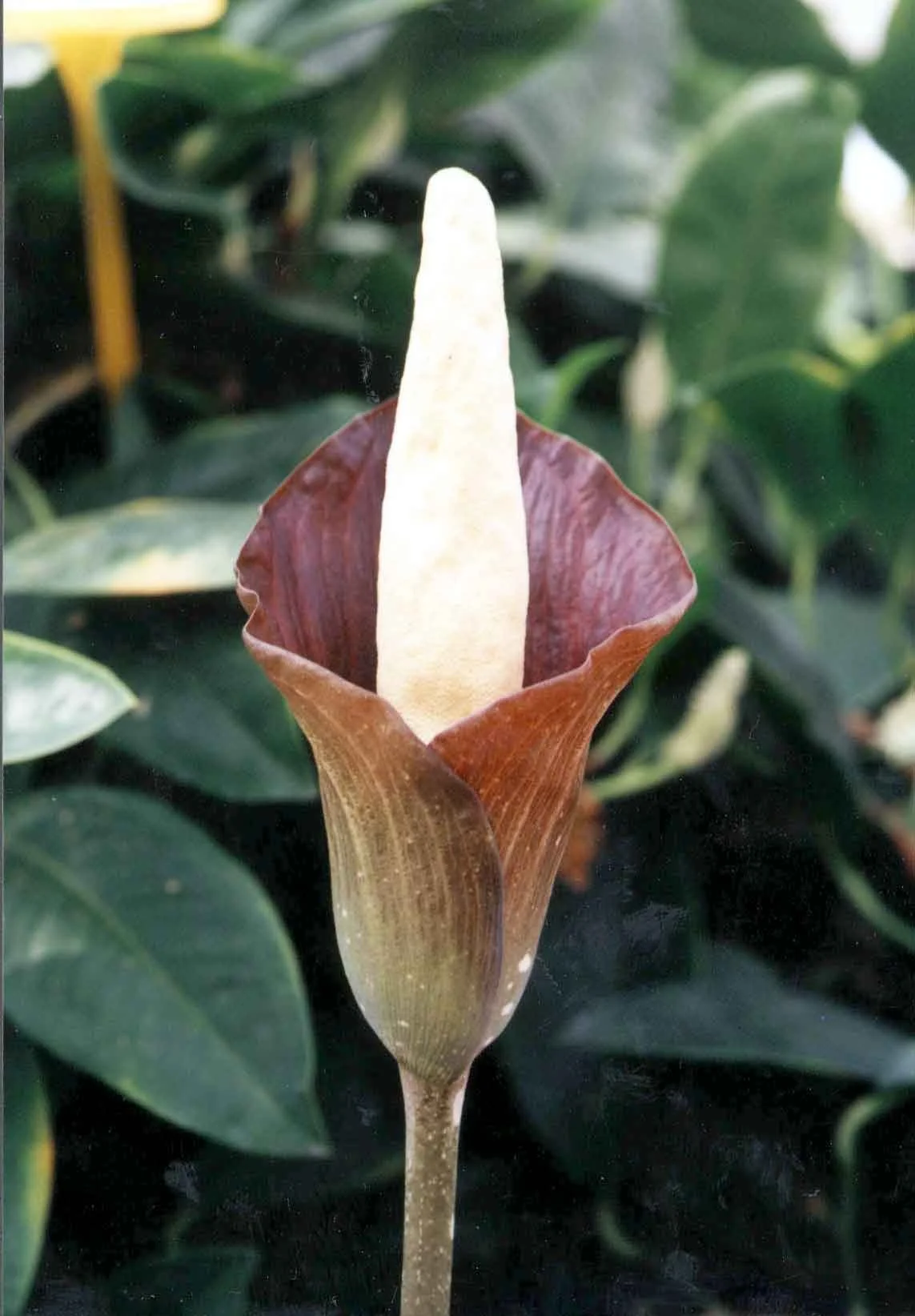
Photo by Mary Sizemore
SYNONYMS:
HOMOTYPIC SYNONYMS: N/A
HETEROTYPIC SYNONYMS: N/A
ACCEPTED INFRASPECIFICS: N/A
OTHER: N/A
DISTRIBUTION: Java | East Java | Mt. Wilis
CLIMATE: N/A
ECOLOGY: Secondary forest,900–1,300 m elevation
SPECIES DESCRIPTION:
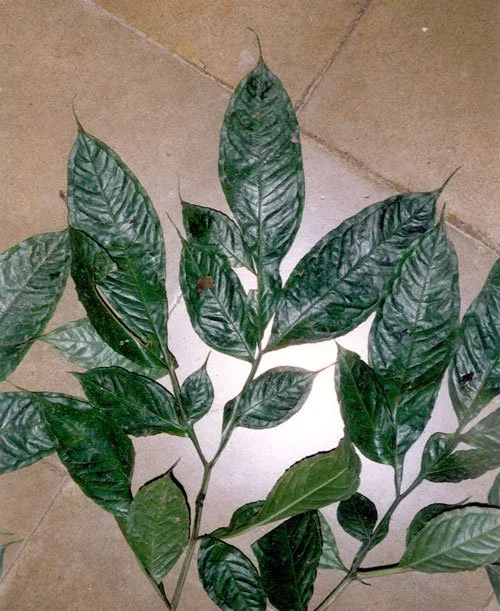
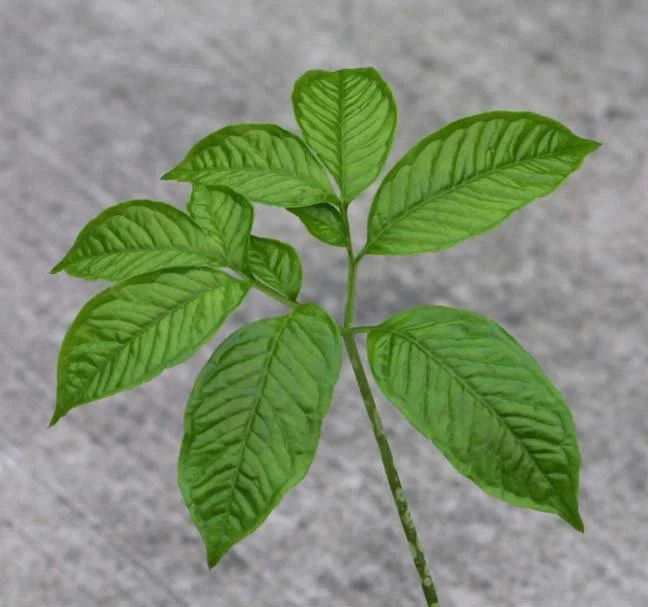
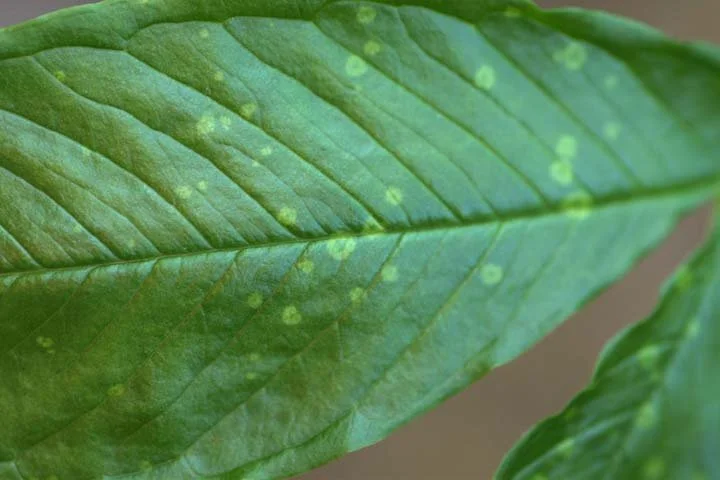
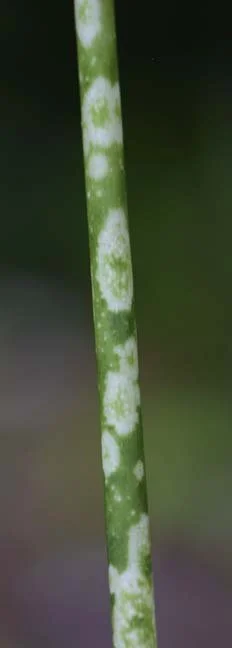
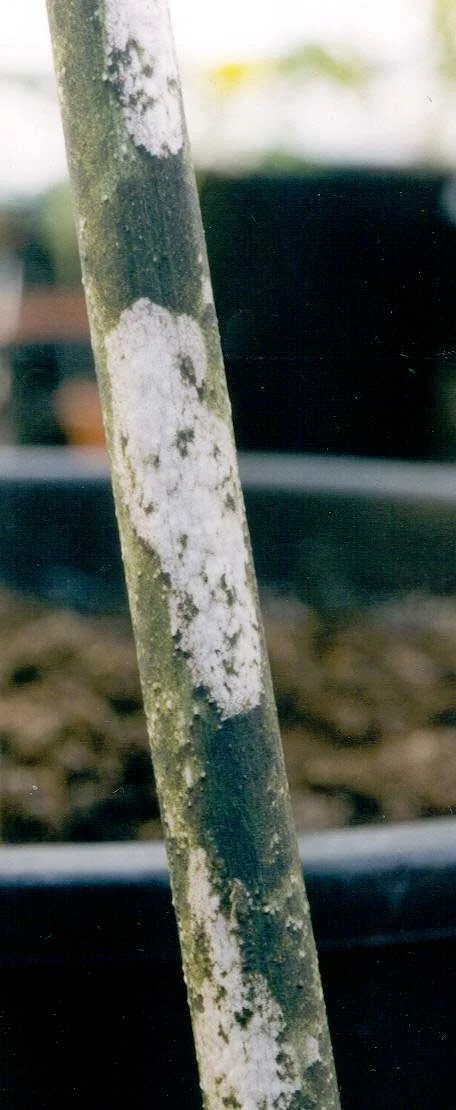
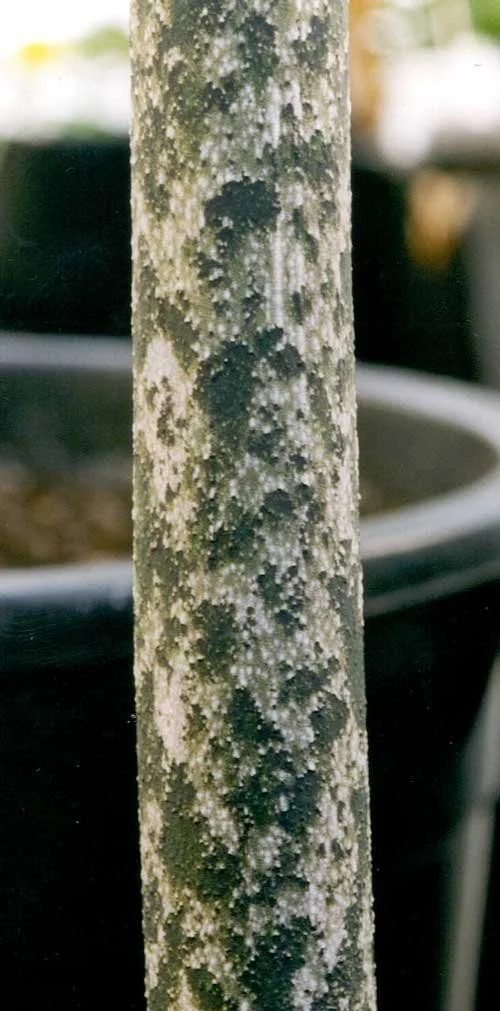
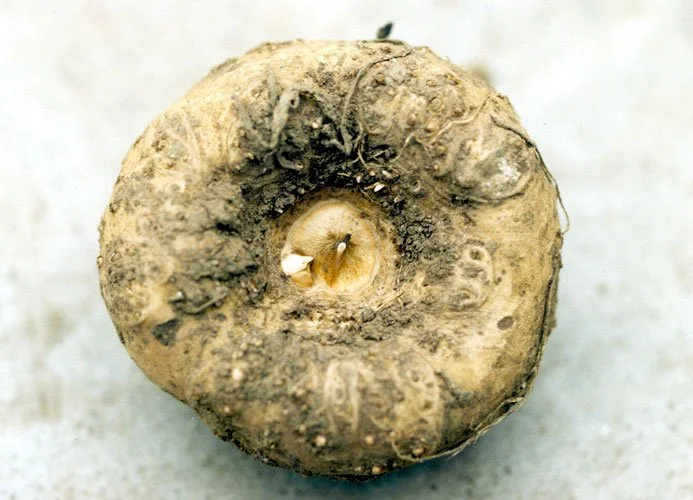
Tuber depressed–globose; leaf solitary; petiole 80–120 cm long, green with dark brown and greyish spots, the basal part rugose; lamina 100–150 cm in diam.; terminal leaflets elliptic or oblong–lanceolate, up to 20 cm long, ca. 6 cm wide, with caudate tip, base abruptly narrowing and long de-current
INFLORESCENCE:
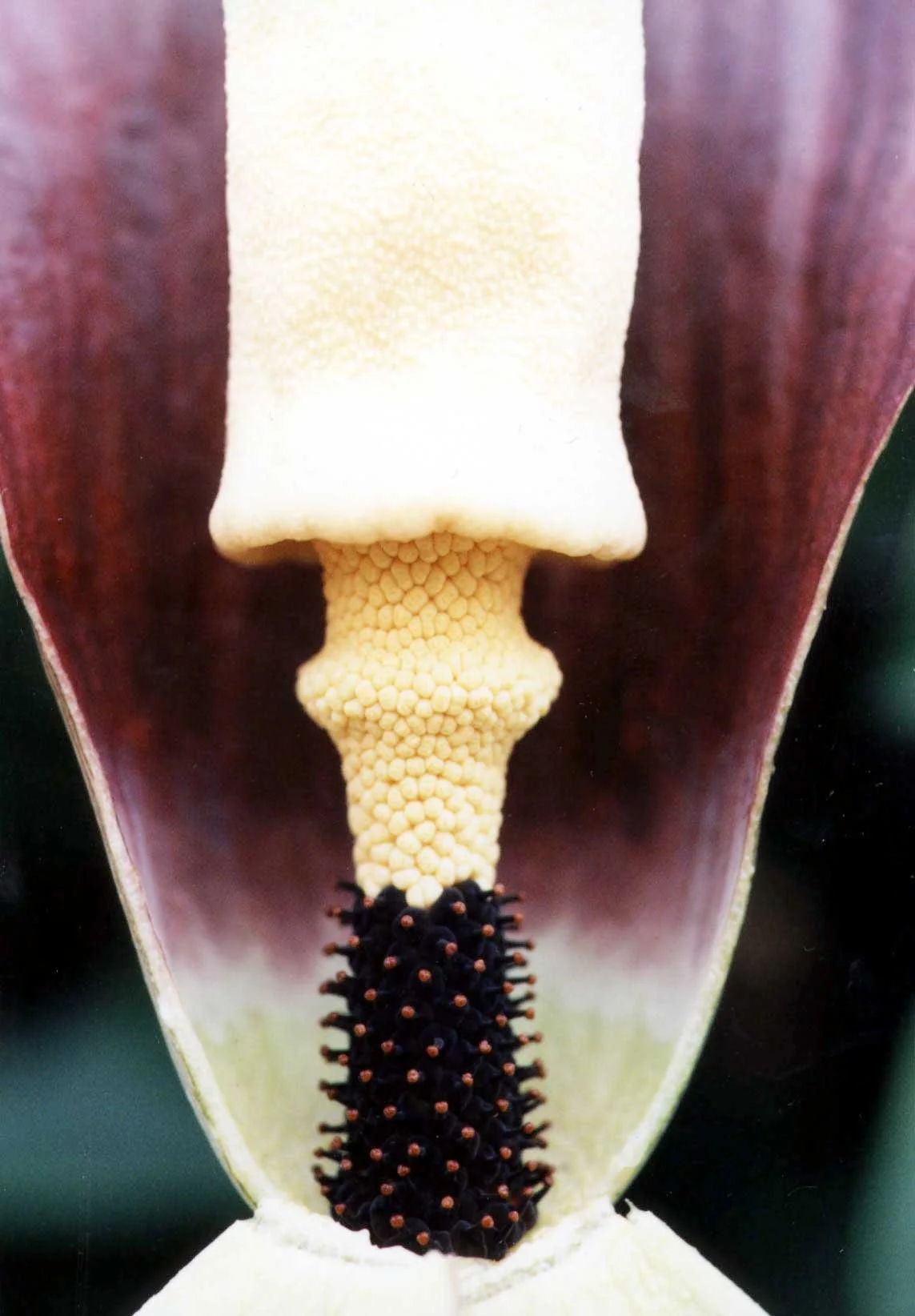
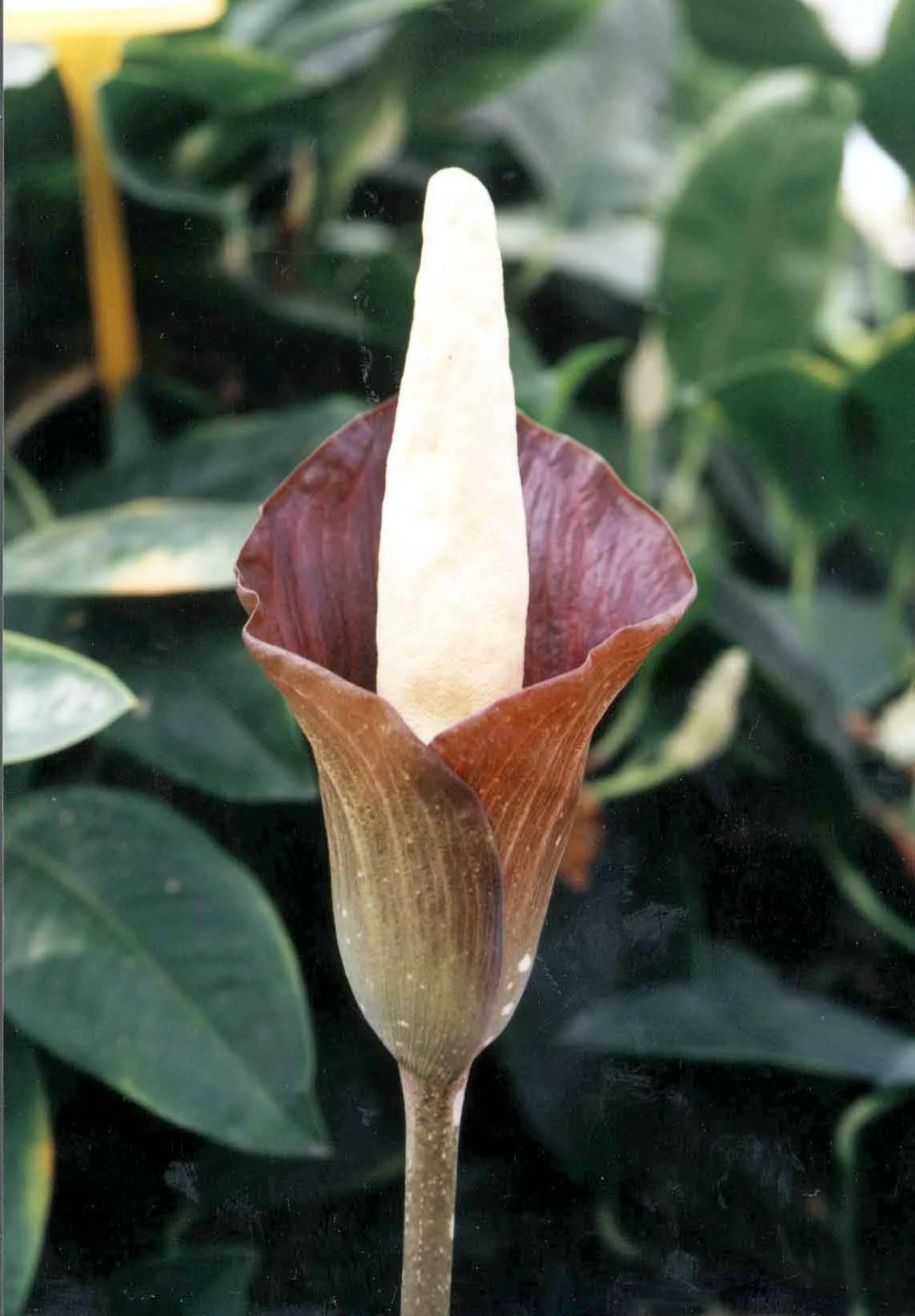
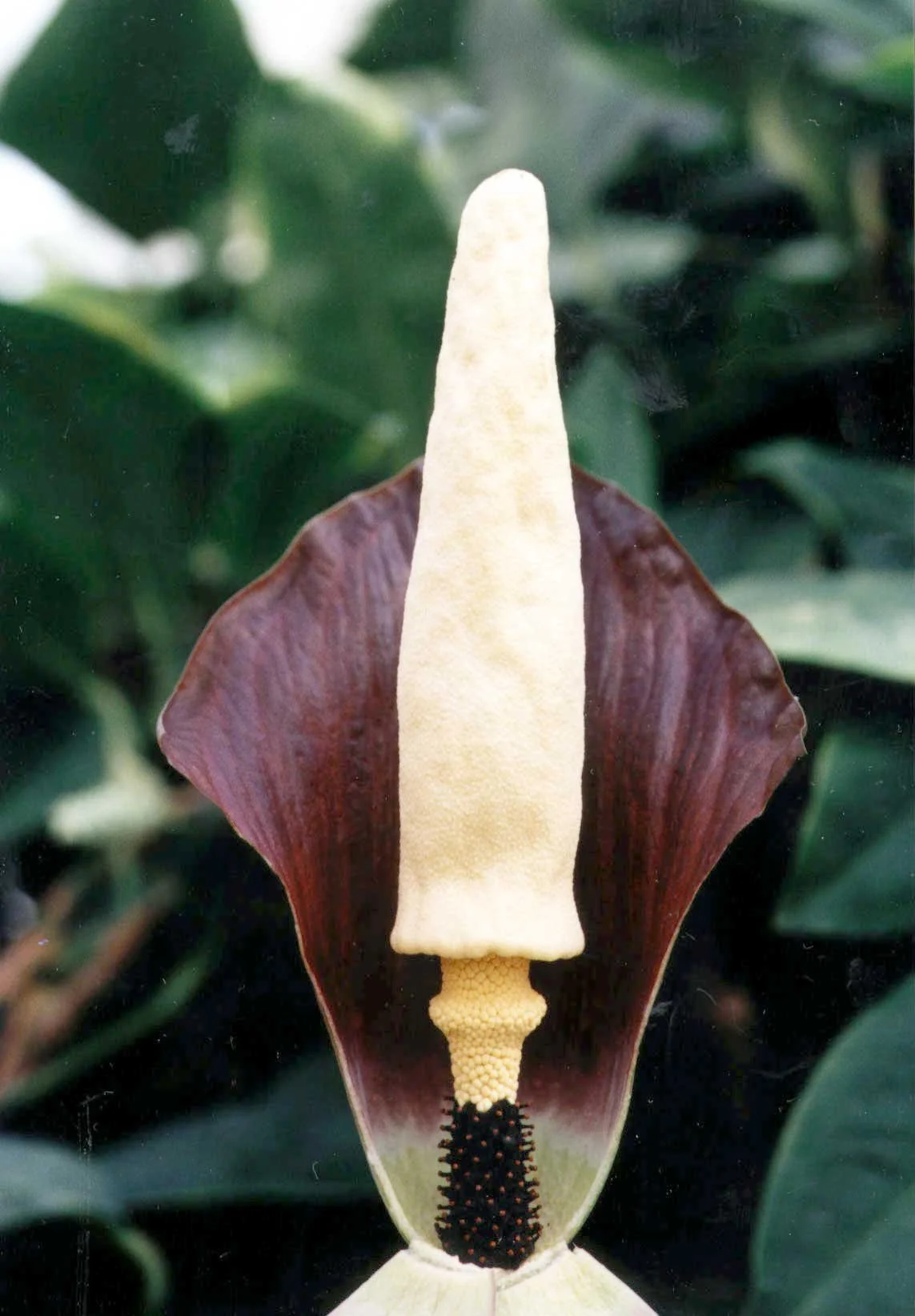
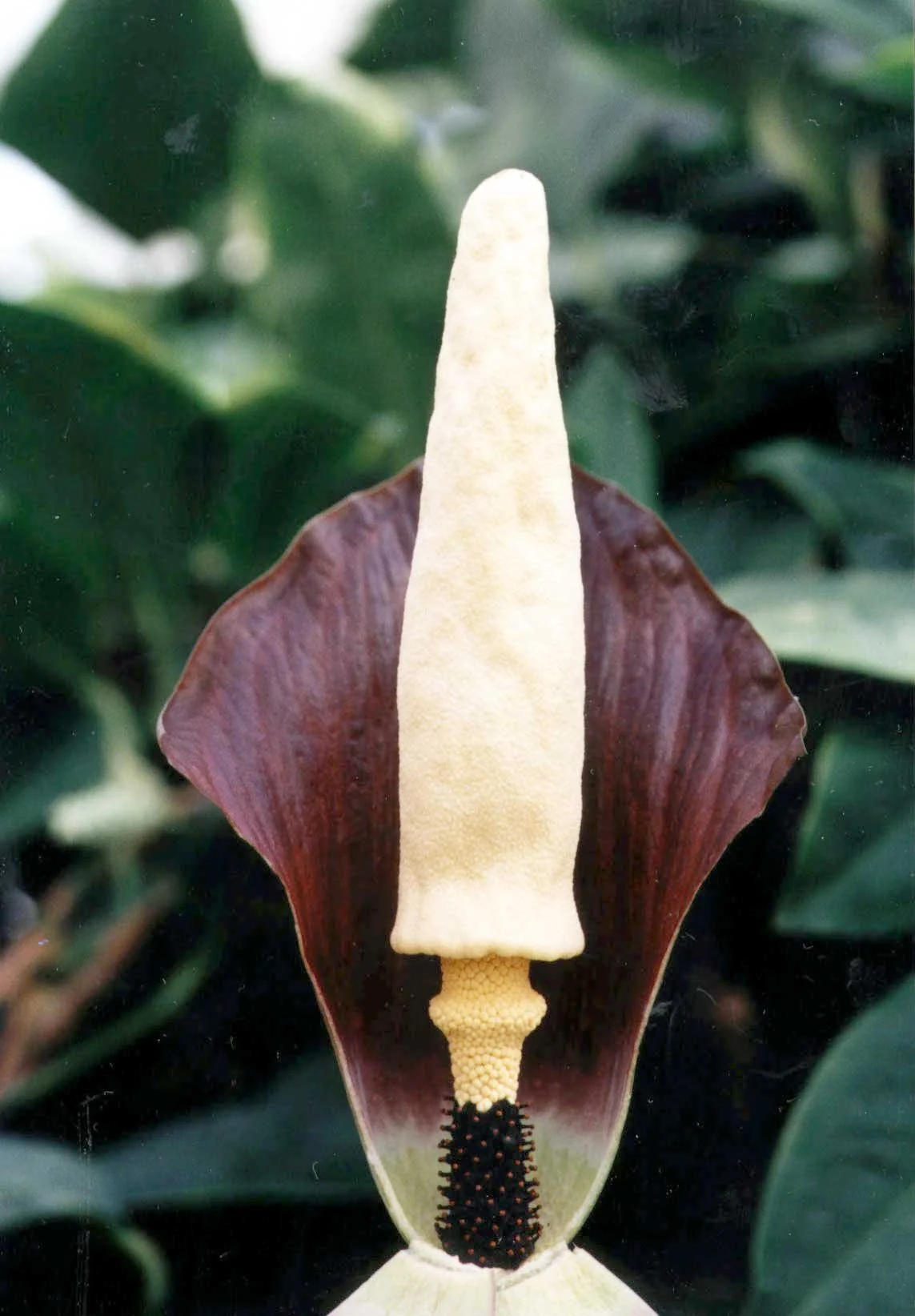
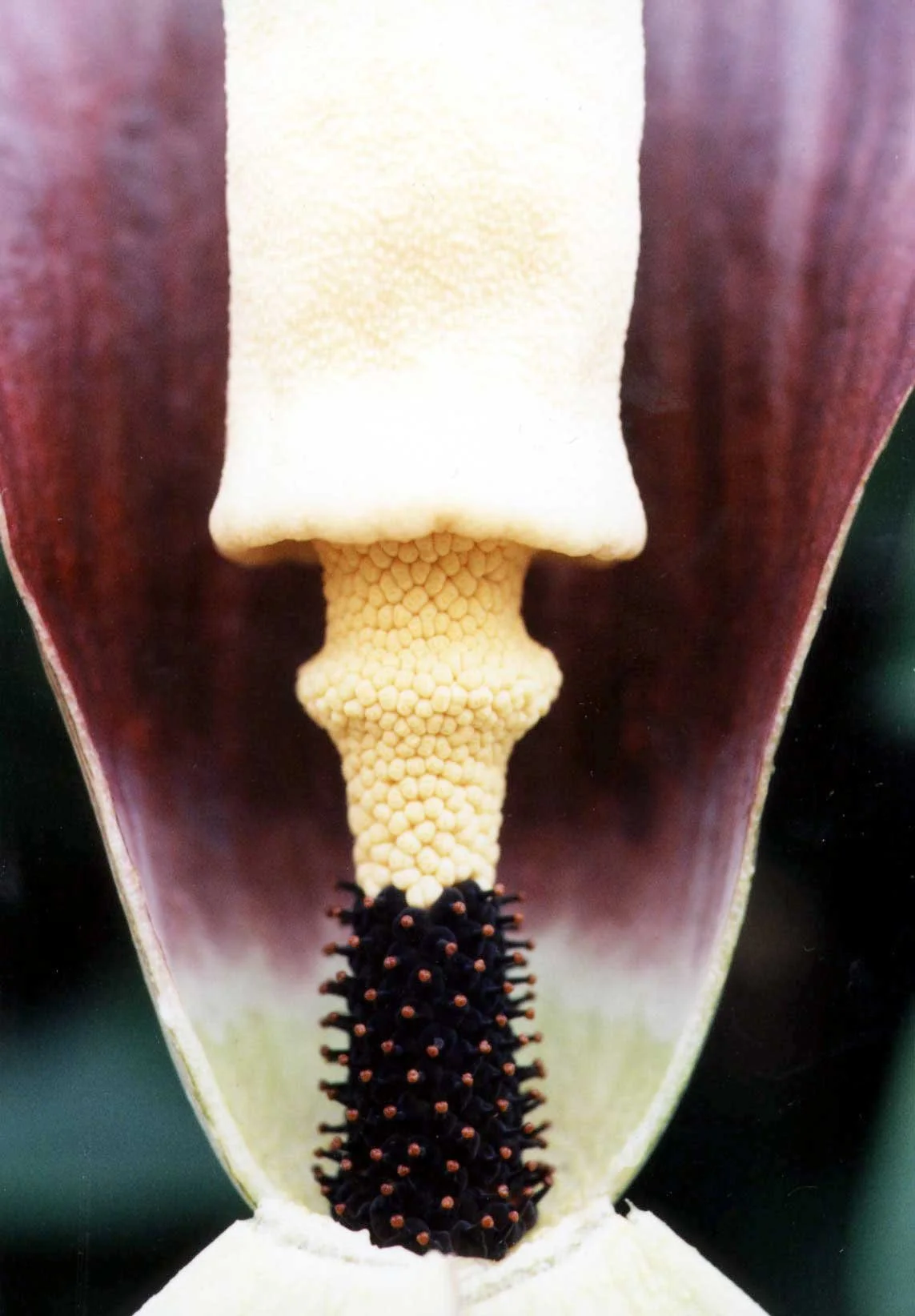
Inflorescence solitary; peduncle 80–150 cm long, as petiole in colour; spathe ovate, not con-stricted, 15–20 cm long, 7.5–14 cm in diam., with acute to obtuse tip, sometimes shortly apiculate tip; lower spathe convolute, dull dark green with scat-tered whitish dots outside, dirty greyish–purple with scattered faint paler dots in the upper part, the mar-gin darker, inside pale yellowish–green in lower 1/3, with tiny conical warts at the base, deep purple toward apex, with narrow greyish waxy zone in between; limb erect, glossy dark–maroon on both surfaces; spadix sessile, shorter to slightly longer than spathe, 14–20 cm long; female zone sub–cylindric, 3–4 cm long, 1.5 cm in diam.; pistils closely packed; ovaries depressed to obovate, ca. 0.2 cm long, 0.3–0.4 cm in diam., depressed in the centre, lower half yellowish green, upper half black-ish purple with ridged surface, 2 locular with 1 ovule each; placenta basal; style 0.1–0.2 cm long, ca. 0.1 cm in diam., dark purple; stigma conoid, ca.0.1 cm high, ca. 0.1 cm in diam., bright yellow or brown, shallowly 2–lobed; male zone 2–2.5 cm long, orange, swollen near the middle, disc–like; male flowers with 3–4 stamens; stamens ca. 0.25 cm long; filaments ca. 0.15 cm long, connate; an-thers truncate or slightly rounded, yellow, ca. 0.1 cm long, 0.1–0.2 cm in diam.; thecae opening through apical pores; appendix spreading at base, tapering toward apex with obtuse tip, 10–15 cm long, 2–3.5 cm in diam. in middle part, granulate, cream to yellowish green or dirty purple, producing heavy scent of decay during female anthesis; fruit unknown.
VARIEGATED FORMS: N/A
ETYMOLOGY: The name discophorus is quite descriptive: Greek diskos, “disc,” + -phoros, “bearing” — essentially “disc-bearing.” It almost certainly refers to that conspicuous disc-shaped, annular swelling in the middle of the male flowering zone, which the authors specifically highlight as the species' distinguishing feature.
NOTES:
Of three syntypes cited in the protologue, only specimens of Backer 11463 bis (three of six sheets) have been found. Unfortunately, the male zone of the inflorescence, which provides important diagnostic characters, is damaged. It is interesting to note that possibly Backer collected several specimens from the same locality (11–15 Feb 1914, as in the protologue) but initially gave them only one number, thinking they were all the same taxon. The bis may have been added later if this was found to be incorrect, with the other three herbarium sheets filed with another species. These sheets have not been found. The remaining syntypes (Backer 11470 & Backer 11563), presumed lodged at BO, are still an enigma. They are probably located together with other specimens of cultivated plants from the gar-den, which are kept separately or at the Bogor Gardens Herbarium. Further searches for and work on the syntypes are required before lectotypification or epitypification can be done. Amorphophallus discophorus strongly resembles Amorphophallus annulifer, but can be readily distinguished by its swollen disc–like male zone (Hetterscheid, pers. comm.).
The description of the protologue was based on dried specimens and supplemented with field notes. The authors note that the dried stigmas, when boiled, become indistinctly lobed. They considered the species very distinct from the other known Malayan species because of its unusual male flowering zone.
CULTIVARS: N/A
HYBRIDS: N/A