AMORPHOPHALLUS CRINITUS
ORIGINAL DESCRIPTION:
Amorphophallus crinitus A. Galloway, Luu, Malkm.-Huss., Prehsler & Claudel sp. nov.
Type: from a plant cultivated by A.Galloway (orig. coll.: VIETNAM, Bình Thuận Province), 13 May 2017, Galloway AGA-2488–01-T (holotype, SGN, spirit collection).
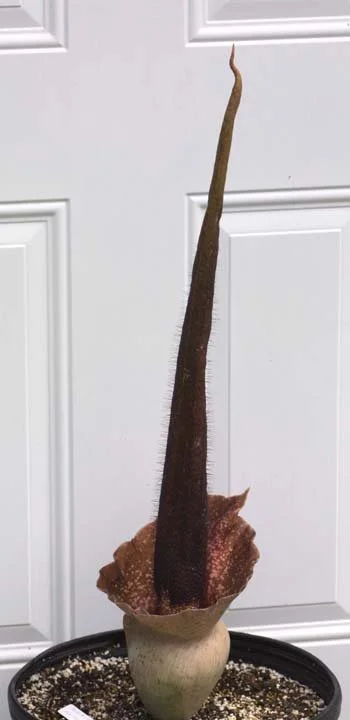
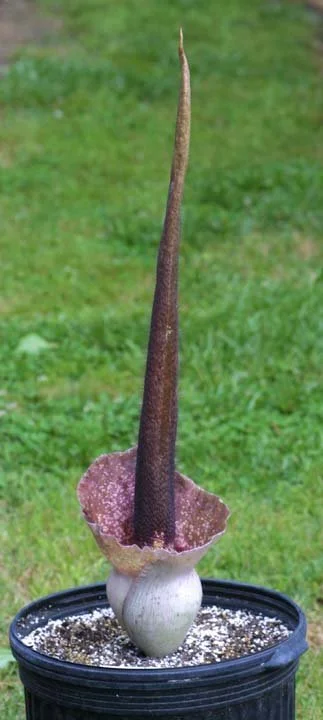
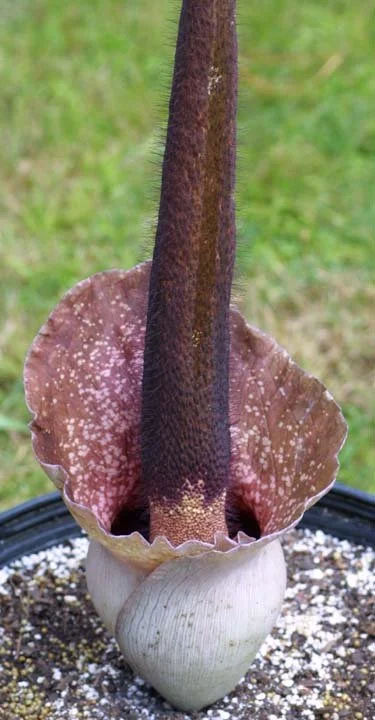
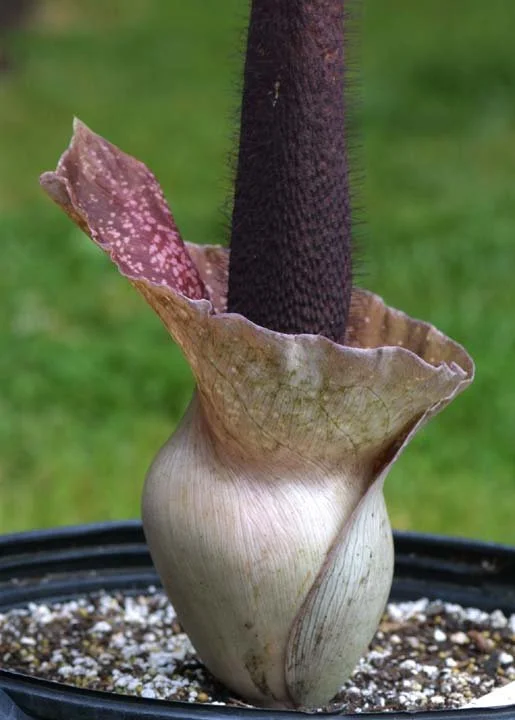
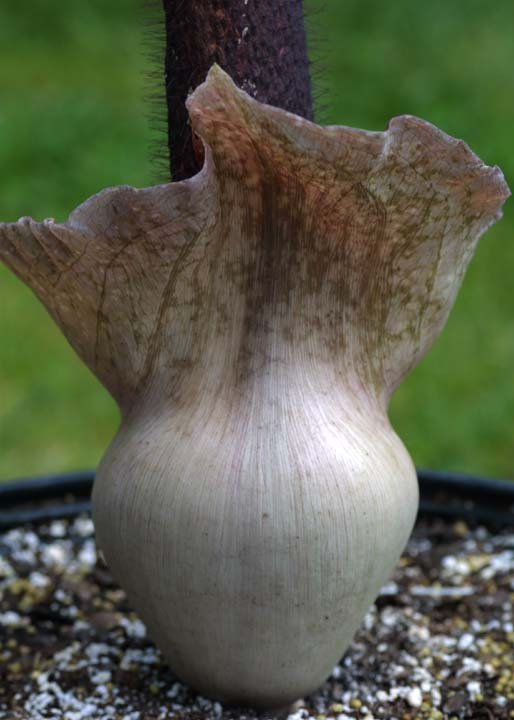
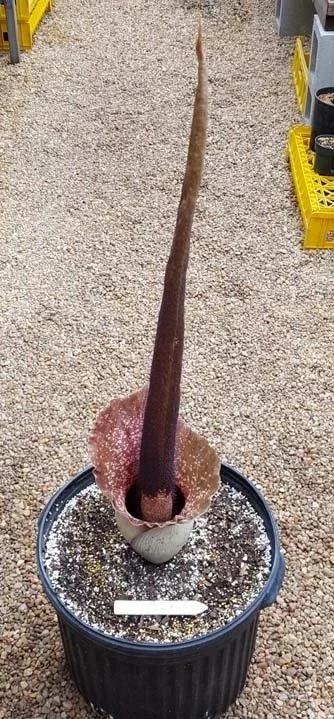
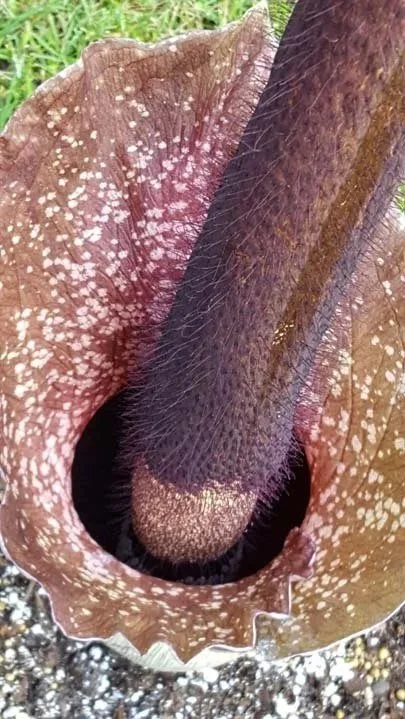
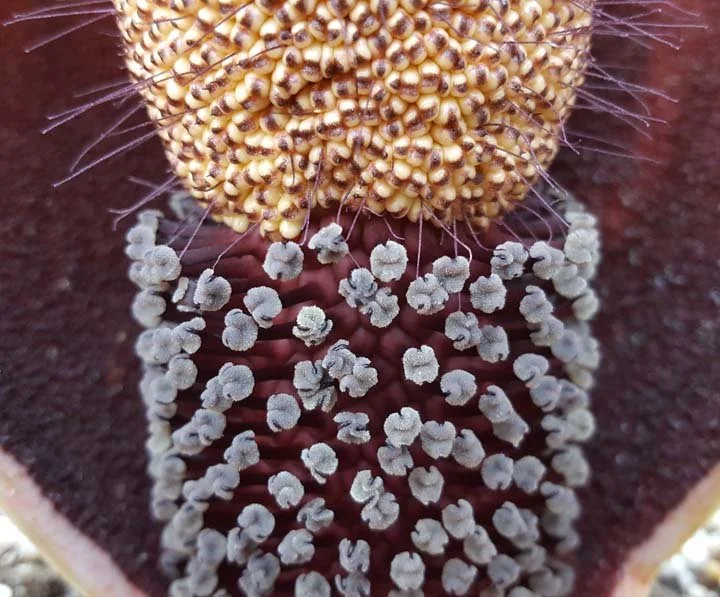
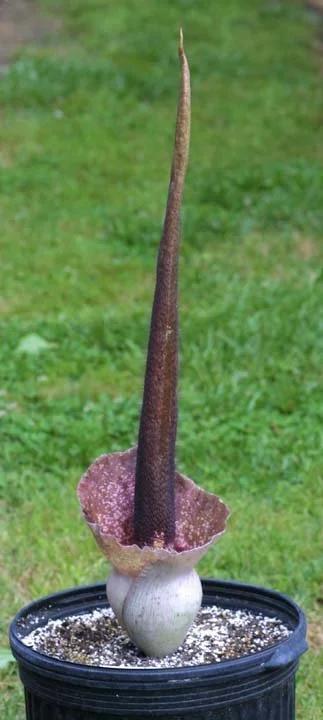
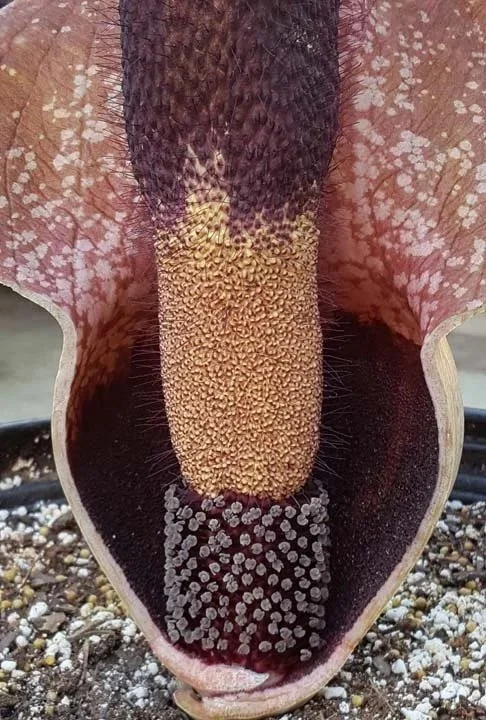
Photo by Alan Galloway
SYNONYMS:
HOMOTYPIC SYNONYMS: N/A
HETEROTYPIC SYNONYMS: N/A
ACCEPTED INFRASPECIFICS: N/A
OTHER: N/A
DISTRIBUTION: Vietnam - Bình Thuận Province
CLIMATE: N/A
ECOLOGY: Near small streams, growing in rather heavy loam soil, in filtered sunlight due to a rather open canopy of large trees.
SPECIES DESCRIPTION:
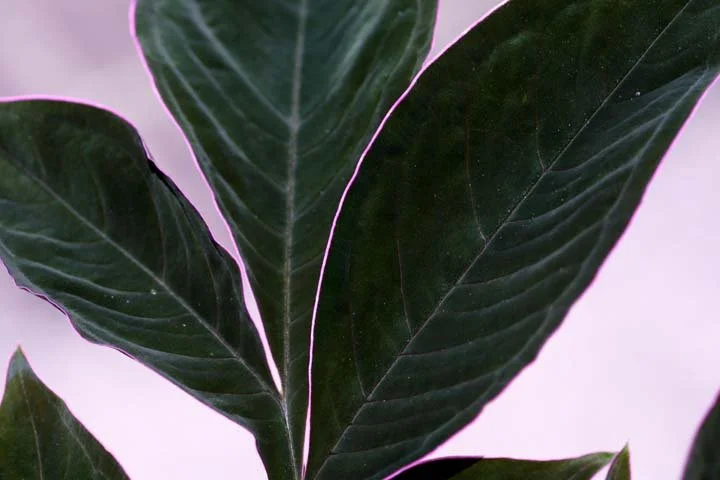
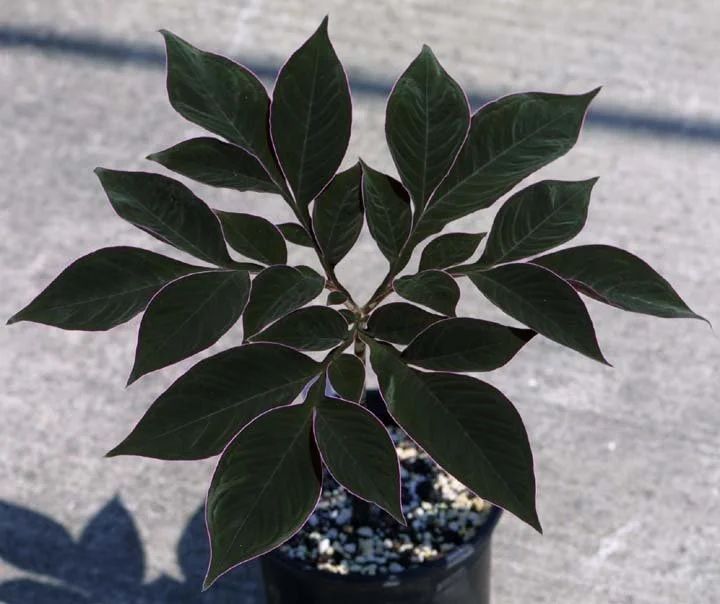
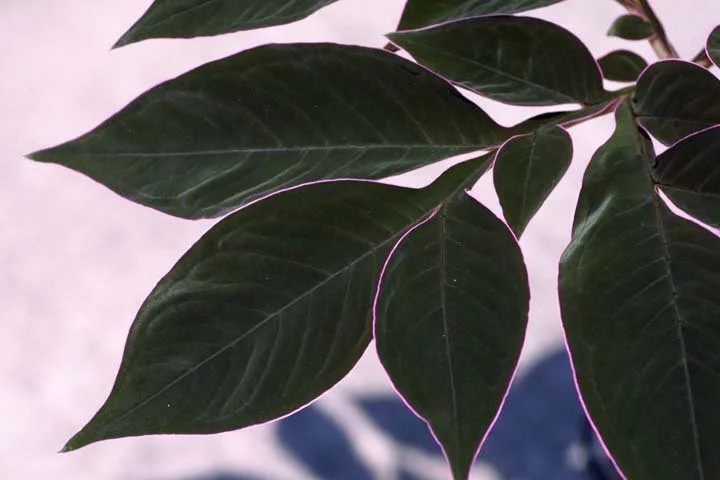
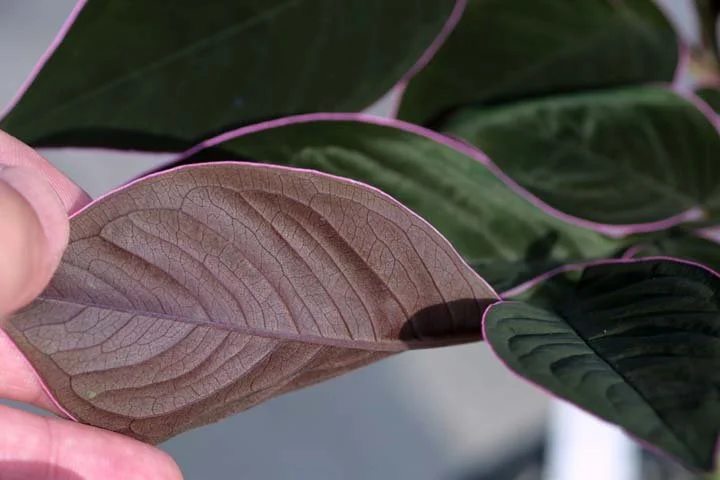
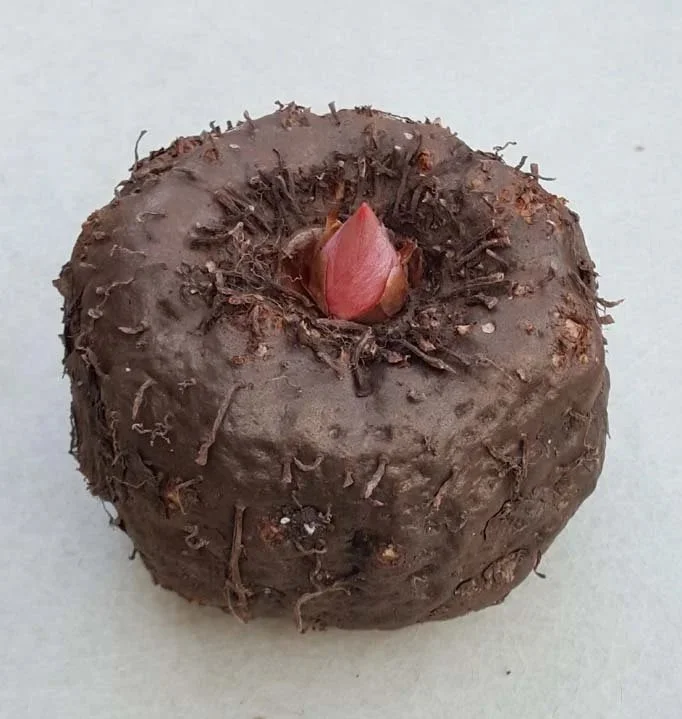
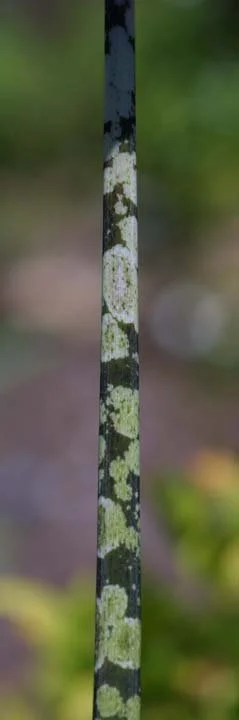
Tuber depressed globose, to 20 cm in diam., 10 cm high, brown, no offset development. Leaf solitary; petiole to 150 cm long, to 6 cm in diam. at the base, smooth, background green to dark green, with greenish-white spots with a fine brown to green over-layer pattern, 0.2–2 cm high, 0.2–1 cm wide; lamina to 180 cm in diam., rachises moderately winged; leaflets elliptic, acuminate, 17 cm long, 8 cm in diam., upper side rich deep velvety-green to dark green, margins magenta, lower side pale burgundy.
INFLORESCENCE:
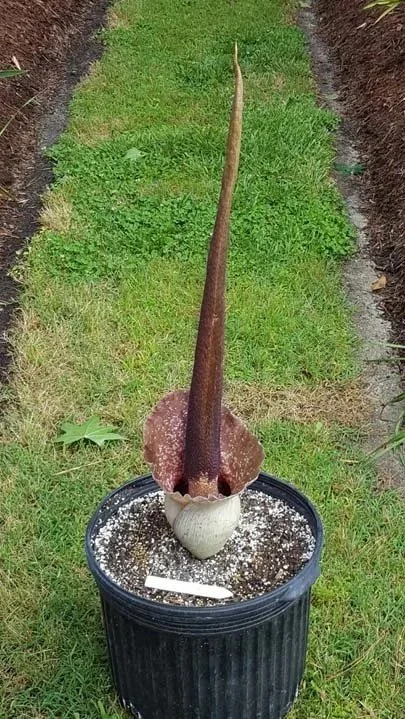
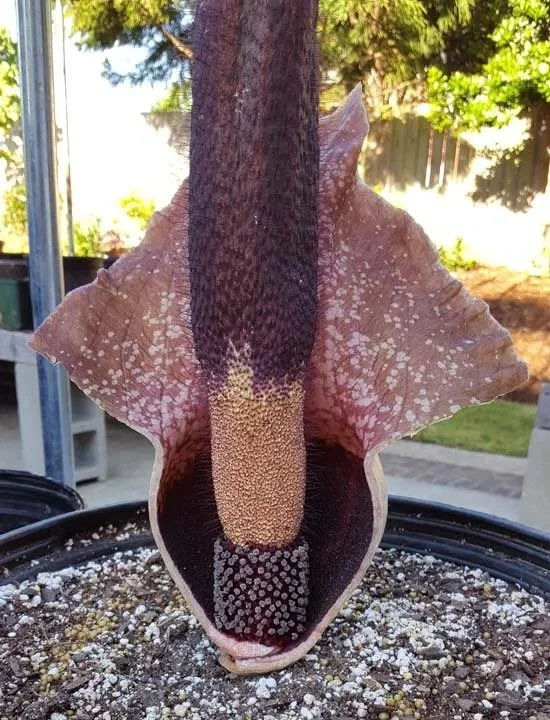
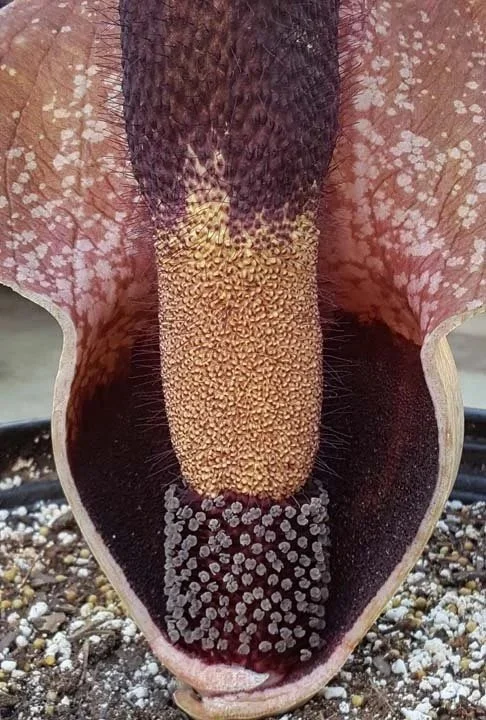
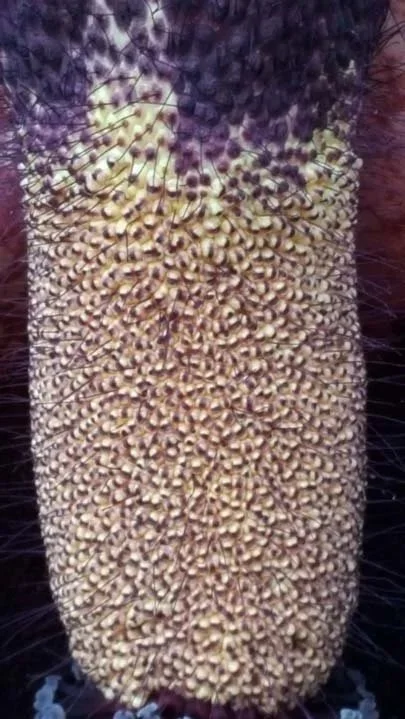
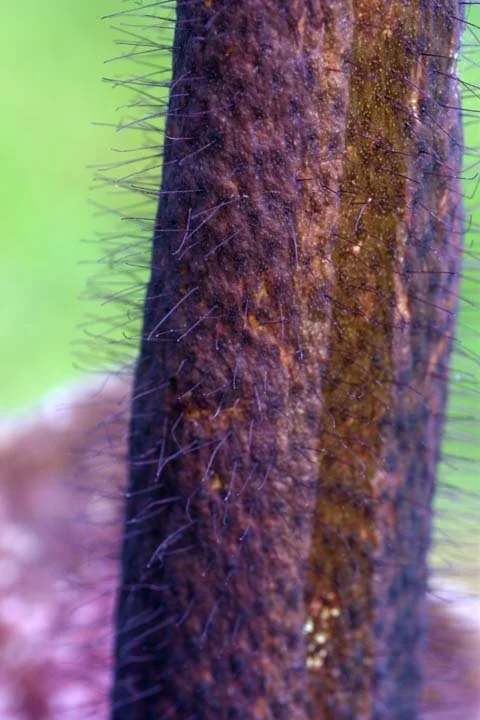
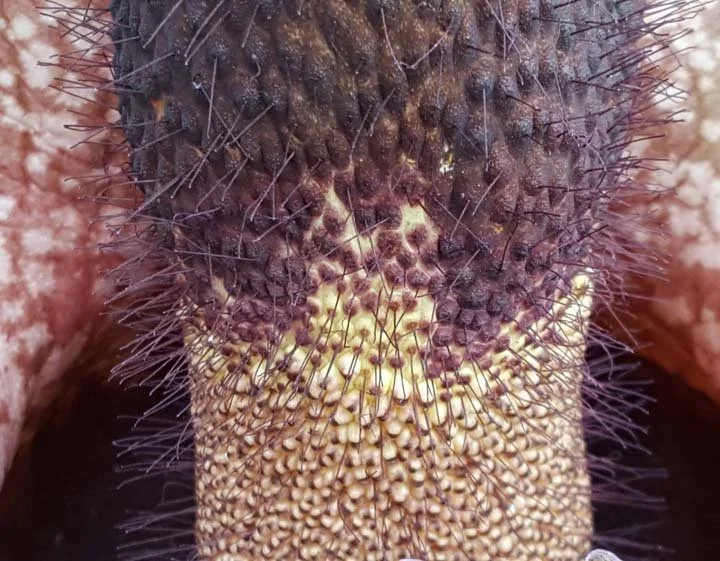
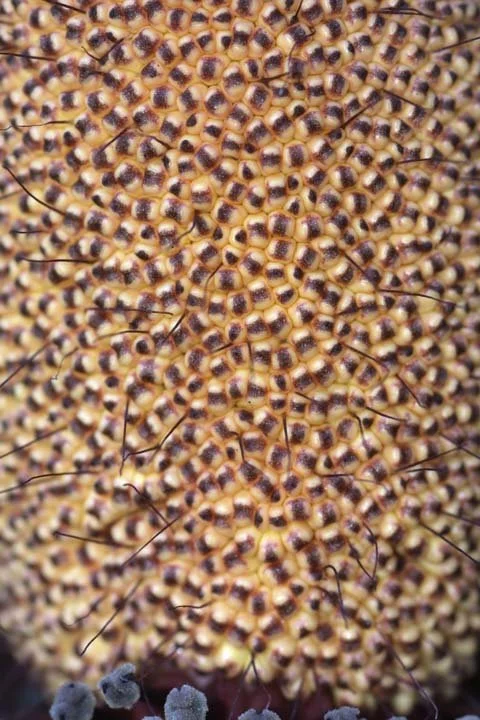
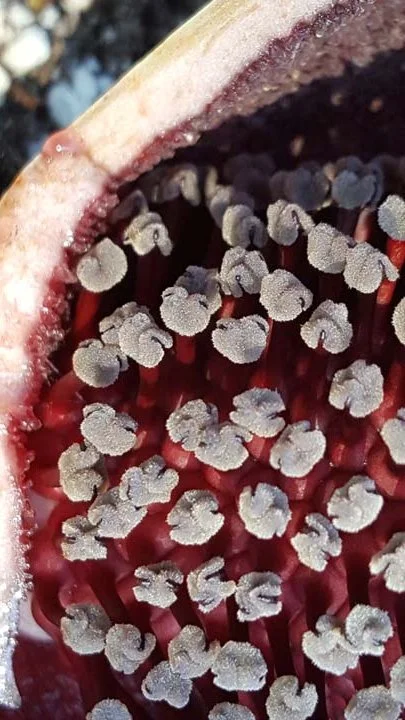
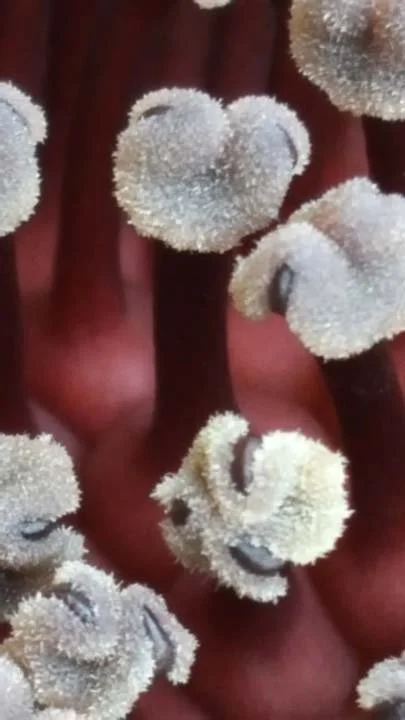
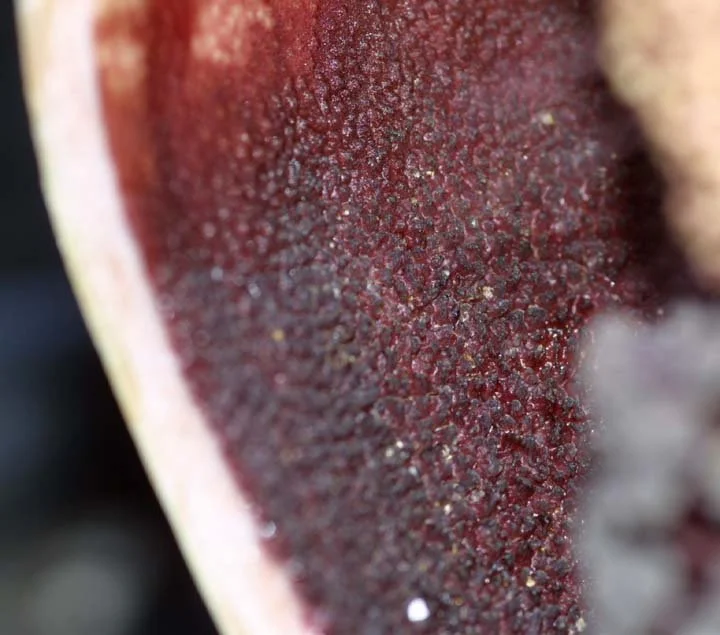
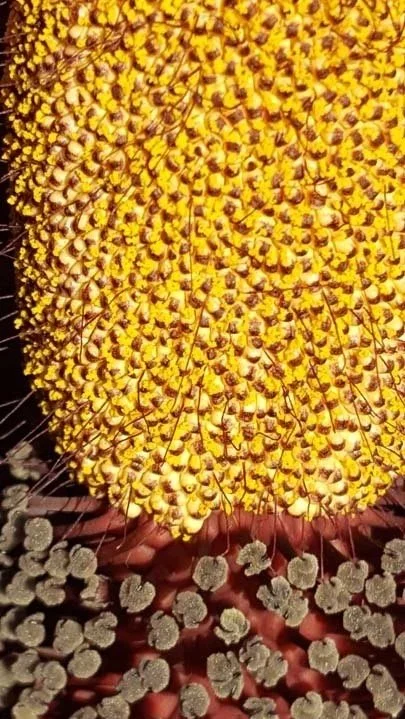
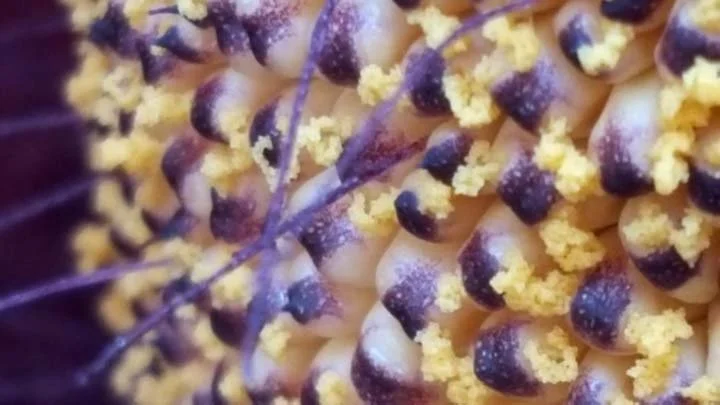
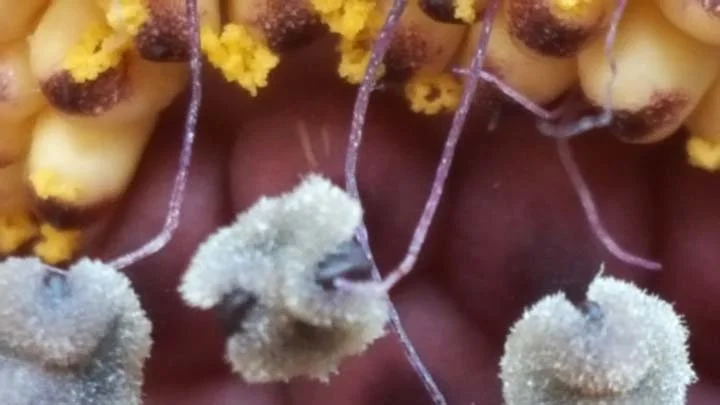
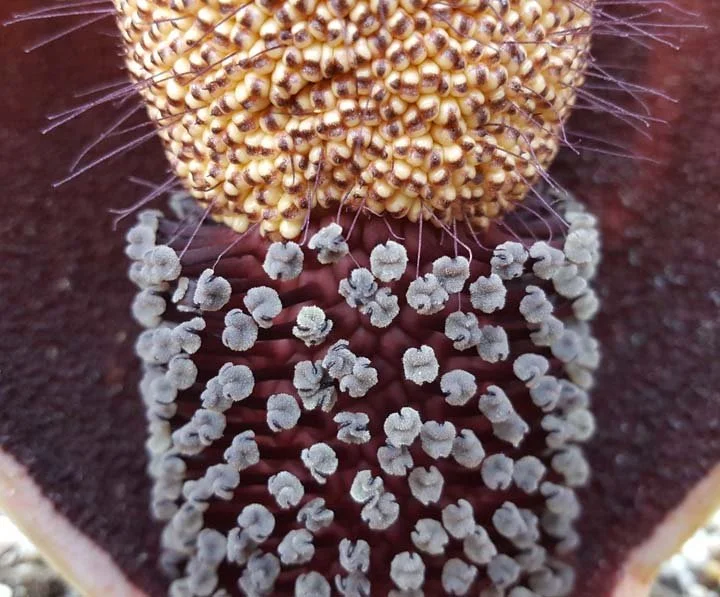
Inflorescence solitary; peduncle length variable, entirely subterranean. spathe 25 cm long, 22 cm wide, kettle and limb separated by a strong constriction, outside grayish-white, above constriction with greenish-brown venation, inside below constriction dark burgundy, with conical irregular warts and ridges; above constriction pale burgundy, with numerous creamy-white spots ca. 1–3 mm in diam. Spadix much longer than spathe, to 70 cm long; female zone cylindric, 5 cm long, 4.5 cm in diam. (incl. styles), flowers congested; sterile zone between female and male zone absent; male zone cylindric, 7.5 cm long, 4 cm in diam., flowers congested with filiform burgundy staminodes between the stamina; appendix elongate-conical, top acute, to 55 cm long, 5 cm in diam. at the base, not smooth, more even towards the top, dark burgundy-brown, covered with burgundy filiform staminodes, on the lower part staminodes sitting on humps, these disappearing upwards. Ovaries depressed, circular in cross-section, ca. 3 mm high, ca. 5 mm in diam., pale burgundy, bilocular; style ca. 0.9–1 cm long, ca. 1.75 mm in diam., terete, dark burgundy; stigma ca. 2 mm high, ca. 3 mm in diam., deeply 2–3 lobed and strongly undulate, surface echinulate, gray. Stamens ca. 3 mm long, anthers creamy-white, connective burgundy; filaments ca.1.8 mm long; anthers ca. 1 mm in diam.
VARIEGATED FORMS: N/A
ETYMOLOGY: The species epithet, crinitus, Latin for long-haired, refers to the beardlike filiform staminodes on the spadix.
NOTES:
Amorphophallus crinitus is another species from subgenus Metandrium Stapf with an appendix covered with filiform staminodes.
The other species with this characteristic are:
Following some discriminating traits of the above mentioned species are discussed for the circumscription of the new species. Amorphophallus crinitus differs from all the above-mentioned species, except for Amorphophallus cirrifer, by a strictly subterranean peduncle and thus an inflorescence held at ground level. Although Amorphophallus cirrifer also has a short peduncle, it cannot be mistaken for Amorphophallus crinitus and differs amongst others by a sigmoid appendix, markedly smaller dimensions and an elongate tuber opposed to a depressed globose in Amorphophallus crinitus. Juvenile leaves of Amorphophallus crinitus are reminiscent of those in Amorphophallus barbatus. However, Amorphophallus crinitus is considerably larger than Amorphophallus barbatus and Amorphophallus natolii and presents a smooth and conspicuously patterned petiole, with the patterns reminiscent of lichens, in comparison to solid colored petioles in both Amorphophallus barbatus and Amorphophallus natolii, which additionally have a longitudinally ridged surface in Amorphophallus barbatus. Apart from the peduncle length, Amorphophallus hirtus and Amorphophallus longicomus differ from Amorphophallus crinitus by the presence of a sterile zone between the female and the male zones.
Amorphophallus pilosus differs by filiform staminodes in the female zone and an elongate tuber. Amorphophallus laoticus can be distinguished from Amorphophallus crinitus by linearlanceolate leaflets and an elongate instead of a depressed globose tuber.
CULTIVARS: N/A
HYBRIDS: N/A