AMORPHOPHALLUS CROATII
ORIGINAL DESCRIPTION:
Amorphophllus croatii Hett. & A.Galloway sp. nov.
Type: from a plant cultivated by A. Galloway (orig. coil.: LAOS, Bolikhamsai & Khammouane Provinces, in heavy shade, in rather wet and heavy soils, A. Galloway), 13 September 2004, Galloway AGA- 1741-01-T(holotype, WAG, spirit collection.).
Morphologia Amorphophallus tonkinensem approximata, habitu ubique infirmiore, staminibus multo brevioribus, petiolo sine maculis prominentibus nigris differt.
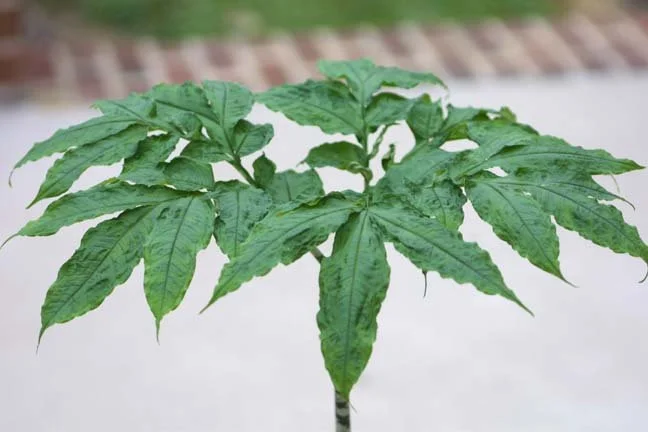
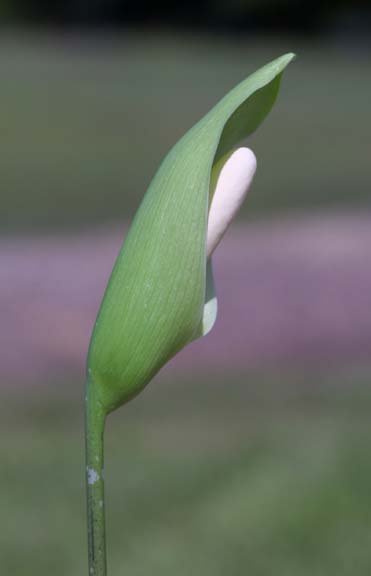
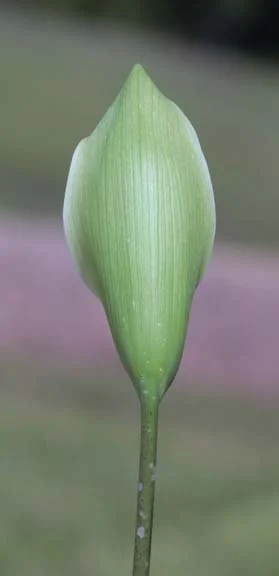
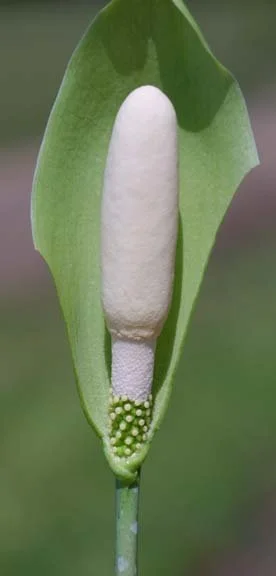
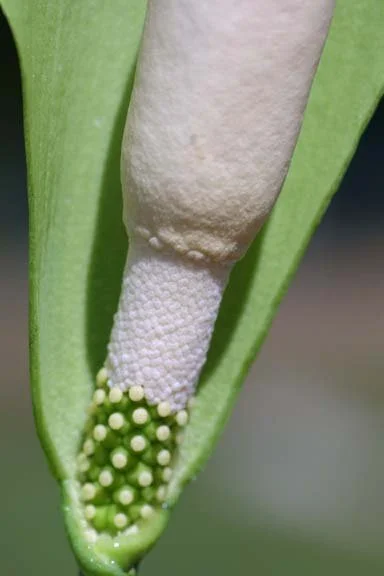
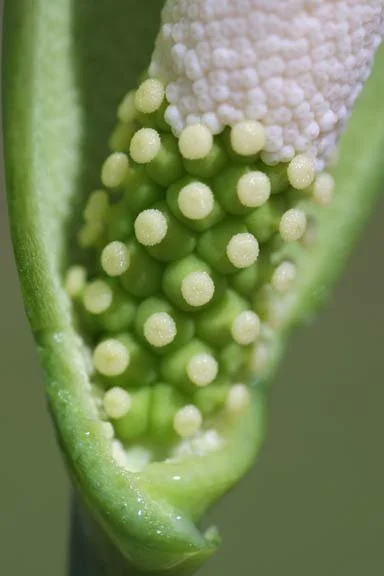
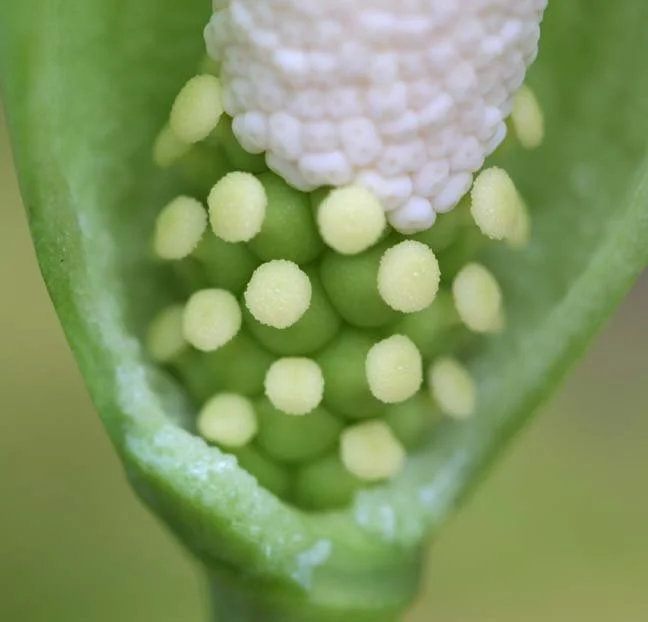
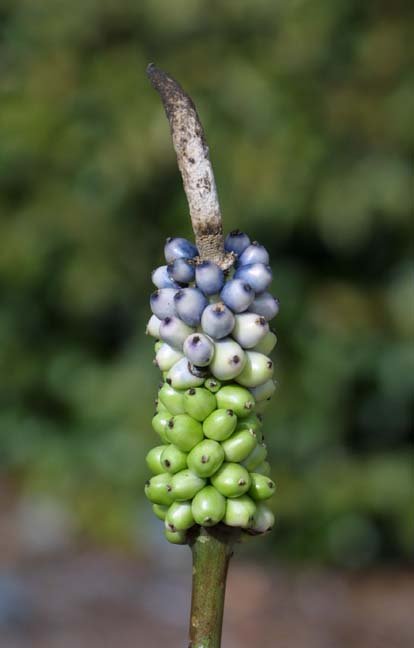
Photo by Alan Galloway
SYNONYMS:
HOMOTYPIC SYNONYMS: N/A
HETEROTYPIC SYNONYMS: N/A
ACCEPTED INFRASPECIFICS: N/A
OTHER: N/A
DISTRIBUTION: Laos
Type locality, from a plant cultiva ted in the Botanical Gardens of Wageningen University (orig. coll. by A. Galloway), Hetterscheid H.AM. 1432 (WAG) .
CLIMATE: N/A
ECOLOGY: N/A.
SPECIES DESCRIPTION:
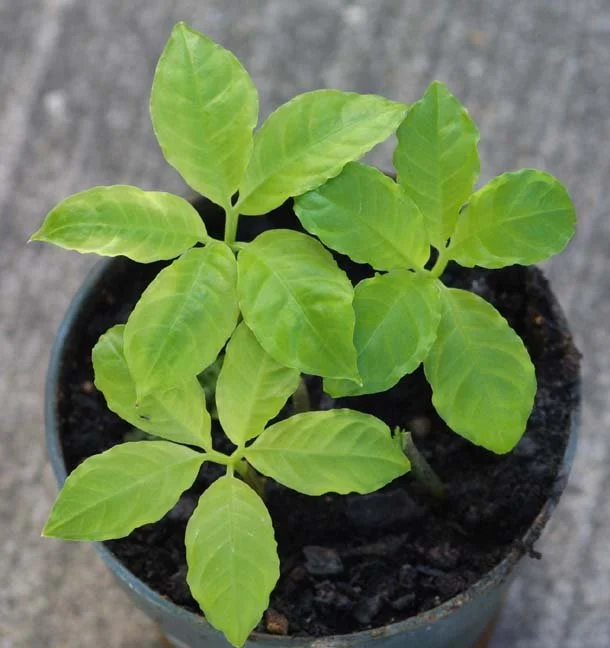
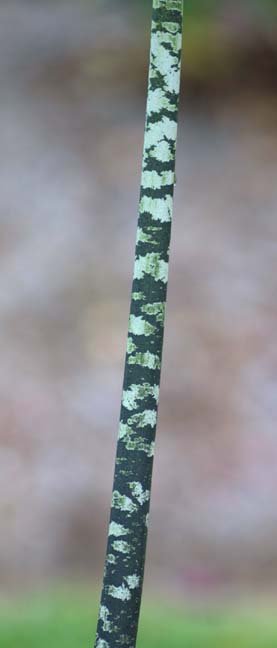
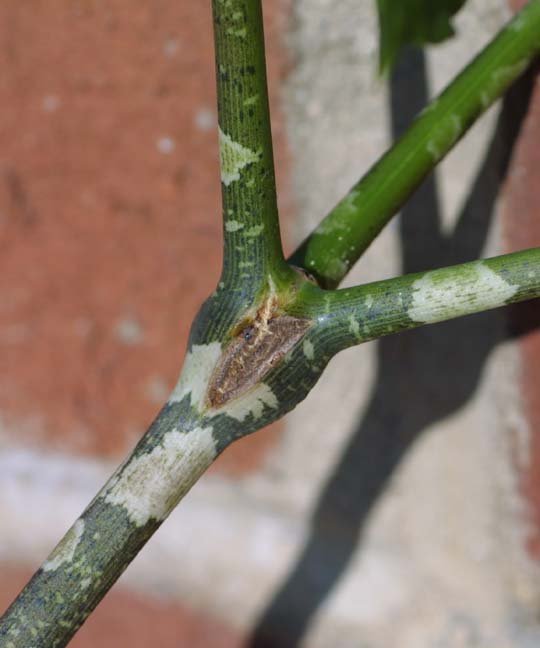
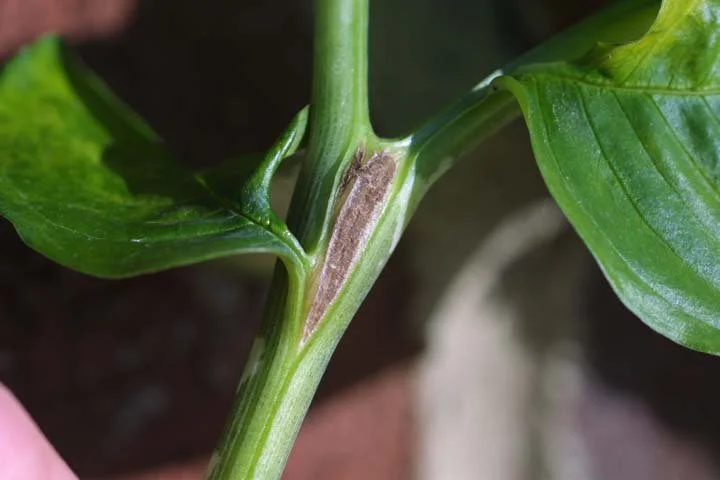
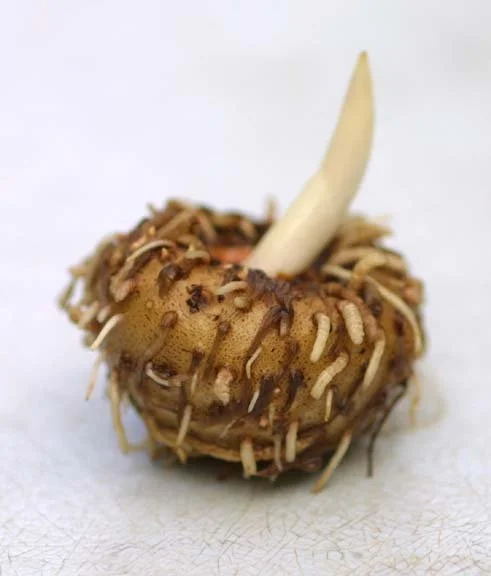
Tuber depressed-globose, 6 cm in diam., 4 cm high, no offset development. Petiole 35-50 cm long, to 2 cm in diam., smooth, background a very fine pattern of tiny pale and dark green spots, with superimposed scattered larger, irregular, pale whitish green spots, the junction of petiole to the rachises of the lamina occasionally swelling to form an intercalary bulbil; lamina highly dissected, 60 cm wide, rachises winged distal from the basal branching points; leaflets elongate-elliptic, 4-16 cm long, 2-5.5 cm wide, acuminate, upper surface glossy green.
INFLORESCENCE:
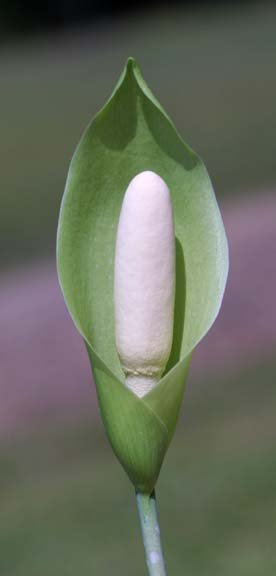
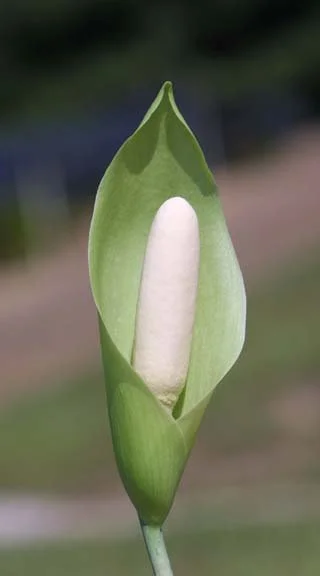
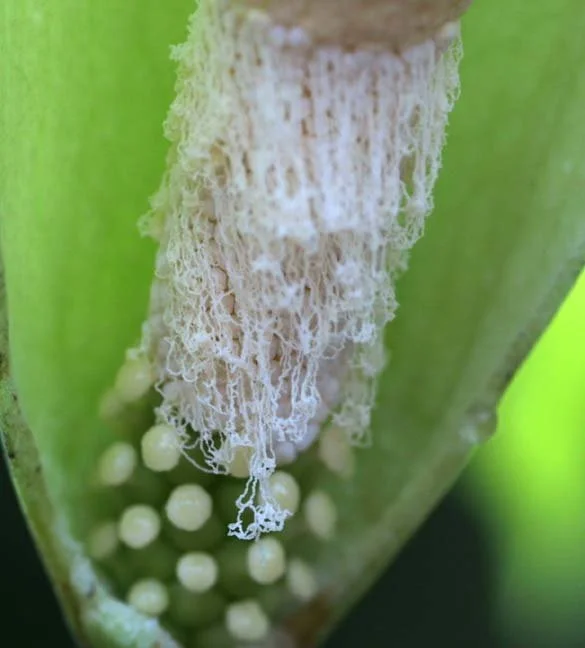
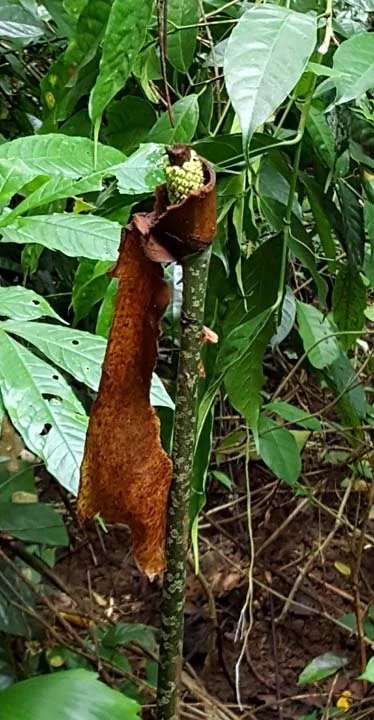
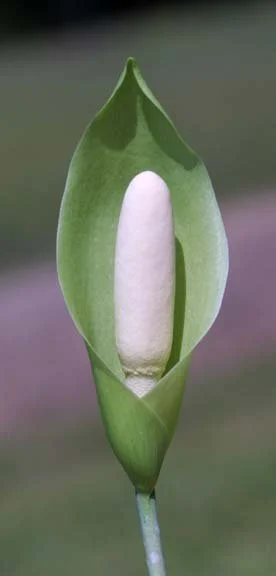
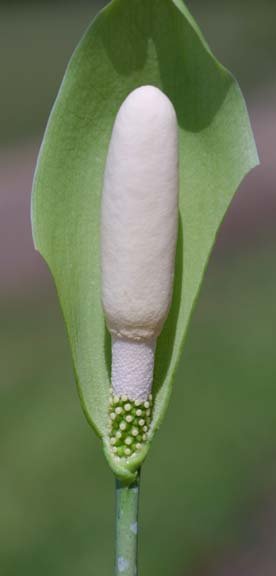
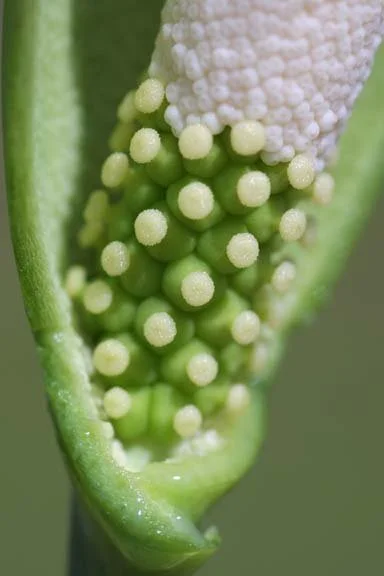
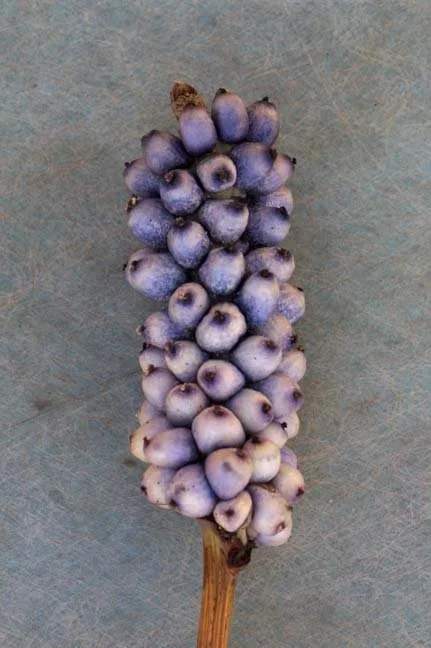
Inflorescence solitary, after a very short leafless dormancy period; peduncle as petiole but considerably thinner, 35-40 cm long, ca. 5 mm in diam.; spathe ovate, 10-13 cm long, 7-8 cm wide, outside pale green, margins whitish green, inside pale green, base inside ridged-verrucate, apex broadly acute. Spadix slightly shorter than or equaling the spathe, sessile; female zone subcylindric, slightly wider at the apex, 1.4-1.5 cm long, 1-1.1 cm in diam., flowers congested; male zone subcylindric, slightly widening at the apex, 1.7-1.9 cm long, 1.2-1.3 cm in diam., flowers congested ; appendix more or less cylindric-fusiform, 6.5- 6.7 cm long, 1.5- 2 cm in diam., obtuse, smooth , white. Ovary depressed, 3 mm in diam. , 1.5 mm high , green, bilocular; style 1- 1.2 mm long, 1 mm in diam., pale green ; stigma depressed , 1.5 mm in diam. , 0.5 mm high, entire with or without a very small central depression, verrucate, pale yellowish. Male flowers consisting o f 3-4 stamens; stamens 1.5 mm long; filaments 0.5 mm long, fused entirely, white; anthers 1 mm long, 1-1.5 mm in diam. , white, pores apical, oval. Pollen psilate.
VARIEGATED FORMS: N/A
ETYMOLOGY: The species epithet celebrates the great aroid scientist, Thomas B. Croat of the Missouri Botanical Garden, whose career has been prodigiously dedicated to work on South American Araceae
NOTES:
Amorphophallus croatii is obviously close to Amorphophallus tonkinensis (North Vietnam, South China) with which it shares the typical color pattern of the petiole, the shape of the spathe and the appendix shape. The differences being the much smaller dimensions in general of Amorphophallus croatii and the much longer stamens in Amorphophallus tonkinensis. Additionally Amorphophallus croatii lacks the black, raised spots in the lower part of the petiole as found typically in Amorphophallus tonkinensis and the latter has so far rarely been observed to form intercalary bulbils in the leaves.
CULTIVARS: N/A
HYBRIDS: N/A